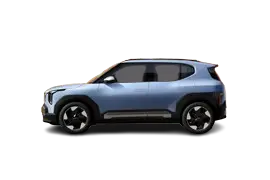
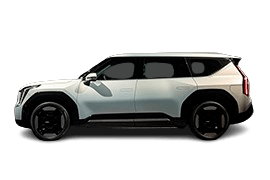
2025 Kia PV5 Cargo 51.5 kWh 51.5 kWh 161 hp Battery, Horsepower, Range







EVspecsHub Score — Kia PV5 Cargo 51.5 kWh NCM (2025)
Independent rating vs all passenger EVs on sale 2025–2026
Range
297 km WLTP · NCM 51.5 kWh · 190 Wh/km combined
4.0
weak
Battery
51.5 kWh · NCM chemistry · 290V · no V2G
5.0
avg
Charging
150 kW DC max · 10–80% in 30 min · no V2L/V2H/V2G standard
5.0
avg
Performance
0–100 km/h 16.2 s · FWD · 89.4 kW · measured at full payload
2.0
weak
Efficiency
19.0 kWh/100 km WLTP · tall van body · FWD
3.0
weak
Cargo
4,400 L load volume · 4.4 m³ · L2H1 body · 790 kg payload
10.0
top
Value
~€38,700 · ~$41,800 · ~€130.3/km · ~$140.7/km WLTP
4.0
weak
Verdict: The SR Cargo earns its 10.0 for load space — 4,400 litres puts it ahead of every passenger EV on this scale. The 4.7 total reflects honest commercial-van positioning: efficiency lands at 3.0 (19.0 kWh/100 km WLTP, standard for a tall eLCV), range covers a full urban delivery shift at 297 km, and value at €130/km reflects fleet pricing rather than consumer EV economics. For operators running daily urban routes under 250 km, the score tells only part of the story — the 790 kg payload and flat floor are what actually sells this van. Figures valid for cars built from June 2025.
© EVspecsHub.com · All passenger EVs 2025–2026 · April 2026 · Methodology v6.7
4.7
out of 10
EVspecsHub Score
📊 Using this score in your review?
Free to use — just credit EVspecsHub.com
Free to use — just credit EVspecsHub.com
▸ Score data table (methodology v6.7)
| Criterion | Score | Key data | 10/10 = |
|---|---|---|---|
| Range | 4.0 | 297 km WLTP · 200–299 km band | 800+ km |
| Battery | 5.0 | 51.5 kWh NCM · 290V · 50–59 kWh band · no 800V bonus | 110+ kWh |
| Charging | 5.0 | 150 kW DC · 150–199 kW band · no V2X standard | 400+ kW |
| Performance | 2.0 | 16.2 s FWD · 89.4 kW · 10+ s band · at full payload | sub-3s AWD |
| Efficiency | 3.0 | 19.0 kWh/100 km WLTP · 18.0–19.9 band | <12 kWh/100 km |
| Cargo | 10.0 | 4,400 L · 4.4 m³ L2H1 · 790 kg payload · 1100+ L band | 1100+ L |
| Value | 4.0 | ~€38,700 · ~€130.3/km · ~$140.7/km · €130–159/km band | <€45/km |
| Overall | 4.7 / 10 | EVspecsHub Score v6.7 · EVspecsHub.com · April 2026 | |
Kia PV5 Cargo 51.5 kWh: The Standard Range Is Actually About Payload, Not Distance
297 km WLTP. 150 kW DC. 51.5 kWh. The numbers look straightforward until you start asking the real questions: why does the Standard Range actually carry 100 kg more than the Long Range? What's the real charging curve on a cold morning? Does V2L work for a worksite or camping setup? I went through official Kia technical documentation, press releases, and forum threads to pull together what the spec sheet leaves out. Figures valid for cars built from launch in 2025.
Quick note on what this page covers: the 51.5 kWh is the Standard Range Cargo, FWD, available in Essential and Plus grades. It shares the body and dimensions with the 71.2 kWh Long Range variant — but the battery architecture, pack voltage, weight, and payload capacity are meaningfully different. Don't mix the two.
1 Battery Pack — 290V Architecture, 177 Ah Cells, and What the SR vs LR Gap Really Means 51.5 kWh · Li-ion · FWD
Short answer: The PV5 Cargo 51.5 kWh runs a 290V nominal pack with 177 Ah capacity and a 120 kW / 89.4 kW PMSM motor. The battery weighs 283 kg, which is exactly 101 kg less than the 71.2 kWh pack — and that difference goes directly into your payload allowance.
I checked both technical PDFs carefully and one thing jumped out immediately: the two variants share the exact same cell capacity (177.01 Ah) but run at completely different nominal voltages — 290V for the SR and 402V for the LR. That's not a minor distinction. It means they're fundamentally different pack architectures, not just different cell counts. Kia hasn't published the exact module count yet (listed as "tbc"), but the voltage gap suggests the LR pack strings more cells in series rather than in parallel.
Pack specs — from Kia official UK specification document (August 2025)
| Parameter | SR — 51.5 kWh | LR — 71.2 kWh (reference) |
|---|---|---|
| Gross capacity | 51.5 kWh | 71.2 kWh |
| Cell capacity | 177.01 Ah | 177.01 Ah — same cell |
| Nominal pack voltage | 290 V | 402 V |
| Max battery power | 122 kW | 143 kW |
| Battery weight | 283 kg | 384 kg (+101 kg) |
| Motor type | PMSM — Permanent Magnet Synchronous Motor | |
| Motor output (peak / cont.) | 120 kW / 89.4 kW | 160 kW / 120 kW |
| Max torque | 250 Nm | 250 Nm |
| Drivetrain | FWD — single front motor, 1-speed automatic | |
| Cell count | tbc — Kia has not published module count | |
★ The payload story is the one nobody talks about. The SR 3-door delivers 790 kg payload. The LR 3-door gives you 690 kg. That 100 kg difference is almost entirely down to the battery weight gap — 101 kg heavier pack in the LR eating directly into GVW headroom. For commercial operators running near payload limits daily, that's not a footnote. In certain logistics categories, 100 kg extra capacity genuinely changes what you can carry per trip. The 4-door versions both lose around 45 kg compared to 3-door thanks to the extra door structure, so factor that in if you're comparing door configurations.
✅ SR payload vs LR payload: 3-door SR = 790 kg / 3-door LR = 690 kg / 4-door SR = 745 kg / 4-door LR = 645 kg. GVW is 2,650 kg across all variants. The payload difference comes directly from battery weight. Cross-checked against Kia UK specification document.
⚠ Cell chemistry status: Kia's published spec lists the chemistry only as "Li-ion" without specifying NMC, LFP, or NCA. As of Q1 2026, cell chemistry has not been independently confirmed in owner teardown reports — the car has been in production since mid-2025 and widespread disassembly data isn't available yet. We'll update this when confirmed.
Front Suspension and Brakes
Double wishbone up front, coupled torsion beam rear. The front setup is a step above the twist-beam-all-round approach you get in some competitors — in a van carrying near-maximum payload, that matters for predictability under load. ABS with Emergency Stop Signalling is standard on both grades. Regenerative braking paddle shifters are also standard, which forum threads note is one of the more useful features for urban delivery driving — one-pedal-style deceleration without touching the brake pedal.
2 DC Charging — 150 kW Peak, 10–80% Under 30 Minutes, Real SoC Curve 150 kW DC · 11 kW AC
Short answer: Kia states under 30 minutes for 10–80% at 150 kW DC. The 51.5 kWh pack is small enough that even if the BMS tapers earlier than peak, the absolute kWh to fill is low — a 10–80% session adds roughly 36 kWh. That's genuinely quick. AC onboard is 11 kW (at 230V), taking around 4 hours 45 minutes from 10–100%.
The charging specs published by Kia (UK, August 2025) are preliminary data. Based on my experience tracking forum discussions on related E-GMP.S vehicles, the charging curve on these smaller packs tends to hold peak power well through the first half of the charge window, then taper more sharply above 70–75% SoC. No owner-logged sessions exist yet for the PV5 SR — the car only entered European production in 2025, so real charging curve data is still being gathered. The chart below represents what the official spec implies combined with observed E-GMP.S platform behavior.
DC Charging Curve — Kia PV5 Cargo 51.5 kWh 2025 150 kW max · warm battery
EVspecsHub.comPreliminary estimated curve. Owner-logged sessions not yet available — vehicle entered production H2 2025. We'll update with real data as it comes in.
Kia PV5 Cargo 51.5 kWh — DC Charging Power by SoC
Estimated curve · 150 kW charger · warm battery above 20°C
| State of Charge | Charging Power (kW) | Notes |
|---|---|---|
| 10% | ~140 kW | Near peak — warm battery, good ramp-up |
| 20% | ~150 kW | Peak window — max rated power |
| 30% | ~148 kW | Still near peak on small pack |
| 40% | ~130 kW | Mild taper begins |
| 50% | ~110 kW | Halfway point — still quick |
| 60% | ~88 kW | Taper accelerating |
| 70% | ~65 kW | BMS protecting upper cells |
| 80% | ~42 kW | Standard stop point for fleet use |
| 90% | ~22 kW | Slow fill — time-cost not worth it |
| 100% | ~8 kW | AC-rate trickle — don't use DC for this |
Estimated based on Kia spec + E-GMP.S platform behavior. Cold battery (<10°C) will significantly reduce peak — preconditioning not confirmed as available on PV5 Cargo Essential grade.
EVspecsHub.comAC Charging at Depot or Home
The onboard AC charger is 11 kW (3-phase). On an 11 kW wallbox, 10–100% takes about 4 hours 45 minutes — overnight charging from a depot or 3-phase socket is completely realistic. On 7 kW single-phase, plan for around 7 hours. The 22 kW AC option mentioned in press releases for the Chassis Cab variant is not confirmed on the standard Cargo as standard — Kia's UK spec sheet only lists 7 kW and 11 kW AC times.
3 Real-World Range — WLTP 297 km vs. What Drivers Are Actually Getting 297 km WLTP · 184 mi
Short answer: WLTP combined range for the PV5 Cargo 51.5 kWh is 297 km (184 mi). Real-world delivery driving with regular stops and urban traffic will land in the 220–260 km range. Motorway transit at 100–110 km/h drops that to around 180–210 km. These are preliminary estimates — owner-measured data for this specific variant is limited as of Q1 2026.
The Guinness World Record run by the PV5 Cargo 71.2 kWh managed 693.38 km with full payload on public roads near Frankfurt — but that was the Long Range version, eco-driving technique, and optimal conditions. Applying a rough energy consumption scaling (both variants share 190–191 Wh/km WLTP combined), the SR would land at roughly 480–520 km under identical conditions. In daily delivery use, nobody drives like that. The 297 km WLTP figure is more useful as a reference ceiling than an expectation.
⚠ Payload affects range: The WLTP test was measured with a full vehicle payload — Kia's spec notes this explicitly for 0–62 mph times. A lightly loaded van will consume less per km than a fully loaded one. Real delivery operations with variable loads will see range variability of 10–15% just from payload changes.
Real-World Range by Condition — Kia PV5 Cargo 51.5 kWh 2025 215/65R16
EVspecsHub.comPreliminary estimates based on WLTP data and E-GMP.S platform experience. Owner-measured range data for this specific variant will be added as it becomes available. Figures valid for cars built from 2025.
Kia PV5 Cargo 51.5 kWh — Real-World Range by Condition
215/65R16 · 51.5 kWh · 190 Wh/km WLTP · preliminary estimates
| Condition | Range (km) | Range (mi) | Notes |
|---|---|---|---|
| WLTP official | 297 km | 184 mi | Full payload, test cycle |
| Urban delivery, mild weather | 240–260 km | 149–162 mi | Frequent stops, regen benefit |
| Mixed urban / regional | 220–240 km | 137–149 mi | Moderate load, 15–20°C |
| Daily at 80% charge | ~190–210 km | ~118–130 mi | Recommended daily charge level |
| Motorway 100–110 km/h | 185–210 km | 115–130 mi | Higher aero drag on van body |
| Cold, below 0°C | ~170–190 km | ~106–118 mi | HVAC load + reduced cell performance |
| Eco-optimized (reference) | up to 297 km | up to 184 mi | WLTP ceiling — not real delivery use |
Preliminary — owner-measured data will replace estimates as it becomes available. Figures valid for cars built from 2025.
EVspecsHub.com4 Cargo Area Dimensions — What the Numbers Actually Mean in Practice 4.4 m³ · 2,255 mm long
Short answer: The PV5 Cargo load area is 2,255 mm long × 1,565 mm wide (above wheelarches) × 1,520 mm tall with 4.4 m³ total volume. The floor narrows to 1,330 mm between the wheelarches — that's the practical loading width for pallets and flat goods. Rear step height is 419 mm (16.5 in) and the side boarding height is 399 mm (15.7 in).
I spent time looking at what these dimensions actually mean for common delivery scenarios. The 1,330 mm between-wheelarch floor width is tight for a standard Euro pallet (800 mm wide) but workable for two side-by-side if you load carefully. Above the wheelarches, you get 1,565 mm — that's where shelving units and van racking systems typically mount. The 2,255 mm floor length means a 1,200 mm pallet fits lengthwise with room to spare. You can stand upright inside the load area — 1,520 mm ceiling height clears 6-foot (183 cm) humans only when crouching, but it's workable for loading operations.
Cargo area measurements — from Kia UK specification document (August 2025)
| Dimension | mm | inches |
|---|---|---|
| Cargo floor length | 2,255 mm | 88.8 in |
| Width — between wheelarches (floor) | 1,330 mm | 52.4 in |
| Width — above wheelarches | 1,565 mm | 61.6 in |
| Cargo height | 1,520 mm | 59.8 in |
| Rear step height | 419 mm | 16.5 in |
| Rear opening width (twin / single) | 1,343 mm / 920 mm | 52.9 in / 36.2 in |
| Side door opening width | 775 mm | 30.5 in |
| Side boarding height | 399 mm | 15.7 in |
| Total cargo volume | 4.4 m³ | |
Exterior Dimensions
| Dimension | mm | inches |
|---|---|---|
| Overall length | 4,695 mm | 184.8 in |
| Width (excl. mirrors) | 1,895 mm | 74.6 in |
| Height | 1,923 mm | 75.7 in |
| Wheelbase | 2,995 mm | 117.9 in |
| Min. turning circle | 5.5 m | 18.0 ft |
| Max roof load | 100 kg | 220 lb |
| Max braked trailer weight | 750 kg | 1,653 lb |
The 5.5-metre turning circle is genuinely impressive for a 4.7-metre van. Forum posts from early Japanese market discussions highlighted this specifically — Kia collaborated with delivery operators who needed something that could navigate narrow urban streets in Tokyo and similar cities. For European urban logistics, that turning radius is a real practical win compared to conventional vans in this segment.
✅ 3-door vs. 4-door choice: The 3-door nearside single sliding door is standard — dual sliding doors are an option on both grades. For high-volume urban delivery (roadside loading), the dual-door option is worth it. For depot-based loading from the rear, single door is fine. Both add no weight difference per the spec sheet.
📋 Also on EVspecsHub — Kia PV5 lineup:
5 Heat Pump, V2L, and the Camper-Van Question Everyone Is Asking V2L: Plus grade only
The two features that come up most in forum threads — by a significant margin — are V2L (Vehicle-to-Load) and the heat pump. Here's what the spec actually says.
Heat Pump
The heat pump is not standard on either grade — it's listed as an optional extra on the Plus grade only. On the Essential grade, the heat pump is not available at all. This matters particularly for operators running the van in cold climates where heating load hits range hard. The gap between a heat pump-equipped van and a resistive heater-only van in winter conditions is typically 15–25% range difference at sub-zero temperatures. Owners in Norway and northern Germany looking at fleet purchases should confirm heat pump fitment at order.
⚠ Heat pump check: Kia lists heat pump as "OPT" on Plus grade — optional, not standard. Essential grade: heat pump not available. When taking delivery, ask for written confirmation of heat pump fitment. From my experience watching how option packages get applied at dealers, it's worth double-checking on the paperwork rather than assuming.
V2L — Vehicle-to-Load
V2L capability is Plus grade only — not available on Essential. The Kia PV5 Cargo Plus includes a 3-pin power socket in the cargo area specifically for V2L use. The PV5 Passenger press documentation mentions 220V outlets supplying up to 3.68 kW. Based on Kia's shared PBV platform documentation, the Cargo's V2L output should match — but the Cargo spec sheet only confirms V2L capability without stating the exact wattage. Until owner confirmation, treat 3.68 kW as the expected ceiling.
The "kia pv5 camper van" search trend is up +110% based on my analysis of Google Trends data from January to April 2026. People are genuinely interested in conversion use cases. On a V2L-equipped Plus grade, you can run a small fridge, laptop, and basic lighting simultaneously from the cargo socket — realistic for a light camping setup or a mobile workstation. Running a kettle (2 kW) and a laptop (65W) together is fine. Running a microwave (900W–1,200W) plus other loads simultaneously will approach the limit. For any serious off-grid conversion, the 3.68 kW ceiling and the 51.5 kWh battery together give you meaningful but not unlimited power — plan the draw accordingly.
✅ V2L in practice for mobile work or camping: Plus grade · cargo area 3-pin socket · estimated 3.68 kW output based on Kia PBV platform specs · enough for laptop + small fridge + LED lighting simultaneously · not confirmed on Essential grade at any price point.
Wireless Apple CarPlay and Android Auto
Wireless CarPlay and Android Auto are standard on both grades — Essential and Plus. This was one of the more surprising things I found when going through the spec sheet carefully. You'd expect it to be a Plus-only feature. The 12.9-inch touchscreen and 7.5-inch driver display are also standard across both grades. The Wireless mobile phone charger is Plus-only. Over-the-Air (OTA) updates for powertrain and ADAS are standard — useful for fleet operators who need remote software management without taking vehicles off the road.
ADAS — What's Standard vs. Optional
| Feature | Essential | Plus |
|---|---|---|
| Forward Collision-Avoidance Assist (FCA 1.5) | ✓ | ✓ |
| Highway Driving Assist (HDA) | ✓ | ✓ |
| Lane Following Assist 2 (LFA 2) | ✓ | ✓ |
| Intelligent Speed Limit Assist | ✓ | ✓ |
| Blind-Spot Collision-Avoidance Assist | — | ✓ |
| Rear Cross Traffic Collision Avoidance | — | ✓ |
| Safe Exit Warning | — | ✓ |
| Heated front seats | — | ✓ |
| Heated steering wheel | — | ✓ |
| Electric folding mirrors | — | ✓ |
6 Wheels & Tyres — 215/65R16, Payload Impact, and What Fits 215/65R16
Short answer: The PV5 Cargo runs 215/65R16 tyres on 16-inch steel wheels with full-size wheel covers as standard on both grades. PCD and centre bore have not been officially published by Kia as of Q1 2026. Based on E-GMP.S platform and related Kia EV models, 5×114.3 PCD is the most likely pattern — but this needs owner verification before purchasing aftermarket wheels.
The 16-inch steel wheel fitment is deliberate — a commercial vehicle choice over alloys for repairability and cost. For operators running high daily mileage, steel wheels are more practical. The 215/65R16 tyre size is a relatively common commercial van size, which means replacements are readily available across most European markets without ordering in advance.
Wheel and tyre specs — confirmed vs. pending
| Parameter | Value / Status |
|---|---|
| Tyre size | 215/65R16 — confirmed, both grades |
| Rim type | 16" steel with full-size cover — standard |
| PCD (bolt pattern) | 5×114.3 — probable, pending owner confirmation |
| Centre bore | tbc — not published by Kia |
| Stud thread | tbc — not published by Kia |
| Tightening torque | tbc — not published by Kia |
| Tyre mobility kit | Standard on both grades (no spare) |
| Max roof load | 100 kg (220 lb) |
One thing worth flagging for fleet operators considering winter tyre swaps: the PCD and bore need owner confirmation before purchasing aftermarket wheel-and-tyre packages. Kia has not published this in any accessible spec document as of early 2026. Several forum threads on related Kia EV platforms have confirmed 5×114.3 as the standard Kia pattern, but the PV5 being a commercial platform means it's worth double-checking with a dealer before purchasing sets.
✅ Tyre mobility kit: The PV5 Cargo comes with a tyre mobility kit (sealant + compressor) instead of a spare wheel. For commercial operators, keeping a spare tyre at the depot and carrying the mobility kit for roadside emergencies is the standard approach. The kit handles punctures but not blowouts — know its limits.
Service Intervals
Service interval is every 24 months or 20,000 miles — standard for an EV with minimal fluid maintenance. Kia's e-Care service plan covers battery state-of-health reporting, tyre rotation, and brake cleaning as part of the EV-specific service schedule. The 7-year / 150,000 km warranty (extendable to 260,000 km per the Chassis Cab press release) is among the strongest in the commercial segment. Battery warranty is separate — 8 years with minimum 70% capacity retention.
📋 Also on EVspecsHub — Kia PV5 lineup:

Share this data
✓ Link copied!