Used Volkswagen e-Golf Problems and Fixes (2013 – 2020).
TESLA FORD HONDA CHEVROLET RIVIAN HYUNDAI KIA LUCID VOLKSWAGEN SKODA AUDI BMW MERCEDES RENAULT VOLVO PEUGEOT BYD XIAOMI TOYOTA NISSAN…
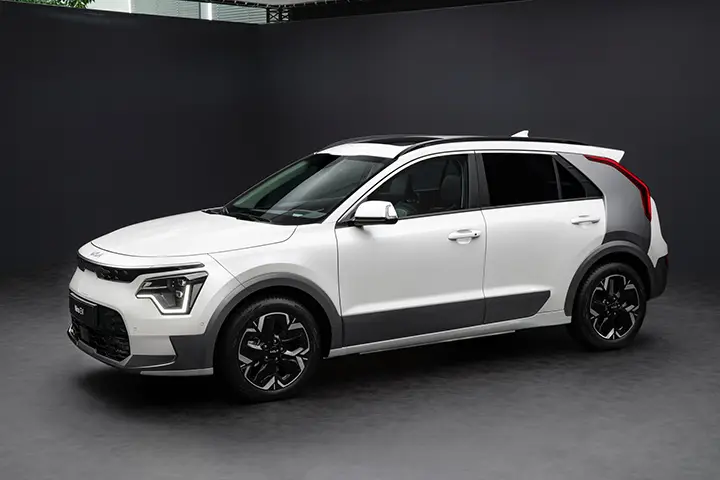
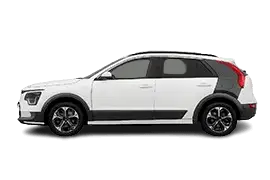
The 2023 Kia Niro EV utilizes a modern 64.8 kWh usable Li-ion battery capacity (battery size) to deliver enhanced electric specs, offering a maximum estimated 460 km (286 mi) WLTP range. All specs verified with official sources.
TESLA FORD HONDA CHEVROLET RIVIAN HYUNDAI KIA LUCID VOLKSWAGEN SKODA AUDI BMW MERCEDES RENAULT VOLVO PEUGEOT BYD XIAOMI TOYOTA NISSAN…
Volkswagen ID.7 Pro S — 794 km on one charge TESLA FORD HONDA CHEVROLET RIVIAN HYUNDAI KIA LUCID VOLKSWAGEN SKODA…
The Volkswagen ID.4 has become a significant player in the electric SUV market, but it’s important to understand that the…
150 kW
TRIM (VARIANT) :
Technical Data & Performance | |
| Model Years | 2023–present |
| Trim (Variant) | Niro EV - 64.8 kWh |
| Power (Horsepower) | 150 kW (204 hp) |
| Top Speed | 167 km/h (104 mph) |
| Torque | 255 Nm (188 lb-ft) |
| Acceleration | 7.8 sec (0–100 km/h) 7.8 sec (0–62 mph) |
| Drive | FWD Front-wheel drive |
| Motor details | Single Permanent Magnet Synchronous Motor |
| Motor code | Kia Motor |
Battery & Charging | |
| Battery Capacity & Size | 62.5 kWh usable, 64.8 kWh gross |
| Max Range | 460 km (286 mi) / WLTP 407 km (253 mi) / EPA |
| Consumption | 14.8 kWh/100 km |
| Battery Type | Lithium-ion |
| Cell Format / Supplier | Lithium Polymer |
| Battery Voltage | 400 V |
| V2L Supported | Yes / 3.6 kW |
| Heat pump | Yes |
| AC Home Charging | Type2 / 1-phase - 7.2 kW (Max Power) Type2 / 3-phase - 11 kW (Max Power) |
| DC Fast Charging | CCS2, 100 kW (Max Power) 28 min. (10–80%) |
Dimensions & Body | |
| Type | 5 door, Crossover |
| Seating capacity | 5 |
| Length | 4420 mm (174.0 in) |
| Width | 1825 mm (71.9 in) |
| Height | 1570 mm (61.8 in) |
| Wheelbase | 2720 mm (107.1 in) |
| Ground Clearance | 180 mm (7.1 in) |
| Curb weight | 1752 kg (3862 lb) |
| Gross weight | 2237 kg (4932 lb) |
| Trunk Volume | 475 L (16.8 ft³) 1390 L (49.1 ft³) max |
| Towing | Unbraked: 750 kg (1653 lb), Braked: 1500 kg (3307 lb) |
| Drag Coefficient | 0.29 |
| Platform | Kia EV Platform |
|
Estimated Market Price * for reference only |
EUR 40,000 / USD 38,900 |
⚠️ Please note: actual vehicle specifications may vary depending on market, trim level, or available regional packages.
One of the most reported mechanical problems is abnormal noise from the reduction gear unit. Owners describe a rumble or clunk at low speeds (0-25 mph), linked to premature bearing wear. While not an immediate failure, the issue worsens over time and is a known weak point.
Common Solutions: Covered by TSB ELE234. Repairs include bearing replacement, a new reduction gear assembly, or a full motor unit replacement. Buyers should confirm via VIN that this repair has been completed under warranty.
Frequent 12V battery failures leave the car unable to start, even with a full high-voltage pack. Causes include software charging logic flaws and parasitic drains (notably from the UVO module or faulty trunk latch). This issue is widely discussed in owner forums.
Common Solutions: Kia released software updates to improve 12V charging. If problems persist, diagnosis may reveal a faulty latch or sensor board. Many owners recommend upgrading to an AGM 12V battery and carrying a jump starter.
A critical safety recall affected some 2020 models due to coolant leaks in the Electric Power Control Unit (EPCU). Leaks could short the circuit board, causing sudden loss of drive power.
Common Solutions: Mandatory recall fix: inspection of the EPCU and replacement of the unit and wiring if leaks are found. Buyers must verify recall completion with Kia.
Owners report unstable charging at 11 kW AC. Sessions may stop or throttle unexpectedly, often linked to the Onboard Charger (OBC) or thermal management system.
Common Solutions: Dealer software updates to the Vehicle Control Unit (VCU) usually resolve the issue. Temporarily limiting charge to 7 kW can help until updates are applied.
Community feedback highlights i-Pedal malfunctions (brake lights not activating during regen) and infotainment freezes. A recall also addressed 12V charging logic faults, similar to Gen I but less frequent.
Common Solutions: Ensure the car has the latest VCU firmware and OTA updates. These improve regenerative braking logic, infotainment stability, and 12V battery management.
The KIA Niro EV is generally reliable, but Gen I buyers must confirm resolution of the reduction gear noise and coolant leak recall. Gen II has fewer mechanical issues, with most complaints centered on charging inconsistencies and software bugs. Verifying all recalls, TSBs, and updates is essential when purchasing a used model.
* Disclaimer: The information presented here is compiled from owner discussions in online communities, forums, and various open public sources. The accuracy, completeness, and reliability of this data cannot be guaranteed, and it should be used for informational purposes only.
The Niro EV offers a range of up to 460 km (286 mi) / WLTP under WLTP standards, depending on driving conditions and trim.
It supports DC fast charging up to 100 kW, reaching 10–80% in about 28 minutes at compatible stations. AC charging is 11 kW from a home wallbox.
Yes, the Niro EV supports V2L (Vehicle-to-Load) and bidirectional charging at up to 3.6 kW. That means you can power external devices or even charge another EV from the car.
The 2023 Kia Niro EV 64.8 kWh has a trunk capacity of 475 L (16.8 ft³) standard, expandable to 1390 L (49.1 ft³) with rear seats folded. Frunk availability hasn't been officially confirmed yet.
The 2023 Kia Niro EV 64.8 kWh measures 4420 mm (174.0 in) in length, 1825 mm (71.9 in) in width, and 1570 mm (61.8 in) in height. The wheelbase is 2720 mm (107.1 in).
The ground clearance of the Niro EV is 180 mm (7.1 in).
Unbraked trailer: 750 kg (1653 lb). Braked trailer: 1500 kg (3307 lb).
The Niro EV features a motor (Kia Motor) delivering 150 kW (204 hp) and 255 Nm (188 lb-ft) of torque.
2023 Kia Niro EV 64.8 kWh common issues and main problems:
EVspecsHub is a non-profit informational platform dedicated to providing free electric vehicle specifications. Any future ads will support hosting and maintenance costs to keep our content accessible.