
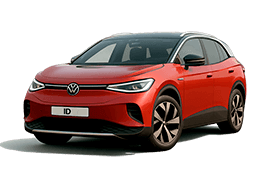
 The Volkswagen ID.4 has become a significant player in the electric SUV market, but it’s important to understand that the model offered in North America differs in several key aspects from its European counterpart. These variations stem from different market demands, regulatory requirements, and consumer preferences. While the core design and MEB platform remain the same, a closer look reveals a number of distinctions in features, powertrains, and even aesthetics.
One of the most notable differences lies in the powertrain and battery options. The European market offers a broader range of choices, including different battery sizes and power outputs from the outset. In Europe, customers can choose between a 52 kWh or a 77 kWh battery. The smaller battery is typically paired with lower-powered motors, offering a more affordable entry point into the ID.4 lineup. The American market, on the other hand, initially focused on a single, larger 77 kWh battery pack (usable capacity, often referred to as 82 kWh gross) to address consumer demand for longer range. This simplifies the product offering and caters to the American preference for longer-distance travel. Recently, a 62 kWh battery option was introduced for the US market, but the initial strategy was quite different.
Another significant area of divergence is in the charging standards and infrastructure. Europe uses the Combined Charging System (CCS) Type 2 connector, which is the standard across the continent. In the United States, the CCS Type 1 connector is the norm. This is a fundamental difference that affects how the vehicles are charged at public stations. While the onboard charging systems are similar in their capabilities, the physical ports are different to comply with regional standards.
When it comes to interior and exterior features, there are also some subtle but important variations. European models often have a slightly different lighting setup, including the standard use of matrix LED headlights on higher trims. American versions have been adapted to US lighting regulations, and while they feature advanced lighting, the specific functionality and design may vary. Inside the cabin, the trim levels and available packages can differ. For instance, some premium features that are standard on European trims might be part of an optional package in the US, and vice-versa. The infotainment system software and user interface may also have region-specific adaptations for navigation and app compatibility.
The suspension and handling can also be slightly tuned differently. Volkswagen often tailors the suspension to suit the roads and driving styles of a particular region. European models might have a firmer, more “sporty” feel, while the US versions may be tuned for a softer, more comfortable ride to handle the often longer, straighter roads and different traffic conditions.
Key Differences Table
| Feature | European Version | American Version |
|---|---|---|
| Battery Options | 52 kWh and 77 kWh (usable) | 62 kWh and 77 kWh (usable) |
| Charging Port | CCS Type 2 | CCS Type 1 |
| Motor Options | Varied power outputs (e.g., Pure, Pro, GTX) | Limited to a few configurations (e.g., Standard, Pro, AWD Pro) |
| Headlights | Matrix LED (Standard on some trims) | LED, adapted to US regulations |
| Suspension Tune | Often firmer, more dynamic | Generally softer, more comfort-oriented |
| Naming Conventions | ID.4 Pure, Pro, GTX | ID.4 Standard, Pro, S, AWD Pro S |
Conclusion
In summary, while the Volkswagen ID.4 maintains its global identity as a versatile electric SUV, the American and European versions are distinct products tailored for their respective markets. The differences in powertrain options, charging standards, and even subtle design and tuning elements reflect the unique regulatory and consumer landscapes of each region. Understanding these distinctions is crucial for anyone researching or considering a purchase, as it helps clarify why a model reviewed in one region might have different specifications or features when sold in another.