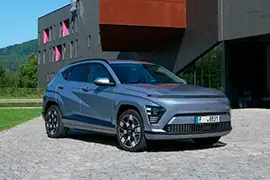

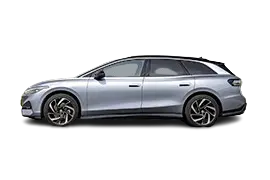

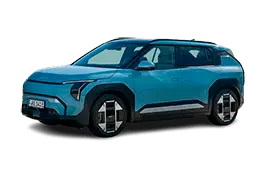

The KONA Electric kept coming up every time I dug into the used EV market. Good range, strong price-to-spec ratio, and a powertrain warranty that genuinely stands out — especially in the US. But the deeper I went into owner threads and repair histories, the clearer it became: this car rewards people who buy it with their eyes open, and punishes those who don't.
I went through forum posts, NHTSA complaint filings, TSBs, and real owner conversations — not manufacturer summaries. The kind of research I wish someone had done before I started looking myself.
Also worth knowing upfront: you're essentially choosing between two different cars here.
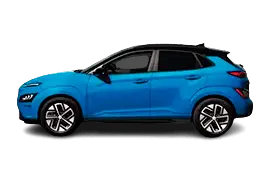
- Gen 1 (2018–2023): Modified combustion platform, 39.2 or 64 kWh battery. All the serious stuff in this guide happened here.
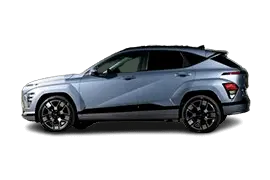
- Gen 2 (2024–2025): Ground-up EV platform, 48.6 or 65.4 kWh battery, completely reworked drivetrain. Hyundai fixed most of what was wrong with Gen 1.
1 The High-Voltage Battery Fire Risk — The Recall That Shook Everything 2019–2020
Got a 2019 or 2020 on your shortlist? Run the VIN before you do anything else. Before you book a test drive, before you talk price. This one matters.
In 2020 Hyundai pulled about 82,000 KONA Electrics with the 64 kWh pack. In the US, NHTSA logged 6,707 vehicles built between August 28, 2018 and March 2, 2020. The problem came down to the battery cells — LG Energy Solution's Nanjing factory, manufacturing defect, anode tab that could fold and short internally. Real-world outcome: the car caught fire. Parked, plugged in, charged. Over a dozen fires reported worldwide.
⚠ Affected years: 2019–2020 (64 kWh models only). Always run the VIN through NHTSA's recall check at nhtsa.gov before buying any first-gen KONA Electric.
What Hyundai Did — and Why It Took So Long
Hyundai's response dragged. First fix in late 2020 was a BMS update capping charge at around 90%. Then a car that already had the update caught fire in early 2021 — at that point Hyundai had no choice but to replace the packs entirely.
Some owners waited six weeks or more for a replacement pack. Multiple California owners ended up pursuing buybacks instead of waiting. A replaced pack is actually a positive thing — it means a newer battery assembly inside an older car. Ask for service records that specifically document the battery pack replacement, not just a software update.
2 The Gear Reduction Unit — The "Wheel of Fortune" Noise Gen 1, All Years
Spend five minutes in any KONA EV community and you'll run into the phrase "wheel of fortune noise." Tapping, clicking, whirring on deceleration or regen braking at low speeds — quiet at first, then louder month by month until you can't tune it out.
The culprit is the single-speed Gear Reduction Unit. The factory drain plug is magnetic but weak — too weak to catch the fine metal particles that wear off during normal use. Those particles stay in the oil. Oil goes from light amber to black sludge. Sludge gets into the bearings, bearings wear out faster than they should.
⚠ All Gen 1, mostly 2019–2023. Noise tends to show up somewhere between 30,000–60,000 km (18,600–37,000 miles) — but I've seen reports of it starting at 4,200 km (2,600 miles). Not a typo.
The Fix and the Community Lifehack
Under the powertrain warranty (10 years / 100,000 miles for original U.S. owners), Hyundai replaces the motor and/or GRU assembly. The revised part number 44500-18EA1 (replacing 44500-18EA0) was introduced after February 2021 with stronger fastening hardware. Out-of-warranty repair quotes: $3,000–$4,500 USD.
✅ Owner Lifehack: Change the GRU oil at 2,000 km (1,200 mi), again at 10,000 km (6,200 mi), then every 20,000–30,000 km after that. I went through the forum threads on this — owners who did this early report zero noise issues even with high mileage. Use Red Line MT-LV 70W/75W GL-4. Swap the drain plug for a Votex DP-007 magnetic one. Dealer billing: ~$140–$400 USD under a transmission fluid service code.
Gen 2 status (2024+): The redesigned drivetrain carries three times more oil and includes an actual oil filter. Community consensus: GRU flaw effectively addressed. Nobody in owner communities has credibly reported the wheel-of-fortune noise on a 2024 model yet.
3 The 12-Volt Battery — The Silent Killer All Years
A dead 12V battery in the KONA Electric doesn't just mean the car won't start — it means nothing works. No door locks, no key fob, no trunk, no dash. Even a partially depleted 12V can cause a cascade of warning lights across every system.
One 2022 owner described finding the car dead six times in nine months. Another needed to jump-start every morning for two months before a dealer would schedule service. A 2023 Hyundai investigation linked one wave of failures to Bluelink overload — third-party apps making excessive API calls that kept waking the car's systems overnight.
⚠ All Gen 1 (2019–2023) and early Gen 2 (2024). TSB 24-01-090H covers 2024–2025 models: the multimedia keyboard could keep the infotainment awake all night and flatten the 12V by morning.
✅ Loading stuff into the car with doors open? Switch on Utility Mode from the dash — it holds the car in low-power state instead of letting systems creep awake.
✅ Lock with a double-press of the key fob (not single) to fully put all modules to sleep.
✅ Leaving the car for over a week? Keep it plugged into L1/L2 charging — the DC-DC converter tops up the 12V while plugged in.
✅ Some owners replaced the factory battery with a LiFePO4 unit — handles deep discharge cycles better than lead-acid.
After the August 2023 software update, the car tops up the 12V up to six times per day while parked. Verify by watching for the small yellow light in the center of the front Hyundai badge when parked — if it never illuminates, ask the dealer to apply the latest software update.
4 EPCU Coolant Leak — Formal NHTSA Recall 2021 Models
NHTSA recall Campaign #239, March 2023: on certain 2021 models the Electric Power Control Unit had a sealing problem. Coolant could get inside the enclosure, degrade the electronics, and in the worst case affect braking performance. Fix is dealer inspection and full EPCU replacement — no charge to the owner. A separate 2021 recall also covered the Integrated Electronic Brake System sensor.
⚠ Certain 2021 KONA Electric models. Verify both recalls closed by VIN at nhtsa.gov before purchase.
5 Infotainment and Electronics Gremlins All Years
Gen 1 (2019–2023)
- Screen delamination: 2019 owners report a yellowish tint or the screen physically separating. If it's out of warranty, you're looking at $300–$900 for a replacement — ask the dealer to re-flash the ECU first, a lot of display issues are software.
- Backup camera cutting out: Usually moisture getting into the module. Most dealers replaced it under warranty — check for flickering during your test drive.
- Infotainment freezing/rebooting: ECU re-flash fixes this most of the time. Don't let anyone swap hardware before exhausting the software options.
- Scheduled charging failures: Sessions not starting at set times. Usually software-related, resolved by updates.
Gen 2 (2024–2025)
- Keyboard sleep bug (TSB 24-01-090H): Cars built through September 2024 — the multimedia keyboard stays active overnight and kills the 12V. Software patch available, get it applied at delivery.
- Bluelink false alerts: Linked to R.E.D. Alert aftermarket accessory installed at delivery.
- Digital Key 2 setup failures: Intermittent issue registering digital key on 2024 Ultimate models.
- ISLA false triggers: Speed limit assist misreads signs and slows the car. Can be disabled per trip; software patch reportedly in development.
✅ Before accepting delivery, ask the dealer to apply all pending software updates — many of the above have OTA or dealer-applied patches available.
6 Charging Quirks and Real-World Range All Years
DC Fast Charging: Gen 1 tops out at 50 kW on paper — in practice owners rarely see it hold above 45 kW. The 39.2 kWh pack is even slower at 32 kW peak. Gen 2 is rated at 100 kW; real owners report hitting 80–85 kW in decent conditions, not the full 100.
Cold weather: Gen 1 thermal management is passive — no active pre-conditioning unless you manually initiate cabin pre-heating while plugged in. Below -10°C (14°F) expect 30–40% real-world range reduction. Experienced owners use ×0.65 on the dash estimate in serious cold as a conservative planning figure.
Home charging oddities: Scattered reports of scheduled sessions not starting or charge settings resetting after software updates. Request dealer check for pending software campaigns before any hardware diagnosis.
7 Minor Mechanical: Brakes, Suspension & Steering Gen 1
- Rear brake clicking: Fix — replacement of rear pads with thicker versions and new retaining clips.
- Steering wheel rubbing noise: Traced to steering column assembly. Dealers replaced under warranty. Check during test drive: any rubbing or creaking when turning.
- Front knuckle clunk on right turns: 2019–2020 models. Front knuckle and hub assembly replacement required. Listen during full-lock right turns in a parking lot.
- Tire wear: Faster-than-expected front wear due to EV weight and instant torque. Many owners see front replacements at 30,000–40,000 km (18,600–25,000 miles). EV-rated tires at replacement make a noticeable difference.
8 Real-World Repair & Maintenance Costs All Years
I went through dozens of owner threads and repair discussions across EV communities to pull together actual numbers people paid — not dealer brochure estimates. The spread is wide, but the patterns are consistent. US figures first, European equivalents where I found the data.
💡 How to read the table: In the US, Hyundai's powertrain warranty runs 10 years / 100,000 miles for original owners — drops to 5 yr / 60k mi if you're a subsequent owner. In Europe the standard warranty is 5 years / 100,000 km, and once that expires it's all on you.
| Repair / Service | Under Warranty | Out-of-Pocket USA | Out-of-Pocket Europe | Notes from owners |
|---|---|---|---|---|
| ⚡ High-Voltage Battery | ||||
| HV battery pack replacement (recall 2019–2020, 64 kWh) |
Free recall covered |
$9,000–$13,000 if out-of-warranty |
€8,000–€12,000 one EU owner cited ~€8k+ |
Recall must be completed before buying. Replaced pack = effectively newer battery in older car. Retail part alone listed at $31,000 — no owner actually pays that. |
| HV battery capacity loss (warranty claim, below threshold) |
Free if SOH below threshold |
$5,000–$7,000 independent estimate |
€5,000–€9,000 varies significantly by country |
Good news: many owners report <5% capacity loss after 5 years. Single-cell repair at independent EV shops may cost far less than full replacement. |
| ⚙️ Gear Reduction Unit (GRU) — Gen 1 only | ||||
| GRU oil change (preventive, at dealer) |
$100–$250 not a recall item |
$140–$250 dealer avg. ~$248 incl. oil |
€120–€250 UK 4yr service £335–£577 incl. |
I verified actual invoices: one US owner paid $100.80 labor + $141.63 for 3L oil at a Colorado dealer. Another paid $150 flat (brought own plugs). DIY cost: ~$25–$50 for oil + $10 for Votex magnetic plug. |
| GRU assembly replacement (full unit, noise confirmed) |
Free US powertrain warranty |
$3,000–$4,500 one owner paid $4,300 OOW |
€2,500–€5,000 one UK case cited ~£7,200 total incl. motor |
GRU part alone: ~$1,300 online. Expect 1hr+ labor on top. In the US, push for warranty coverage — it's powertrain. Outside the US: consumer protection laws may apply even post-warranty if the defect is design-related. |
| GRU + motor replacement (both failed together) |
Free US powertrain warranty |
$6,000–$10,000 motor ~$6,700 parts alone |
€8,000–€13,000 one case reported ~$13k USD equiv. |
In some cases noise returns after GRU replacement because the motor bearing also failed. Ask dealer to inspect both simultaneously. Motor part listed at ~$6,700 in US. |
| 🔋 12V Auxiliary Battery | ||||
| 12V battery replacement (OEM AGM unit) |
Free or low cost if within 2yr battery warranty |
$150–$230 dealer OEM ~$150, aftermarket $200–$230 |
€100–€180 UK: £90–£150 (Halfords or dealer) |
I went through a bunch of threads on this. UK owners: Halfords charged £90 and gave a 5-year warranty — the dealer charged £150 and gave 2 years. That's not a typo. US owners went with the AC Delco LN1 AGM, about $130 on Amazon. No dealer coding needed on most Gen 1 cars. |
| 12V roadside assistance call (dead battery stranding) |
— | $0–$150 if roadside plan included |
€50–€100 UK: ~£60 per call-out reported |
One UK owner got stranded 250 miles from home — £60 for the call-out, then he bought a portable jump pack for another £60 so it wouldn't happen twice. A $50 / €50 jump starter in the boot is the cheapest KONA accessory there is. |
| 🛞 Tyres & Brakes | ||||
| Front tyre set (×2) (EV-rated all-season) |
— | $300–$500 fitted, per axle |
€280–€480 per axle, fitted |
Front tyres are the consumable on this car. EV weight plus instant torque means they go at 30,000–40,000 km (18,600–25,000 mi) — sooner if you're heavy on the throttle or running cheap rubber. When you replace, go EV-rated: Michelin e.Primacy, Goodyear ElectricDrive. They last longer and actually handle the load rating the car needs. |
| Full tyre set (×4) (EV-rated, premium) |
— | $750–$1,200 fitted, all four |
€700–€1,100 fitted, all four |
EV tyres run 15–25% more than equivalent ICE tyres — load rating and rolling resistance compound cost money. Budget accordingly. |
| Brake pads (front axle) (pads + hardware, no rotors) |
— | $216–$416 RepairPal avg. $365–$416 |
€180–€380 independent shop |
This is the good news section. Regen does most of the braking work, so pads last a long time — people hitting 60,000 km (37,000 mi) on originals is normal. What actually causes problems is caliper seizing: the sliders corrode because you're barely using the friction brakes. Get them inspected and lubed at every tyre rotation, not just when the pads look thin. |
| Brake fluid flush (every 2–3 years regardless of pad wear) |
— | $120–$180 | €80–€160 | Often included in the 4-year major service interval. Don't skip it — brake fluid absorbs moisture over time regardless of pad use, which reduces boiling point. |
| 4-wheel alignment | — | $120–$200 | €80–€160 | Check annually or whenever tyres are replaced. Misalignment accelerates front tyre wear significantly on the heavier EV platform. |
| 🖥️ Electronics / Infotainment | ||||
| Touchscreen replacement (delamination, 2019 models) |
Free if within 3yr / 36k mi |
$300–$900 OOW, parts + labor |
€300–€800 | Primarily 2019 model year. Ask dealer to re-flash ECU first — many display issues are software, not hardware. |
| Backup camera module | Free usually within warranty |
$200–$500 OOW |
€150–€450 | Moisture ingress is the typical cause. Check camera output during test drive — look for flickering or dropout when reversing. |
| 🔧 Regular Maintenance (no issues, just upkeep) | ||||
| Annual basic service (no oil change needed) |
— | $50–$150 tyre rotation, visual check |
€80–€200 UK basic: ~£87 (3yr service) |
No oil, no plugs, no belt — annual service on this car is basically: rotate the tyres, swap the cabin filter, check the fluids. That's the whole list. Coming from a petrol car this feels almost suspicious at first. |
| 4-year / major service (incl. battery coolant, brake fluid) |
— | $300–$500 | €250–€600 UK dealer charged £335–£577 |
I verified this one directly: a UK owner was quoted £577 for the 4-year service (40k mi), which included a battery coolant change. Before you pay that — check if the coolant recall covers your car first. If it does, that part is free. |
⚠ Owner-reported figures, early 2026. Prices shift a lot depending on country, dealer vs. independent shop, and whether you source parts yourself. Treat these as ballpark planning numbers.
The Actual Cost Difference vs. a Petrol Car
After going through the numbers, the picture is clear: if the GRU and 12V issues are covered under warranty — or have already been fixed — the KONA Electric is genuinely cheap to run. No oil changes, no spark plugs, no timing belt. Brake pads can last twice as long thanks to regen braking.
The risk zone is a 2019–2020 car that is out of US powertrain warranty, or any Gen 1 outside the US where the 5-year European warranty has expired. In that scenario, a single GRU + motor failure can exceed €8,000–€13,000 — more than many owners paid for the car secondhand. That single data point from owner forums is the reason I'd strongly recommend an OBD-II inspection and test-drive noise check before buying any high-mileage Gen 1.
✅ Post-warranty Gen 1 budget: Put aside $500–$1,000 USD (€450–€900) a year for tyres, brake fluid, and alignment. Normal running, that's your whole maintenance budget. The GRU is the wildcard — a $150–$250 oil change every 20–30k km is the cheapest insurance there is.
9 Pre-Purchase Checklist
Step 1 VIN Check — Before the Appointment
- 2019–2020: Battery recall NHTSA 21V-127 (Recalls 196 & 200) — must show completed.
- 2021: EPCU recall #239 and brake recall — both must be closed.
- 2024–2025: TSB 24-01-090H keyboard logic / 12V drain status.
- Check at nhtsa.gov/recalls by VIN.
Step 2 Service History
- 2019–2020: documentation of battery pack replacement, not just software update.
- Any GRU oil change or GRU/motor replacement on record?
- When was the 12V battery last replaced?
Step 3 Test Drive — What to Listen For
- Under 30 km/h (18 mph), max regen — any tapping, clicking, or whirring from the front drivetrain = GRU noise.
- Full-lock turns both directions — any clunking from front suspension.
- Slow steering wheel rotation — any rubbing or creaking from the column.
- Check backup camera for flickering or dropout.
Step 4 Battery State of Health
- OBD-II SOH check by dealer or independent EV specialist. Above 85–90% SOH on high-mileage Gen 1 is reasonable.
- Don't rely on displayed range estimate alone.
Step 5 Quick Electronics
- Bluelink app connects and responds.
- Scheduled charging can be set and accepted by the car.
- Charge port door: press key fob unlock once, then charge port button within ~15 seconds.
10 What Actually Works Well — From Day One
I spent most of this guide on problems, so let me end on what actually holds up. Strip out the GRU bearing issue and the electric motor is rock solid — I've gone through owner reports of 200,000+ km (124,000+ miles) on original motors with zero drivetrain complaints. That's not a fluke, that's the whole point of an electric powertrain done right.
The traction battery, once the 2019–2020 recall is properly closed out, degrades slowly. Most owners show under 5% capacity loss after 5 years of real-world mixed charging. The US battery warranty — 8 years / 100,000 miles — is among the best you'll find on any EV in this price range.
Brakes last longer than on almost any petrol car — regen does most of the work, so some people hit 60,000 km (37,000 miles) on original pads. Running costs vs a petrol SUV: no oil changes, no spark plugs, no timing belt. Owners coming from combustion cars keep saying they've halved their monthly maintenance spend, sometimes more — and after going through the numbers myself, I believe them.
The KONA Electric has real flaws and they deserve honest attention — that's what this guide was for. A solid example with the recall sorted and the GRU looked after is genuinely one of the better used EV buys out there right now.
Also on Medium
I Spent 40 Hours Researching Used KONA Electric Problems. Here's What I Found.The condensed version — recalls, GRU noise, 12V issues, and a 5-step pre-purchase checklist.
🔍 Explore full technical specifications by generation:
Disclaimer: Pulled together from owner forums, community discussions, and publicly available sources. Not guaranteed to be complete or error-free — use it as a starting point, not a final word. Data current as of March 2026. Always verify open recalls at nhtsa.gov before any purchase.