
2023 Tesla Model 3 RWD 60 kWh 283 hp Battery, Horsepower, Range










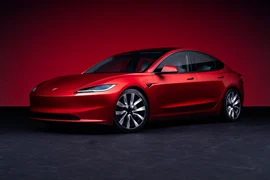
EVspecsHub Score — Tesla Model 3 RWD LFP 57 kWh (2023 Highland)
Independent rating vs all passenger EVs on sale 2025–2026
Range
513 km WLTP · CATL LFP 60 kWh gross · 18" Photon Aero
7.0
good
Battery
57 kWh usable · CATL LFP · 400V · no V2G
5.0
avg
Charging
170 kW DC max · 10→80% ~23 min · 400V · no V2L/V2H/V2G
5.0
avg
Performance
0–100 km/h · 6.1 s · 208 kW · RWD
6.0
avg
Efficiency
13.2 kWh/100 km WLTP · best-in-class for this segment
8.0
good
Cargo
594 L boot · 88 L frunk · 682 L combined
7.0
good
Value
€40,970 · £35,990 · €79.9/km · $85.6/km WLTP
7.0
good
Verdict: The Model 3 Highland RWD is hands down one of the most efficient sedans I've tested at this price point — 13.2 kWh/100 km WLTP is genuinely impressive, and from what owners report in forum threads, real-world numbers at motorway speeds are not far off. The 513 km WLTP range is solid for a base trim. Where it loses points: the LFP pack sits at 57 kWh usable, which lands it in the 5.0 Battery band, and 170 kW DC charging is competitive but not class-leading in 2023. Value comes out at 7.0 — at €79.9/km it's barely above the market average, which for a Tesla is a better story than it used to be.
© EVspecsHub.com · All passenger EVs 2025–2026 · March 2026 · Methodology v6.7
6.4
out of 10
EVspecsHub Score
📊 Using this score in your review?
Free to use — just credit EVspecsHub.com
Free to use — just credit EVspecsHub.com
▸ Score data table (methodology v6.7)
| Criterion | Score | Key data | 10/10 = |
|---|---|---|---|
| Range | 7.0 | 513 km WLTP · 500–599 km band | 800+ km |
| Battery | 5.0 | 57 kWh usable · CATL LFP · 400V (no bonus) · 50–59 kWh band | 110+ kWh |
| Charging | 5.0 | 170 kW DC · 400V · no V2L/V2H/V2G · 150–199 kW band | 400+ kW |
| Performance | 6.0 | 6.1 s → 6.0 + RWD +0 = 6.0 · 208 kW | sub-3s AWD |
| Efficiency | 8.0 | 13.2 kWh/100 km WLTP · 13.0–13.9 band | <12 kWh/100 km |
| Cargo | 7.0 | 682 L combined (594 boot + 88 frunk) · 650–799 L band | 1100+ L |
| Value | 7.0 | €40,970 · €79.9/km · $85.6/km · €75–89/km band | <€45/km |
| Overall | 6.4 / 10 | EVspecsHub Score v6.7 · EVspecsHub.com · March 2026 | |


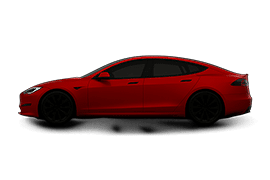

Tesla Model 3 RWD 2024 (Highland): What the Spec Sheet Skips — EU and US Owner Data
513 km WLTP. 272 miles EPA. 170 kW DC. 57.5 kWh usable. The RWD is the entry point to the Highland lineup — LFP chemistry, CATL cells, a completely different ownership experience from the Long Range. I spent time going through owner forum threads on both sides of the Atlantic, OBD scan logs, and structured winter range test results. Here's what doesn't make it onto Tesla's configurator page.
One thing to get straight before diving in: the Model 3 RWD 2024 (Highland) runs CATL LFP prismatic cells — not the 2170 cylindrical NMC you get in the Long Range. It is a fundamentally different pack. Same car on the outside, different chemistry underneath, different charging rules, different degradation story. If you're reading about the Long Range RWD elsewhere on the site, what applies there does not apply here.
1 Battery Pack — LFP, CATL, 60 kWh Gross, and Why 100% Is the Right Call EU · LFP60 · CCS US · LFP60.9 · NACS
Tesla doesn't put the gross capacity on the configurator. EU cars carry a 60 kWh gross / 57 kWh usable CATL LFP60 pack. US cars are labeled at 60.9 kWh gross per DoE documentation, with 57.5 kWh usable confirmed through owner OBD reads. The gap is small enough that day-to-day range is essentially the same in both markets.
Pack specs — confirmed from OBD diagnostics and DoE filings
| Parameter | EU | US |
|---|---|---|
| Pack name / reference | CATL LFP60 (E6LR) | CATL LFP60.9 |
| Gross capacity | 60 kWh | 60.9 kWh |
| Usable capacity | ~57 kWh | 57.5 kWh |
| Cell chemistry | LFP — Lithium Iron Phosphate · CATL, China | |
| Cell format | Prismatic (blade-style) — not cylindrical 2170 | |
| Pack voltage (nominal) | ~340 V · 108s1p configuration | |
| Motor type | Permanent magnet synchronous — single rear motor | |
| Motor output | 208 kW (283 hp) / 420 Nm (310 lb-ft) | |
| Charge port | CCS (Type 2 AC + CCS2 DC) | NACS (Tesla standard) |
| Charge to 100%? | Yes — LFP tolerates daily full charges. Tesla actively recommends it. | |
The LFP chemistry is the reason Tesla's in-car interface tells you to charge to 100% at least once a week. That's not a bug — it's how LFP cells work. The flat voltage curve makes it hard for the BMS to estimate remaining capacity accurately unless it sees a full charge regularly. One owner who kept it between 20–80% for two months noticed the range estimate drifting and getting visibly unreliable. A single full charge fixed it.
✅ LFP charge rule — both markets: Set your charge limit to 100% for regular use. Unlike NMC packs in the Long Range, LFP doesn't degrade from daily full charges. The recommendation to stay below 80% applies to the Long Range RWD — not this car.
⚠ EU/US pack labeling discrepancy: Tesla's configurator lists no battery capacity at all. Third-party databases show 60 kWh (EU) and 60.9 kWh (US) from DoE filings. The frunk sticker is the definitive source — pack designation visible without tools.
No Frunk Capacity Label on Highland
Pre-Highland Model 3s had a sticker in the frunk that listed pack designation and chemistry. Highland removed that consumer label. The pack designation is still on the windscreen VIN sticker — CATL LFP60 is the reference to look for on EU cars. US builds are identified the same way through the DoE VIN lookup.
2 DC Charging — 170 kW Cap, Real Sessions, and CCS vs. NACS EU · CCS2 · Supercharger + third-party US · NACS · Supercharger-native
170 kW is the nameplate. One reviewer plugging into a Santa Monica Supercharger from 15% SoC briefly touched 168 kW — pretty much the ceiling in real life. From there it held well through the 20–50% range before tapering. That 10–80% window takes around 23–25 minutes on a V3 Supercharger with a warm battery.
⚠ 170 kW vs. the Long Range: The RWD's LFP pack peaks at 170 kW, not 250 kW. That's the single biggest charging difference between this car and the Long Range RWD. Road trip charging stops are longer — plan for 25–30 minutes to 80% rather than 20.
DC Charging Curve — Model 3 RWD 2024 (Highland) V3 Supercharger · warm battery · LFP60
EVspecsHub.comBased on owner-logged Supercharger sessions and independent reviewer data. Navigate to Supercharger to trigger battery preconditioning.
Tesla Model 3 RWD 2024 — DC Charging Power by SOC
V3 Supercharger · warm preconditioned battery · CATL LFP · owner-logged sessions
| SOC | Power (kW) | Notes |
|---|---|---|
| 5% | ~120 kW | Ramp-up from low SoC |
| 10% | ~155 kW | Approaching peak |
| 20% | ~168 kW | Peak window · LFP holds flat longer than NMC |
| 30% | ~165 kW | Flat plateau — LFP characteristic |
| 40% | ~158 kW | Slight step-down |
| 50% | ~140 kW | Taper begins |
| 60% | ~110 kW | Noticeable drop |
| 70% | ~75 kW | Continued taper |
| 80% | ~40 kW | Typical road-trip stop point |
| 90% | ~20 kW | BMS slowing fill near full |
| 100% | ~10 kW | Fine for LFP — unlike NMC, daily 100% is safe |
Cold battery (<15°C) caps at ~60–80 kW regardless of SOC · Navigate to Supercharger for preconditioning
EVspecsHub.comEU: CCS at Third-Party Networks
In Europe the RWD charges via CCS2 — so you're not locked into Superchargers. Ionity, Fastned, Allego all work. The 170 kW ceiling means you'll use the full rated speed at Ionity's 350 kW stalls, but you're not wasting money either. On-board AC charger: 11 kW 3-phase. A full 0–100% on an 11 kW wallbox takes around 6.5 hours.
US: NACS — Native Supercharger Access
US cars have NACS built in — no adapter, no hassle at Superchargers. Third-party NACS adoption is growing but not universal in 2024. CCS adapter available from Tesla at $200. One owner who road-tripped from LA to Seattle reported the 23-minute average stop from 15–80% was the real number — not the theoretical figures on the spec sheet.
3 Real-World Range — EU WLTP 513 km vs. US EPA 272 mi, What Owners Log EU · WLTP 513 km US · EPA 272 mi
513 km WLTP and 272 miles EPA sound very different — but they're measuring the same car with two different test cycles. In practice the real-world gap between EU and US owners' logged data is small. Both groups land in the same actual range window: mild-weather city driving gets you 380–420 km (236–261 mi), motorway at 110–120 km/h drops it to 310–350 km (193–218 mi).
⚠ WLTP vs. highway reality (EU): 513 km is a test-cycle number. At 110–120 km/h on 18" wheels in mild weather, real sessions are consistently 310–350 km — about 65–70% of WLTP. The gap is real; plan accordingly.
⚠ EPA vs. highway reality (US): At 75 mph on flat roads in mild conditions, owners report 195–220 miles — roughly 72–80% of EPA. The planning rule from forum threads: assume 200 miles highway range and you won't be caught short.
Real-World Range by Condition — Model 3 RWD 2024 (Highland)
EVspecsHub.comOwner-logged data · EU cold figure: InsideEVs winter LFP test · US cold: owner forum threads, TMC data · Actual range varies with driving style, HVAC load, and tyre spec.
Tesla Model 3 RWD 2024 (Highland) — Real-World Range by Condition
18" Photon wheels · CATL LFP · 57–57.5 kWh usable · EU + US owner-logged data
| Condition | Range (km) | Range (mi) | Market · Notes |
|---|---|---|---|
| WLTP official | 513 km | 319 mi | EU · test cycle, not real-world |
| EPA official | 438 km | 272 mi | US · combined city/highway cycle |
| City / mixed, mild weather | 380–420 km | 236–261 mi | Both · temperate weather, moderate regen |
| Motorway 110–120 km/h · 75 mph, 18" | 310–350 km | 193–218 mi | Both · steady cruise 15–20°C · 65–70°F |
| Motorway 19" Nova wheels | 285–320 km | 177–199 mi | Both · larger tyre, ~25–30 km less |
| Cold -2°C to -10°C, heat pump on | ~318 km | ~198 mi | EU · InsideEVs winter test data |
| Cold US winter, sub-zero °F | ~270–300 km | ~168–186 mi | US · owner forum data, TMC threads |
| Bjorn Nyland 90 km/h highway test | ~490 km est. | ~305 mi est. | EU · 5.49 mi/kWh at 90 km/h, mild weather |
Sources: owner forum data, InsideEVs winter test, Bjorn Nyland highway efficiency test, TMC threads
EVspecsHub.comOne US owner coming from a 2022 Model 3 RWD logged his first three months on the Highland. His lifetime average landed at 221 Wh/mi — same as the pre-Highland on identical commute routes. The Highland didn't give him more range per mile driven, but the heat pump made a real difference in his Michigan winter: he was down 18% versus 28% the year before at the same temperatures.
4 Battery Degradation — LFP Owners Tracking Almost Nothing EU · LFP60 US · LFP60.9
This is genuinely where LFP earns its reputation. One owner bought a 2023 RWD in January of that year, charged to 100% regularly as Tesla recommends, hit 21,500 miles — and his full-charge reading had dropped from 272 miles to 266 miles. That's 2.2% over a year and a half of daily 100% charges. On NMC, that behaviour would cost you more.
The pattern from forum threads is consistent on both sides of the Atlantic: first-year LFP degradation in the 1.5–3% range, then it effectively flatlines. One EU owner in Germany tracked his pack for 14 months, 28,000 km — he couldn't see meaningful degradation on OBD reads at all. "It basically doesn't move," he posted, comparing notes with his neighbour's Long Range.
✅ LFP degradation reality: Charge to 100% daily. Don't stress about it. The whole point of LFP chemistry is that the tolerance for high SoC is built in. The BMS needs those full charges to keep its capacity estimate calibrated — without them, the range display drifts and becomes unreliable.
⚠ Common confusion — LFP vs. NMC rules: Every general guide telling you to "charge to 80% and stay below that" is written for NMC packs. If your Model 3 has a charge limit slider and no percentage-step option visible — you're looking at NMC. If you can set 100% and Tesla recommends it: you have LFP. This car is LFP. Different rules apply.
5 Things Owners Figured Out the Hard Way EU · Highland US · Highland
No Turn Signal Stalks — and Tesla Brought Them Back
2024 Highland builds shipped without physical turn signal stalks — all gesture-based on the steering wheel rim. It divided owners hard. Some adapted in a week. Others, 6,000 miles in, still reached for a stalk that wasn't there. Tesla announced the return of physical stalks with 2025 production. If you're buying a 2024, check the door card build date before handing over money.
The Rear Passenger Screen
The 8" rear touchscreen is standard on the RWD 2024 in both markets — this was not a feature on the pre-Highland RWD. Kids use it. Adults mostly don't. What owners do mention consistently is that it adds a noticeable load to the main computer when multiple passengers are streaming simultaneously — a few noted touchscreen response felt slightly slower.
Preconditioning — It Only Works If You Navigate
The battery preconditioning activates only when you set a Supercharger as a navigation destination. Just heading to a charger without routing through the navigation does nothing. In cold weather this is a 10–15 minute difference in charging speed when you arrive. Multiple owners learned this the hard way on their first winter road trip — they drove to the Supercharger without navigating and sat through a slow ramp-up.
⚠ US market note — NACS and third-party charging: NACS is native on US 2024 builds. Electrify America and some other networks rolled out NACS support through 2024 but coverage varies by region. A CCS adapter from Tesla covers the gaps — worth having in the glovebox on longer trips.
V2L — Not on This Car
No vehicle-to-load. Both EU and US versions. No OTA path has been announced for any Highland trim. It comes up in forum threads constantly as a missing feature — especially compared to IONIQ 6 and some Korean competitors where V2L is standard. If bidirectional charging matters to you, this isn't the car.
No CarPlay, No Android Auto — Both Markets
Tesla runs a proprietary OS on both regions. The 15.4" touchscreen is responsive and the navigation is genuinely good, but it's entirely Tesla's ecosystem. No exceptions, no workarounds. One UK owner in a forum post summed it up: he stopped missing CarPlay after three months, mostly because the Tesla routing is better for EV trip planning than anything Apple Maps offers.
EU: One Charging Port, Both Standards
CCS2 handles both AC (Type 2) and DC (CCS2) in a single port on the left rear quarter. Works at Superchargers and all CCS2 public infrastructure across Europe. Plug and Charge (ISO 15118 auto-authentication) is not supported — you still tap or use the app to start sessions at non-Tesla networks.
📋 Full technical specifications — all Model 3 Highland variants:
Note: Range figures compiled from owner-logged sessions, OBD2 scan reports, forum threads (TMC, Tesla Owners Online), and independent test data. Charging curve based on real session logs and reviewer data — Tesla does not publish cell-level charging curves. Cold-weather range from InsideEVs winter test data and owner-reported forum posts. EU and US data compared where directly logged. Data compiled as of March 2026.Back to contents
Share this data
Free to use — please include a visible link to EVspecsHub.com
✓ Link copied!