
2024 Tesla Model 3 Performance AWD 82 kWh 510 hp Battery, Horsepower, Range










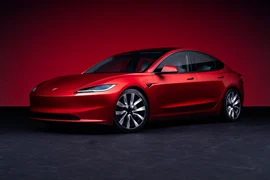
EVspecsHub Score — Tesla Model 3 Performance AWD NMC 75 kWh (2024 Highland)
Independent rating vs all passenger EVs on sale 2025–2026
Range
528 km WLTP · NMC 78.1 kWh gross · 20" Überturbine (only option)
7.0
good
Battery
75 kWh usable · NMC 2170 · 400V · no V2G
7.0
good
Charging
250 kW DC max · 10→80% ~27 min · 400V · no V2L/V2H/V2G
7.0
good
Performance
0–100 km/h · 3.1 s · 380 kW · AWD · Track Mode · adaptive dampers
10.0
top
Efficiency
16.7 kWh/100 km WLTP · price of 20" wheels + sport tune
5.0
avg
Cargo
594 L boot · 88 L frunk · 682 L combined
7.0
good
Value
€58,470 · £52,990 · €110.7/km · $118.7/km WLTP
5.0
avg
Verdict: The Performance is the only Model 3 that hits a perfect 10.0 on the Performance criterion — 3.1 seconds, AWD, Track Mode, adaptive dampers standard. Nobody who drives it questions that part. What you're trading is efficiency (16.7 kWh/100 km, the worst in the lineup by a real margin — 20" Überturbine wheels and a harder tune do that) and value: at €110.7/km you're paying 48% above the all-EV market average. From what I've seen across owner forums, buyers know this going in and mostly don't care — they're buying the Performance for exactly what it delivers. For anyone range-sensitive or budget-conscious, the LR AWD at 7.6 overall is the smarter pick. But as a driver's car, the Performance is in a different league within this lineup.
© EVspecsHub.com · All passenger EVs 2025–2026 · March 2026 · Methodology v6.7
6.9
out of 10
EVspecsHub Score
📊 Using this score in your review?
Free to use — just credit EVspecsHub.com
Free to use — just credit EVspecsHub.com
▸ Score data table (methodology v6.7)
| Criterion | Score | Key data | 10/10 = |
|---|---|---|---|
| Range | 7.0 | 528 km WLTP · 500–599 km band · 20" wheels (only option) | 800+ km |
| Battery | 7.0 | 75 kWh usable · NMC 2170 · 400V (no bonus) · 70–79 kWh band | 110+ kWh |
| Charging | 7.0 | 250 kW DC · 400V · no V2L/V2H/V2G · 250–299 kW band | 400+ kW |
| Performance | 10.0 | 3.1 s → 9.0 + AWD +1.0 = 10.0 (cap) · 380 kW · Track Mode | sub-3s AWD |
| Efficiency | 5.0 | 16.7 kWh/100 km WLTP · 16.0–16.9 band | <12 kWh/100 km |
| Cargo | 7.0 | 682 L combined (594 boot + 88 frunk) · 650–799 L band | 1100+ L |
| Value | 5.0 | €58,470 · €110.7/km · $118.7/km · €110–129/km band | <€45/km |
| Overall | 6.9 / 10 | EVspecsHub Score v6.7 · EVspecsHub.com · March 2026 | |


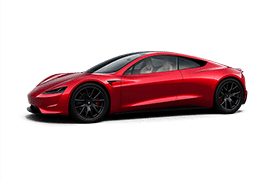
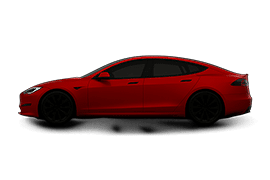

Tesla Model 3 Performance AWD 2024 (Highland): What Changes When You Actually Drive It Every Day
528 km WLTP. 303 miles EPA. 250 kW DC. 82 kWh gross. The Performance is the only Model 3 where the chassis hardware is genuinely different from the rest of the lineup — different rear motor, bigger pack, adaptive dampers, Track Mode V3. I went through owner forum threads, long-term test data, and track session reports to pull together what actually matters once you're living with this car.
One thing to set straight before anything else: the Performance AWD 2024 is not the LR AWD with a sport tune slapped on top. It has a different rear drive unit (Performance 4DU), a larger gross pack (82 kWh vs 78 kWh), staggered Pirelli P Zero tyres on 20" Warp wheels, hardware-adjustable dampers, and a completely reworked Track Mode. The only trim where what's under the car is actually different from every other Highland variant.
1 Battery — 82 kWh Gross, Unique Rear Motor, Two Pack Variants EU · LG NMC · ~79 kWh gross US · Panasonic NCA · 82.1 kWh gross
Tesla publishes 75 kWh usable across all markets. The gross figure differs by factory. EU cars from Giga Shanghai run LG NMC cells — same supplier as EU LR AWD, but at a slightly different pack size around 79 kWh gross. US Fremont cars use Panasonic NCA at 82.1 kWh gross confirmed by DoE filings. Both show 75 kWh usable on the screen. The buffer is bigger on Panasonic builds, and that matters for track use — more thermal headroom in the reserve.
Pack and motor specs — confirmed from OBD logs, DoE filings, and TMC data
| Parameter | EU (Shanghai) | US (Fremont) |
|---|---|---|
| Cell supplier | LG Energy Solution, Nanjing | Panasonic, Gigafactory Nevada |
| Cell chemistry | NMC · 2170 cylindrical | NCA · 2170 cylindrical |
| Gross capacity | ~79 kWh (LG pack) | 82.1 kWh (Panasonic BT42/43) |
| Usable capacity | 75 kWh (OBD confirmed) | 75 kWh (OBD confirmed) |
| Pack voltage (nominal) | ~357–360 V · 96s46p | |
| Rear motor | Performance 4DU — permanent magnet · unique to this trim | |
| Front motor | AC induction (same as LR AWD) | |
| Combined output (EU) | 338 kW / 723 Nm (460 hp) | 375 kW / 730 Nm (510 hp) |
| 0–100 km/h (0–60 mph) | 3.1 sec (2.9 sec with rollout) | |
| Top speed | 262 km/h (163 mph) | |
| Weight | ~1,851 kg (4,080 lb) | |
| Tax credit eligibility (US) | Not applicable | $7,500 — qualifies at launch |
The power split between EU and US builds is real. EU Performance cars from Shanghai make 338 kW combined (460 hp). US Fremont builds hit 375 kW (510 hp) thanks to the larger Panasonic pack being able to deliver more peak current. Both are fast in a way that's hard to describe accurately in text — an owner who came from a Porsche Taycan GTS put it plainly: "The Porsche felt faster at the limit. The Tesla felt faster everywhere else."
✅ How to identify your pack: EU — check CoC document for pack designation code. US — if you claimed $7,500 tax credit on purchase, you have Panasonic NCA. Controls → Software → Additional Vehicle Information lists battery chemistry. NMC = LG, NCA = Panasonic.
⚠ Charge limit rule: NMC and NCA are both nickel-based chemistries. Keep daily limit at 80%. Do not charge to 100% routinely. 100% is fine before a long trip or a track day — just don't leave it sitting there. This is the opposite of the base RWD (LFP) rule.
2 DC Charging — 250 kW Peak, What the Track Does to It EU · CCS2 US · NACS
The charging curve on the Performance is very close to the LR AWD in normal use — same 250 kW peak, same general taper shape. Where it differs is after a track session. Run the battery hard for 20–30 minutes in Track Mode and arrive at a Supercharger with a thermally elevated pack — charging may be throttled while the battery cools. One owner who took his Performance to Thunderhill for a Track Night event noted his next Supercharger session peaked at only 160 kW instead of the usual 240 kW. The pack recovered within the first 10 minutes as it cooled.
DC Charging Curve — Model 3 Performance AWD 2024 (Highland) V3 Supercharger · warm battery · normal use (not post-track)
EVspecsHub.comReconstructed from owner-logged sessions and forum data. Navigate to Supercharger to trigger preconditioning. Post-track charging speed recovers within 10–15 min as battery temp drops.
Tesla Model 3 Performance AWD 2024 — DC Charging Power by SOC
V3 Supercharger · warm preconditioned battery · normal daily use (not post-track)
| SOC | Power (kW) | Notes |
|---|---|---|
| 5% | ~200 kW | Ramp-up from low SoC |
| 10% | ~240 kW | Approaching peak |
| 20% | ~245 kW | Peak window — warm pack, preconditioned |
| 30% | ~215 kW | Taper begins |
| 40% | ~185 kW | Continued step-down |
| 50% | ~155 kW | Mid-range taper |
| 60% | ~120 kW | Noticeable drop |
| 70% | ~85 kW | Continued taper |
| 80% | ~50 kW | Typical road-trip stop point |
| 90% | ~25 kW | BMS protecting cells near full |
| 100% | ~8 kW | Not recommended for daily — NMC/NCA pack |
Post-track charging: expect 150–170 kW peak until battery cools (10–15 min) · Cold battery caps at ~80 kW
EVspecsHub.com3 Real-World Range — 303 mi EPA, 528 km WLTP, What Owners Actually Get EU · WLTP 528 km US · EPA 303 mi
The Performance is the one Highland trim where the EPA test produced a genuinely honest number. Edmunds bought one for their long-term fleet, ran their full real-world range loop at mixed city and highway speeds, and logged 307 miles — 4 miles over the 303 EPA estimate. That almost never happens with Teslas in their testing. The efficiency in daily mixed driving is genuinely good despite the weight and the power: 29 kWh/100 miles in Edmunds' test.
Push it hard on the highway and the picture changes. At 75–80 mph in the US or 120–130 km/h in Europe, owners report landing around 220–240 miles (354–386 km) per charge. The 20" Pirelli P Zeros and the extra mass of the Performance pack cost real range at motorway speeds — figure 15–20% less than the LR AWD on a pure highway run. One UK owner coming from a 2021 LR AWD on 19" wheels noted his new Performance on 20" Warps was consistently using 12–15% more energy per mile on his usual M40 motorway commute.
⚠ The tyre tax is real: The 20" Warp wheels with 245/35 P Zeros at the rear and 235/35 at the front are not interchangeable with LR AWD wheels. They're staggered — different front and rear sizes. Fitting winter tyres means buying a separate set of 18" or 19" wheels. Multiple owners recommend doing this before the first cold snap, not during it.
Real-World Range by Condition — Model 3 Performance AWD 2024 (Highland)
EVspecsHub.comOwner-logged data · Edmunds real-world range test (Oct 2024) · EVDB cold-highway modelling · Post-track figure from owner reports at track events — plan charging stops accordingly.
4 Adaptive Dampers and Track Mode — What They Actually Feel Like
The adaptive dampers are the single biggest hardware differentiator from every other Highland. Standard mode genuinely surprised owners who drove both the Performance and LR back-to-back on the same road. "The LR is softer, no question," wrote one UK owner who tested both before ordering. "But the Performance in Standard is not harsh — it handles rough tarmac way better than the 20" wheels would suggest. Then you switch to Sport and everything tightens up and you actually feel it happen." The transition between modes is perceptible in a way that most adaptive suspension systems aren't.
Track Mode V3 integrates the adaptive dampers with the torque vectoring and stability systems for the first time. The front-rear torque split is adjustable in Track Mode — you can dial in 50/50 or bias toward the rear. Stability assist has multiple levels, including a setting that lets the car get slightly sideways before intervention. A GreenCars reviewer who took a Performance to Thunderhill Raceway described it as "smoked just about all the other higher-performance cars at the event in acceleration, and was very comparable to a BMW M3 in corner handling."
⚠ OTA changes to Standard damper feel: Multiple owners flagged a change in Standard mode firmness after the 2024.32.7 OTA update. Standard became noticeably firmer, closer to what Sport had been before. Tesla hasn't acknowledged this as a change. If your Standard mode feels different after an update, you're not imagining it — several forum threads confirm this.
✅ Practical track tip: Track Mode automatically engages the stiffest damper setting. Come in from a session with less than 30% SoC and the next Supercharger charge will be throttled. Plan your track days so you arrive with at least 50–60% and leave with enough to reach a charger comfortably. The navigation system is good at this if you route to a Supercharger before leaving the venue.
5 Things You Figure Out After Taking Delivery
The Seats Are Bolstered — Large Drivers Take Note
The Performance comes with more aggressively bolstered front seats than the LR AWD. Taller and broader-framed owners consistently mention this in forum posts. One owner who stands 6'3" and weighs 230 lbs said getting comfortable took three weeks of adjusting. Shorter or narrower drivers love the support in Sport and Track mode driving. Worth checking before ordering if you're on the larger side.
Brakes Are Different — In a Good Way
Upgraded semi-metallic brake pads are standard, not an add-on like on the previous Performance. Brake disc diameter is larger front and rear. Chill Mode regen handles most daily deceleration, but the hardware is there when you need it. One Edmunds reviewer noted the brakes still showed some fade after extended track laps — the Performance is a capable track car, but it's not an unlimited-laps car without cooling consideration.
No Turn Signal Stalks — and No Workaround That Feels Natural
Same situation as all other 2024 Highland builds. Tesla brought stalks back with 2025 production. The Performance community seems to care about this more than RWD owners — probably because Performance buyers are coming from BMW M3s, Porsche 718s, and AMG C-Classes where stalk ergonomics are refined. Check build date before buying used.
Winter Tyre Planning Is More Complex Than on Other Trims
The staggered tyre setup (different front and rear sizes) means you cannot rotate stock tyres front-to-back. A winter tyre set needs its own wheels — square setup, 18" or 19", same size front and rear. This is standard knowledge for performance car owners but catches EV-first buyers off guard. Budget for an extra wheel set if you're in a cold climate. Multiple owners in Norway and Canada mention buying 18" Photons or aftermarket steelies for the winter months.
V2L — Not Here Either
No bidirectional charging on any Highland trim including Performance. No announcement. Comes up in forum threads constantly. The IONIQ 5 N does have V2L; the Model 3 Performance doesn't. If that matters to you, it's worth knowing upfront.
📋 Full technical specifications — all Model 3 Highland variants:
Note: Pack supplier identification from DoE filings, CoC documents, and OBD session data shared in owner forums. Power output figures per Tesla EU and US press releases — EU (338 kW) and US (375 kW) differ due to pack and motor spec. Range data: Edmunds long-term real-world range test (October 2024), EVDB cold-highway modelling, and owner forum reports from TMC and Tesla Owners Online. Charging data from owner-logged Supercharger sessions. Track thermal throttling from owner-reported sessions. Data compiled as of March 2026.Back to contents
Share this data
Free to use — please include a visible link to EVspecsHub.com
✓ Link copied!