
2023 Tesla Model 3 Long Range AWD 78 kWh 498 hp Battery, Horsepower, Range









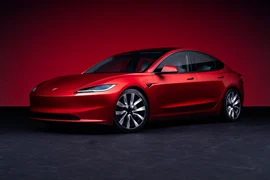
EVspecsHub Score — Tesla Model 3 Long Range AWD NMC 75 kWh (2023 Highland)
Independent rating vs all passenger EVs on sale 2025–2026
Range
678 km WLTP · NMC 78.1 kWh gross · 18" Photon Aero (TEL)
8.0
good
Battery
75 kWh usable · NMC 2170 · 400V · no V2G
7.0
good
Charging
250 kW DC max · 10→80% ~27 min · 400V · no V2L/V2H/V2G
7.0
good
Performance
0–100 km/h · 4.4 s · 366 kW · AWD
9.0
top
Efficiency
14.0 kWh/100 km WLTP · expected penalty for dual-motor setup
7.0
good
Cargo
594 L boot · 88 L frunk · 682 L combined
7.0
good
Value
€49,990 · £43,970 · €73.7/km · $79.0/km WLTP
8.0
good
Verdict: The Long Range AWD is where the Model 3 Highland lineup gets genuinely interesting. By my numbers, the Performance score hits 9.0 — 4.4 seconds to 100, dual motor, 366 kW — and that's not marketing, owners confirm that in real driving too. Range lands at 8.0 with 678 km WLTP on 18" wheels; the front motor costs you roughly 70 km versus the single-motor LR RWD, which is a real trade-off and nobody should pretend otherwise. What surprised me most: Value scores 8.0 at €73.7/km — technically below the all-EV market average of €75/km. For a dual-motor Tesla in 2023, that's hard to argue with. The only weak spots are efficiency (front motor drag is real on the highway) and the absence of V2X, which keeps it off the very top.
© EVspecsHub.com · All passenger EVs 2025–2026 · March 2026 · Methodology v6.7
7.6
out of 10
EVspecsHub Score
📊 Using this score in your review?
Free to use — just credit EVspecsHub.com
Free to use — just credit EVspecsHub.com
▸ Score data table (methodology v6.7)
| Criterion | Score | Key data | 10/10 = |
|---|---|---|---|
| Range | 8.0 | 678 km WLTP · 600–699 km band · TEL 18" wheels | 800+ km |
| Battery | 7.0 | 75 kWh usable · NMC 2170 · 400V (no bonus) · 70–79 kWh band | 110+ kWh |
| Charging | 7.0 | 250 kW DC · 400V · no V2L/V2H/V2G · 250–299 kW band | 400+ kW |
| Performance | 9.0 | 4.4 s → 8.0 + AWD +1.0 = 9.0 · 366 kW combined | sub-3s AWD |
| Efficiency | 7.0 | 14.0 kWh/100 km WLTP · 14.0–14.9 band | <12 kWh/100 km |
| Cargo | 7.0 | 682 L combined (594 boot + 88 frunk) · 650–799 L band | 1100+ L |
| Value | 8.0 | €49,990 · €73.7/km · $79.0/km · €60–74/km band | <€45/km |
| Overall | 7.6 / 10 | EVspecsHub Score v6.7 · EVspecsHub.com · March 2026 | |



Tesla Model 3 Long Range AWD 2024 (Highland): The Dual-Motor Data Tesla Doesn't Publish
629 km WLTP. 341 miles EPA. 250 kW DC. 75 kWh usable. The Long Range AWD is the most popular trim in the Highland lineup — and it comes with a battery story that Tesla doesn't tell you at delivery. I spent time going through owner forum threads, charging session logs, and supplier identification data from multiple markets. Here's what actually matters once you start driving it every day.
The big thing to understand upfront: the LR AWD 2024 is not the same car everywhere. EU cars almost universally got LG NMC cells from Nanjing. US cars split between LG and Panasonic NCA depending on build window — and that difference affects the charging curve, long-term durability outlook, and even whether you qualified for the $7,500 tax credit. Same exterior, different pack, and Tesla tells you nothing about it at delivery.
1 Battery Pack — Two Suppliers, Two Different Stories EU · LG NMC · 78.8 kWh US · LG or Panasonic NCA · 78–82 kWh
Tesla publishes 75 kWh usable for the LR AWD across all markets. The gross figure depends entirely on which supplier built your cells. OBD logs and CoC documents from European owners consistently show 78.1–78.8 kWh gross for LG-equipped cars, with 75 kWh usable. Panasonic-cell cars — mostly US Fremont builds — start at 81–82 kWh gross, with the same 75 kWh usable. The buffer size differs, the pack size differs, the charge curve differs. The sticker says the same number.
Pack specs — confirmed from OBD logs, CoC documents, and TMC forum data
| Parameter | EU (most builds) | US (Panasonic builds) |
|---|---|---|
| Cell supplier | LG Energy Solution, Nanjing | Panasonic, Gigafactory Nevada |
| Cell chemistry | NMC (NCM811) · 2170 cylindrical | NCA · 2170 cylindrical |
| Gross capacity | ~78.1–78.8 kWh | ~81–82 kWh |
| Usable capacity | 75 kWh (OBD confirmed) | 75 kWh (OBD confirmed) |
| Pack reference | LG M50 / 5L series | Panasonic BT42 / BT43 |
| Pack config | 96s46p · ~357 V nominal | 96s46p · ~357 V nominal |
| Front motor | AC induction | |
| Rear motor | Permanent magnet synchronous | |
| Combined output | 366 kW (498 hp) / 493 Nm (364 lb-ft) | |
| 0–100 km/h (0–62 mph) | 4.4 sec | |
| Tax credit (US, at launch) | Not applicable | $7,500 — Panasonic builds only |
One owner in Germany posted his CoC breakdown: LG 5L cells, 78.8 kWh gross, confirmed. His neighbour with a US-spec car from Fremont had a Panasonic BT42 designation — 81.5 kWh gross on his OBD read. Both cars show the same 75 kWh usable on the touchscreen. Neither shows cell supplier anywhere in the UI.
✅ How to identify your supplier in 60 seconds: EU — check CoC document (Certificate of Conformity), look for pack designation code. US — got the $7,500 tax credit on purchase? You have Panasonic. Bought through lease or no credit? Likely LG. Controls → Software → Additional Vehicle Information sometimes shows battery chemistry — NMC = LG, NCA = Panasonic.
⚠ EU LG pack durability flag: An independent repair facility (EV Clinic, Croatia) published data in late 2025 flagging elevated internal resistance and higher failure rates in LG NCM811 packs from Nanjing compared to Panasonic packs — particularly in cars above 150,000 km. Panasonic packs show failures as isolated cells; LG packs often show module-wide degradation. This is an emerging concern, not a recall, and Tesla covers the pack under the 8-year / 192,000 km warranty.
2 DC Charging — 250 kW Peak, and Why LG Cars Charge Differently EU · CCS2 · LG curve US · NACS · Panasonic curve
Both cells nominally support 250 kW DC. The difference is in how long they hold that peak. Panasonic cars hit 250 kW and stay close to it through 25–30% SoC before tapering. LG cars reach 250 kW briefly — somewhere around 10–20% — then step down faster. In practical road-trip terms, Panasonic packs add 50% charge in 13–17 minutes from 10%. LG packs take closer to 20–23 minutes for the same window. The gap isn't catastrophic, but it shows up on long days.
⚠ LG vs Panasonic charging speed: Forum data from Teslalogger.de (thousands of sessions) shows LG Highland cars average roughly 124 kW across 10–80% SoC on a V3 Supercharger. Panasonic-cell cars consistently beat that. Same car, same charger, different pack — and Tesla doesn't disclose which one you have.
DC Charging Curve — Model 3 LR AWD 2024 (Highland) V3 Supercharger · warm battery · LG NMC (EU / most markets)
EVspecsHub.comReconstructed from owner-logged Supercharger sessions and Teslalogger.de fleet data. Navigate to Supercharger to activate battery preconditioning — skip this step and cold-weather sessions start 30–40 kW lower.
Tesla Model 3 LR AWD 2024 — DC Charging Power by SOC
V3 Supercharger · warm battery · LG NMC (EU typical) · owner and fleet session data
| SOC | LG NMC (kW) | Panasonic NCA (kW) | Notes |
|---|---|---|---|
| 5% | ~200 kW | ~220 kW | Ramp-up from low SoC |
| 10% | ~240 kW | ~250 kW | Approaching peak |
| 20% | ~245 kW | ~250 kW | Peak window — LG brief, Panasonic holds |
| 30% | ~210 kW | ~240 kW | LG steps down faster here |
| 40% | ~185 kW | ~210 kW | Panasonic advantage most visible 30–50% |
| 50% | ~155 kW | ~175 kW | Both tapering, gap narrows |
| 60% | ~120 kW | ~130 kW | Continued taper |
| 70% | ~85 kW | ~90 kW | Similar from here on |
| 80% | ~50 kW | ~55 kW | Typical road-trip stop point |
| 90% | ~25 kW | ~28 kW | BMS protecting cells near full |
| 100% | ~8 kW | ~8 kW | Not recommended at DC — NMC and NCA both |
LG data: Teslalogger.de fleet sessions · Panasonic data: TMC owner logs and TMC charging thread · Cold battery caps 60–80 kW regardless of pack
EVspecsHub.comAC Charging — Same on Both Markets
On-board AC charger: 11 kW (3-phase, EU) / 11.5 kW (US NACS). Full 0–100% on an 11 kW wallbox takes roughly 8 hours. UK and EU owners on single-phase 7.4 kW: around 11.5 hours.
3 Real-World Range — What 629 km WLTP Looks Like on the Road EU · WLTP 629 km US · EPA 341 mi
629 km WLTP is the heavy-configuration TEH figure — 18" wheels, full passenger load. The light TEL figure reaches 678 km. Neither reflects motorway driving. An owner who just got his LR AWD in the UK and immediately did a Birmingham-to-Edinburgh run logged 418 km of real range at 110–120 km/h, with HVAC running. "About what I expected from research," he posted, "but still a kick in the gut when you first see the energy graph at 70 mph."
⚠ EU motorway reality: At 110–120 km/h in mild weather, logged sessions cluster around 420–460 km — roughly 67–73% of WLTP. Add winter temperatures (-10°C) and the heat pump working hard: owners report 380–420 km combined range. The WLTP gap is wider here than on the RWD because the second motor adds drag at cruising speed.
⚠ US highway reality: At 75 mph in mild conditions, owners consistently log 240–260 miles — about 70–76% of EPA. One owner on a forum who completed a 2,400-mile road trip noted his average energy consumption was 239 Wh/mile at 75 mph, putting his real range around 240 miles per charge stop. Planning around 220–230 miles per leg keeps you comfortably in the fast part of the charging curve.
Real-World Range by Condition — Model 3 LR AWD 2024 (Highland)
EVspecsHub.comOwner-logged data · EU cold: EVDB cold-highway estimate and owner forum data · US cold: TMC thread reports · Conditions vary with HVAC load, tyre spec, and elevation.
4 Battery Degradation — NMC Rules Apply, Not LFP EU · LG NMC US · Panasonic NCA
Calendar aging matters more than cycle count on both pack types. A UK owner with a 2024 LR AWD three months in mentioned he'd been charging to 100% most nights — someone in the forum corrected him immediately. "You have NMC, not LFP. Treat it differently." He switched to an 80% daily limit and set a target SoC average below 60%.
The degradation inflection point differs by chemistry: Panasonic NCA packs see meaningfully lower calendar aging below 55% average SoC. LG NMC packs have a slightly higher sweet spot — 60% average SoC halves calendar degradation on these cells. Practically, both benefit from the same rule: charge to 80% for daily use, charge to 100% only before long trips, and don't leave the car sitting at high SoC overnight regularly.
✅ Daily charge rule — both markets: 80% for daily use. Below 60% average SoC for minimising long-term capacity loss. 100% only before a trip, then start driving immediately. NMC/NCA packs degrade faster when held at high SoC over time, regardless of cycle count.
⚠ Common confusion at delivery: Multiple owners on forums mention Tesla service didn't tell them anything about charging limits. The in-car UI prompts "Trip charging" for the 80–100% band — that label exists for a reason. If the slider shows a 80% recommended daily limit, you have NMC or NCA. Charge accordingly.
5 AWD in Practice — What the Second Motor Actually Costs You EU · 629 km WLTP US · 341 mi EPA
The front motor adds about 70 km (43 mi) of motorway range deficit versus the single-motor LR RWD — that gap is consistent across all owner data I've gone through. In city traffic it shrinks to almost nothing, because the front motor barely operates at low load. One owner who switched from an RWD to AWD posted his data from identical commute routes: city efficiency was within 4% between the two cars. At 120 km/h the AWD used about 8% more energy per kilometre.
What owners in Norway, Scotland, and Canada consistently say: the AWD is worth the range trade for anywhere that gets proper winter roads. "My RWD was fine 90% of the time. That other 10% was genuinely stressful," posted one Edinburgh owner who traded up. The AWD doesn't give you more grip on ice — no car does — but it controls slip between axles in a way that single-motor cars can't match on wet, leaf-covered, or lightly snowed surfaces.
✅ AWD vs RWD range planning rule: Subtract 10–12% from LR AWD figures versus LR RWD at motorway speeds. In city and mixed driving the gap drops to 3–5%. Winter traction gains matter most where temperatures regularly drop below 0°C (32°F) and roads aren't always cleared.
6 What Owners Figured Out After Taking Delivery EU · Highland US · Highland
The Dashboard Shows EPA Range in All Markets
The touchscreen displays EPA-based range in all countries — including EU markets where WLTP is the advertised figure. At 100% charge a UK or German LR AWD shows roughly 492–510 km — not 629 km. This catches people immediately after delivery. It's not degradation. It's a different measurement standard, and Tesla doesn't explain it anywhere in the delivery process. Forum threads on this are hundreds of posts long.
No Turn Signal Stalks — 2024 Production
All 2024 Highland builds shipped without physical stalks. Tesla added them back in 2025 production. This comes up constantly in used-car threads — check the build date on the door card before buying. The steering wheel buttons work, but muscle memory for stalks is real, and a lot of owners mention it months into ownership.
Preconditioning Is Smarter Than You Think — But Only if You Use It
Navigate to a Supercharger and the car conditions the battery during the drive. Skip the navigation and drive straight there — no conditioning, slower ramp-up. In winter, that difference is 20–35 kW lower peak charging for the first 5–10 minutes. An owner who road-tripped across Germany in January: "First stop I forgot to navigate. Forty-five minutes to 80%. Second stop I used the nav. Twenty-nine minutes." Same car, same charger, one setting.
8" Rear Screen — Feature Nobody Uses, Heat It Generates
Standard on LR AWD both markets. Most adult owners mention they never touch it. A few mention seeing it affect front touchscreen responsiveness slightly during heavy streaming. Kids on long trips: game-changer. Adults commuting alone: background noise that happens to be a screen.
V2L — Still Not on Any Highland
No bidirectional charging of any kind on any trim. No V2L, no V2H, no V2G. No announced OTA path. It gets asked about in every LR AWD thread. The answer hasn't changed since Highland launched.
📋 Full technical specifications — all Model 3 Highland variants:
Note: Battery supplier identification based on CoC documents, OBD logs, VIN origin, and tax credit eligibility data shared across owner forums. Charging curves reconstructed from Teslalogger.de fleet data and TMC session threads. Range figures from owner-logged sessions, EVDB cold-weather modelling, and forum reports. LG pack durability data: EV Clinic (Croatia), December 2025 — independent data, not an official recall. All figures current as of March 2026.Back to contents
Share this data
Free to use — please include a visible link to EVspecsHub.com
✓ Link copied!