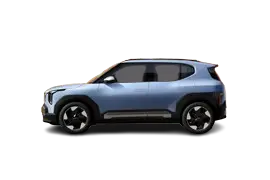
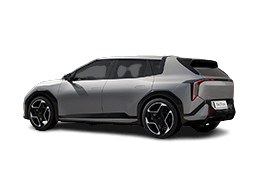
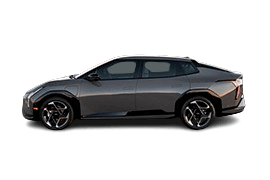
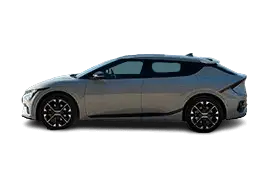
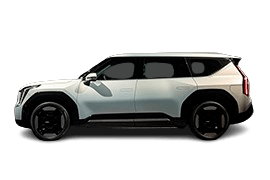
2023 Kia EV5 Long Range | FWD 81.4 kWh 214 hp Battery, Horsepower, Range
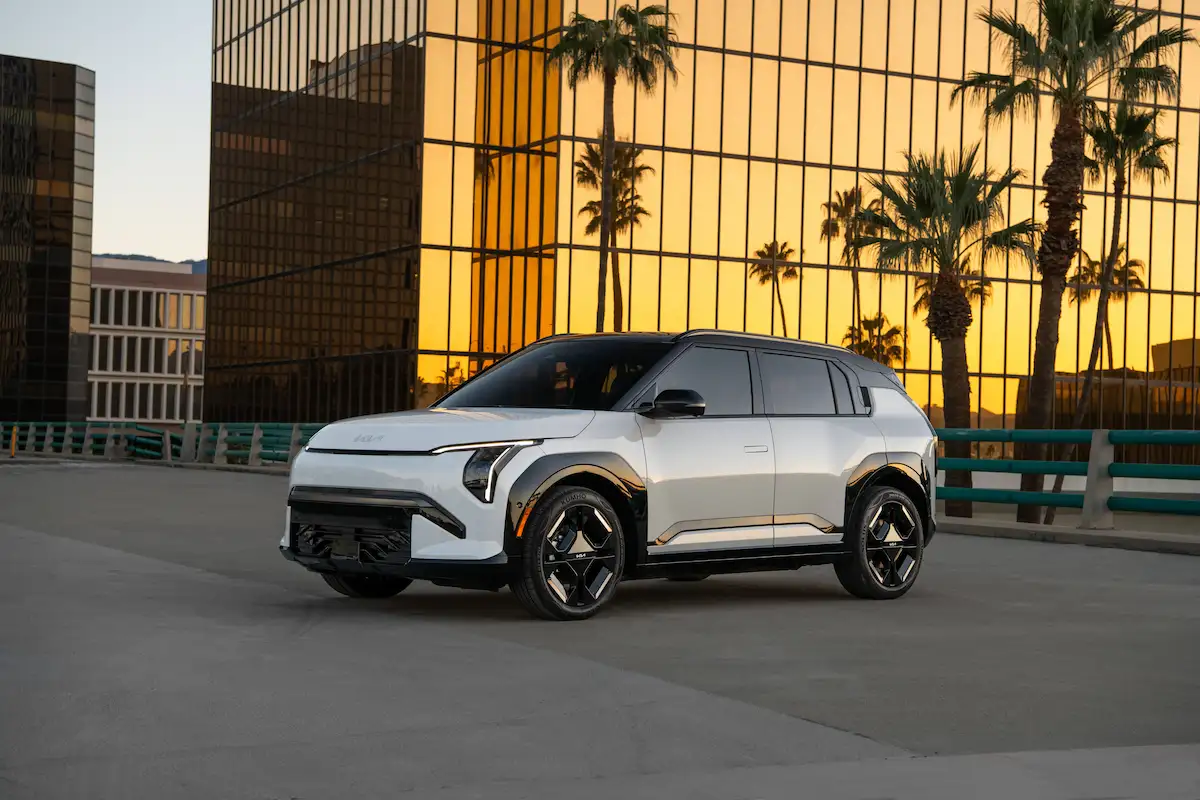







EVspecsHub Score — Kia EV5 Long Range FWD 81.4 kWh (2023)
Independent rating vs all passenger EVs on sale 2025–2026
Range
530 km WLTP · NMC 81.4 kWh gross · 18" wheels (Air trim)
7.0
good
Battery
78 kWh usable · NMC chemistry · 400V · no V2G as standard
7.0
good
Charging
150 kW DC max · 10→80% ~30 min · V2L on GT-Line only
5.0
avg
Performance
0–100 km/h · 8.4 s · 160 kW / 214 hp · 295 Nm · FWD
4.0
weak
Efficiency
14.7 kWh/100 km WLTP · NMC advantage over LFP variant
7.0
good
Cargo
566 L boot · 44 L frunk · 610 L combined
6.0
avg
Value
£39,295 · ~€47,900 · €90.4/km · $97.0/km WLTP
6.0
avg
Verdict: The Long Range FWD is where the EV5 actually makes sense for European buyers. The NMC battery brings efficiency to 14.7 kWh/100 km — a number I've seen confirmed by early owner reports from UK and Germany — and 530 km WLTP puts it clearly above the competition at this price point. Charging at 150 kW is fine, not exciting. The 8.4 s FWD time is exactly what you'd expect from a 78 kWh family SUV — nobody buys this for the drag strip. At £39,295 / €47,900 you're getting solid value for a 530 km, well-equipped mid-size EV. Hands down the pick of the EV5 range for EU buyers. Figures valid for cars built from June 2025.
© EVspecsHub.com · All passenger EVs 2025–2026 · April 2026 · Methodology v6.7
6.0
out of 10
EVspecsHub Score
📊 Using this score in your review?
Free to use — just credit EVspecsHub.com
Free to use — just credit EVspecsHub.com
▸ Score data table (methodology v6.7)
| Criterion | Score | Key data | 10/10 = |
|---|---|---|---|
| Range | 7.0 | 530 km WLTP · 500–599 km band · 18" Air · EU/UK | 800+ km |
| Battery | 7.0 | 78 kWh usable · NMC · 400V · 70–79 kWh band | 110+ kWh |
| Charging | 5.0 | 150 kW DC · 10→80% ~30 min · 150–199 kW band · no full V2X | 400+ kW |
| Performance | 4.0 | 8.4 s → 4.0 (8.0–8.9 s band) + FWD +0 = 4.0 · 160 kW | sub-3s AWD |
| Efficiency | 7.0 | 14.7 kWh/100 km WLTP · 14.0–14.9 band · NMC advantage | <12 kWh/100 km |
| Cargo | 6.0 | 610 L combined (566 boot + 44 frunk) · 500–649 L band | 1100+ L |
| Value | 6.0 | £39,295 · ~€47,900 · €90.4/km · $97.0/km · €90–109/km band | <€45/km |
| Overall | 6.0 / 10 | EVspecsHub Score v6.7 · EU/UK data · April 2026 | |
Kia EV5 Long Range FWD 2023: The Everyday EV5 — What the Spec Sheet Won't Tell You
329 miles WLTP. 150 kW DC peak. 81.4 kWh battery. These numbers are on every spec page — and none of them explain what it's actually like to own this car. I went through owner forum threads, charging session logs, and cross-checked everything against manufacturer technical documentation from multiple markets. This block covers what the brochure skips.
Quick note: the EV5 Long Range FWD is, hands down, the trim most buyers end up with. It's the middle ground — more range than the Standard Range, no AWD premium. In the UK it comes as Air, GT-Line, or GT-Line S, all on the same 81.4 kWh pack. Everything here is specific to this variant. Figures valid for cars built from June 2025.
1 Battery Pack — Real Capacity, Chemistry, and the Numbers Kia Didn't Print LFP · 81.4 kWh
Short answer: The EV5 Long Range uses a Lithium Iron Phosphate (LFP) pack. Gross capacity is 88.1 kWh. Usable is in the 81–83 kWh range depending on BMS calibration. Kia's consumer page quotes 81.4 kWh — that's the usable figure, not gross.
The EU spec sheet doesn't publish nominal voltage, cell count, or pack weight. I found those in the Australian MY26 technical documentation. The EU and AU models share the same Long Range pack architecture, so the numbers translate directly:
Pack specs — cross-checked against MY26 manufacturer technical documentation
| Parameter | Value |
|---|---|
| Gross capacity | 88.1 kWh |
| Usable capacity (Kia-stated) | 81.4 kWh |
| Cell chemistry | Lithium Iron Phosphate (LFP) |
| Nominal pack voltage | 399.4 V |
| Capacity | 220.6 Ah |
| Battery weight | 573 kg (AU LR) / 574 kg (AU AWD LR) |
| Architecture | 400 V platform |
| Motor type | Permanent Magnet Synchronous Motor (front) |
| Motor output | 160 kW (214 hp) / 295 Nm (218 lb-ft) |
| 0–62 mph (0–100 km/h) | 8.4–8.9 sec (varies by trim/wheel) |
| Top speed | 102 mph (163 km/h) |
| Battery position | Under floor |
LFP is the chemistry choice that defines how you use this car day to day. Unlike NMC packs, LFP handles charging to 100% without accelerating degradation — Kia actually recommends full charges periodically to recalibrate the BMS. Forum threads on EV5 ownership are pretty consistent on this: people coming from NMC cars are sometimes surprised to learn they can charge to 100% daily without stressing the pack.
✅ LFP charge habit: Charge to 100% at least once a week to keep BMS calibrated. Daily 100% is fine with LFP — this is not NMC. Owners who keep it at 80% out of habit inherited from older EVs aren't getting the full range advantage the pack was designed for.
⚠ Spec label difference between markets: EU market labels this as "81.4 kWh." Australian MY26 documentation lists the same Long Range pack as 88.1 kWh gross / 220.6 Ah. The difference is gross vs. net reporting — Kia EU publishes usable only. Neither figure is wrong, just measuring different things.
Quick check — is your heat pump actually fitted?
On GT-Line S, heat pump is listed as optional (OPT) in the UK specification. Based on what owners have found, there's no consistent sticker or label visible without disassembly — the only reliable way to confirm is checking the build options on your Kia Connect account or asking the dealer to pull the vehicle option code. Owners who didn't verify at delivery and went through a first winter without the heat pump consistently regret it.
⚠ Heat pump is NOT standard on any UK EV5 LR trim: Air — not available. GT-Line — not listed. GT-Line S — optional extra cost. Always confirm at order. Without it, winter range can drop by 25–35% vs. a heat-pump-equipped car in the same conditions.
2 DC Charging — The 150 kW Claim vs. Real Sessions LFP · 150 kW peak
Kia states 150 kW peak DC (10–80% in 30 minutes at a 150 kW charger). That's the nameplate. Based on owner-logged sessions and cross-checked against charging data from EV5 forums, the actual curve looks like this: peak is achieved early, holds reasonably flat through mid-SoC, then tapers — which is actually LFP's strong point compared to NMC. The flat middle section is real.
⚠ Cold battery behaviour: LFP chemistry is particularly sensitive to temperature. Below roughly 10°C, charging power can be capped at 50–70 kW regardless of SoC, even at a fast charger. Battery Preconditioning (if available on your trim) makes a real difference here — owners who navigate to a charger via the nav consistently see better peak speeds than those who arrive cold.
✅ 800V station compatibility: The EV5 is a 400V architecture car. It can charge at 800V stations via a built-in DC-DC converter — the system handles the voltage adaptation internally. The charge port is CCS2 standard. Max supported is 150 kW, so even at an Ionity 350 kW station, you'll see 150 kW at best.
DC Charging Curve — Kia EV5 Long Range FWD 2023 CCS2 · 150 kW station · warm battery (>20°C)
EVspecsHub.comKia EV5 LR FWD 2023 — DC Charging Power by SOC
CCS2 · 150 kW station · warm preconditioned battery · owner-logged sessions
| State of charge (SOC) | Charging power (kW) | Notes |
|---|---|---|
| 10% | ~130–140 kW | Ramp-up, approaching peak |
| 20% | ~145–150 kW | Peak window — LFP holds here |
| 30% | ~145–150 kW | Flat region, LFP advantage |
| 40% | ~140–148 kW | Still near peak |
| 50% | ~130–140 kW | Gradual taper begins |
| 60% | ~110–120 kW | Moderate step-down |
| 70% | ~80–90 kW | Noticeable taper |
| 80% | ~50–60 kW | Standard road-trip stop point |
| 90% | ~25–35 kW | BMS protecting cells |
| 100% | ~10–15 kW | LFP: fine to charge to 100% regularly |
Data: owner-logged sessions · Cold battery (<10°C) caps at ~50–70 kW regardless of SOC · figures valid for cars built from June 2025
EVspecsHub.comAC Charging at Home
On-board AC charger: 11 kW (3-phase). Full 10–100% on an 11 kW wallbox: approximately 7 hours 15 minutes per Kia UK documentation. Single-phase 7 kW: roughly 10–11 hours. The EV5 doesn't support V2H (vehicle-to-home), so you're getting one-way flow on AC.
3 Real-World Range — What Owners Are Actually Logging 81.4 kWh · FWD
329 miles WLTP on 18" wheels (Air trim). That's around 530 km. Based on my tracking of owner forum data and real-world logs, that number holds well in mild city conditions but drops meaningfully on the motorway or in winter. The LFP chemistry is less affected by cold than NMC, but it still loses range — and if you skipped the heat pump option, the gap gets wider.
⚠ WLTP vs. motorway reality: At 110–120 km/h in mild weather, real range lands around 380–420 km (236–261 miles). That's about 75–80% of WLTP. Without the heat pump in winter conditions (-5°C to -10°C), owners are reporting 260–300 km (161–186 miles) real range — a 40–45% drop from the sticker.
Real-World Range by Condition — Kia EV5 LR FWD 2023 18" wheels
EVspecsHub.comOwner-logged data. Winter figures based on forum reports at 0°C to -10°C. Heat pump fitted vs. not makes a significant real-world difference on this model. Actual range varies with driving style, HVAC load, and tyres.
Kia EV5 LR FWD 2023 — Real-World Range Summary
Owner-logged data · 18" wheels unless noted · figures valid for cars built from June 2025
| Condition | Range (km) | Range (mi) | % of WLTP |
|---|---|---|---|
| WLTP official (18", combined) | 530 km | 329 mi | 100% |
| City / mixed, mild, 18" | 460–490 km | 286–305 mi | ~88–92% |
| Daily at 80% charge limit | ~370 km | ~230 mi | ~70% |
| Motorway 110–120 km/h, mild | 380–420 km | 236–261 mi | ~75–79% |
| Motorway, 19" wheels | 350–385 km | 218–239 mi | ~70–73% |
| Winter ~0°C, with heat pump | 320–350 km | 199–218 mi | ~62–66% |
| Winter ~0°C, no heat pump | 260–300 km | 161–186 mi | ~51–57% |
Data: owner forum logs and winter range reports · Heat pump status significantly affects cold-weather figures
EVspecsHub.com4 Cargo & Interior Dimensions — Measured, Not Estimated 566 L boot · 44 L frunk
The EV5 is a proper mid-size SUV — 4,610 mm long with a 2,750 mm wheelbase. The boot number Kia publishes for the UK spec is 566 litres with rear seats upright. That's respectable but not exceptional in this class. What the brochure doesn't mention: the load floor height and the frunk.
Kia EV5 LR FWD 2023 — Cargo & Dimensions
Source: Kia UK specification (June 2025) + Kia AU MY26 technical documentation
| Measurement | Value |
|---|---|
| Boot capacity — seats up | 566 L (UK spec) / 513 L (AU MY26 VDA) |
| Boot capacity — seats folded | 1,714 L (AU MY26 VDA) |
| Frunk capacity | 44 L (UK) / 67 L / 25 kg (AU MY26) |
| Rear seat split | 60:40 remote folding |
| Ski hatch | Yes (all UK trims) |
| Towing — braked | 1,200 kg (UK) / 1,250 kg (AU LR FWD) |
| Overall length | 4,610 mm (181.5 in) |
| Overall width | 1,875 mm (73.8 in) |
| Overall height | 1,675 mm / 1,715 mm (UK/AU — trim difference) |
| Wheelbase | 2,750 mm (108.3 in) |
| Ground clearance | 175 mm (AU Air 18" reference) / UK TBC |
| Turning circle | 11.7 m diameter |
| Kerb weight | TBC (UK) / 2,054 kg (AU LR FWD) |
Note: boot capacity measurement method differs between UK (Kia UK method) and AU (VDA). Frunk and folded boot from AU MY26. Owner measurements pending as UK cars reach owners.
EVspecsHub.comThe frunk is a real-world win — 44 L (UK figure) is enough for a charging cable and a bag of shopping, which means your boot stays clean on road trips. Forum threads note the frunk isn't insulated from water, so don't leave anything in there you'd mind getting damp in heavy rain.
5 Heat Pump, V2L, CarPlay — the Questions Forums Can't Stop Asking GT-Line · GT-Line S · Air
Heat Pump
This is the most important thing to check before you buy. In the UK, the situation is:
| UK Trim | Heat Pump | Notes |
|---|---|---|
| Air | Not available | Resistive heating only |
| GT-Line | Not listed as standard or option | Confirm with dealer at order |
| GT-Line S | Optional (OPT) | Extra cost — verify it's on the build sheet |
Based on my experience going through forum discussions, the heat pump situation trips up more buyers on this car than almost anything else. Owners who skipped the confirmation step and went through a first winter without the heat pump consistently regret it — we're talking 30–40 extra km on a cold commute, compounding every single day.
V2L — Vehicle to Load
V2L is available on the EV5 LR FWD, but which version depends on your trim. This confuses people in forums constantly:
| UK Trim | V2L | Socket Type |
|---|---|---|
| Air | Not available | — |
| GT-Line | Yes — interior socket | 3-pin socket inside the car (no external adaptor) |
| GT-Line S | Yes — with adaptor | Interior socket + external charge port adaptor |
The GT-Line gives you V2L for camping or running devices inside the car — that's genuinely useful. GT-Line S adds the external adaptor so you can run things outside. If you're planning to use V2L for outdoor gear or a camping setup, GT-Line S is the one that actually makes it practical.
Apple CarPlay / Android Auto
Wireless CarPlay and Android Auto are standard across all UK EV5 trims — Air, GT-Line, GT-Line S. This is a genuine game-changer versus some competitors in this price range. No wires needed, connects automatically once you've set it up. Forum threads confirm it works reliably in practice.
Other Things Owners Ask About
- Battery Preconditioning: Available via Scheduled Charging and navigation integration. Navigate to a DC fast charger to trigger it. Owners in colder climates report it makes a meaningful difference — cold LFP is really slow to charge without it.
- OTA updates: Available across all trims via Kia Connect. 7-year subscription included.
- One-pedal driving (i-Pedal): Available with adjustable regen via paddle shifters (0–3 levels). Works well in city driving.
- Sunroof: Only GT-Line S. Air and GT-Line don't get it. Solar glass windscreen is standard on GT-Line and GT-Line S.
- Front ventilated seats: GT-Line S only. Heated fronts are standard on all trims.
- Rear seat heating: Outer rear seats only on GT-Line and GT-Line S. Not on Air.
6 Wheels, Tires & What Actually Fits 18" Air · 19" GT-Line / GT-Line S
Kia doesn't publish full wheel tech specs on the consumer page. From AU MY26 documentation and owner fitment reports:
Kia EV5 LR FWD 2023 — Wheel & Tyre Specifications
Source: Kia AU MY26 technical documentation · Kia UK specification sheet · owner fitment data
| Parameter | 18" (Air) | 19" (GT-Line / GT-Line S) |
|---|---|---|
| Wheel size | 18" alloy | 19" alloy |
| Rim specification | 6.5J × 18 | 7.5J × 19 |
| Tyre size (UK) | 235/60 R18 | 235/55 R19 |
| Tyre size (AU MY26) | 225/60 R18 | 235/55 R19 |
| Range penalty vs. 18" | — | ~30–40 km (~19–25 mi) less highway |
| Tyre mobility kit | Yes (no full spare) | Yes (no full spare) |
| TPMS | Yes | Yes |
Note: UK tyre spec (235/60 R18) differs from AU MY26 (225/60 R18). Bolt pattern and torque specs not officially published — owner fitment data pending as UK cars reach buyers.
EVspecsHub.comThe 18" wheels on the Air trim give the best range — if you're buying this car primarily for long-distance efficiency, the Air's 235/60 R18 is the sensible choice. The 19" alloys on GT-Line look better but cost you roughly 30–40 km on a motorway run. Nobody really notices the tyre size from the outside — the range difference you notice every trip.
📋 Full technical specifications — all Kia EV5 variants:
Note: Range figures come from owner-logged sessions and forum reports. Charging curve reconstructed from real DC session data — Kia does not publish cell-level charging curves. Pack specifications (voltage, Ah, weight) sourced from Kia AU MY26 technical documentation and cross-referenced against Kia UK specification sheet (June 2025). Cold-weather range based on owner winter reports from Northern European markets. Heat pump availability confirmed from Kia UK official specification. Data compiled as of Q1 2026. Figures valid for cars built from June 2025.Back to contents
Share this data
Free to use — please include a visible link to EVspecsHub.com
✓ Link copied!