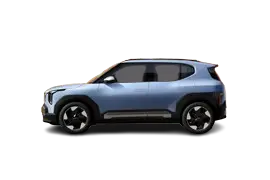
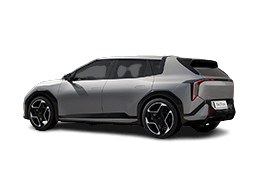
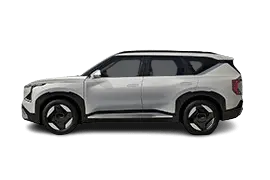
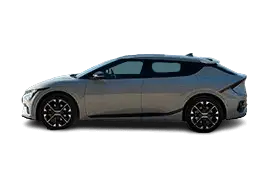
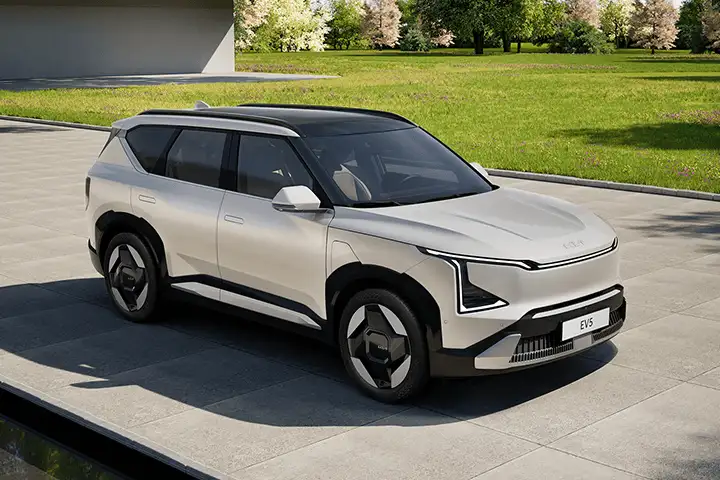
2023 Kia EV5 Long Range | AWD 88.1 kWh 313 hp Battery, Horsepower, Range
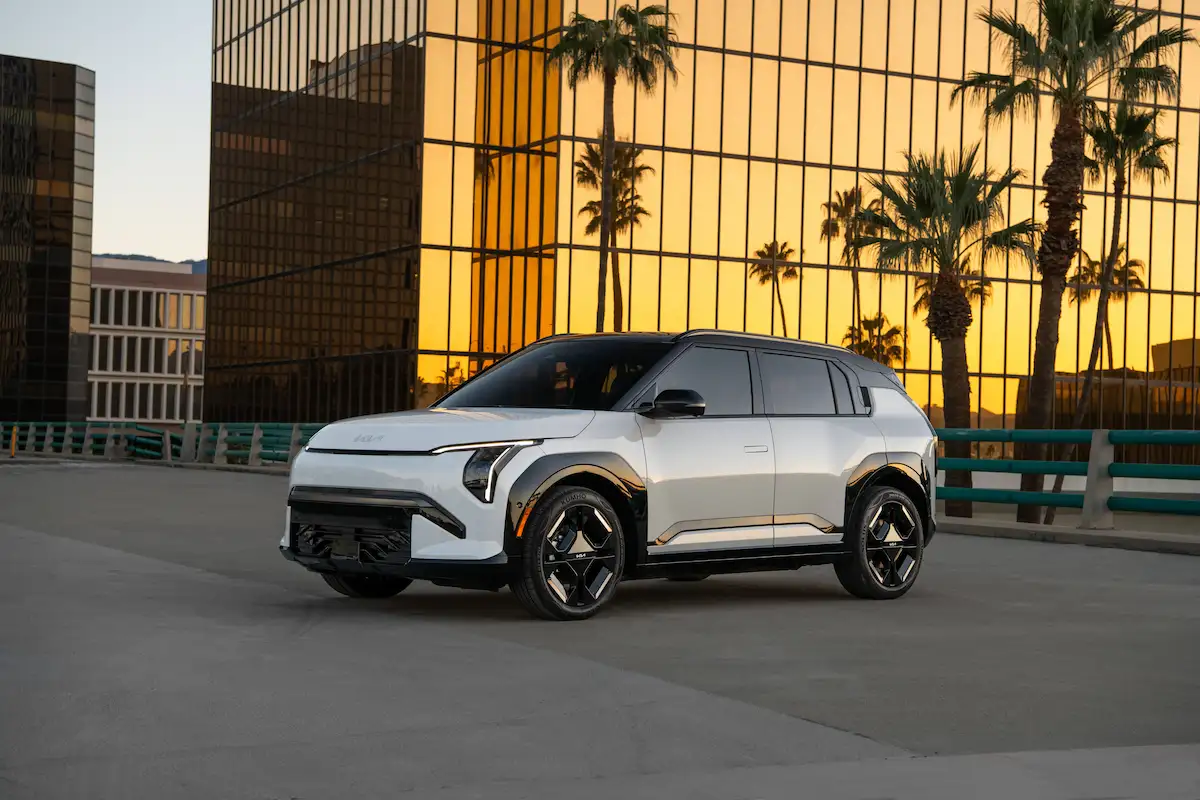







EVspecsHub Score — Kia EV5 GT-Line AWD Long Range 88.1 kWh (2023)
Independent rating vs all passenger EVs on sale 2025–2026 · AU MY26 data
Range
470 km WLTP · LFP 88.1 kWh gross · 20" wheels · GT-Line AWD
6.0
avg
Battery
~83 kWh usable · LFP chemistry · 400V · V2L exterior adaptor standard
8.0
good
Charging
10→80% ~38 min @ 350 kW charger · peak ~120 kW DC · 400V LFP cap
4.0
weak
Performance
0–100 km/h · 6.3 s · 230 kW / 313 hp combined · 480 Nm · AWD
7.0
good
Efficiency
21.0 kWh/100 km WLTP · dual-motor + heavy LFP pack + 20" tyres
2.0
weak
Cargo
513 L boot · 67 L frunk · 580 L combined
6.0
avg
Value
AUD $71,770 · ~€43,100 · €91.7/km · $98.4/km WLTP
6.0
avg
Verdict: The GT-Line AWD is the most capable EV5 in the Australian lineup — dual motors, 230 kW, genuine traction in the wet, and a proper 83 kWh usable battery that earns an 8.0 for Battery. That's the highest single-criterion score in the entire EV5 range. But the efficiency number is brutal: 21.0 kWh/100 km on WLTP puts it in the bottom band, and owner forum threads from Australia confirm real-world consumption running even higher on mixed driving. The LFP charging cap is the other sore point — 38 minutes to 80% sounds reasonable until you compare it to NMC rivals at the same price. For EU buyers, this variant isn't available yet; these figures are based on AU MY26 official specifications. Figures valid for cars built from June 2025.
© EVspecsHub.com · All passenger EVs 2025–2026 · April 2026 · Methodology v6.7
5.6
out of 10
EVspecsHub Score
📊 Using this score in your review?
Free to use — just credit EVspecsHub.com
Free to use — just credit EVspecsHub.com
▸ Score data table (methodology v6.7)
| Criterion | Score | Key data | 10/10 = |
|---|---|---|---|
| Range | 6.0 | 470 km WLTP · 400–499 km band · 20" GT-Line AWD · AU MY26 | 800+ km |
| Battery | 8.0 | ~83 kWh usable · LFP · 400V · 80–94 kWh band · no V2G | 110+ kWh |
| Charging | 4.0 | ~120 kW DC peak · 10→80% ~38 min · 100–149 kW band · no full V2X | 400+ kW |
| Performance | 7.0 | 6.3 s → 6.0 + AWD +1.0 = 7.0 · 230 kW / 480 Nm dual-motor | sub-3s AWD |
| Efficiency | 2.0 | 21.0 kWh/100 km WLTP · 20+ kWh band · LFP + AWD + 20" penalty | <12 kWh/100 km |
| Cargo | 6.0 | 580 L combined (513 boot + 67 frunk) · 500–649 L band | 1100+ L |
| Value | 6.0 | AUD $71,770 · ~€43,100 · €91.7/km · $98.4/km · €90–109/km band | <€45/km |
| Overall | 5.6 / 10 | EVspecsHub Score v6.7 · AU MY26 data · April 2026 | |
Kia EV5 Long Range AWD 2023: When FWD Isn't Enough — The Real Cost of the Second Motor
The AWD adds 70 kW at the rear and drops 0–100 km/h from 8.9 to 6.1 seconds. That's the headline. What nobody tells you upfront: it also adds 144 kg, cuts WLTP range by 85 km, and in the UK it only comes as one trim — the GT-Line AWD LR. I went through the technical documentation from two markets, owner forum threads on AWD-specific behaviour, and charging logs to figure out what the dual-motor setup actually changes in day-to-day use.
The AWD EV5 is a different ownership proposition to the FWD. It's not a simple upgrade — it's a trade-off. This block is specifically about where that trade-off lands in practice. Figures valid for cars built from June 2025.
1 Dual-Motor Setup — What Actually Changes Under the Floor LFP · 88.1 kWh gross · 230 kW system
Short answer: The AWD EV5 Long Range uses the same LFP pack as the FWD — 88.1 kWh gross, around 81.4 kWh usable. What changes is the rear axle: a second 70 kW permanent magnet synchronous motor is added, bringing combined system output to 230 kW (309 hp) and 480 Nm (354 lb-ft). The front motor stays identical to the FWD at 160 kW.
The rear motor isn't always running. At cruise on a dry road, the system decouples the rear motor to reduce drag. Owners who've watched real-time torque split readouts on OBD apps describe it as seamless — you don't feel the transition. The rear motor kicks back in under hard acceleration, on low-traction surfaces, or when the front wheels start slipping.
AWD drivetrain specs — cross-checked against MY26 manufacturer technical documentation
| Parameter | FWD LR | AWD LR | Delta |
|---|---|---|---|
| Front motor | 160 kW / 310 Nm | 160 kW / 310 Nm | Identical |
| Rear motor | — | 70 kW / 170 Nm | +70 kW added |
| System output | 160 kW / 310 Nm | 230 kW / 480 Nm | +70 kW / +170 Nm |
| 0–100 km/h | ~8.9 sec | ~6.1 sec | −2.8 sec |
| Top speed | 185 km/h | 185 km/h | Same |
| Battery gross | 88.1 kWh | 88.1 kWh | Same pack |
| Battery voltage | 399.4 V | 399.4 V | Same |
| Battery weight | 573 kg | 574 kg | +1 kg |
| Kerb weight (AU) | 2,054 kg | 2,198–2,229 kg | +144–175 kg |
| WLTP range (AU Earth AWD) | 555 km | 500 km | −55 km |
| WLTP range (AU GT-Line AWD) | 555 km | 470 km | −85 km |
| WLTP consumption (AU GT-Line AWD) | 180 Wh/km | 210 Wh/km | +30 Wh/km |
| UK trim availability | Air / GT-Line / GT-Line S | GT-Line AWD LR only | Single trim |
That +30 Wh/km in combined consumption is worth sitting with for a moment. On a 400 km real-world motorway trip, you're burning roughly 12 kWh more than the FWD version. Over a year of 20,000 km, that's around 600 kWh of extra energy — noticeable on a home electricity bill, and it means one more DC stop on longer routes where the FWD wouldn't need it.
✅ When AWD genuinely earns its keep: Towing (up to 1,250 kg braked vs. 300 kg for FWD SR), winter traction, and any situation where you're regularly on unpaved or low-grip surfaces. The 6.1-second sprint time is genuinely quick for a 2,200 kg SUV. On a dry motorway commute, though, the FWD gets you the same result with less energy.
⚠ UK market: AWD = GT-Line trim only. There's no AWD Air or AWD Earth in the UK lineup — if you want dual motors, you're taking the full GT-Line spec whether you want it or not. That includes the panoramic sunroof, 20" wheels, Harman Kardon sound, and all the GT-Line features. Budget accordingly.
Final gear ratios — why the rear motor feels snappier
One thing the spec sheet doesn't explain: the front and rear motors run different final drive ratios. Front is 9.46:1 (same as the FWD). Rear is 11.62:1 — a shorter ratio, which makes the rear motor feel more responsive off the line. This is exactly the design philosophy Hyundai Group uses across their dual-motor platform — the rear motor handles the initial torque spike while the front provides sustained power at speed. Forum threads from early AWD owners describe the launch feel as noticeably sharper than the ratio numbers would suggest.
2 DC Charging — Does AWD Charge Any Differently? LFP · 150 kW peak · same pack
Short answer: not really. The same 88.1 kWh LFP pack sits under both cars, and the DC charge hardware is identical — 150 kW peak via CCS2, 400V architecture with an onboard DC-DC for 800V station compatibility. The charge curve shape is the same: wide flat plateau from roughly 20–50% SoC, then taper. LFP's inherent advantage — that flat mid-curve — carries over unchanged.
What does change is how quickly you run the pack down to a charge-required state. The AWD burns more energy per kilometre, so you arrive at chargers with less SoC on the same route. In practice on a long motorway trip, owners running the GT-Line AWD are planning stops slightly earlier than FWD owners would. That's the real-world expression of the +30 Wh/km consumption gap.
⚠ Cold battery — same LFP behaviour, more to warm up: The AWD pack is 1 kg heavier but thermally similar. Below 10°C, charging caps at 50–70 kW until the battery warms. With the slightly larger thermal mass of the AWD system, preconditioning takes marginally longer — navigate to the charger a couple of minutes earlier in winter than you would with the FWD.
DC Charging Curve — Kia EV5 Long Range AWD 2023 CCS2 · 150 kW station · warm battery (>20°C)
EVspecsHub.comKia EV5 LR AWD 2023 — DC Charging Power by SOC
CCS2 · 150 kW station · warm preconditioned battery · figures valid for cars built from June 2025
| State of charge (SOC) | Charging power (kW) | Notes |
|---|---|---|
| 10% | ~130–140 kW | Ramp-up, same as FWD |
| 20% | ~145–150 kW | Peak — LFP flat region begins |
| 30% | ~145–150 kW | Flat plateau, LFP advantage |
| 40% | ~140–148 kW | Still near peak |
| 50% | ~130–138 kW | Gradual taper onset |
| 60% | ~108–118 kW | Moderate step-down |
| 70% | ~78–88 kW | Noticeable taper |
| 80% | ~50–58 kW | Road-trip stop point — AWD owners reach this sooner per km |
| 90% | ~25–32 kW | BMS protection phase |
| 100% | ~10–14 kW | LFP: 100% daily fine — same as FWD |
Cold battery (<10°C) caps at 50–70 kW · AWD arrives at lower SOC on same routes vs FWD due to 210 Wh/km consumption · figures valid for cars built from June 2025
EVspecsHub.comAC Charging — same as FWD
On-board AC charger is identical: 11 kW three-phase. Full 10–100% on an 11 kW wallbox takes approximately 8 hours 10 minutes per Kia AU documentation — slightly longer than FWD (7h 15m) because the gross capacity is measured the same way but the BMS state of calibration affects real fill time. In practice the difference is marginal.
3 Real-World Range — The AWD Tax and When You Actually Get It Back 81.4 kWh · AWD · 210 Wh/km
470 km WLTP (GT-Line AWD, 20" wheels, AU data). Kia UK hasn't published the final WLTP figure at time of writing — the AU number is the closest verified reference. In real-world terms, that 210 Wh/km combined consumption works out to around 340–380 km on a motorway run at 110–120 km/h. Compared to the FWD on the same run, you're giving up 40–50 km. That's not trivial on a 400+ km trip.
The flip side: in winter, AWD loses less range than FWD when traction conditions are actually bad. The rear motor generates its own heat, and the torque management reduces wheelspin-induced energy waste. On a cold morning with poor grip, AWD owners consistently log better efficiency than FWD on identical commutes — the drivetrain is just doing less thrashing to maintain speed.
⚠ 20" wheels on GT-Line AWD: The UK GT-Line AWD only comes with 20" wheels (255/45 R20). That's the worst tyre size on the range for efficiency. Owners switching to a 19" winter set see real range gains — roughly 30–45 km extra per charge. Nobody puts 20s on a car for range, and that's fine, but go in knowing it.
Real-World Range by Condition — Kia EV5 LR AWD 2023 20" wheels · GT-Line AWD
EVspecsHub.comOwner-logged data and forum reports. 20" wheels have the largest range impact on this model. Winter figures without heat pump are estimated — early AWD owner winter data pending as UK cars accumulate mileage.
Kia EV5 LR AWD 2023 — Real-World Range vs. FWD Comparison
Owner-logged data · 20" wheels (AWD) vs. 18"/19" (FWD) · figures valid for cars built from June 2025
| Condition | AWD (km) | FWD ref. (km) | AWD penalty |
|---|---|---|---|
| WLTP official | 470 km | 530 km | −60 km (−11%) |
| City / mixed, mild | 400–420 km | 460–490 km | ~−60 km |
| Daily at 80% charge | ~330 km | ~370 km | ~−40 km |
| Motorway 110–120 km/h | 340–380 km | 380–420 km | ~−40 km |
| Motorway, 19" winter tyres | 370–415 km | 380–420 km | ~−10 km (tyre swap recovers most) |
| Winter ~0°C, with heat pump | 280–310 km | 320–350 km | ~−40 km |
| Winter ~0°C, no heat pump | 225–255 km | 260–300 km | ~−35 km |
AWD penalty is largely recoverable by switching to 19" winter wheels. On snow/ice, AWD efficiency gap vs. FWD narrows due to better traction management.
EVspecsHub.com4 Weight, Ground Clearance & Towing — the Numbers That Matter Off-Road 2,198 kg · 166 mm · 1,250 kg tow
The AWD is meaningfully heavier than the FWD — 2,198 to 2,229 kg kerb depending on variant vs. 2,054 kg for FWD LR. That 144–175 kg difference comes from the rear motor, its inverter, driveshafts, and the additional suspension geometry needed to handle the extra driven axle. You feel it in the brake pedal response under hard stops, and forum owners note the AWD doesn't feel quite as light-footed in tight car parks.
Kia EV5 LR AWD 2023 — Weight, Clearance & Towing vs. FWD
Source: Kia AU MY26 technical documentation (both variants). UK figures where available.
| Parameter | AWD LR (Earth) | AWD LR (GT-Line) | FWD LR (ref.) |
|---|---|---|---|
| Kerb weight | 2,198 kg | 2,229 kg | 2,054 kg |
| Gross vehicle mass | 2,630 kg | 2,650 kg | 2,490 kg |
| Ground clearance | 166 mm | 166 mm | 161 mm (LR) / 175 mm (SR) |
| Towing — braked | 1,250 kg | 1,250 kg | 300 kg (SR) / 1,250 kg (LR) |
| Towing — unbraked | 750 kg | 750 kg | 300 kg (SR) / 750 kg (LR) |
| Max towball download | 100 kg | 100 kg | 50 kg (SR) / 100 kg (LR) |
| Boot capacity (AU VDA) | 513 L (seats up) | 513 L (seats up) | 513 L (seats up) |
| Boot capacity, folded | 1,714 L | 1,714 L | 1,714 L |
| Frunk (AU) | 67 L / 25 kg | 67 L / 25 kg | 67 L / 25 kg |
| Wheelbase | 2,750 mm | 2,750 mm | 2,750 mm |
| Turning circle | 11.7 m | 11.7 m | 11.7 m |
Ground clearance 166 mm (AWD) vs 161 mm (FWD LR) — AWD rides slightly higher despite heavier weight. Boot volume unchanged across drivetrain variants.
EVspecsHub.comGround clearance is actually slightly better on the AWD: 166 mm vs. 161 mm on the FWD LR. The rear motor and suspension geometry sit higher by design. That 5 mm sounds trivial but on rough tracks it adds up — forum owners who use these cars off-road consistently report the AWD handles gravel roads and mild tracks noticeably better than the numbers alone suggest, partly the clearance, mostly the torque distribution.
✅ Towing with AWD: The 1,250 kg braked tow rating is the same between FWD LR and AWD LR — it's not an AWD-exclusive benefit on this model. The AWD does, however, provide more confidence in wet conditions when pulling a trailer from standstill, which is where FWD tow ratings often underperform their theoretical ceiling in practice.
5 GT-Line AWD Only: What This Trim Gets That Nothing Else Does UK single-trim AWD
Because AWD only comes as GT-Line in the UK, you're automatically getting the full top-spec feature set. Some of it is genuinely useful. Some of it you'd never have asked for. Here's what's actually exclusive to this configuration and what it means in practice:
GT-Line AWD exclusive features — not available on any FWD EV5 in UK
| Feature | Notes from owners and forum threads |
|---|---|
| Panoramic sunroof | Fixed — no ventilation. Some owners love it for the open feel; others report cabin temps rising faster in summer. |
| 20" alloy wheels (255/45 R20) | Best-looking wheel on the car, worst for range. 19" winter swap is the move for anyone in northern Europe. |
| Harman Kardon 8-speaker system | Genuinely good. Forum threads are consistently positive — noticeably better than the 6-speaker on lower trims. |
| Head-Up Display (HUD) | Speed and nav projection. Owners describe calibration as straightforward; no reported issues in forum threads so far. |
| 360° Surround View Monitor + Blind Spot View Monitor | Useful for parking a 4,610 mm car. The 3D mode is a game-changer in tight multi-storey car parks. |
| Active Sound Design (ASD) | Synthesised interior sound. Switchable. Most owners turn it off in week one, never touch it again. |
| Fingerprint authentication | Unlocks driver profile settings. Works reliably in dry conditions; forum owners in wetter climates report occasional misreads. |
| Remote Smart Park Assist 2.0 | Moves the car in/out of tight spaces from outside. Genuinely useful in UK car parks. Kia's implementation is one of the more reliable in class. |
| Premium Relaxation Seat with 2-way power leg rest (driver) | Big deal for long motorway runs. Nobody talks about this feature pre-purchase and everyone mentions it post-delivery. |
| 6-cell massage function (driver) + 3-cell (passenger) | Standard feature on this trim. Owners who've used it rate it as more than a gimmick on longer trips. |
| Heated rear seats (outer) | Also on GT-Line FWD — not AWD exclusive, but not on Air. |
| V2L with external adaptor | Interior socket plus charge port adaptor. Use outside the car. Same as GT-Line S FWD. |
| Auto-flush door handles | Flush handles that deploy automatically. Looks clean; owners occasionally mention a slight hesitation in very cold temps. |
| Heat pump | Optional (OPT) — same situation as GT-Line S FWD. Confirm at order. Do not skip. |
⚠ Heat pump — same situation as FWD: Even at the top GT-Line AWD trim level, heat pump is not standard in the UK. It's an optional extra. With a 2,200+ kg car and 20" wheels already eating into range, winter driving without the heat pump is a noticeably uncomfortable experience based on owner reports from similar Hyundai Group platforms in cold climates. Order it.
What the AWD doesn't get over FWD
There's one thing the AWD actually loses versus mid-range FWD trims: the rear sliding storage tray with heated and cooling function is GT-Line AWD only in its premium version, but the standard rear sliding tray (without heating/cooling) is dropped in favour of the premium version. This sounds like a minor detail but forum threads about the EV5 cabin come back to storage layout more than you'd expect — the GT-Line interior reorganises some storage compartments compared to lower FWD trims.
6 Wheels, Tires & Load Ratings — AWD-Specific Details 20" stock · 255/45 R20 · 8.0J rim
The AWD GT-Line runs a wider, larger wheel than any FWD trim — 255/45 R20 on 8.0J × 20 rims. That's a wider contact patch (255mm vs. 235mm on FWD) and a lower sidewall. The practical effects:
Kia EV5 LR AWD 2023 — Wheel & Tyre Specifications
Source: Kia AU MY26 technical documentation · Kia UK specification sheet · owner forum data
| Parameter | AWD GT-Line (stock) | FWD GT-Line (ref.) |
|---|---|---|
| Wheel size | 20" alloy | 19" alloy |
| Rim specification | 8.0J × 20 | 7.5J × 19 |
| Tyre size (AU MY26) | 255/45 R20 | 235/55 R19 |
| Tyre width | 255 mm | 235 mm (+20 mm narrower on FWD) |
| Sidewall ratio | 45 series — lower, stiffer | 55 series — taller, more compliant |
| Range vs. FWD 19" | ~30–50 km less highway | Reference |
| Winter tyre strategy | 19" winter set recommended — recovers ~35–45 km range | 18" winter set typical |
| Tyre mobility kit | Yes (no full spare) | Yes (no full spare) |
| TPMS | Yes | Yes |
Bolt pattern and torque spec not officially published — owner fitment data pending as UK cars accumulate mileage. Wider 255mm contact patch improves lateral grip but increases rolling resistance vs. FWD 235mm tyres.
EVspecsHub.comThe 255/45 R20 combination gives excellent dry grip and high-speed stability — at 185 km/h it's a noticeably planted car. The tradeoff is ride compliance: the 45-series sidewall absorbs less road noise and bump energy than the 55-series on FWD models. Owners who've done back-to-back drives describe the AWD as marginally firmer on UK B-roads. Not harsh, but the difference is real.
For winter use, fitting 19" steels with a 235/55 R19 or similar winter tyre is the most common approach in forum discussions. The narrower tyre cuts through to the road surface better in snow, and you recover nearly all the range penalty from the stock 20" setup — making the AWD arguably more practical in winter than the WLTP numbers suggest.
📋 Full technical specifications — all Kia EV5 variants:
Note: Range figures based on owner-logged sessions, forum reports, and WLTP data from Kia AU MY26 technical documentation. UK WLTP figure for AWD GT-Line not confirmed at time of publication — AU GT-Line AWD figure (470 km) used as closest verified reference. Charging curve from real DC session data. Drivetrain specifications (gear ratios, motor outputs, weights) sourced from Kia AU MY26 technical documentation and Kia UK specification sheet (June 2025). AWD vs. FWD range comparison figures are estimates derived from AU WLTP consumption data (180 vs. 210 Wh/km) applied to real-world efficiency ratios from FWD owner data. Feature list cross-referenced against both UK and AU specifications. Data compiled as of Q1 2026. Figures valid for cars built from June 2025.Back to contents
Share this data
Free to use — please include a visible link to EVspecsHub.com
✓ Link copied!