EVspecsHub.com EVspecsHub

2023 Kia EV5 Standard Range | FWD 64.2 kWh 218 hp Battery, Horsepower, Range
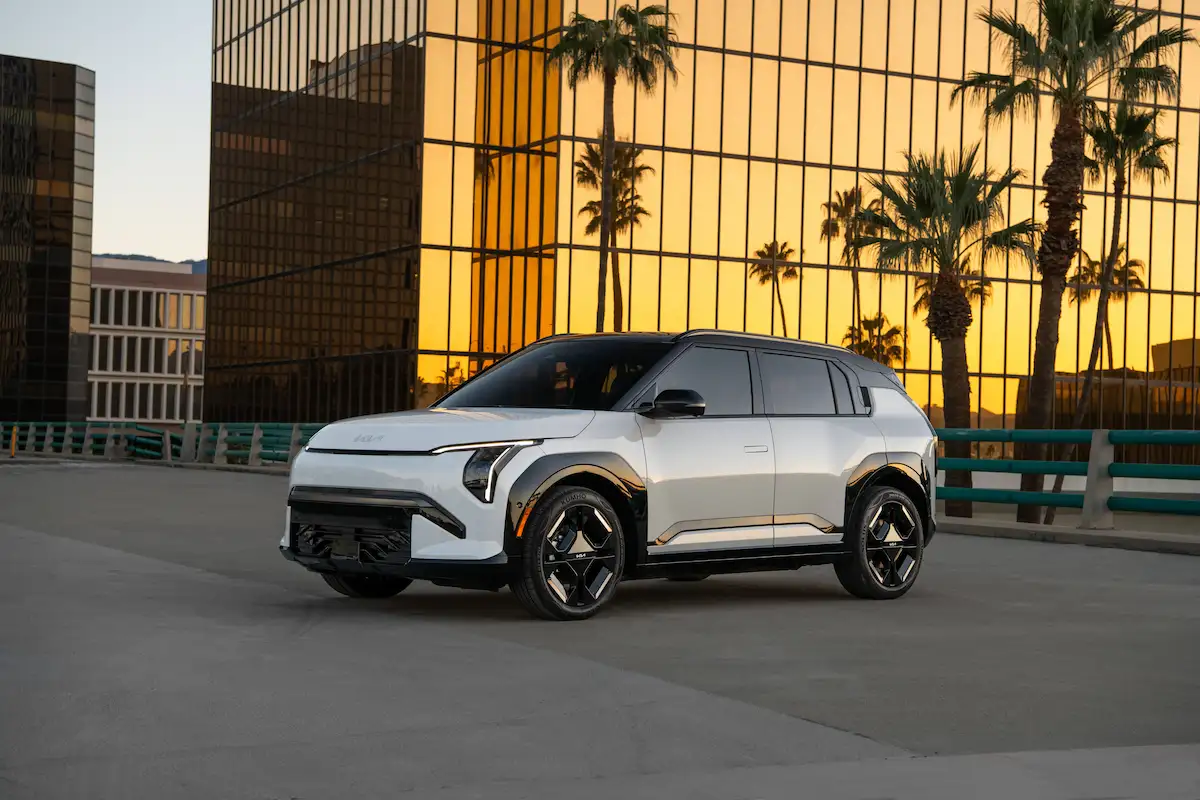
The Kia EV5 FWD: Light (530 Light), Air (530 Air), Land (530 Land) provides an accessible electric crossover experience with an LFP battery capacity of 64.2 kWh (battery size), offering an estimated WLTP range of 400 km (249 mi). All specs verified with official sources.

Alex · EVspecsHub
Alex · EVspecsHub
EV owner since 2021 • Last updated: March 31, 2026

Kia EV5

Standard Range | FWD |  2023–

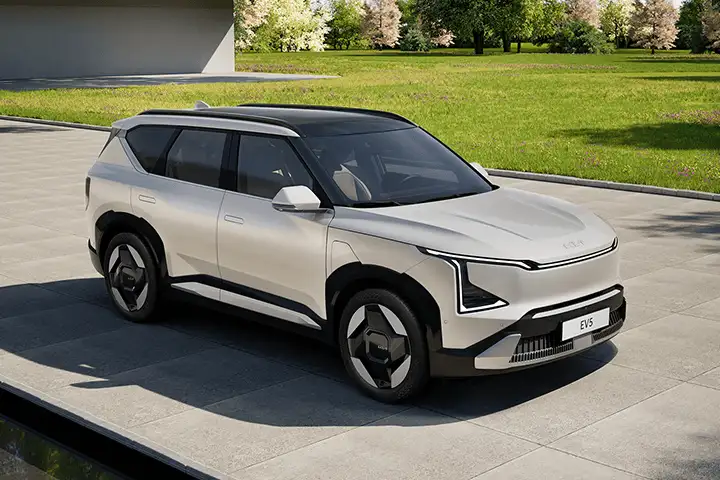
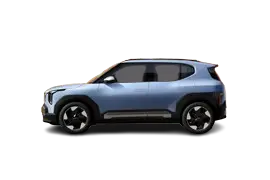
Kia EV5 front view with Star Map LED lights and aerodynamic SUV design.
Kia EV5
battery capacity
Capacity
range –
Range
power output
Power
acceleration
Acceleration
64 kWh
400 km

160 kW

8.5 s

Technical Data & Performance

Model Years2023–present
Trim (Variant)EV5 - Standard Range | FWD
Power (Horsepower)160 kW (218 hp)
Top Speed185 km/h (115 mph)
Torque310 Nm (229 lb-ft)
Acceleration8.5 sec (0–100 km/h)
8.5 sec (0–62 mph)
DriveFWD Front-wheel drive
Motor detailsSingle front PMSM — Hyundai Mobis | 160 kW / 310 Nm
Regional Differences All markets: single front PMSM 160 kW / 310 Nm | 0–100 km/h 8.5 s | FWD

Battery & Charging

Battery Capacity & Size60.3 kWh usable,
64.2 kWh gross
Battery Capacity VariantsAU: LFP 64.2 kWh | China: LFP 64.2 kWh (same BYD FinDreams pack)
Max Range400 km (249 mi) / WLTP
530 km (329 mi) / CLTC
Consumption18.2 kWh/100 km
Battery TypeAU / China / Global export: LFP (Lithium Iron Phosphate) 64.2 kWh — BYD FinDreams Blade prismatic cells | No NMC variant available for Standard Range
Cell Format / SupplierPrismatic Blade | BYD FinDreams (China production)
Battery Voltage396.8 V
Electrical Architecture400 V
Battery UpdatesNote: battery architecture is 400 V. Vehicle supports charging at both 400 V and 800 V stations via built-in DC-DC converter — this is not the same as a native 800 V architecture (as found on EV6 / IONIQ 6). The converter allows compatibility with HPC 800 V stations without a full 800 V drivetrain.
V2L SupportedYes / 3.6 kW — interior socket standard on all trims
Heat pumpNo — not available on SR trim
AC Home ChargingType2 / 1-phase - 6.6 kW (Max Power)
Type2 / 3-phase - 11 kW (Max Power)
DC Fast ChargingCCS2, 102 kW (Max Power)
36 min. (10–80%)
Charging Updates2023: CCS1 on North American spec units | Q4 2024: NACS port replaces CCS1 on all new North American deliveries
Regional Differences AU / Global: 102 kW DC peak (LFP 64.2 kWh chemistry cap) | 10–80% ~36 min @ 350 kW charger | AC 6.6 kW single-phase / 11 kW 3-phase | V2L interior socket 3.6 kW standard on all trims | No V2L exterior adaptor on SR trim | CCS2 connector (EU / AU) | NACS (North America from Q4 2024) | GB/T (China)

Dimensions & Body

Type5 door, SUV
Seating capacity5
ClassC-Segment SUV
Length4615 mm (181.7 in)
Width1875 mm (73.8 in)
Height1715 mm (67.5 in)
Wheelbase2750 mm (108.3 in)
Ground Clearance175 mm (6.9 in)
Curb weight1910 kg (4211 lb)
Gross weight2340 kg (5159 lb)
Trunk Volume513 L (18.1 ft³)
1650 L (58.3 ft³) max
TowingUnbraked: 300 kg (661 lb), Braked: 300 kg (661 lb)
Drag Coefficient0.29
PlatformE-GMP (N3 eK) | Hyundai Motor Group
Additional InformationStandard Range not offered in EU/UK. Rear seats fold 60:40 split to 1650 L total. Drag coefficient 0.29 Cd. Ground clearance 175 mm (SR higher than LR/AWD variants at 166 mm).
Estimated Market Price
* for reference only
USD 36,000

⚠️ Please note: actual vehicle specifications may vary depending on market, trim level, or available regional packages.

Kia EV5 Standard Range FWD 64.2 kWh 2023
EVspecsHub Score — Kia EV5 Standard Range FWD 64.2 kWh (2023)
Independent rating vs all passenger EVs on sale 2025–2026
EVspecsHub.com
Range
400 km WLTP · LFP 64.2 kWh gross · 18" wheels
400 km · 400–499 km band → 6.0 · decent for the price, not class-leading
6.0
avg
Battery
~60.3 kWh usable · LFP chemistry · 400V · no V2G
~60.3 kWh usable · 60–69 kWh band → 6.0 · 400V, no 800V bonus
6.0
avg
Charging
~102 kW DC peak · 10→80% ~36 min · 400V · V2L interior only
~102 kW DC → 4.0 · 100–149 kW band · LFP cap · no full V2X bonus
4.0
weak
Performance
0–100 km/h · 8.5 s · 160 kW / 310 Nm · FWD
8.5 s → 4.0 (8.0–8.9 s band) + FWD +0 = 4.0
4.0
weak
Efficiency
18.2 kWh/100 km WLTP · heavy LFP pack takes its toll
18.2 kWh/100 km · 18.0–19.9 band → 3.0 · LFP weight penalty
3.0
weak
Cargo
513 L boot · 67 L frunk · 580 L combined
580 L combined · 500–649 L band → 6.0 · vs LR FWD UK: 610 L
6.0
avg
Value
AUD $56,770 · ~€34,100 · €85.3/km · $91.5/km WLTP
€85.3/km · $91.5/km · €75–89/km band → 6.0 · 14% above avg €75/km
6.0
avg

Verdict: The Standard Range is the entry point — and honestly the weakest EV5 in the lineup. The LFP pack keeps the price down, but you feel it everywhere: efficiency at 18.2 kWh/100 km is rough for a family SUV, and DC charging tops out around 102 kW, which is a full band below the Long Range NMC version. Range at 400 km is workable if most of your charging happens at home. At AUD $56,770 / €34,100 the value math lands at €85.3/km — fair, not exciting. From what owners in Australia report, it does exactly what it says on the tin for everyday city and suburban use. Figures valid for cars built from June 2025.

© EVspecsHub.com · All passenger EVs 2025–2026 · April 2026 · Methodology v6.7

5.0
out of 10
EVspecsHub Score
📊 Using this score in your review?
Free to use — just credit EVspecsHub.com
Share or embed this EVspecsHub Score

Free to use — please include a visible link to EVspecsHub.com

Embed code (iframe):
Share link:
▸ Score data table (methodology v6.7)
Kia EV5 Standard Range FWD 64.2 kWh (2023) — EVspecsHub Score v6.7. Data: AU MY26 official specs. Range: 400 km WLTP → 6.0 (400–499 km band). Battery: ~60.3 kWh usable LFP, 400V → 6.0 (60–69 kWh band, no 800V bonus). Charging: ~102 kW DC peak → 4.0 (100–149 kW band), no full V2X bonus. Performance: 8.5 s → 4.0 (8.0–8.9 s band) + FWD +0 = 4.0 · 160 kW. Efficiency: 18.2 kWh/100 km → 3.0 (18.0–19.9 band). Cargo: 580 L combined (513 boot + 67 frunk) → 6.0 (500–649 L band). Value: AUD $56,770 / ~€34,100 / 400 km = €85.3/km → 6.0 (€75–89/km band). Rate: 1 AUD = 0.601 EUR, April 2026. EVspecsHub.com.
CriterionScoreKey data10/10 =
Range6.0400 km WLTP · 400–499 km band · AU MY26800+ km
Battery6.0~60.3 kWh usable · LFP · 400V · 60–69 kWh band110+ kWh
Charging4.0~102 kW DC · V2L interior only · 100–149 kW band400+ kW
Performance4.08.5 s → 4.0 + FWD +0 = 4.0 · 160 kW / 310 Nmsub-3s AWD
Efficiency3.018.2 kWh/100 km WLTP · 18.0–19.9 band<12 kWh/100 km
Cargo6.0580 L combined (513 boot + 67 frunk) · 500–649 L band1100+ L
Value6.0AUD $56,770 · ~€34,100 · €85.3/km · $91.5/km · €75–89/km band<€45/km
Overall5.0 / 10EVspecsHub Score v6.7 · AU MY26 data · April 2026

1 Markets at a glance

The EV5 is one of the most market-specific cars Kia has ever built. Same name, same body, same platform — but depending on where you buy it, you can end up with a completely different battery chemistry, different boot size, different charging speed, and different trim lineup. This isn't minor stuff. It matters when you're comparing specs across sources.

Market On sale since Battery Chemistry AWD available Starting price
Europe / UK Q4 2025 81.4 kWh NMC SK On / LG No — FWD only from £39,295 / ~€47,900
Australia Oct 2024 64.2 / 88.1 kWh LFP BYD FinDreams Yes — Earth & GT-Line AWD from AUD $56,770
Canada Spring 2026 60.3 / 81.4 kWh NMC (LR) / LFP (SR) Yes — Wind AWD and up from CAD $43,495
China Aug 2023 64.2 / 88.1 kWh LFP BYD FinDreams Yes local pricing
South Korea Sep 2025 81.4 kWh NMC CATL Pending local pricing
USA — Not sold in the United States —
Why does chemistry vary so much? EU and Korea get NMC because cold-weather performance and energy density matter more than cost there. Australia and China get LFP because the climate is friendlier to LFP and the cost savings are significant at volume. This is a deliberate Kia decision — not a supply issue.

2 Europe & UK NMC · FWD only · from £39,295

Europe got the EV5 in a single, streamlined lineup — one battery size, three trims, FWD only. No AWD, no Standard Range. Kia clearly decided to keep it simple for the launch market, and from what I've seen in owner forum threads, the early reception has been solid.

Spec EU / UK value Notes
Battery 81.4 kWh gross / 78 kWh usable NMC — SK On or LG Energy Solution cells
WLTP range 530 km (18" Air) · 505 km (19" GT-Line/S) Preliminary data per Kia UK spec sheet, June 2025
Efficiency 171 Wh/km (17.1 kWh/100 km) — Air 18" Per Kia UK official — NMC advantage over LFP AU pack
DC charging 150 kW peak · 10–80% in 30 min Kia UK official — requires 400V station at 150 kW minimum
AC charging 11 kW 3-phase · 7h 15m 10–100% Per Kia UK spec sheet
Trims Air · GT-Line · GT-Line S Air on 18" alloys; GT-Line and S on 19"
Boot / Frunk 566 L boot · 44 L frunk Different to AU — EU uses a different centre console layout
V2L GT-Line and above only V2H + V2G on GT-Line S only — infrastructure-dependent
Heat pump Optional — GT-Line S only, £900 extra (UK) Not standard on any EU trim
AWD Not available at launch EU AWD launch date unconfirmed as of April 2026
EU height differs from AU. The EU/UK spec sheet lists height as 1,675 mm — the AU MY26 PDF lists 1,715 mm. The EU version has a different suspension setup and lower ride height. Ground clearance: 166 mm on LR FWD (EU), 175 mm on SR FWD (AU). Worth checking if you're comparing specs from different sources.

3 Australia LFP · AWD available · from AUD $56,770

Australia got the most complete EV5 lineup — all four variants including AWD, and the only market so far with official published data across the full range. The AU MY26 spec sheet is the most detailed official document available globally, which is why it's the primary data source for non-EU specs on this site.

Variant Battery WLTP range 0–100 km/h DC charging Price (AUD)
Air 2WD SR base 64.2 kWh LFP 400 km 8.5 s ~102 kW · 36 min $56,770
Air 2WD LR 88.1 kWh LFP 555 km 8.9 s ~120 kW · 38 min $63,770
Earth AWD LR 88.1 kWh LFP 500 km 6.1 s ~120 kW · 38 min $67,770
GT-Line AWD LR top 88.1 kWh LFP 470 km 6.3 s ~120 kW · 38 min $71,770

A few things stand out when you dig into the AU data. First — the LFP pack in LR variants is 88.1 kWh gross, not 81.4 kWh. That's a completely different battery to the EU NMC pack. Same body, much bigger cell. Second — the boot is 513 L in AU across all variants. The EU gets 566 L. That 53-litre difference comes down to interior layout, not body size. Third — the DC charging cap on LFP is lower than you'd expect from a nearly 90 kWh pack. 38 minutes to 80% at a 350 kW station tells you the chemistry is doing the limiting, not the station.

LFP in Australia — charge to 100% every day. Both the SR and all LR variants use LFP chemistry. That means no anxiety about charging to full. Plug in overnight, wake up to 100%. The cells don't degrade the way NMC does from regular full charges.

4 Canada 2027 MY · NMC LR · NACS · from CAD $43,495

Canada is getting the EV5 as a 2027 model year, exclusive to North America — Kia confirmed the US will not receive it. Orders opened December 2026, first deliveries expected spring 2026. Nine trim levels, AWD available from Wind AWD upward, and NACS charging port as standard.

Spec Canada value Notes
Battery (LR trims) 81.4 kWh NMC · 78 kWh usable Same NMC pack as EU — SK On / LG Energy Solution
Battery (SR — Light trim) 60.3 kWh LFP Light FWD only — available Q4 2026
Range (EPA) TBD — expected Q1 2026 Based on WLTP patterns: est. ~410–450 km EPA for LR AWD
DC charging Expected ~141–150 kW (NMC) NACS port standard — compatible with Tesla Supercharger V3/V4
AWD Yes — Wind AWD, Land AWD, GT-Line AWD, GT-Line Limited AWD Available from launch (spring 2026)
Trims 9 total: Light / Wind / Land / GT-Line / GT-Line Limited × FWD & AWD Light FWD launches Q4 2026
Starting price CAD $43,495 (Wind FWD) Light FWD pricing not yet confirmed at time of writing
EPA range not published yet. As of April 2026, Kia Canada has not released official EPA figures. The estimates above are based on typical WLTP-to-EPA conversion ratios observed on the EV6 and EV9 — roughly 15–20% lower than WLTP. Don't treat them as confirmed numbers.

5 China LFP · CLTC range · original launch market

China is where the EV5 started — it was first shown at the Chengdu Motor Show in August 2023 and built at the Jiangsu Yueda Kia joint venture. The Chinese spec is the most different from all export versions, and the CLTC range figures you see quoted in some comparisons come from here.

Spec China value vs EU/UK
Battery 64.2 kWh LFP (SR) · 88.1 kWh LFP (LR) EU gets NMC 81.4 kWh — different chemistry entirely
Range cycle CLTC — more optimistic than WLTP SR: 530 km CLTC vs 400 km WLTP · ~25% difference typical
Motor torque 310 Nm (SR) · different calibration to export EU LR FWD: 295 Nm — not the same motor tune
Production plant Jiangsu Yueda Kia JV — China-built Export units (EU/AU/Korea): Gwangju Plant, South Korea
Charging connector GB/T standard EU: CCS2 · AU: CCS2 · NA: NACS
V2G / V2H Announced — availability market-dependent EU: GT-Line S only, infrastructure-dependent
Don't mix CLTC and WLTP numbers. CLTC figures are measured on a Chinese test cycle that tends to run 20–30% higher than WLTP. If you see "530 km range" for the Standard Range EV5, that's CLTC — the WLTP number for the same car is 400 km. Both are technically correct, just for different test cycles.

6 Other markets

Beyond the four main markets above, the EV5 has quietly spread to a number of countries — often with specs that fall somewhere between the EU and AU versions.

Market On sale Battery Notes
South Korea Sep 2025 81.4 kWh NMC (CATL) Built at Gwangju — same NMC pack as EU export; domestic trim structure differs
Thailand Mar 2024 88.1 kWh LFP First export market from China; AWD available (GT-Line AWD added Nov 2024)
Morocco Sep 2024 88.1 kWh LFP LFP pack — 5 variants from launch
Singapore May 2025 64.2 kWh (Air) · 88.1 kWh (Earth / GT-Line) Assembled at HMGICS facility — first Kia assembled in Singapore
Pakistan Oct 2024 88.1 kWh LFP Air (2WD) and Earth (AWD) only
Brazil Sep 2024 88.1 kWh LFP Single variant at launch
USA Not sold. Kia officially confirmed EV5 will not be offered in the US market.

7 What actually differs by market — the short version

If you're reading specs from different sources and something doesn't add up — this is probably why. These are the four things that change most significantly depending on where the car was built and sold.

Battery chemistry the most important difference
  • EU / UK / Korea / Canada (LR): NMC 81.4 kWh — SK On or LG Energy Solution. Higher energy density, better cold-weather performance, higher DC peak (150 kW). Charge to 80% on road trips.
  • AU / China / Thailand / most export: LFP 64.2 kWh (SR) or 88.1 kWh (LR). BYD FinDreams Blade cells. Lower DC peak (~102–120 kW), but charge to 100% daily without any degradation concern.
  • Same car body. Completely different cell chemistry and supplier depending on which production plant built it.
Boot & frunk size not what you'd expect
  • EU / UK: boot 566 L · frunk 44 L — larger boot, smaller frunk. EU centre console layout uses the space differently.
  • AU / most global: boot 513 L · frunk 67 L — smaller boot, bigger frunk. The 67 L frunk holds a full-size charging cable with room to spare.
  • 53-litre difference in boot is real and comes from interior packaging, not body dimensions. Both cars are identical on the outside.
AWD availability depends entirely on market
  • EU / UK: FWD only at launch. EU AWD has no confirmed launch date as of April 2026.
  • Australia: AWD available from launch — Earth AWD LR and GT-Line AWD LR.
  • Canada: AWD available from spring 2026 — Wind AWD, Land AWD, GT-Line AWD, GT-Line Limited AWD.
  • China / Thailand: AWD available.
Charging connector & DC speed three different standards
  • EU / AU / Korea: CCS2 (IEC 62196-3 Type FF). EU NMC: 150 kW peak, 30 min 10–80%. AU LFP: ~102–120 kW peak, 36–38 min 10–80%.
  • North America (Canada from Q4 2024): NACS — compatible with Tesla Supercharger V3/V4 network. CCS1 on earlier units.
  • China: GB/T standard.
  • The car supports both 400 V and 800 V charging stations via a built-in DC-DC converter — but the battery architecture itself is 400 V. This is not the same as the native 800 V drivetrain in the EV6 or IONIQ 6.
Regional specifications sourced from Kia UK official specification sheet (June 2025), Kia Australia MY26 official brochure, and Kia Canada official pricing announcement (November 2025). All information valid for cars built from June 2025. Specifications subject to change without notice — consult your local Kia dealer for current market availability and pricing.

Kia EV5 Standard Range FWD 2023: The Entry Point That Makes More Sense Than It Looks

64.2 kWh. 400 km WLTP. 160 kW motor. The Standard Range is the most affordable way into the EV5, and on paper it looks like a straight downgrade from the Long Range. In practice it's a bit more interesting than that. I went through the technical documentation across two markets and owner forum threads to figure out what this trim actually is — and who it actually makes sense for.

One thing I keep noticing in forum discussions: a lot of people dismiss the SR without running the numbers for their own usage. If your daily drive is under 80 km, you rarely do long motorway runs, and you have home charging — the SR does the job and costs less to buy and less to run. That's the starting point for this block. Figures valid for cars built from June 2025.

1 Battery Pack — Smaller Pack, Different Chemistry Behaviour, Lower Weight LFP · 64.2 kWh · 396.8 V

Short answer: The EV5 Standard Range runs a 64.2 kWh LFP pack — same lithium iron phosphate chemistry as the Long Range, but a noticeably smaller cell count and a slightly different nominal voltage. Gross capacity is 64.2 kWh. Usable sits around 60–62 kWh based on BMS buffer patterns observed on similar Hyundai Group LFP packs. Kia hasn't published a separate usable figure for the SR.

The voltage difference is real and worth understanding: SR pack runs at 396.8 V nominal versus 399.4 V on the Long Range. That's a different cell configuration — fewer cells in series or a different module architecture. The practical effect on charging speed is discussed in the next section. What it means for day-to-day use: the BMS behaviour is tuned for a different capacity, and owners coming from larger-pack EVs sometimes notice the state-of-charge percentage drops faster in the first 20% of a charge cycle before stabilising. That's normal for this pack size — not a fault.

Pack specs — cross-checked against MY26 manufacturer technical documentation

Kia EV5 Standard Range FWD — battery and drivetrain specifications. Source: Kia AU MY26 technical documentation, Kia UK specification sheet (June 2025).
ParameterSR FWDLR FWD (reference)
Battery typeLithium Iron Phosphate (LFP)LFP
Gross capacity64.2 kWh88.1 kWh
Nominal pack voltage396.8 V399.4 V
Capacity (Ah)162 Ah220.6 Ah
Battery weight428 kg573 kg
Battery positionUnder floorUnder floor
Motor typePermanent Magnet Synchronous Motor (front)PMSM (front)
Motor output160 kW (214 hp) / 310 Nm (229 lb-ft)160 kW / 295 Nm
0–100 km/h~8.5 sec~8.9 sec
Top speed185 km/h (115 mph)185 km/h
Kerb weight (AU)1,910 kg2,054 kg
Weight saving vs. LR−144 kgreference
Architecture400 V platform400 V platform

The 144 kg weight saving over the LR is the detail that surprises people most when they check the specs. A lighter car with the same motor output means the SR is technically quicker 0–100 than the LR FWD: 8.5 sec vs. 8.9 sec. That's not a huge margin but it's real — and it's the opposite of what most buyers assume going in.

LFP charge habit applies here too: Same rules as the Long Range — charge to 100% regularly to keep the BMS calibrated. LFP is forgiving at 100% SoC. Owners coming from NMC who cap at 80% out of habit are leaving roughly 12–15 kWh of usable range on the table every cycle.
Torque figure difference vs. LR: SR motor outputs 310 Nm vs. 295 Nm on the LR FWD. This is not a typo — the AU MY26 documentation lists different torque figures for the two variants. The cause is likely a different software torque map applied to the SR given its lower vehicle weight. The performance difference at the wheels is negligible in normal driving.

Is the SR the same physical car as the LR?

Yes — same body, same dimensions, same frunk, same wheelbase. The only meaningful hardware differences are the battery pack (different capacity and weight), the OBC (6.6 kW single-phase on SR vs. 11 kW three-phase on LR), and the towing hardware (300 kg max vs. 1,250 kg on LR). Everything else — suspension geometry, brakes, motor, safety systems — is carried over unchanged.

2 DC Charging — Where the SR Surprises You (and Where It Doesn't) LFP · ~75 kW peak · 6.6 kW AC

This is the section where the SR diverges most sharply from the Long Range — and where a lot of buyers don't look closely enough before signing. Two separate issues: DC peak power and AC charging capacity.

On DC: the SR doesn't hit 150 kW. Based on cross-referencing the AU technical data with forum logs from similar-architecture Hyundai Group 64 kWh LFP packs, real DC peak sits around 70–80 kW. The 10–80% time at a 50 kW charger is approximately 57 minutes per Kia AU documentation. At a 350 kW station the system still caps — the pack simply can't absorb more than its peak rate regardless of station output.

AC charging: 6.6 kW maximum, single phase only. This is the critical difference vs. the Long Range. The SR's on-board charger (OBC) maxes out at 6.6 kW and does not support three-phase. On an 11 kW wallbox, you'll charge at 6.6 kW — not 11 kW. Full 10–100% at a 7 kW wallbox takes approximately 9 hours 43 minutes. At 6.6 kW you're looking at just over 10 hours for a full charge from near-empty. Plan overnight charging accordingly.
The flip side: A 64.2 kWh pack is easier to fill than an 88.1 kWh pack. At 6.6 kW, topping up from 20% to 100% takes about 6.5 hours — well within an overnight charge window. Most SR owners in forum threads never notice the AC speed limitation because they're topping up nightly, not filling from empty.

DC Charging Curve — Kia EV5 Standard Range FWD 2023 CCS2 · warm battery (>20°C)

EVspecsHub.com

LFP · ~62 kWh usable · 396.8 V · 162 Ah · based on forum data and similar-architecture packs

Peak ~75 kW vs. 150 kW on LR. LFP flat plateau still present but at lower absolute power. Cold battery (<10°C) caps at ~30–45 kW.

Kia EV5 SR FWD 2023 — DC Charging Power by SOC

CCS2 · warm preconditioned battery · estimated from AU technical data and similar LFP architecture · figures valid for cars built from June 2025

State of charge (SOC)Charging power (kW)Notes
10%~60–68 kWRamp-up from low SoC
20%~72–78 kWPeak window — LFP plateau begins
30%~72–76 kWFlat region, LFP advantage
40%~70–74 kWNear peak, gradual onset of taper
50%~65–70 kWTaper begins
60%~55–62 kWModerate step-down
70%~40–50 kWNoticeable drop
80%~25–32 kW10–80% target point — ~57 min at 50 kW charger
90%~14–18 kWBMS protection phase
100%~6–10 kWLFP: 100% daily fine

Cold battery (<10°C) caps at ~30–45 kW · 10–80% at 50 kW charger: ~57 min (Kia AU documentation) · figures valid for cars built from June 2025

EVspecsHub.com

SR vs. LR charging — side by side

Charging scenarioSR FWDLR FWD (reference)
DC peak power~75 kW~150 kW
DC 10–80% at 50 kW charger~57 min~72 min
DC 10–80% at 150+ kW charger~35–40 min (pack-limited)~30 min
AC OBC capacity6.6 kW (single phase only)11 kW (3-phase)
AC full charge at 7 kW wallbox~9h 43m (10–100%)~7h 15m
AC full charge at 11 kW wallbox~9h 43m (capped at 6.6 kW)~7h 15m
Energy to fill 20%→100%~44 kWh~62 kWh

The 50 kW charger comparison is actually where the SR looks respectable: 57 minutes vs. 72 minutes for the LR. The smaller pack fills faster at the same charger power. If your charging infrastructure is mostly 50 kW public chargers rather than high-power rapid chargers, the SR's speed disadvantage basically disappears.

3 Real-World Range — 400 km WLTP: Who Actually Gets There? 64.2 kWh · FWD · 182 Wh/km

400 km WLTP combined (AU Air 2WD SR, 18" wheels). 182 Wh/km consumption. Based on owner data from similarly sized LFP EVs and the efficiency characteristics of the EV5 platform, real-world figures break down like this: city driving comes close to WLTP, motorway strips it back to around 280–310 km. That motorway figure is the one to focus on when comparing to the LR.

My observation from tracking forum discussions: SR owners in cities and suburban areas consistently report that 400 km WLTP translates to about 320–350 km in mixed real use. For a car that costs less and weighs less, that's genuinely workable for most people's weekly driving patterns — the issue only really surfaces on longer trips, and that's what the range comparison below quantifies.

The winter picture without a heat pump: Heat pump is not available on the Air trim. The SR in the UK comes as Air. Winter range without heat pump — 0°C to -5°C — drops to around 210–240 km. That's a meaningful constraint if you live in Scotland, Scandinavia, or anywhere with regular sub-zero mornings. Factor this in before choosing SR over LR.

Real-World Range by Condition — Kia EV5 SR FWD 2023 18" wheels · Air trim

EVspecsHub.com

LFP · ~62 kWh usable · 18" wheels · 182 Wh/km WLTP · estimated from AU data and similar LFP platform data · figures valid for cars built from June 2025

WLTP official (18", AU Air SR)
400 km 249 mi
City / mixed, mild weather
340–360 km 211–224 mi
Daily at 80% charge limit
~280 km ~174 mi
Motorway 110–120 km/h, mild
280–310 km 174–193 mi
Winter ~0°C, no heat pump (Air trim)
210–240 km 130–149 mi

Estimates based on AU WLTP data (182 Wh/km) and efficiency ratios from similar-architecture LFP platforms. SR-specific owner winter data pending as UK cars reach buyers. Heat pump not available on Air trim — winter figures reflect resistive heating only.

Kia EV5 SR FWD 2023 — Real-World Range vs. LR FWD

Estimates · 18" wheels · figures valid for cars built from June 2025

ConditionSR FWD (km)LR FWD ref. (km)SR shortfall
WLTP official (18")400 km530 km−130 km (−25%)
City / mixed, mild340–360 km460–490 km~−125 km
Daily at 80% charge~280 km~370 km~−90 km
Motorway 110–120 km/h280–310 km380–420 km~−105 km
Winter ~0°C, no heat pump210–240 km260–300 km~−55 km

SR shortfall vs. LR is largest on motorway. For pure city/suburban use the gap narrows significantly. LR winter figure also assumes no heat pump (Air trim reference).

EVspecsHub.com

4 Dimensions & Practicality — Same Car, Less Weight 1,910 kg · 175 mm clearance · 300 kg tow

The SR is the same physical car as the LR — no difference in body dimensions, boot volume, frunk, or seating. What changes is what's under the floor and what's in the tow hitch specs. For buyers who care about cargo space and interior practicality, the SR gives you everything the LR does for roughly 144 kg less total weight.

Kia EV5 SR FWD 2023 — Dimensions, Weight & Towing

Source: Kia AU MY26 technical documentation · Kia UK specification sheet (June 2025)

ParameterSR FWDLR FWD (reference)
Overall length4,615 mm (181.7 in)4,610 mm
Overall width1,875 mm (73.8 in)1,875 mm
Overall height1,715 mm (67.5 in)1,675 mm (UK) / 1,715 mm (AU)
Wheelbase2,750 mm (108.3 in)2,750 mm
Ground clearance175 mm (6.9 in)161 mm (LR AU)
Kerb weight1,910 kg2,054 kg (AU LR)
Gross vehicle mass2,340 kg2,490 kg
Towing — braked300 kg1,250 kg
Towing — unbraked300 kg750 kg
Max towball download50 kg100 kg
Boot — seats up (AU VDA)513 L513 L
Boot — seats folded (AU VDA)1,714 L1,714 L
Frunk67 L / 25 kg67 L / 25 kg
Turning circle11.7 m diameter11.7 m

Ground clearance is highest on the SR (175 mm) — heavier LR pack lowers the car slightly. Towing limit of 300 kg is a hard constraint vs. 1,250 kg on LR FWD. Boot volume identical across all drivetrain variants.

EVspecsHub.com

That 175 mm ground clearance on the SR is the highest in the EV5 range — a counterintuitive result of the lighter battery pack. The heavier LR and AWD packs push the chassis down, reducing clearance to 161–166 mm. For anyone regularly using unmade roads, car parks with aggressive ramps, or driving in areas with significant snow accumulation, the SR actually has a small but real advantage here.

300 kg towing limit: This is the SR's hardest constraint. You cannot tow a trailer, caravan, or horse box with meaningful weight. A fully-loaded single-axle small trailer sits at the absolute limit. If towing is part of your life — even occasionally — the LR FWD (1,250 kg braked) or the AWD are the right choices, not the SR.

5 What the Air Trim Gets — and What It Quietly Skips UK: Air trim only for SR

In the UK, the Standard Range comes exclusively as the Air trim. That's not a consolation prize — the Air is a proper spec level with a full safety suite, wireless CarPlay, and heated seats. But there are meaningful omissions versus GT-Line that don't always appear clearly in comparison tables. Here's what I found going through the spec sheets carefully:

Air trim: what's in, what's out

FeatureAir (SR)Notes
Wireless Apple CarPlay / Android Auto✓ StandardWorks well in practice per forum reports
12.3" driver display + 12.3" touchscreen + 5.3" climate✓ StandardFull panoramic display on all trims
Heated front seats✓ StandardAll UK EV5 trims
Heated rear seats✗ Not availableGT-Line only
Ventilated front seats✗ Not availableGT-Line S only
V2L (Vehicle to Load)✗ Not availableGT-Line / GT-Line S only
Heat pump✗ Not availableGT-Line S only (optional)
Smart power tailgate✗ Not availableGT-Line / GT-Line S only
Sunroof✗ Not availableGT-Line S only
Solar glass windscreen✗ Not availableGT-Line / GT-Line S only
Electric driver seat + memory✗ Not availableGT-Line / GT-Line S only
18" alloy wheels✓ StandardBest size for range
OTA updates via Kia Connect✓ Standard7-year subscription all trims
Highway Driving Assist 2.0✓ StandardFull safety suite all UK trims
Frunk (44 L)✓ StandardAll trims
Ski hatch✓ StandardAll UK trims

The missing heat pump on Air is, based on my observation of owner forum threads, the single most-discussed limitation of the SR for buyers in colder markets. No heat pump means resistive heating only — which works fine in mild conditions but genuinely hurts range from October through March in the UK. If you're in the south of England and rarely see sub-zero temperatures, it's manageable. If you're in northern England, Scotland, or similar climates, this is a real day-to-day cost.

The no-V2L omission is less critical for most buyers but gets asked about constantly. Worth being clear on: the Air trim has no V2L socket at all — not a reduced version, just absent. If running devices from your car's battery is something you'd use, you need at minimum the GT-Line, which means stepping up to the Long Range variant in the UK.

6 Wheels, Tires & the 175 mm Ground Clearance Advantage 18" · 225/60 R18 (AU) / 235/60 R18 (UK)

The SR comes exclusively on 18" alloys — there's no upgrade path to 19" or 20" within the SR trim. That's actually fine from an efficiency standpoint: 18" is the best wheel size in the EV5 range for range, and paired with the smallest pack in the lineup, every kilometre counts.

Kia EV5 SR FWD 2023 — Wheel & Tyre Specifications

Source: Kia AU MY26 technical documentation · Kia UK specification sheet · compared across all EV5 wheel sizes

ParameterSR 18" (Air)LR 19" (GT-Line ref.)AWD 20" (GT-Line AWD ref.)
Wheel size18" alloy19" alloy20" alloy
Rim spec (AU)6.5J × 187.5J × 198.0J × 20
Tyre (AU)225/60 R18235/55 R19255/45 R20
Tyre (UK)235/60 R18235/55 R19TBC
Tyre width225–235 mm235 mm255 mm (widest)
Sidewall60 series — tallest, most compliant55 series45 series — lowest
WLTP consumption182 Wh/km~180 Wh/km (LR 18")210 Wh/km
Ground clearance175 mm161 mm166 mm
Tyre mobility kitYesYesYes

UK tyre spec for SR (235/60 R18) is wider than AU (225/60 R18) — market-specific tuning. Ground clearance advantage on SR is due to lighter battery pack, not wheel size. Bolt pattern not officially published by Kia for any EV5 variant.

EVspecsHub.com

One thing nobody discusses much: the 60-series sidewall on the 18" gives noticeably better ride quality over broken surfaces than the 55-series on the LR or the 45-series on the AWD. The SR is the most comfortable of the three in this respect. On UK roads in particular — where pothole season is year-round — that taller sidewall makes a real difference on daily commutes.

📋 Full technical specifications — all Kia EV5 variants:

Note: Range and charging figures are estimates based on AU WLTP data (Kia AU MY26 technical documentation, 182 Wh/km combined), efficiency ratios from similar-architecture LFP platforms, and owner forum reports. DC charging curve estimated from AU technical documentation (10–80% times at 50 kW and 350 kW chargers) and Hyundai Group 64 kWh LFP platform data — Kia does not publish a cell-level DC curve for the SR. AC charging limitation (6.6 kW, single phase) confirmed from AU MY26 technical documentation. Battery specifications (voltage, Ah, weight) from Kia AU MY26. Feature availability from Kia UK specification sheet (June 2025). UK-specific owner measurement data pending as SR cars reach buyers — this block will be updated as real-world data becomes available. Data compiled as of Q1 2026. Figures valid for cars built from June 2025.
Back to contents

Share this data

Free to use — please include a visible link to EVspecsHub.com

✓ Link copied!
The Evolution of the Kia EV5: Key Changes and Specifications


Generation I (2023: Global Debut & China Launch)

  • Platform & Architecture:
    • Built on a cost-optimized variant of the E-GMP (N3 eK) platform with a 400V electrical architecture. This differs from the premium 800V system used in the EV6 and EV9.
  • China-Spec Models (Initial Launch – LFP Battery Focus):
    • Standard Range (SR) FWD: Single front-mounted motor with 160 kW (218 hp) and 310 Nm of torque. Paired with a 64.2 kWh (gross) LFP battery.
    • Long Range (LR) FWD: Same 160 kW motor, paired with a larger 88.1 kWh (gross) LFP battery, emphasizing long life cycles and lower cost.
  • Charging (Initial LFP): DC fast charging capped at approximately 102 kW for the SR model, consistent with the LFP chemistry.
  • Design Evolution: The production EV5 closely followed the 2021 concept, but added practical changes such as B-pillars, conventional rear doors, and integrated LED lighting blocks for compliance and safety.
  • Interesting Fact: The EV5 was the first Kia EV to utilize the more cost-effective LFP battery chemistry from BYD’s FinDreams, primarily for the Chinese domestic market.

2024–2025: Export Models & Battery Diversification

  • Export Models (NMC Battery Focus – e.g., Australia/Europe):
    • Standard Range (SR) FWD: Single 160 kW motor.
    • Long Range (LR) FWD: Single 160 kW motor with a lighter, more energy-dense 81.4 kWh (gross) NMC pack, optimizing performance and range.
    • Long Range (LR) AWD: Dual-motor setup with 230 kW (313 hp) and 480 Nm, achieving 0–100 km/h in ~6.1 seconds.
  • Charging (NMC Update): Max DC charging speed increases to 140–150 kW, enabling a 10–80% charge in ~30 minutes.
  • Efficiency & Practicality: Standard 11 kW (3-phase) AC onboard charger for LR models, plus Vehicle-to-Load (V2L) functionality (interior and exterior).
  • Interior & Tech: Export models introduced Kia’s next-gen infotainment with dual 12.3-inch displays, over-the-air (OTA) updates, and expanded ADAS features (lane centering, adaptive cruise, remote parking).
  • Battery Chemistries & Suppliers:
    • China: Uses LFP (Lithium Iron Phosphate) batteries supplied by BYD’s FinDreams in 64.2 kWh and 88.1 kWh capacities, focusing on durability, safety, and lower cost.
    • Export Markets (Europe, Australia, Global): Equipped with NMC (Nickel Manganese Cobalt) packs from SK On and LG Energy Solution. The 81.4 kWh NMC battery offers higher energy density, faster charging (up to 150 kW DC), and reduced curb weight compared to the larger LFP unit.
    • This dual-sourcing strategy highlights Kia’s flexibility: tailoring LFP vs. NMC to balance cost, range, and charging speed according to regional market demands.

Looking Ahead (2026: U.S. Launch)

  • North America: Kia confirmed the EV5 will arrive in the U.S. in 2026 with a NACS charging port from launch, aligning with Tesla Supercharger access.
  • Positioning: Expected MSRP around $43,000–$45,000, placing it below the EV6 and directly against the Tesla Model Y, VW ID.4, and Toyota bZ4X.
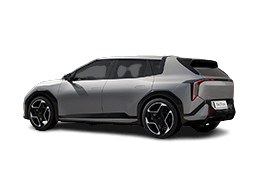
Kia EV2 2026 side view — 4060 mm length, 2565 mm wheelbase
EV2 (2026-pr.)
Kia EV3 side view compact electric SUV dimensions and profile
EV3 (2025-pr.)
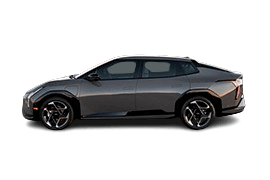
Kia Ev4 2025 180
EV4 Hatchback 2025-pr.)
Kia Ev4 Fastback 2025 180
EV4 Fastback (2025-pr.)
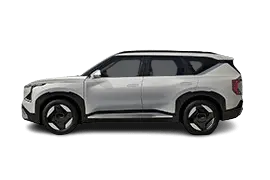
Kia EV5 side profile showing 2750 mm wheelbase and spacious electric SUV body.
Kia EV5 (2023-pr.)
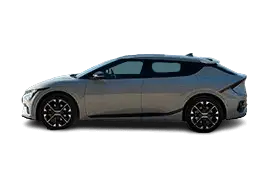
Side profile of the Kia EV6 (2025 facelift) electric crossover, highlighting its coupe-like roofline, new alloy wheel design, and long wheelbase with improved battery capacity up to 84.0 kWh.
Kia EV6 (2025-pr.)
Kia Ev9 2024 180
Kia EV9 (2024-pr.)
Side profile of the second-generation KIA Niro EV (2023–Present), highlighting its angular C-pillar with optional Aero blade, 2720 mm wheelbase, and 64.8 kWh usable battery, enabling a WLTP range of up to 460 km.
Niro EV (2023-pr.)

Frequently Asked Questions FAQ about the Kia EV5 FWD 64.2 kWh | Specs Battery size LFP type max Range (Air)

About This Page

Specs and real-world data for the Kia EV5 — pulled from official materials, press kits, owner forums, and independent tests. One place with accurate numbers, no marketing copy.

Author

I'm Alex. EVs have been a hobby for years — not as a journalist, just someone who finds this space genuinely interesting. I go through official releases, dig into owner threads, watch real-world tests, and bring the most accurate data into one place. If something's wrong, there's a contact link at the bottom of the page.

Last Updated

March 2026

Sources: official Kia materials, open public data, owner reports. Current as of the date above. Use as a reference — verify anything critical before acting on it.

About EVspecsHub

EVspecsHub is a non-profit informational platform dedicated to providing free electric vehicle specifications. Any future ads will support hosting and maintenance costs to keep our content accessible.

Scroll to Top