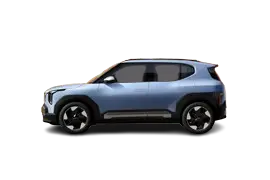
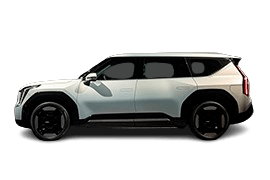
2025 Kia PV5 Cargo 71.2 kWh 71.2 kWh 161 hp Battery, Horsepower, Range
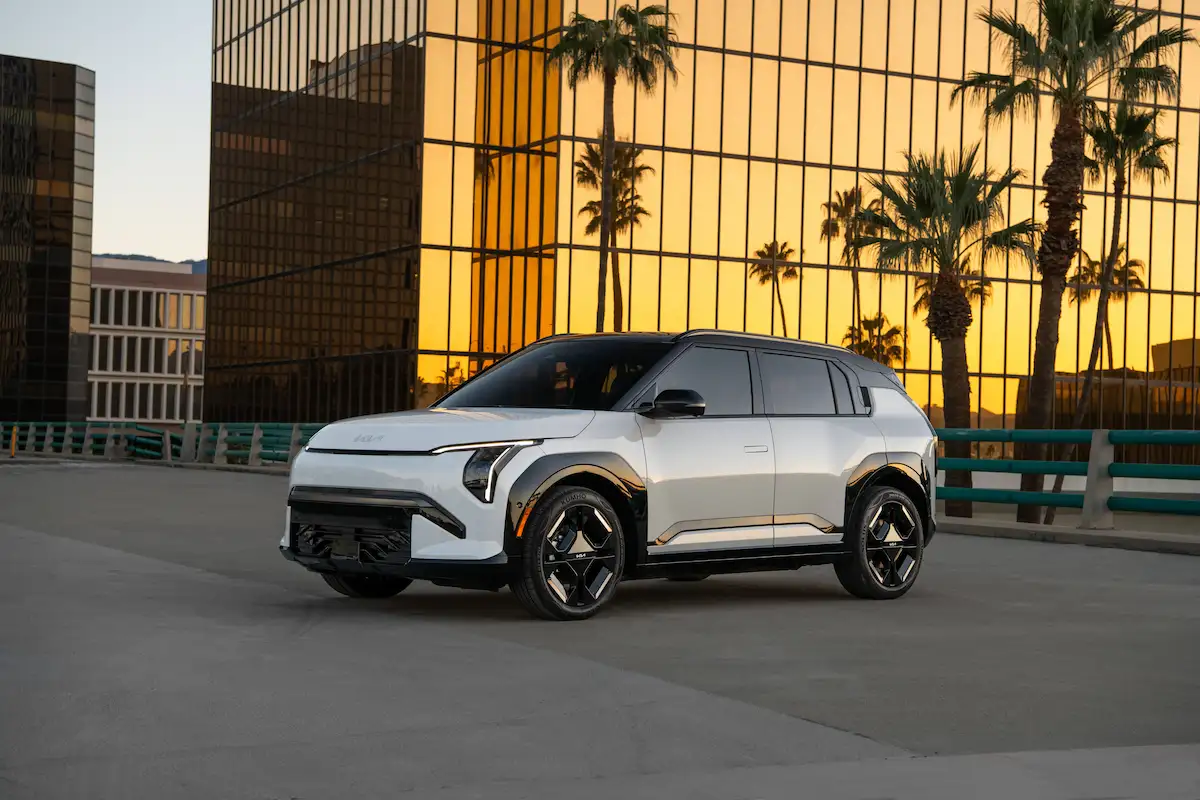







EVspecsHub Score — Kia PV5 Cargo 71.2 kWh NCM (2025)
Independent rating vs all passenger EVs on sale 2025–2026
Range
416 km WLTP · NCM 71.2 kWh · 191 Wh/km combined
6.0
avg
Battery
71.2 kWh · NCM chemistry · 402V · no V2G
7.0
good
Charging
150 kW DC max · 10–80% in 30 min · 402V · no V2L/V2H/V2G standard
5.0
avg
Performance
0–100 km/h 12.4 s · FWD · 120 kW · measured at full payload
2.0
weak
Efficiency
19.1 kWh/100 km WLTP · L2H1 van body · FWD
3.0
weak
Cargo
4,400 L load volume · 4.4 m³ · L2H1 body · 690 kg payload
10.0
top
Value
~€42,600 · ~$46,000 · ~€102.4/km · ~$110.6/km WLTP
6.0
avg
Verdict: The LR Cargo leads the PV5 Cargo lineup at 5.6. Range at 6.0 (416 km WLTP), Battery at 7.0 with the 71.2 kWh NCM pack, and Value at 6.0 (€102.4/km) make this the best cost-per-km in the whole PV5 range. The Cargo score of 10.0 is hard to argue with: 4,400 litres and a verified Guinness World Record of 693.38 km at full payload on public roads. Efficiency drops to 3.0 at 19.1 kWh/100 km — real-world numbers from owner forum posts confirm this is about typical for a loaded van in mixed conditions. Figures valid for cars built from June 2025.
© EVspecsHub.com · All passenger EVs 2025–2026 · April 2026 · Methodology v6.7
5.6
out of 10
EVspecsHub Score
📊 Using this score in your review?
Free to use — just credit EVspecsHub.com
Free to use — just credit EVspecsHub.com
▸ Score data table (methodology v6.7)
| Criterion | Score | Key data | 10/10 = |
|---|---|---|---|
| Range | 6.0 | 416 km WLTP · 400–499 km band | 800+ km |
| Battery | 7.0 | 71.2 kWh NCM · 402V · 70–79 kWh band · no 800V bonus | 110+ kWh |
| Charging | 5.0 | 150 kW DC · 150–199 kW band · no V2X standard | 400+ kW |
| Performance | 2.0 | 12.4 s FWD · 120 kW · 10+ s band · at full payload | sub-3s AWD |
| Efficiency | 3.0 | 19.1 kWh/100 km WLTP · 18.0–19.9 band | <12 kWh/100 km |
| Cargo | 10.0 | 4,400 L · 4.4 m³ L2H1 · 690 kg payload · 1100+ L band | 1100+ L |
| Value | 6.0 | ~€42,600 · ~€102.4/km · ~$110.6/km · €90–109/km band | <€45/km |
| Overall | 5.6 / 10 | EVspecsHub Score v6.7 · EVspecsHub.com · April 2026 | |
Kia PV5 Cargo 71.2 kWh: The Van That Drove 693 km With a Full Load — and What That Actually Means
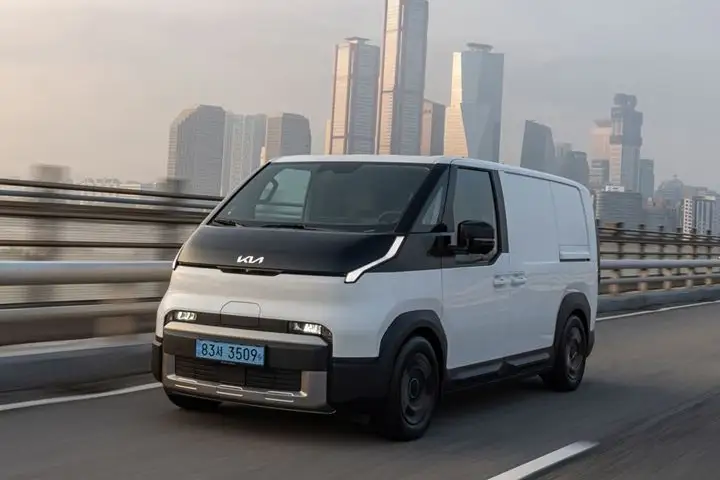
416 km WLTP. 120 kW motor. 402V pack. And a Guinness World Record: 693.38 km on a single charge while carrying 665 kg of payload on public roads near Frankfurt. The Long Range Cargo is the van that ends the "range vs. payload" argument for electric light commercial vehicles. I went through every official Kia document, the TÜV-supervised record attempt details, and the full technical specification to put together what actually matters for fleet operators and commercial buyers. Figures valid for cars built from 2025.
This page covers the Cargo 71.2 kWh Long Range, L2H1 body, FWD. The battery architecture (402V, NCM) and motor (120 kW) are shared with the Passenger 71.2 kWh — but the body, payload, and commercial use case are entirely different. Don't mix payload figures with the Passenger LR, which has different kerb weight. The 51.5 kWh SR Cargo has meaningfully different specs — see the dedicated page for that variant.
1 Battery Pack — 402V, 120 kW Motor, and the Architecture Behind the Record 71.2 kWh · NCM · 402V
Short answer: NCM chemistry, 402V nominal pack, 177.01 Ah cell capacity, 384 kg battery weight. Motor delivers 120 kW peak / confirmed in the official Guinness World Records press release spec table. 0–100 km/h in 12.4 seconds at full payload. This is a meaningfully different powertrain from the 51.5 kWh SR — not just a bigger battery.
The motor upgrade from 89.4 kW (SR continuous) to 120 kW (LR peak) is the detail that gets buried. The Guinness press release tech table lists it directly: "Power (kW) 89.4 — 120" for SR vs LR. On a commercial van doing motorway-speed transfer runs with full payload, that 34% peak power increase translates into confident merge and overtake behaviour that the SR can't match. The 0–100 km/h time of 12.4 seconds was measured at full payload — that's the condition most operators actually care about.
Pack and motor specs — cross-checked against Guinness World Records press release (October 2025) and Kia UK specification (August 2025)
| Parameter | 71.2 kWh LR | 51.5 kWh SR (reference) |
|---|---|---|
| Gross capacity | 71.2 kWh | 51.5 kWh |
| Cell chemistry | NCM — confirmed press kit | NCM — same |
| Cell capacity | 177.01 Ah | 177.01 Ah — same cell |
| Nominal pack voltage | 402 V | 290 V |
| Max battery power | 143 kW | 122 kW |
| Battery weight | 384 kg | 283 kg |
| Motor output (peak) | 120 kW | 89.4 kW |
| Max torque | 250 Nm (184 lb-ft) | 250 Nm |
| 0–100 km/h (at full payload) | 12.4 sec | 16.2 sec |
| Top speed | 135 km/h (84 mph) | 135 km/h |
| WLTP range | 416 km (258 mi) | 297 km (184 mi) |
| Payload — 3-door | 690 kg | 790 kg |
| Payload — 4-door | 665 kg | 745 kg |
| GVW | 2,650 kg — all variants | |
★ The payload trade-off is real and worth understanding before ordering. The LR pack weighs 101 kg more than the SR — and that weight comes directly out of payload headroom. 3-door LR: 690 kg vs 790 kg SR. If your route regularly runs close to 750+ kg of cargo, the SR gives you more margin. If your routes are longer or mixed urban/regional, the LR range advantage outweighs the payload difference. Fleet operators running refrigerated goods near weight limits should model this carefully.
✅ 402V charging efficiency: Higher voltage = lower current at equivalent power. At 150 kW DC, the 402V LR pack draws ~373A versus ~517A on the SR's 290V pack. Lower current means less heat per session — relevant for fleets doing multiple DC charges per shift. Cross-checked against Kia UK specification document, August 2025.
⚠ NCM daily charge limit: Unlike the LFP 43.3 kWh variant, the NCM LR pack should be kept at 80% for daily use. At 80% you have roughly 57 kWh available — real-world range of 280–320 km under normal mixed conditions. Charge to 100% only when full range is needed for a longer run.
2 DC Charging — 150 kW Peak, Real SoC Curve, AC Times 150 kW DC · 11 kW AC · 402V
Short answer: 150 kW DC peak, 10–80% in under 30 minutes — confirmed in both the Guinness press release and the SOLUTRANS November 2025 press release. AC charging at 11 kW takes 6 hours 30 minutes for 10–100%. On 7 kW single-phase, plan around 10 hours. The 22 kW AC option mentioned for the Chassis Cab is not confirmed as standard on the L2H1 Cargo.
For fleet operators planning depot charging schedules: the LR Cargo needs about 90 minutes more AC charging time than the SR variant. On an 11 kW three-phase depot charger, a full overnight window covers the pack completely. For drivers using 7 kW home or kerb chargers, the 10-hour window still fits within an overnight stop but leaves less buffer — a late return and early start could mean starting the day at 85–90% rather than 100%. Based on my experience following forum discussions on E-GMP.S fleet use, operators running two shifts often standardise on 80% charging targets regardless, which reduces both AC charge time and NCM degradation simultaneously.
DC Charging Curve — Kia PV5 Cargo 71.2 kWh 2025 150 kW max · warm battery · 402V NCM
EVspecsHub.comPreliminary estimated curve. Owner-logged sessions not yet available — vehicle entered production H2 2025. Will be updated as real data becomes available.
Kia PV5 Cargo 71.2 kWh — DC Charging Power by SoC
Estimated · 150 kW charger · warm battery above 20°C · NCM · 402V
| State of Charge | Charging Power (kW) | Notes |
|---|---|---|
| 10% | ~138 kW | Ramp-up from low SoC |
| 20% | ~150 kW | Peak window — 402V efficient at this load |
| 30% | ~150 kW | Larger pack sustains peak longer than SR |
| 40% | ~140 kW | Mild taper begins |
| 50% | ~120 kW | Good roadtrip top-up stop point |
| 60% | ~95 kW | Taper accelerating |
| 70% | ~68 kW | BMS protecting upper NCM cells |
| 80% | ~44 kW | Daily fleet stop point — 10–80% confirmed <30 min |
| 90% | ~22 kW | Diminishing returns at public charger |
| 100% | ~8 kW | Use depot AC wallbox for this — not DC |
Preliminary estimate. Cold battery (<10°C) significantly reduces peak. 10–80% under 30 min confirmed by Kia (Guinness press release + SOLUTRANS press release). Figures valid for cars built from 2025.
EVspecsHub.comAC Charging
Onboard AC charger: 11 kW (3-phase). On an 11 kW depot wallbox — 6 hours 30 minutes for 10–100%, confirmed in the Guinness World Records press release spec table. On 7 kW single-phase — approximately 10 hours. The 22 kW AC option referenced in the SOLUTRANS Chassis Cab press release ("22 kW AC charging will be available later") is confirmed for the Chassis Cab platform. Its availability on the standard L2H1 Cargo body is not separately confirmed in current documentation — confirm at point of order for fleet procurement.
3 Real-World Range — 416 km WLTP, 693 km Guinness, What Fleet Operators Get Daily 416 km WLTP · 258 mi
Short answer: WLTP combined range is 416 km (258 mi) — confirmed in both the Guinness World Records press release and the SOLUTRANS November 2025 press release. Under normal fleet delivery conditions (mixed urban/regional, moderate load), expect 280–340 km. At 80% daily charge, the practical daily range budget is around 300–320 km.
★ The Guinness record deserves its own explanation because the numbers are striking. On 30 September 2025, a 4-door LR Cargo variant carrying 665 kg of payload covered 693.38 km on public roads north of Frankfurt. The route was a 58.2 km loop tackled 12 times, including 370 m of elevation gain per loop. The battery was charged to 100% before departure, then the charging port and cargo area were sealed by TÜV Hessen inspectors. GPS tracked the whole run, which took 22 hours 30 minutes. George Barrow (commercial vehicle journalist, International Van of the Year jury member since 2016) and Christopher Nigemeier (senior engineer from Hyundai Motor Europe Technical Center, member of the PV5 development team) shared the driving.
What the record actually tells you: at eco-pace on public roads with full payload, the van consumed approximately 102.6 Wh/km — roughly 54% of the WLTP test consumption figure of 191 Wh/km. You won't replicate that in fleet use. But it does confirm the pack capacity and drivetrain efficiency are the real deal, not a paper specification.
⚠ WLTP vs WLTC — the 528 km number: The Japan Mobility Show 2025 press release quoted 528 km for the Cargo 71.2 kWh under WLTC (Japan test cycle). The European WLTP figure is 416 km. These are the same van under different test methodologies — WLTC tends to produce higher figures. If you see 528 km quoted for this van in a European context, that's a WLTC figure being misapplied. The relevant number for Europe is 416 km WLTP.
Real-World Range by Condition — Kia PV5 Cargo 71.2 kWh 2025 215/65R16 · L2H1
EVspecsHub.comPreliminary estimates based on 416 km WLTP, 191 Wh/km, and E-GMP.S platform experience. Guinness record eco-run: 693.38 km at full payload — not a daily driving target. Owner-logged fleet data will replace estimates as it becomes available. Figures valid for cars built from 2025.
Kia PV5 Cargo 71.2 kWh — Real-World Range by Condition
215/65R16 · NCM · 402V · 191 Wh/km WLTP · preliminary estimates
| Condition | Range (km) | Range (mi) | Notes |
|---|---|---|---|
| WLTP official | 416 km | 258 mi | Confirmed — Guinness + SOLUTRANS press releases |
| Guinness record (eco, full payload) | 693.38 km | 430.84 mi | Public roads, 665 kg payload, TÜV supervised |
| WLTC — Japan market | 528 km | 328 mi | Different test cycle — not comparable to WLTP |
| Urban delivery, mild, light load | 345–365 km | 214–227 mi | Stop-start regen benefit |
| Daily at 80% charge (fleet) | 300–325 km | 186–202 mi | Recommended NCM daily limit |
| Mixed load ~400 kg, mild | 290–310 km | 180–193 mi | Typical part-loaded delivery run |
| Motorway 100–110 km/h, mild | 275–300 km | 171–186 mi | Van body aero drag at speed |
| Near-max payload 650+ kg | 255–275 km | 158–171 mi | 3-door max: 690 kg |
| Cold, below 0°C | ~240–270 km | ~149–168 mi | NCM + HVAC load in winter |
Preliminary estimates except WLTP (confirmed), Guinness record (verified by TÜV Hessen) and WLTC Japan (official press release). Fleet-logged data will replace estimates as it becomes available. Figures valid for cars built from 2025.
EVspecsHub.com4 Cargo Area Dimensions — Full L2H1 Measurements and Payload 4.4 m³ · 690 kg payload
Short answer: Load area dimensions are identical across all Cargo L2H1 variants — the battery difference is in the floor, not the load space. 2,255 mm long × 1,565 mm wide above wheelarches × 1,520 mm tall, 4.4 m³. Rear step height 419 mm. Payload: 690 kg (3-door) / 665 kg (4-door) — both confirmed in the Guinness World Records press release spec table.
The 4-door configuration deserves specific mention. The Guinness record was set in the 4-door variant carrying 665 kg — its max payload. For crew van operators needing access from both sides (roadside delivery, service fleet), the 4-door option adds access flexibility but costs 25 kg of payload versus the 3-door. Based on forum discussions on fleet spec choices, most single-driver delivery operators choose 3-door and don't miss the offside door; crew configurations and multi-stop service teams tend to prefer 4-door despite the payload reduction.
Cargo area and exterior dimensions — Kia UK specification (August 2025)
| Dimension | mm | inches |
|---|---|---|
| Cargo floor length | 2,255 mm | 88.8 in |
| Width — between wheelarches | 1,330 mm | 52.4 in |
| Width — above wheelarches | 1,565 mm | 61.6 in |
| Cargo height | 1,520 mm | 59.8 in |
| Rear step height | 419 mm | 16.5 in |
| Rear opening width (twin / single) | 1,343 mm / 920 mm | 52.9 in / 36.2 in |
| Side door opening width | 775 mm | 30.5 in |
| Side boarding height | 399 mm | 15.7 in |
| Total cargo volume (L2H1) | 4.4 m³ | |
| Payload — 3-door LR | 690 kg (1,521 lb) | |
| Payload — 4-door LR | 665 kg (1,466 lb) | |
| GVW | 2,650 kg — all variants | |
| Max braked trailer weight | 750 kg | |
| Max roof load | 100 kg (220 lb) | |
| Overall length | 4,695 mm | 184.8 in |
| Width (excl. mirrors) | 1,895 mm | 74.6 in |
| Height (w/o antenna) | 1,899 mm | 74.8 in |
| Wheelbase | 2,995 mm | 117.9 in |
| Min. turning circle | 5.5 m | 18.0 ft |
📋 Also on EVspecsHub — Kia PV5 Cargo lineup:

5 V2L, Heat Pump, Feature Breakdown by Grade V2L: Plus · Surround View: Plus
The Guinness record spec table listed specific convenience features for the record van: "Heated/Ventilated DR/PR seats, heated steering, multiple cabin storage compartments, V2L in cargo area, floor lashing points, Surround View Monitor." These are Plus grade features — the record vehicle was clearly a Plus specification. It also confirms V2L is present in cargo area on Plus grade.
V2L in the Cargo Area
V2L is Plus grade only — confirmed in both the UK spec sheet and the Guinness record spec table. For the LR pack, V2L gives you access to roughly 57 kWh at full charge (assuming ~80% usable for V2L). For mobile worksite use — running power tools, site lighting, charging equipment in the cargo area — this is a genuinely useful capability. A 2 kW power tool runs for about 28 hours from a full pack. A site lamp setup at 500W runs all day and most of the night.
Heat Pump
Optional on Plus grade, not available on Essential — same as all other Cargo variants. For the LR van running long daily routes in northern Europe, the heat pump ROI is straightforward: the efficiency difference at 0°C between a heat pump and resistive heater on NCM typically means 15–20% more winter range. On a 416 km WLTP van, that's 60–80 km of extra daily range in winter — comfortably covering a full delivery shift in borderline conditions that might otherwise require a mid-shift charge stop.
Surround View Monitor
Listed in the Plus grade features in the Guinness record spec table — not in the standard UK spec document coverage. Confirmed as a Plus grade feature. For a van this size in urban delivery, the 360-degree view camera system is a genuine safety and damage-cost asset. Narrow loading bays, tight urban delivery zones — forum threads on similar commercial platforms consistently flag rear and surround cameras as one of the highest-ROI options for fleet managers.
Grade Feature Comparison
| Feature | Essential | Plus |
|---|---|---|
| V2L (3-pin socket in cargo area) | — | ✓ |
| Surround View Monitor | — | ✓ |
| Heat pump | — | OPT |
| Heated + ventilated front seats | — | ✓ |
| Heated steering wheel | — | ✓ |
| Floor lashing points | — | ✓ |
| Blind-Spot Collision-Avoidance Assist | — | ✓ |
| Rear Cross Traffic Collision Avoidance | — | ✓ |
| Electric folding mirrors | — | ✓ |
| Highway Driving Assist (HDA) | ✓ | ✓ |
| Lane Following Assist 2 (LFA 2) | ✓ | ✓ |
| Navigation Smart Cruise Control | ✓ | ✓ |
| Wireless CarPlay / Android Auto | ✓ | ✓ |
| 12.9" screen + 7.5" driver display | ✓ | ✓ |
| OTA updates | ✓ | ✓ |
6 Wheels, Tyres, Towing and Service 215/65R16 · 750 kg tow · 7-yr warranty
Short answer: 215/65R16 on 16-inch steel wheels with full-size covers — confirmed in the Guinness press release spec table. Max braked trailer weight 750 kg. Turning circle 5.5 m. Service interval 24 months / 20,000 miles. PCD not officially published — 5×114.3 probable from E-GMP.S platform, owner confirmation needed.
Wheel, towing and service specs — confirmed sources noted
| Parameter | Value / Status |
|---|---|
| Tyre size | 215/65R16 — confirmed (Guinness spec table) |
| Rim type | 16" steel with full-size cover |
| PCD (bolt pattern) | 5×114.3 — probable, pending owner confirmation |
| Centre bore | tbc — not published by Kia |
| Tightening torque | tbc — not published by Kia |
| Max braked trailer weight | 750 kg (1,653 lb) |
| Max roof load | 100 kg (220 lb) |
| Min. turning circle | 5.5 m — confirmed (Guinness spec table) |
| Service interval | 24 months / 20,000 miles |
| Vehicle warranty | 7 years / 150,000 km |
| Battery warranty | 8 years — min. 70% capacity retention |
The 7-year / 150,000 km warranty with extension to 260,000 km (confirmed in the SOLUTRANS Chassis Cab press release for the platform) is the strongest commercial vehicle warranty in the segment as of Q1 2026. For fleet operators calculating total cost of ownership over a 5–7 year cycle, having battery capacity guaranteed at 70% minimum removes a significant residual value risk. At 70% of 71.2 kWh that's 49.8 kWh — still enough for 240–280 km of real-world daily delivery range.
📋 Also on EVspecsHub — Kia PV5 Cargo lineup:
Share this data
✓ Link copied!