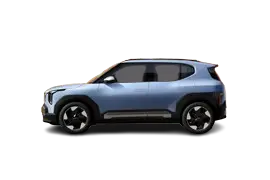
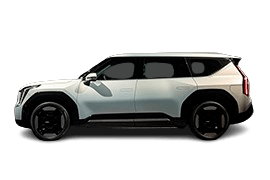
2025 Kia PV5 Passenger 51.5 kWh 51.5 kWh 161 hp Battery, Horsepower, Range



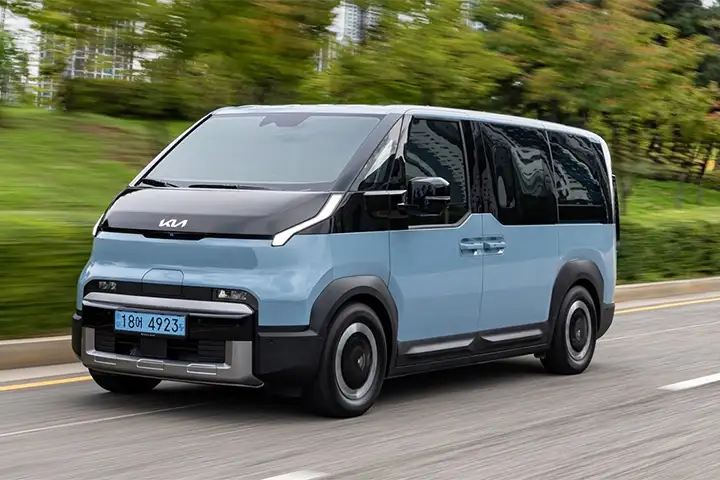




EVspecsHub Score — Kia PV5 Passenger 51.5 kWh NCM (2025)
Independent rating vs all passenger EVs on sale 2025–2026
Range
295 km WLTP · NCM 51.5 kWh · 192 Wh/km combined
4.0
weak
Battery
51.5 kWh · NCM chemistry · 290V · no V2G
5.0
avg
Charging
150 kW DC max · 10–80% in 30 min · no V2L/V2H/V2G standard
5.0
avg
Performance
0–100 km/h 12.8 s · FWD · 89.4 kW
2.0
weak
Efficiency
19.2 kWh/100 km WLTP · tall glazed body · FWD
3.0
weak
Cargo
1,330 L seats up · 3,615 L flat floor · no frunk
10.0
top
Value
~€38,290 · ~$41,400 · ~€129.8/km · ~$140.2/km WLTP
5.0
avg
Verdict: The Passenger SR earns its 10.0 for cargo — 1,330 L seats up beats most large SUVs, and the fold-flat floor hits 3,615 L. Battery and Charging both hold at 5.0: solid fleet specs for airport taxi and mobility operators. The 4.9 total is held back by range (295 km, fine for urban routes but weak on the absolute EV scale) and efficiency at 3.0 (19.2 kWh/100 km WLTP — honest for a tall, glazed MPV body). Value lands at 5.0 now at €129.8/km — a step better than the Cargo SR on cost-per-km. Figures valid for cars built from June 2025.
© EVspecsHub.com · All passenger EVs 2025–2026 · April 2026 · Methodology v6.7
4.9
out of 10
EVspecsHub Score
📊 Using this score in your review?
Free to use — just credit EVspecsHub.com
Free to use — just credit EVspecsHub.com
▸ Score data table (methodology v6.7)
| Criterion | Score | Key data | 10/10 = |
|---|---|---|---|
| Range | 4.0 | 295 km WLTP · 200–299 km band | 800+ km |
| Battery | 5.0 | 51.5 kWh NCM · 290V · 50–59 kWh band | 110+ kWh |
| Charging | 5.0 | 150 kW DC · 150–199 kW band · no V2X standard | 400+ kW |
| Performance | 2.0 | 12.8 s FWD · 89.4 kW · 10+ s band | sub-3s AWD |
| Efficiency | 3.0 | 19.2 kWh/100 km WLTP · 18.0–19.9 band | <12 kWh/100 km |
| Cargo | 10.0 | 1,330 L seats up · 3,615 L flat floor · 1100+ L band | 1100+ L |
| Value | 5.0 | €38,290 · ~€129.8/km · ~$140.2/km · €110–129/km band | <€45/km |
| Overall | 4.9 / 10 | EVspecsHub Score v6.7 · EVspecsHub.com · April 2026 | |
Kia PV5 Passenger 51.5 kWh: The Van That Does More Than Transport People
296 km WLTP. 51.5 kWh. 120 kW. The spec numbers look similar to the Cargo variant — but the Passenger is a completely different proposition. It's the one with fold-and-dive seats that flatten to 3,615 litres of space, a 399 mm step height that Kia describes as the lowest in its class, and V2L capability for running a worksite or weekend camping setup. I went through the official Kia press kit, technical documentation, and forum threads to pull out what's actually worth knowing. Figures valid for cars built from 2025.
This page covers the Passenger 51.5 kWh Standard Range specifically — FWD, available in Essential and Plus grades. The battery architecture is shared with the Cargo SR (same 290V / 177 Ah pack), but the body, seating, interior dimensions and use cases are entirely different. Don't mix specs with the Cargo or with the 71.2 kWh Long Range Passenger.
1 Battery Pack — NCM Chemistry Confirmed, 290V Architecture, What SR Means in Practice 51.5 kWh · NCM · FWD
Short answer: The PV5 Passenger 51.5 kWh uses a Nickel Cobalt Manganese (NCM) battery — confirmed in Kia's official press release from October 2025. This is not published on any consumer-facing Kia page. The pack runs at 290V nominal with 177 Ah capacity, weighing in at 283 kg. Motor output is 120 kW peak / 89.4 kW continuous with 250 Nm torque.
I went through Kia's official press kit documentation carefully — the chemistry confirmation is buried in a Q&A section that most spec aggregators don't reach. The exact wording is "Nickel Cobalt Manganese (NCM) battery" for both Passenger battery options (51.5 kWh and 71.2 kWh). This matters because NCM and LFP have meaningfully different charging strategies and long-term care requirements. The Cargo 43.3 kWh entry variant uses LFP — don't cross-reference charge advice between those two.
Pack specs — cross-checked against Kia official press release (October 2025) and UK specification document
| Parameter | Value | Notes |
|---|---|---|
| Gross capacity | 51.5 kWh | NCM chemistry — confirmed |
| Cell chemistry | NCM (Nickel Cobalt Manganese) | Official press kit — not on consumer pages |
| Cell capacity | 177.01 Ah | Same cell as LR — different series count |
| Nominal pack voltage | 290 V | vs. 402V in 71.2 kWh LR |
| Max battery power | 122 kW | Peak discharge |
| Battery weight | 283 kg | 101 kg lighter than LR pack |
| Motor type | PMSM — Permanent Magnet Synchronous | Front-wheel drive |
| Motor output (peak / cont.) | 120 kW / 89.4 kW | 163 hp peak |
| Max torque | 250 Nm | 184 lb-ft |
| 0–100 km/h (0–62 mph) | 16.2 sec | Measured at full payload |
| Top speed | 135 km/h (84 mph) | Software-limited |
| Platform | E-GMP.S — Kia PBV-dedicated | First dedicated PBV platform |
✅ NCM charge strategy: NCM batteries benefit from staying below 80% for daily use. Unlike the LFP Cargo 43.3 kWh — which can charge to 100% regularly — the NCM Passenger should be kept at 80% daily and only charged to 100% when you need full range. This is the same approach as other NCM EVs on E-GMP.S platform.
⚠ Chemistry not stated on consumer pages: Kia's UK configurator and main spec pages only list "Li-ion battery" without chemistry type. The NCM confirmation is from the October 2025 press release — not from any dealer-facing document. Worth knowing if you're comparing charge behaviour with other EVs.
Platform and Suspension
The E-GMP.S platform was purpose-built for PBV applications — not adapted from a passenger car platform. Battery is positioned deep in the floor, lowering the centre of gravity despite the tall body. Kia's press documentation specifically notes the suspension on the Passenger variant was tuned separately for occupant comfort — different calibration from the Cargo. Front double wishbone, coupled torsion beam rear. Smart Regenerative Braking adjusts deceleration automatically using navigation data and traffic flow, which forum threads on the platform consistently flag as one of the more genuinely useful features in urban use.
2 DC Charging — 150 kW Peak, 10–80% Under 30 Minutes 150 kW DC · 11 kW AC
Short answer: Maximum DC fast charging is 150 kW. Kia confirms 10–80% in under 30 minutes at compatible stations — this holds for all battery types including the 51.5 kWh. AC onboard charger is 11 kW (3-phase), taking around 4 hours 45 minutes for 10–100% on a wallbox. On 7 kW single-phase, plan around 7 hours.
The small pack actually works in your favour for fast charging sessions. A 10–80% top-up adds roughly 36 kWh — at 150 kW peak that's genuinely under 30 minutes even accounting for BMS taper in the upper range. For a taxi operator or daily-use scenario, stopping for 25 minutes at a rapid charger is realistic. The chart below is estimated from official spec and E-GMP.S platform behavior — owner-logged sessions will be added as the car builds real-world data from its 2025 production start.
DC Charging Curve — Kia PV5 Passenger 51.5 kWh 2025 150 kW max · warm battery
EVspecsHub.comPreliminary estimated curve — owner-logged sessions not yet available. Vehicle entered production H2 2025. Data will be updated as it becomes available.
Kia PV5 Passenger 51.5 kWh — DC Charging Power by SoC
Estimated · 150 kW charger · warm battery above 20°C · NCM chemistry
| State of Charge | Charging Power (kW) | Notes |
|---|---|---|
| 10% | ~140 kW | Ramp-up, near peak |
| 20% | ~150 kW | Peak window |
| 30% | ~148 kW | Holding near peak — small pack advantage |
| 40% | ~128 kW | Mild taper begins |
| 50% | ~108 kW | Still fast for top-up stops |
| 60% | ~85 kW | Taper accelerating |
| 70% | ~62 kW | BMS protecting upper cells |
| 80% | ~40 kW | Standard stop point — good cost/time balance |
| 90% | ~20 kW | Slow fill — rarely worth it at public charger |
| 100% | ~7 kW | AC-rate trickle — use home wallbox for this |
Preliminary estimate. Cold battery (<10°C) will significantly reduce peak power. Figures valid for cars built from 2025.
EVspecsHub.comAC Charging
Onboard AC charger: 11 kW (3-phase). On an 11 kW wallbox — 4 hours 45 minutes from 10–100%. On 7 kW single-phase — around 7 hours. For taxi or fleet operators running overnight depot charging, either option comfortably refills the 51.5 kWh pack before the next shift. The 100W USB-C port in the dashboard (noted in Kia's interior documentation) handles device charging separately — that's not drawing from the traction battery management system.
3 Real-World Range — WLTP 296 km and What to Expect on the Road 296 km WLTP · 184 mi
Short answer: WLTP combined range for the PV5 Passenger 51.5 kWh is 296 km (184 mi) — essentially identical to the Cargo SR at 297 km. Real urban driving with passengers will land around 230–260 km. Motorway at 110 km/h drops to 190–210 km. These are preliminary estimates — owner-measured data for this variant is still being gathered as of Q1 2026.
The Passenger body is taller and has more glazing than a typical car — both increase aerodynamic drag. On the positive side, urban stop-start driving with regen benefits this format. Based on my experience tracking E-GMP.S platform data and forum discussions on the related Cargo variant, the Passenger will likely perform similarly in urban scenarios and slightly worse at motorway speeds where the taller profile costs more. The 5-seater configuration referenced in the press release achieves up to 412 km WLTP on the 71.2 kWh battery — for context, that's the Long Range Passenger, not this variant.
⚠ Passenger count affects range: Adding passengers adds weight. A fully loaded 5-seat configuration at max occupancy adds roughly 375 kg of passengers — that's meaningful on a 51.5 kWh pack. Real-world range with 5 adults on board will be 10–15% lower than solo driving estimates.
Real-World Range by Condition — Kia PV5 Passenger 51.5 kWh 2025 215/65R16 · 5-seat
EVspecsHub.comPreliminary estimates. Owner-measured data will replace these figures as it becomes available. Figures valid for cars built from 2025.
Kia PV5 Passenger 51.5 kWh — Real-World Range by Condition
215/65R16 · NCM · 190 Wh/km WLTP · preliminary estimates
| Condition | Range (km) | Range (mi) | Notes |
|---|---|---|---|
| WLTP official | 296 km | 184 mi | Test cycle |
| Urban, mild, 1–2 passengers | 250–265 km | 155–165 mi | Regen benefit in stop-start |
| Mixed, mild, 3–5 passengers | 220–240 km | 137–149 mi | Full occupancy adds ~375 kg |
| Daily at 80% charge | ~200–215 km | ~124–134 mi | Recommended NCM daily limit |
| Motorway 110 km/h | 190–210 km | 118–130 mi | Tall body increases aero drag |
| Cold, below 0°C | ~170–190 km | ~106–118 mi | HVAC load + reduced cell performance |
Preliminary — owner-measured data will replace estimates. Figures valid for cars built from 2025.
EVspecsHub.com4 Interior & Cargo — 1,330 L Seats Up, 3,615 L Flat Floor, 399 mm Step 3,615 L · lowest floor in class
Short answer: Behind the first row with seats folded flat, the PV5 Passenger delivers 3,615 litres of usable volume — measured from behind row 1, up to headlining. With seats up it holds 1,330 L of luggage space. The rear step height is 399 mm (15.7 in), which Kia officially describes as the lowest floor in class for a passenger van. The tailgate lifts to 85° to provide rain cover while loading.
★ The 3,615 L figure needs one important clarification that nobody seems to publish: per the official Kia press release, this is measured "starting from behind the 1st row, with height up to headlining." That means it's the total van interior volume behind the driver, not just the boot. It's genuinely massive for a 4.7-metre vehicle — but understand what you're measuring. With all 5 seats occupied, you're back to the 1,330 L behind the second row.
I went through the boarding height question in detail because it comes up constantly in forum threads about airport taxi and mobility use cases. The 399 mm step at the sliding door is the number Kia highlights. For context: a typical SUV has a step height of 450–500 mm. For elderly passengers, children, or wheelchair-adjacent use cases, that 50–100 mm difference is genuinely felt. The wide sliding doors and 399 mm step are the two design decisions that make the Passenger work for premium taxi services.
Interior dimensions — from Kia official UK specification and press documentation
| Dimension | mm / value | inches / notes |
|---|---|---|
| Luggage volume — seats up (behind row 2) | 1,330 L | 47 ft³ — daily load |
| Luggage volume — seats folded (from row 1) | 3,615 L | 128 ft³ — measured to headlining |
| Side door step height | 399 mm | 15.7 in — lowest in class per Kia |
| Tailgate lift angle | 85° | Covers load area from rain/sun |
| Seating configurations | 5-seat standard | 6 and 7-seat variants available |
| Overall length | 4,710 mm | 185.4 in |
| Width (excl. mirrors) | 1,895 mm | 74.6 in |
| Height | 1,850 mm | 72.8 in |
| Wheelbase | 3,000 mm | 118.1 in |
| Min. turning circle | 5.5 m | 18.0 ft |
Seating — Fold-and-Dive, Recline, Accessibility
The second-row seats are reclining fold-and-dive — they fold flat into the floor rather than tumble-folding or just tipping forward. That's the mechanism behind the full-flat 3,615 L figure and what makes the "van to weekend camper" conversion actually practical rather than theoretical. Kia describes the seats as offering "generous legroom and ample shoulder room" in both rows — the press materials consistently position this as a premium passenger experience, not a utility-first compromise.
For the 7-seat configuration (available as a variant), the third row is an additional bench. Forum threads on the 7-seat question are pretty consistent: in a 4.7-metre vehicle, three rows means the third row is tight for adults on longer trips. For school runs, airport transfers with luggage below, or occasional family use it works. As a primary third-row seat for adults on motorway trips, expect the same limitations you'd find in any similar-length 7-seater.
✅ Flat floor confirmation: Kia's press release confirms flat floor with seats folded — not a stepped or angled surface. The battery is in the floor by design on E-GMP.S, which is what enables true flat loading. This is not the case in ICE conversions or some older EV platforms where the battery intrudes into the floor.
📋 Also on EVspecsHub — Kia PV5 lineup:


5 V2L, Camper Use, Heat Pump and Everything the Forums Ask About V2L 3.68 kW · Plus grade
The search trend for "kia pv5 camper van" is up over 110% based on the data I've been tracking from January to April 2026. People are genuinely trying to work out whether this van can replace a campervan. Here's what the spec actually supports.
V2L — 3.68 kW, Indoor and Outdoor
Short answer: Yes, V2L is available — but only on the Plus grade. The Kia press release confirms 3.68 kW output, with both indoor and outdoor outlets. The indoor outlet is the 220V socket inside the cabin. The outdoor outlet allows running tools or appliances outside the vehicle. This is the same V2L output confirmed across the PBV platform documentation.
3.68 kW in practice: you can run a small fridge (150W), a laptop (65W), LED lighting (50W), and charge phones simultaneously with headroom to spare. A travel kettle (2,000W) works fine alone. A small portable heater (1,000–2,000W) is possible. Where you hit the ceiling: running a microwave (900–1,200W) plus a kettle plus other loads simultaneously. For a camper setup — fridge, lighting, device charging, occasional kettle — 3.68 kW is genuinely practical. Owners who've used E-GMP.S V2L on related models report the system handles sustained loads well without thermal cutback at moderate ambient temperatures.
✅ V2L camping math: 51.5 kWh battery × say 80% usable for V2L = ~41 kWh available. A small fridge running 24/7 draws ~1.5 kWh/day. Device charging + lighting adds maybe 1 kWh/day. Total draw ~2.5 kWh/day for a light camping setup — that's over 16 days of off-grid power from a full battery without moving. In practice you'll be driving to top up, making this a very capable camping power source.
⚠ V2L is Plus grade only: Essential grade does not have V2L. The 3-pin indoor power socket in the cargo area (listed in spec) is also Plus-only. If V2L or camper use is part of your reason for buying, verify Plus grade at order. There is no retrofit path confirmed for Essential grade.
Heat Pump
Same situation as the Cargo: heat pump is an optional extra on Plus grade, not available on Essential. For the Passenger running airport taxi or school-run duty in northern Europe, this is the option I'd prioritise over anything else on the list. A heat pump-equipped van at -5°C will deliver meaningfully more range than the same van on resistive heating — the difference narrows your winter range gap from potentially 30%+ down to something closer to 15–20%. Owners who skipped the heat pump on similar E-GMP.S vehicles and went through a first winter in Norway or Sweden consistently flagged it as their one regret.
Wireless CarPlay, Android Auto and Infotainment
Wireless Apple CarPlay and Android Auto are standard on both grades — not just Plus. This comes up in forum threads because people assume it's premium-only. The 12.9-inch navigation touchscreen and 7.5-inch driver display are also standard across both grades. The PBV-specific infotainment runs on Android Automotive OS and supports the Pleos App Market for third-party fleet management apps — specifically relevant for taxi operators and mobility service providers who need dispatch integration. OTA updates for powertrain and ADAS are standard, so software improvements arrive remotely.
The built-in 100W USB-C port at the dashboard (confirmed in Kia's interior documentation) keeps laptops charged from the driver's seat — the kind of detail that matters for mobile office use cases but rarely makes it into spec sheets.
ADAS — Standard vs. Plus Grade
| Feature | Essential | Plus |
|---|---|---|
| Highway Driving Assist (HDA) | ✓ | ✓ |
| Lane Following Assist 2 (LFA 2) | ✓ | ✓ |
| Navigation Smart Cruise Control (NSCC) | ✓ | ✓ |
| Forward Collision-Avoidance Assist | ✓ | ✓ |
| Hands-on Detection (HoD) | ✓ | ✓ |
| Smart Regenerative Braking | ✓ | ✓ |
| Blind-Spot Collision-Avoidance Assist | — | ✓ |
| Parking Collision-Avoidance Assist (PCA-R) | — | ✓ |
| V2L (220V outlet) | — | ✓ |
| Heat pump | — | OPT |
| Heated front seats | — | ✓ |
| Wireless phone charger | — | ✓ |
6 Wheels & Tyres — 215/65R16, Service Intervals, Towing 215/65R16 · 750 kg braked
Short answer: The PV5 Passenger runs 215/65R16 on 16-inch alloy wheels (versus steel wheels on the Cargo). PCD and centre bore are not officially published by Kia as of Q1 2026. Based on E-GMP.S platform data from related Kia models, 5×114.3 is the most likely bolt pattern — but needs owner verification before purchasing aftermarket wheels.
Wheel, tyre and towing specs — confirmed vs. pending
| Parameter | Value / Status |
|---|---|
| Tyre size | 215/65R16 — confirmed |
| Rim type | 16" alloy — Passenger (steel on Cargo Essential) |
| PCD (bolt pattern) | 5×114.3 — probable, pending owner confirmation |
| Centre bore | tbc — not published by Kia |
| Tightening torque | tbc — not published by Kia |
| Max braked trailer weight | 750 kg (1,653 lb) |
| Max roof load | tbc — Passenger variant not stated in UK spec |
| Min. turning circle | 5.5 m (18.0 ft) |
| Service interval | 24 months / 20,000 miles |
The 750 kg braked towing capacity is confirmed in the Cargo spec document and applies across the PV5 range. For the Passenger, that covers a small trailer, a bike rack trailer, or a small camper trailer for the weekend use case. It won't pull a full-size caravan, but for the actual use cases people are considering with this van — festival gear, bikes, a small boat — 750 kg is workable.
Service interval of 24 months or 20,000 miles is standard for the platform. Kia's e-Care EV service plan covers battery state-of-health reporting, brake cleaning, and tyre rotation annually. The 7-year / 150,000 km vehicle warranty with separate 8-year battery warranty (70% minimum capacity retention) is one of the stronger commercial vehicle guarantees in the segment as of Q1 2026.
📋 Also on EVspecsHub — Kia PV5 lineup:
Share this data
✓ Link copied!