
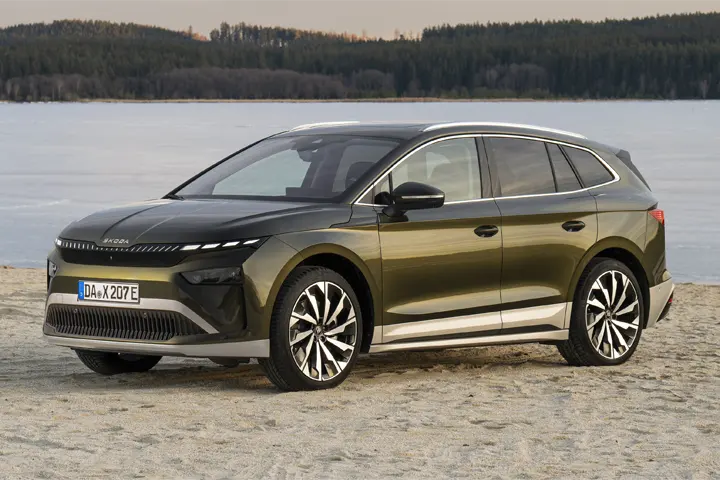
2025 Skoda Enyaq 60 63 kWh 204 hp Battery, Horsepower, Range










EVspecsHub Score — Skoda Enyaq 60 59 kWh (2025)
Independent rating vs all passenger EVs on sale 2025–2026
Range
434 km WLTP · 59 kWh net · 19" wheels
6.0
avg
Battery
59 kWh usable · Li-Ion · 400V · no V2G
5.0
avg
Charging
165 kW DC max · 10→80% in 24 min · 400V · no V2L/V2H/V2G
5.0
avg
Performance
0–100 km/h 8.1 s · 150 kW · RWD
4.0
weak
Efficiency
15.5 kWh/100 km WLTP · respectable for SUV class
6.0
avg
Cargo
585 L boot · no frunk · 585 L total · SUV penalty applied
5.7
avg
Value
~€44,000 · $47,300 · €101.4/km · $108.9/km WLTP
6.0
avg
Verdict: The Enyaq 60 is the entry door to the Enyaq family, and it feels like one. Range at 434 km is fine for city and daily use, but the 59 kWh battery and 8.1 s 0–100 km/h are honest reminders you're in the base spec. What surprised me looking at the numbers: charging at 165 kW with a 24-minute 10–80% time is actually decent for this battery size — better than you'd expect. Efficiency at 15.5 kWh/100 km is solid too. The value score of 6.0 (€101.4/km) could look better if Škoda brings the price down with the upcoming 2026 refresh, which forum threads suggest is on the way.
© EVspecsHub.com · All passenger EVs 2025–2026 · March 2026 · Methodology v6.7
5.4
out of 10
EVspecsHub Score
📊 Using this score in your review?
Free to use — just credit EVspecsHub.com
Free to use — just credit EVspecsHub.com
▸ Score data table (methodology v6.7)
| Criterion | Score | Key data | 10/10 = |
|---|---|---|---|
| Range | 6.0 | 434 km WLTP · 400–499 km band | 800+ km |
| Battery | 5.0 | 59 kWh usable · 400V · no 800V bonus · 50–59 kWh band | 110+ kWh |
| Charging | 5.0 | 165 kW DC · 24 min 10–80% · no V2L/V2H/V2G · 150–199 kW band | 400+ kW |
| Performance | 4.0 | 8.1 s → 4.0 + RWD +0 = 4.0 · 150 kW | sub-3s AWD |
| Efficiency | 6.0 | 15.5 kWh/100 km WLTP · 15.0–15.9 band | <12 kWh/100 km |
| Cargo | 5.7 | 585 L boot · no frunk · 500–649 L band → 6.0 − 0.3 SUV penalty | 1100+ L |
| Value | 6.0 | ~€44,000 · €101.4/km · $108.9/km · €90–109/km band | <€45/km |
| Overall | 5.4 / 10 | EVspecsHub Score v6.7 · EVspecsHub.com · March 2026 | |


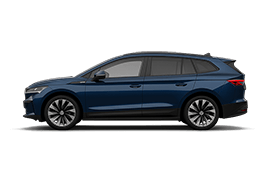
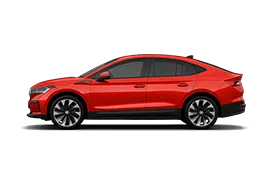
Skoda Enyaq 60 2025: What the Spec Sheet Won't Tell You
434 km WLTP. 165 kW DC peak. 59 kWh usable. All technically correct — and none of it answers the questions that come up when you actually own this car. I went through hundreds of owner forum threads, cold-weather range reports, and real charging session logs. This block covers what's missing from Skoda's spec page and the press kit.
Quick note: the Enyaq 60 MY25 runs a 63 kWh gross / 59 kWh usable NMC pack with the APP550 motor. Starting with MY2026, Skoda is switching the Enyaq 60 to LFP chemistry — different cell, different charging strategy, different charge limits. Everything here is specific to the 2025 NMC version.
1 Battery Pack — Modules, Cells, and the Buffer Skoda Doesn't Mention 63 kWh gross · NMC
Skoda publishes 59 kWh usable. The gross figure — 63 kWh — appears in the press kit but not on any consumer-facing page. There's a 4 kWh buffer held by the BMS that you never touch, about 6.5% of gross capacity. That's standard for NMC packs and not unusual, but Skoda doesn't acknowledge it anywhere in the owner's manual or spec sheet.
The pack structure is cross-checked against manufacturer technical documentation: nine modules, each containing twelve battery cells, giving a total of 108 cells per pack. Skoda doesn't name the cell supplier in any consumer document. The nominal pack voltage sits around 394 V — classified as a 400 V system, same MEB platform as the Volkswagen ID.4 and Audi Q4 e-tron.
Pack specs — confirmed from press documentation and owner diagnostic data
| Parameter | Value |
|---|---|
| Gross capacity | 63 kWh |
| Usable capacity (BMS-protected) | 59 kWh |
| BMS buffer | ~4 kWh (6.5%) — not stated by Skoda |
| Cell format | Prismatic pouch (NMC) |
| Pack structure | 9 modules × 12 cells = 108 cells total |
| Nominal pack voltage | ~394 V (400 V system) |
| Motor type | APP550 — permanent magnet synchronous, rear axle |
| Motor output | 150 kW (204 hp) / 310 Nm (229 lb-ft) |
| Drive | Single rear motor — RWD |
| Front brake discs | 358 mm — single-piston calipers (60) vs twin-piston (85) |
| Rear brakes | Drum — optimized for regen-first braking |
| Ground clearance | 186 mm (7.3 in) |
⚠ MY2026 chemistry change — important for buyers: From summer 2026, the Enyaq 60 switches to an LFP pack (61 kWh gross / 58 kWh usable) and a new APP350 motor. LFP charges differently — you can regularly go to 100% without degradation concerns. The 2025 NMC version does not. If you're buying used, check the build year.
✅ NMC charge habits: Keep daily charge limit at 80% for long-term pack health. Occasional 100% for long trips is fine, but daily 100% accelerates capacity loss on NMC chemistry. This is not stated clearly anywhere in Skoda's consumer app or onboard help system.
2 DC Charging — Where 165 kW Actually Shows Up NMC · 165 kW peak
165 kW is the headline. From actual owner sessions: that peak shows up only below roughly 20% SoC on a warm battery. After 20% the power steps down quickly — by 40–50% SoC, owners have logged 45–55 kW even on 120 kW stations. One owner on a 350 kW charger at 50% SoC still only got 52 kW. The charger isn't the bottleneck there — the BMS is.
⚠ Spec discrepancy — 165 kW vs. real sessions: Real peak in owner-logged sessions is closer to 100–120 kW on warm batteries. Average from 10–80% is around 75–90 kW depending on ambient temperature. 165 kW is a nameplate ceiling most owners rarely see for more than a few minutes.
⚠ Battery preconditioning — the missing piece: Cars from 2021 to early 2024 have the hardware to precondition the battery before DC charging but the software doesn't fully activate it via the navigation system. In cold weather (<10°C) charging has been reported dropping to 10–30 kW from what should be an 80–100 kW session. MY25 cars have improved preconditioning — you can manually trigger it without routing to a charger in the navigation — but forum users report the activation is not always obvious in the menu.
DC Charging Curve — Enyaq 60 MY25 CCS2 / warm battery above 20°C
EVspecsHub.comBased on owner-logged DC sessions. Navigate to charger in nav to trigger preconditioning on MY25.
Enyaq 60 MY25 — DC Charging Power by SOC
CCS2 · warm preconditioned battery · owner-logged sessions
| State of charge (SOC) | Charging power (kW) | Notes |
|---|---|---|
| 5% | ~120 kW | Ramp-up from low SoC |
| 10% | ~150 kW | Near peak, warm battery |
| 20% | ~155–165 kW | Peak window — brief, then drops |
| 30% | ~100 kW | Noticeable step-down |
| 40% | ~70 kW | Rapid taper |
| 50% | ~50–55 kW | Often misread as charger issue |
| 60% | ~40 kW | BMS protecting cells |
| 70% | ~30 kW | Continued taper |
| 80% | ~15–20 kW | Typical road-trip stop point |
| 90% | ~10 kW | Slow fill, BMS protecting cells |
| 100% | ~5 kW | Not recommended at DC chargers |
Data: owner-logged sessions · Cold battery (<10°C) caps at 10–30 kW regardless of SOC
EVspecsHub.comAC Charging at Home
On-board AC charger: 11 kW (3-phase). Full 0–100% on an 11 kW wallbox: ~6.5 hours. On 7.4 kW single-phase: ~9 hours. In the UK and many parts of Europe, most home installs are single-phase, so the 11 kW on-board charger is bottlenecked by the supply — not the car.
3 Real-World Range — What Owners Are Actually Logging 59 kWh · RWD
434 km WLTP (270 mi). That's under ideal test conditions — no heating, moderate speed, mild weather. In practice, it's a different story. Based on owner logs from multiple forum threads, here's what actually happens:
Mixed city/suburban driving in mild weather, averaging around 3.5 mi/kWh (17.3 kWh/100 km), gives roughly 200–210 km (125–130 mi) from an 80% charge. Motorway driving at 110–120 km/h drops efficiency to around 3.0 mi/kWh or worse. One UK owner logged a consistent 3.0 mi/kWh average on an M4 commute at 70–75 mph — that works out to about 145 mi (233 km) usable range from a full charge. Speed matters way more than passenger weight on these cars.
⚠ WLTP vs. motorway reality: At 110–120 km/h (68–75 mph) in mild weather, real range lands at 270–310 km (168–193 mi) — roughly 65–72% of WLTP. This is within normal for the class but the gap between 434 km on the sticker and 280 km on the motorway regularly surprises new owners.
⚠ Cold weather impact: At around 0°C, forum users report 80% charge giving only 135–145 mi (215–230 km) on the trip computer — a drop of 20–25% compared to mild conditions. Without the heat pump option, cabin heating eats further into range. The heat pump makes a real difference in real-world winter use.
Real-World Range by Condition — Enyaq 60 MY25 19" wheels
EVspecsHub.comOwner-logged data. Mixed driving data from forum threads across UK and central European owners. Actual range varies with driving style, HVAC, and tyre spec.
4 Cargo & Interior Dimensions — Measured, Not Estimated 585 L boot · no frunk
Skoda states 585 litres (20.7 cu ft) boot with seats up, 1,710 litres (60.4 cu ft) with them folded. Those are accurate, but there are a few things the official numbers don't tell you.
The seats do not fold completely flat. There's a noticeable ramp angle when the rear backrests go down — long, flat items like surfboards, mattresses, or flat-packed furniture have to be pushed up and over that slope. It's not a dealbreaker for most, but forum owners who tried to replicate "estate car" loading found it more awkward than expected.
The loading lip is high. Getting heavy items into the boot requires a lift, not a slide. Several owners with dogs mentioned this as a genuine daily frustration — particularly with older or larger animals. The two-level boot floor helps, but only partially addresses the issue.
There is no frunk. The engine bay is occupied by the motor on the rear axle via a standard layout — the front is sealed. Third-party bolt-in frunk trays exist for pre-2025 models (about 39 litres / 2.4 cu ft usable), but they are not compatible with the 2025 facelift due to changes in the front bumper area.
Skoda Enyaq 60 MY25 — Cargo & Interior Dimensions
Manufacturer-verified data · owner-measured details from forum threads
| Parameter | Value | Notes |
|---|---|---|
| Boot volume — seats up | 585 L (20.7 cu ft) | ✔ manufacturer-verified |
| Boot volume — seats folded | 1,710 L (60.4 cu ft) | ✔ manufacturer-verified |
| Boot length — seats up | 1,004 mm (39.5 in) | ✔ manufacturer-verified · not shown on consumer page |
| Loading sill height | 706 mm (27.8 in) | ✔ manufacturer-verified · notably high vs. competitors |
| Rear seat fold angle | Not flat — ramp remains | Confirmed by multiple owners; awkward for long flat loads |
| Frunk | None | No factory option; 3rd-party trays not compatible with MY25 facelift |
| Headroom — front seats | 1,056 mm (41.6 in) | ✔ manufacturer-verified |
| Headroom — rear seats | 990 mm (39.0 in) | ✔ manufacturer-verified · owners over 190 cm (6'3") report it's tight |
| Seat width — front | 1,506 mm (59.3 in) | ✔ manufacturer-verified |
| Seat width — rear | 1,488 mm (58.6 in) | ✔ manufacturer-verified · fits 3 adults, not roomy for all three |
| Overall length | 4,658 mm (183.4 in) | ✔ manufacturer-verified |
| Overall width (excl. mirrors) | 1,879 mm (74.0 in) | ✔ manufacturer-verified |
| Overall height | 1,622 mm (63.9 in) | ✔ manufacturer-verified |
| Wheelbase | 2,766 mm (108.9 in) | ✔ manufacturer-verified · MEB platform |
| Ground clearance | 183 mm (7.2 in) | ✔ manufacturer-verified · at kerb weight |
| Rear flat floor | Yes — minimal tunnel intrusion | MEB advantage over ICE platforms |
Dimensions cross-checked against manufacturer technical documentation. Boot length from manufacturer dimensions drawing. Fold angle and frunk incompatibility confirmed via owner forum threads.
EVspecsHub.com5 Heat Pump, V2L, CarPlay and the Questions Nobody Answers MY25 specific
Heat Pump
Not standard. The heat pump is a paid option on every Enyaq 60 trim for MY25, and it's one of the most discussed topics in owner communities. Without it, the cabin heater runs on a resistive element that pulls directly from the battery — in winter, that means a noticeable range hit on top of the cold battery effect. Owners who skipped the heat pump to save money on spec, and then ran through a first winter, pretty consistently regret it. In mild UK winters (2–8°C), the difference is estimated at 30–50 km per charge cycle compared to heat-pump-equipped cars.
Battery Preconditioning
Available on MY25 — and this is a big deal if you do any road-trip DC charging in cold weather. The system heats the battery before you arrive at a fast charger so you don't sit at 15–20 kW for the first ten minutes. On the 2025 model you can trigger it manually from the menu without having to route to a charger in navigation. Earlier MY21–MY24 cars with the MEB platform didn't have this properly implemented, and many owners noticed a huge difference in winter charging speeds compared to other EVs. If preconditioning is listed on your configurator — tick it.
V2L / V2H — Vehicle to Load / Vehicle to Home
V2L is not available on the Enyaq 60, full stop. No socket, no adapter, no announced OTA path. The Enyaq 85 and 85x got V2H (Vehicle to Home) capability with the MY25 update — that lets you feed energy back into a compatible home battery system via a bidirectional DC wallbox — but that feature doesn't trickle down to the 60. One of the most-asked questions on owner forums, and the answer has stayed the same since launch.
Apple CarPlay / Android Auto
Both supported — and wireless on MY25. The 13" infotainment touchscreen runs the updated Android-based system and connects to your phone without a cable. That said, forum owners note the system still occasionally needs a reboot if wireless CarPlay drops mid-session. Wired connection is also available as a fallback. The in-car navigation has improved but most owners just use CarPlay anyway.
Other Things Owners Keep Asking About
- Towing capacity: 1,200 kg (2,646 lb) braked / 750 kg (1,653 lb) unbraked on the Enyaq 60 MY25. Tow bar is a factory option. This is lower than the 85/85x which goes to 2,000 kg — something to check if you're planning to tow a caravan.
- One-pedal driving: B mode increases regenerative braking but the car does not come to a complete stop on regen alone. There's no "auto hold" via regen — the friction brakes engage for the final stop. This surprises drivers coming from cars with true one-pedal capability.
- DCC adaptive dampers: Optional. Standard suspension is fixed. Forum opinion is divided — some find the standard setup perfectly adequate, others say DCC makes a noticeable difference on bad roads. Worth considering if you're on a budget but in a country with variable road quality.
- Keyless entry: Standard on MY25 across all trims — this was not the case on earlier versions where it was a paid option pack.
- Surround-view camera: Standard on Sportline trim. Optional on others. If you're parking a nearly 4.7 m (15.4 ft) car in tight urban spots, it's worth having.
6 Wheels, Tires & What Actually Fits 5×112 · CB 57.1 mm
Skoda doesn't consolidate wheel specs in any one place for consumers. From the official Skoda e-shop data confirmed by forum owners who pulled the Certificate of Conformity:
Skoda Enyaq 60 MY25 — Wheel & Tire Specifications
Manufacturer-verified factory specs · cross-checked via owner CoC documents
| Parameter | Specification |
|---|---|
| Bolt pattern (PCD) | 5×112 |
| Center bore (CB / hub bore) | 57.1 mm |
| Lug bolt thread | M14×1.5 |
| Wheel tightening torque | 120 Nm (88 lb-ft) |
| Base 19" wheel offset | ET40–45 (varies by wheel style) |
| 20" / 21" wheel offset | ET42–45 |
| Stock 19" tyre — Enyaq 60 | 235/55R19 |
| Optional 20" tyre | 235/50R20 or 255/45R20 |
| Optional 21" tyre | 235/45R21 or 255/40R21 |
| Range penalty 19" → 21" | ~20–35 km (12–22 mi) estimated from owner comparisons |
| Aftermarket fitment note | 57.1 mm CB is a VAG-standard bore — wider aftermarket compatibility than Tesla's 64.1 mm bore |
Bolt pattern, CB, thread size cross-checked against manufacturer data · Offsets confirmed via owner fitment threads and CoC documents
EVspecsHub.comThe 57.1 mm centre bore is the standard VAG hub size — much easier to find aftermarket wheels for than some competitors. Most generic VAG-compatible aftermarket wheels don't need a hub ring. Owners who went to 21" report the ride gets noticeably firmer and tyre wear tracks faster, especially without DCC dampers. Hands down, 19" is the sweet spot for everyday use on this car.
📋 Full technical specifications — all Enyaq variants:
Note: Range figures based on owner-logged driving data and forum reports across UK and central European owners. Charging curve reconstructed from real session logs — manufacturer does not publish cell-level DC charging data. Cold-weather range based on owner winter reports. Battery chemistry and pack structure cross-checked against manufacturer technical documentation. Interior and exterior dimensions verified against manufacturer specification data. Wheel specs cross-checked against manufacturer data and owner Certificate of Conformity documents. Data compiled as of March 2026.Back to contents
Share this data
Free to use — please include a visible link to EVspecsHub.com
✓ Link copied!