EVspecsHub.com EVspecsHub

2024 Ford Explorer EV Extended Range AWD 82 kWh 340 hp Battery, Horsepower, Range

The 2024 Ford Explorer EV AWD Extended Range delivers powerful, all-wheel-drive electric versatility with a 79 kWh usable battery capacity (battery size) and a 566 km (352 mi) WLTP range. All specifications verified against official Ford data and type‑approval documents.

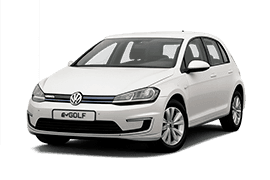
Used Volkswagen e-Golf Problems and Fixes (2013 – 2020).

Used Volkswagen e-Golf Problems and Fixes (2013 – 2020).

TESLA FORD HONDA CHEVROLET RIVIAN HYUNDAI KIA LUCID VOLKSWAGEN SKODA AUDI BMW MERCEDES RENAULT VOLVO PEUGEOT BYD XIAOMI TOYOTA NISSAN…

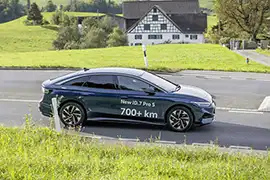
Volkswagen ID.7 Pro S — 794 km on one charge with max Battery

Volkswagen ID.7 Pro S — 794 km on one charge…

Volkswagen ID.7 Pro S — 794 km on one charge TESLA FORD HONDA CHEVROLET RIVIAN HYUNDAI KIA LUCID VOLKSWAGEN SKODA…

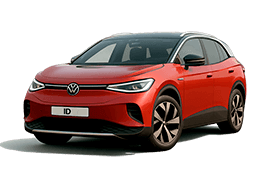
Volkswagen ID.4: American vs. European Versions, Key Differences

Volkswagen ID.4: American vs. European Versions, Key Differences

The Volkswagen ID.4 has become a significant player in the electric SUV market, but it’s important to understand that the…

POPULAR cars…

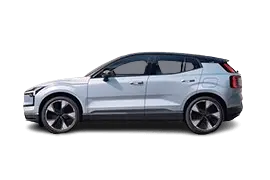
Side profile of Volvo EX30 electric SUV, showing 2,650 mm wheelbase, coupe-like roofline, and clean body lines
EX30 (2023-pr.)
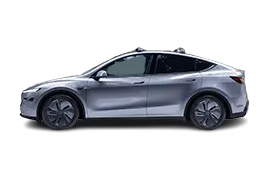
2025 Tesla Model Y Performance with dual motors, 0–100 km/h in 3.5 seconds, and long‑range battery
Model Y (2025-pr.)
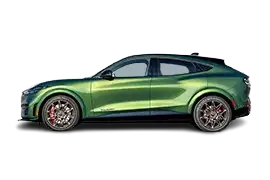
Side profile of the Ford Mustang Mach-E, showing its aerodynamic body, coupe-like roofline, and EV styling cues
Mustang Mach-E (2020-pr.)
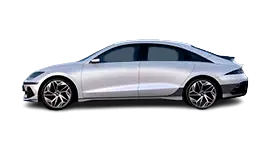
Side profile of the Hyundai Ioniq 6 illustrating its unique curved, streamliner silhouette and long 2950mm wheelbase on the E-GMP platform.
IONIQ 6 (2023-pr.)
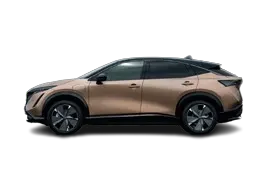
Side profile of the Nissan Ariya electric crossover, emphasizing its sleek, coupe-like silhouette, sloped roofline, and prominent wheel arches, optimized for efficiency and performance.
Ariya (2024-pr.)
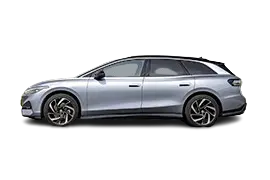
Volkswagen ID.7 Tourer side profile with 2,971 mm wheelbase, 86 kWh battery, and 200 kW fast charging.
ID.7 Tourer (2024-pr.)
Tesla Model 3 side profile showing sleek body lines and alloy wheels
Model 3 (2023-pr.)
Kia EV3 side view compact electric SUV dimensions and profile
EX30 (2023-pr.)

Ford Explorer EV

Extended Range AWD |  2024–

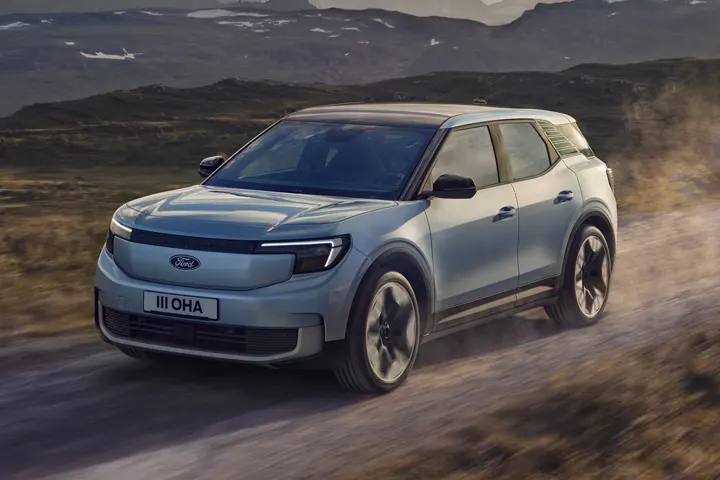
2025 Ford Explorer EV front view — European all-electric SUV with modern closed grille, LED headlights and bold stance
Ford Explorer EV
battery capacity
Capacity
range –
Range
power output
Power
acceleration
Acceleration
82 kWh
566 km

250 kW

5.3 s

Technical Data & Performance

Model Years2024–present
Trim (Variant)Explorer EV - Extended Range AWD
Power (Horsepower)250 kW (340 hp)
Top Speed180 km/h (112 mph)
Torque679 Nm (501 lb-ft)
Acceleration5.3 sec (0–100 km/h)
5.3 sec (0–62 mph)
DriveAWD All-wheel drive
Motor detailsDual (Front ASM + Rear PSM)
Motor codeAC-induction + APP550 | Volkswagen Group

Battery & Charging

Battery Capacity & Size79 kWh usable,
82 kWh gross
Max Range566 km (352 mi) / WLTP
Consumption15.7 kWh/100 km
Battery TypeLithium-ion
Cell Format / SupplierNMC (Nickel Manganese Cobalt)
Battery Voltage400 V
V2L SupportedNo
Heat pumpYes
AC Home ChargingType2 / 1-phase - 7.4 kW (Max Power)
Type2 / 3-phase - 11 kW (Max Power)
DC Fast ChargingCSS2, 185 kW (Max Power)
26 min. (10–80%)

Dimensions & Body

Type5 door, SUV
Seating capacity5
Length4468 mm (175.9 in)
Width1871 mm (73.7 in)
Height1630 mm (64.2 in)
Wheelbase2767 mm (108.9 in)
Ground Clearance148 mm (5.8 in)
Curb weight2167 kg (4777 lb)
Gross weight2740 kg (6041 lb)
Trunk Volume450 L (15.9 ft³)
1422 L (50.2 ft³) max
TowingUnbraked: 750 kg (1653 lb), Braked: 1200 kg (2646 lb)
Drag Coefficient0.28
PlatformMEB | Volkswagen Group
Estimated Market Price
* for reference only
EUR 52,850

⚠️ Please note: actual vehicle specifications may vary depending on market, trim level, or available regional packages.

Side profile of the Ford Mustang Mach-E, showing its aerodynamic body, coupe-like roofline, and EV styling cues
Mustang Mach-E (2020-pr.)
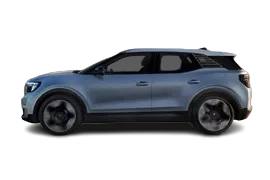
2025 Ford Explorer EV side profile — aerodynamic European electric SUV highlighting sleek body lines, flush door handles and large alloy wheels
Explorer EV (2024-pr.)
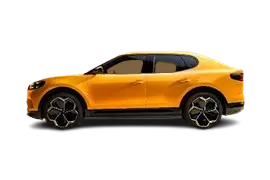
Ford Capri electric SUV side profile showing aerodynamic design
Capri EV (2024-pr.)
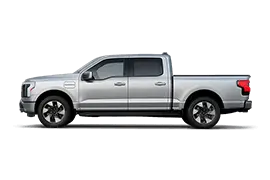
ALT: Ford F-150 Lightning electric truck side profile, demonstrating its full-size dimensions and functional bed.
F-150 Lightning (2022-pr.)
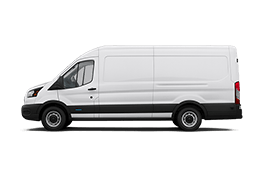
Ford E Transit Cargo Van 180
E-Transit Cargo 350 (2022-pr.)
Ford E Transit Passenger Van 180
E-Transit Passenger Van 350 (2022-pr.)
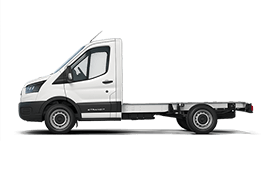
Ford E Transit Classic Cab 180
E-Transit Chassis Cab 350 (2022-pr.)
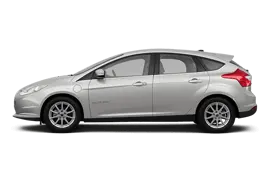
Side profile of the Ford Focus Electric compact car, emphasizing its hatchback body style and standard charging port location, a vehicle known for its Global C-Car Platform and limited 115-mile range.
Focus Electric (2011-2018)

The Evolution of the Ford Explorer EV: Key Specifications and Development Milestones

Generation I (2024–Present) – Initial Launch Specifications

  • Platform Base: Volkswagen Group Modular Electric Drive Matrix (MEB).
  • Battery Capacity: Three official battery variants confirmed for global markets: Standard Range (usable 52 kWh), Extended Range (usable 77 kWh), and Extended Range AWD (usable 77 kWh). *Note: The 82 kWh gross capacity is often marketed as ‘Extended Range’.*
  • Motors & Output (Standard Range RWD): Rear-mounted Permanent Magnet Synchronous Motor (PSM); output is 125 kW (170 PS / 168 HP).
  • Motors & Output (Extended Range RWD): Rear-mounted PSM; output is 210 kW (286 PS / 282 HP).
  • Motors & Output (Extended Range AWD): Dual-motor configuration (PSM Rear + ASM Front); combined system output is 250 kW (340 PS / 335 HP).

2025: Focus on Software and Charging Performance

  • WLTP Range: Officially confirmed maximum range is up to 602 km (374 mi) for the 210 kW Extended Range RWD version.
  • AC Charging: Standard Onboard Charger (OBC) remains at 11 kW for all trims.
  • DC Fast Charging: Peak charging rates are 135 kW (Standard Range) and 185 kW (Extended Range RWD/AWD), enabling a 10–80 % SOC time of approximately 26–28 minutes.
  • Suspension Tuning: Ford-specific tuning of the MEB suspension for a distinct driving experience compared to VW counterparts, prioritizing stable handling.

2026: Future Planned Technical Upgrades (Unconfirmed)

  • Battery: Potential shift to a high-manganese NMC cell chemistry pack in some markets to increase energy density and further improve sustained DC fast charging speeds (based on overall MEB platform evolution).
  • Software/BMS: Expected major firmware update release (e.g., v4.0), focusing on integration of advanced driver-assistance systems (ADAS) and improved energy management efficiency across temperature extremes.
  • DC Charging Capacity: Anticipated increase in peak charging rate for the Extended Range pack, potentially reaching 200 kW, a figure already seen on newer MEB-based models.

POPULAR cars…

2025 Tesla Model Y Performance with dual motors, 0–100 km/h in 3.5 seconds, and long‑range battery
Model Y (2025-pr.)
Side profile of the Ford Mustang Mach-E, showing its aerodynamic body, coupe-like roofline, and EV styling cues
Mustang Mach-E (2020-pr.)
Side profile of the Hyundai Ioniq 6 illustrating its unique curved, streamliner silhouette and long 2950mm wheelbase on the E-GMP platform.
IONIQ 6 (2023-pr.)
Side profile of the Nissan Ariya electric crossover, emphasizing its sleek, coupe-like silhouette, sloped roofline, and prominent wheel arches, optimized for efficiency and performance.
Ariya (2022-pr.)
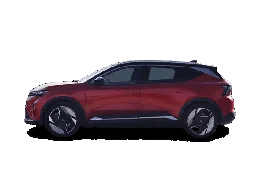
Renault Scenic E-Tech profile view showcasing vehicle dimensions, wheel design, and aerodynamics.
Scenic E-Tech (2023-pr.)
Volkswagen ID.7 Tourer side profile with 2,971 mm wheelbase, 86 kWh battery, and 200 kW fast charging.
ID.7 Tourer (2024-pr.)
Tesla Model 3 side profile showing sleek body lines and alloy wheels
Model 3 (2023-pr.)
Side profile of Volvo EX30 electric SUV, showing 2,650 mm wheelbase, coupe-like roofline, and clean body lines
EX30 (2023-pr.)

Common Issues with the Ford Explorer EV

The Ford Explorer EV, a new entrant into the electric SUV market, is built on the MEB platform. Like all modern EVs, it has a few known issues and problems that potential buyers should be aware of. These are not always major mechanical failures but rather recurring faults and minor weaknesses that have been documented by early adopters and owner communities.


First Generation (2024 - Present)

Charging and Battery Management Issues

As with many new EVs, some owners of the Explorer EV have reported inconsistent charging speeds and problems with the Battery Management System (BMS). These faults can sometimes lead to unexpected range loss or even a charging failure at certain stations. The vehicle's software manages charging and battery health, and any bugs in this system can cause these issues. Ford has been proactive in addressing these weaknesses as they arise.

Common Solutions: Most of these problems can be resolved with over-the-air (OTA) software updates. These updates improve the BMS's performance, optimize charging curves, and enhance communication with charging stations. Ensuring the vehicle has the latest software version is critical. In more severe cases, a visit to a Ford dealership may be needed for a diagnostic check and a manual software update or a component replacement under warranty.

Infotainment & Software Glitches Problems

The Ford Explorer EV features a large, tablet-style infotainment screen and a modern software interface. Users have reported various software issues, including the system freezing, lagging, or rebooting unexpectedly. Some have also noted problems with Bluetooth connectivity, navigation accuracy, or the functionality of features like Android Auto and Apple CarPlay. While generally not a safety failure, these glitches can be frustrating and highlight certain software weaknesses.

Common Solutions: Many of these faults are minor and can be fixed by a simple system reset (typically by holding down a combination of buttons, as outlined in the owner's manual). Ford regularly releases software updates to improve system stability and fix known issues. Always check for and install the latest OTA updates to ensure the best performance. If the problem persists, a visit to the dealership for a professional diagnosis is the next step.

Build Quality and Trim Issues

Some early production models have had minor quality control issues related to interior trim and exterior components. Owners have reported problems such as misaligned body panels, rattling from interior plastics, and other minor fit-and-finish faults. These are not performance-related failures but can impact the overall perception of the vehicle's quality and highlight small manufacturing weaknesses.

Common Solutions: These issues are often addressed during routine service appointments. A Ford dealership can perform adjustments, tighten loose components, or replace faulty parts under warranty. Reporting these problems to the dealership as soon as they are noticed is the best way to get them resolved.


Conclusion

The Ford Explorer EV is an exciting new electric SUV, but like many first-generation models, it has a few known weaknesses. The most common problems are typically related to software, including issues with the battery management system and the infotainment system. Most of these faults can be resolved with routine software updates. While some minor build quality failures may exist, they are generally fixable under warranty. For a used Explorer EV, it's essential to check the service history to ensure all updates have been performed. By being aware of these common points of concern, a buyer can make an informed decision and enjoy the benefits of this modern EV.


* Disclaimer: The information presented here is compiled from owner discussions in online communities, forums, and various open public sources. The accuracy, completeness, and reliability of this data cannot be guaranteed, and it should be used for informational purposes only.

* Disclaimer: The information presented here is compiled from owner discussions in online communities, forums, and various open public sources. The accuracy, completeness, and reliability of this data cannot be guaranteed, and it should be used for informational purposes only.
Frequently Asked Questions FAQ about the 2024 Ford Explorer EV AWD Extended Range – Specs, Battery

About EVspecsHub

EVspecsHub is a non-profit informational platform dedicated to providing free electric vehicle specifications. Any future ads will support hosting and maintenance costs to keep our content accessible.

Scroll to Top