EVspecsHub.com EVspecsHub

2023 Volvo EX30 Single Motor | Extended Range 69.0 kWh 272 hp Battery, Horsepower, Range

The EX30 Extended Range offers optimal travel versatility using a 69 kWh usable NMC battery capacity, providing a lengthy estimated 476 km (296 mi) WLTP range. Its compact dimensions include a length of 4.23 m (166.7 in). All specs verified with official sources.

Used Volkswagen e-Golf Problems and Fixes (2013 – 2020).

Used Volkswagen e-Golf Problems and Fixes (2013 – 2020).

TESLA FORD HONDA CHEVROLET RIVIAN HYUNDAI KIA LUCID VOLKSWAGEN SKODA AUDI BMW MERCEDES RENAULT VOLVO PEUGEOT BYD XIAOMI TOYOTA NISSAN…

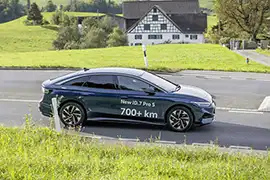
Volkswagen ID.7 Pro S — 794 km on one charge with max Battery

Volkswagen ID.7 Pro S — 794 km on one charge…

Volkswagen ID.7 Pro S — 794 km on one charge TESLA FORD HONDA CHEVROLET RIVIAN HYUNDAI KIA LUCID VOLKSWAGEN SKODA…

Volkswagen ID.4: American vs. European Versions, Key Differences

Volkswagen ID.4: American vs. European Versions, Key Differences

The Volkswagen ID.4 has become a significant player in the electric SUV market, but it’s important to understand that the…

POPULAR cars…

Side profile of Volvo EX30 electric SUV, showing 2,650 mm wheelbase, coupe-like roofline, and clean body lines
EX30 (2023-pr.)
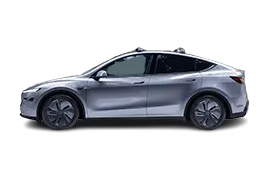
2025 Tesla Model Y Performance with dual motors, 0–100 km/h in 3.5 seconds, and long‑range battery
Model Y (2025-pr.)
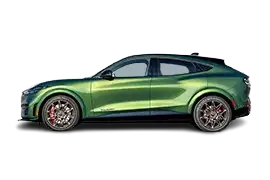
Side profile of the Ford Mustang Mach-E, showing its aerodynamic body, coupe-like roofline, and EV styling cues
Mustang Mach-E (2020-pr.)
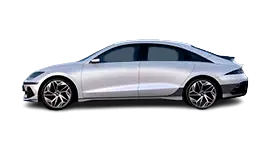
Side profile of the Hyundai Ioniq 6 illustrating its unique curved, streamliner silhouette and long 2950mm wheelbase on the E-GMP platform.
IONIQ 6 (2023-pr.)
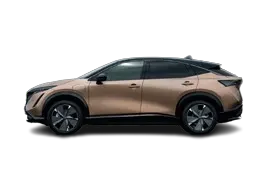
Side profile of the Nissan Ariya electric crossover, emphasizing its sleek, coupe-like silhouette, sloped roofline, and prominent wheel arches, optimized for efficiency and performance.
Ariya (2024-pr.)
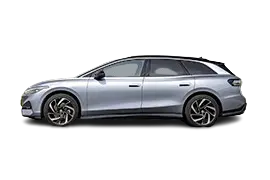
Volkswagen ID.7 Tourer side profile with 2,971 mm wheelbase, 86 kWh battery, and 200 kW fast charging.
ID.7 Tourer (2024-pr.)
Tesla Model 3 side profile showing sleek body lines and alloy wheels
Model 3 (2023-pr.)
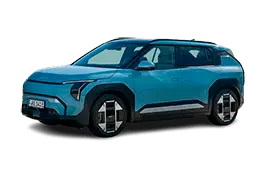
Kia EV3 side view compact electric SUV dimensions and profile
EX30 (2023-pr.)

Volvo EX30

Single Motor | Extended Range |  2023–

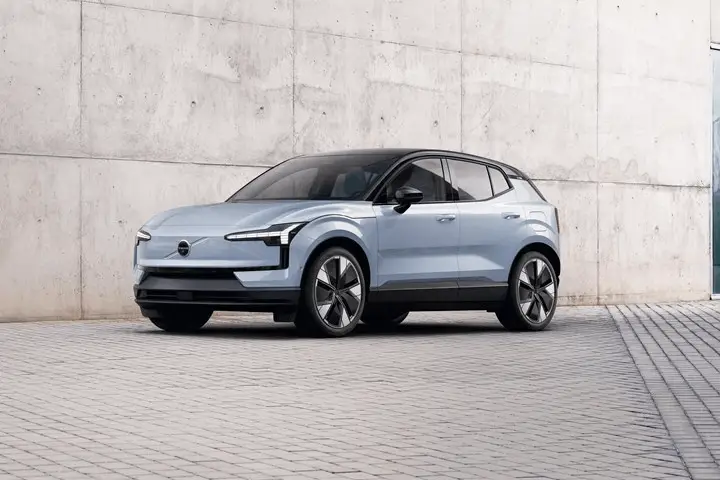
Front view of Volvo EX30 electric SUV, highlighting compact dimensions, closed grille design, and aerodynamic profile
Volvo EX30
battery capacity
Capacity
range –
Range
power output
Power
acceleration
Acceleration
69 kWh
476 km

200 kW

5.3 s

Technical Data & Performance

Model Years2023–present
Trim (Variant)EX30 - Single Motor | Extended Range
Power (Horsepower)200 kW (272 hp)
Top Speed180 km/h (112 mph)
Torque343 Nm (253 lb-ft)
Acceleration5.3 sec (0–100 km/h)
5.3 sec (0–62 mph)
DriveRWD Rear-wheel drive
Motor detailsSingle (Rear PMSM)
Motor codeVolvo Cars (based on Geely SEA platform components)

Battery & Charging

Battery Capacity & Size64.0 kWh usable,
69.0 kWh gross
Max Range476 km (296 mi) / WLTP
414 km (257 mi) / EPA
Consumption17.0 kWh/100 km
Battery TypeNMC (Nickel Manganese Cobalt)
Cell Format / SupplierCATL or LG Chem/SK On (Geely-associated suppliers)
Battery Voltage400 V
V2L SupportedYes / 3.6 kW
Heat pumpYes
AC Home ChargingType2 / 1-phase - 7.4 kW (Max Power)
Type2 / 3-phase - 11 kW (Max Power)
DC Fast ChargingCCS2, 153 kW (Max Power)
28 min. (10–80%)
Charging UpdatesIn the US: J1772/CCS1 Volvo switches to NACS from 2025 MY.

Dimensions & Body

Type5 door, SUV
Seating capacity5
ClassB-segment (Premium Subcompact Crossover SUV)
Length4233 mm (166.7 in)
Width1837 mm (72.3 in)
Height1549 mm (61.0 in)
Wheelbase2650 mm (104.3 in)
Ground Clearance177 mm (7.0 in)
Curb weight1850 kg (4079 lb)
Gross weight2240 kg (4938 lb)
Trunk Volume318 L (11.2 ft³)
904 L (31.9 ft³) max
TowingUnbraked: 750 kg (1654 lb), Braked: 1600 kg (3527 lb)
Drag Coefficient0.28
PlatformSEA | Geely
Additional InformationHeat pump: Yes on 69 kWh models; No on Standard Range.
Estimated Market Price
* for reference only
EUR 41,000

⚠️ Please note: actual vehicle specifications may vary depending on market, trim level, or available regional packages.

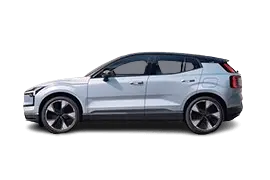
Side profile of Volvo EX30 electric SUV, showing 2,650 mm wheelbase, coupe-like roofline, and clean body lines
EX30 (2023-pr.)
Volvo Ec40 2024 180
EC40 (2024-pr.)
Volvo Ex40 2024 180
EX40 (2024-pr.)
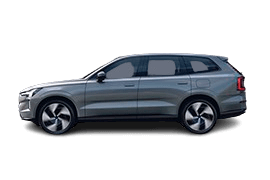
Volvo Ex90 2023 180
EX90 (2023-pr.)
Volvo Es90 2025 180
ES90 (2025-pr.)
Volvo Em90 2025 180
EM90 (2025-pr.)
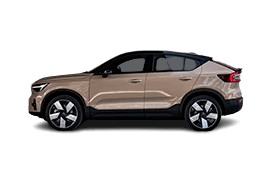
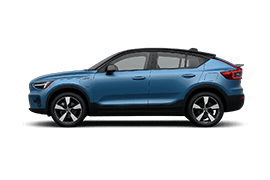
Volvo C40 Recharge 2021 180
C40 Recharge (2021-2023)
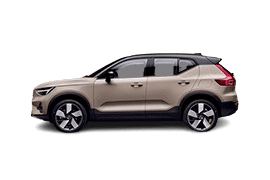
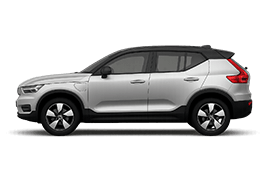
Volvo Xc40 Recharge 2020 180
XC40 Recharge (2020-2023)

The Evolution of the Volvo EX30: Beyond the Numbers


Initial Launch Configuration (Model Year 2024 / 2025)

  • Overview: The Volvo EX30 is not just the smallest SUV in the brand’s line-up; it is a statement on sustainability and minimalism. It is built on the Sustainable Experience Architecture (SEA) platform by Geely, which is key to its compact size and high efficiency.

Unique & Interesting Facts

  • The Quickest Volvo Ever: The Twin Motor Performance variant officially holds the title of the fastest-accelerating Volvo in the company’s nearly century-long history, reaching 0-100 km/h in just 3.6 s.
  • Lowest Carbon Footprint: The EX30 boasts the smallest total carbon footprint of any Volvo car to date. Over 200,000 km of driving, its footprint is approximately 60% less than the petrol-powered XC40 ICE.
  • Recycled Materials Champion: Around 25% of aluminum, 17% of steel, and up to 17% of all plastics used in the EX30 are recycled — the highest proportion in any Volvo yet.
  • Innovative Interior Soundbar: To simplify the cabin and maximize storage space, the EX30 features a single, full-width soundbar integrated into the dashboard — a first for Volvo, inspired by home audio systems.

Battery Chemistries: A Strategic Choice

  • 1. Single Motor (Standard Range):
    • Battery Strategy: Uses LFP (Lithium Iron Phosphate) chemistry. Cheaper to produce, safer, cobalt-free, and can be charged to 100% without major long-term degradation.
    • Output: 200 kW (272 hp) / 343 Nm.
    • Performance: 0-100 km/h in 5.7 s.
  • 2. Single Motor Extended Range & 3. Twin Motor Performance:
    • Battery Strategy: Both use NMC (Nickel Manganese Cobalt) chemistry, offering higher energy density and enabling the Twin Motor’s high performance.
    • Output (Extended Range): 200 kW (272 hp) / 343 Nm (0-100 km/h in 5.3 s).
    • Output (Twin Motor): 315 kW (428 hp) / 543 Nm (0-100 km/h in 3.6 s).
    • Charging Detail: Max DC charging speed up to 153–175 kW, higher than the LFP version due to NMC’s thermal characteristics.

Future Variant (Expected)

  • EX30 Cross Country: A ruggedized variant with protective skid plates, increased ground clearance, and unique exterior styling, aimed at buyers with an adventurous lifestyle.

POPULAR cars…

2025 Tesla Model Y Performance with dual motors, 0–100 km/h in 3.5 seconds, and long‑range battery
Model Y (2025-pr.)
Side profile of the Ford Mustang Mach-E, showing its aerodynamic body, coupe-like roofline, and EV styling cues
Mustang Mach-E (2020-pr.)
Side profile of the Hyundai Ioniq 6 illustrating its unique curved, streamliner silhouette and long 2950mm wheelbase on the E-GMP platform.
IONIQ 6 (2023-pr.)
Side profile of the Nissan Ariya electric crossover, emphasizing its sleek, coupe-like silhouette, sloped roofline, and prominent wheel arches, optimized for efficiency and performance.
Ariya (2022-pr.)
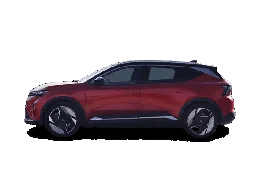
Renault Scenic E-Tech profile view showcasing vehicle dimensions, wheel design, and aerodynamics.
Scenic E-Tech (2023-pr.)
Volkswagen ID.7 Tourer side profile with 2,971 mm wheelbase, 86 kWh battery, and 200 kW fast charging.
ID.7 Tourer (2024-pr.)
Tesla Model 3 side profile showing sleek body lines and alloy wheels
Model 3 (2023-pr.)
Side profile of Volvo EX30 electric SUV, showing 2,650 mm wheelbase, coupe-like roofline, and clean body lines
EX30 (2023-pr.)

Common Issues and Problems with the Used Volvo EX30


First Generation (2024 - Present)

Infotainment System Freezing & Software Glitches Problems

The most prevalent weakness reported by early owners relates to the single-screen, Google-based infotainment system. Users frequently experience sluggishness, lag when switching between applications, and unexpected reboots or freezing. Since the central screen controls nearly all vehicle functions, this is a major frustration. A recall was even issued for a bug that could obscure the speedometer.

Common Solutions: The EX30 benefits from Over-The-Air (OTA) software updates. Volvo is actively releasing patches (e.g., versions 1.3, 1.4, 1.5) to address these stability issues. A quick fix is a soft reset of the system (holding the home button). For a used model, always verify the service history to ensure the latest software version is installed to resolve known bugs.

Charging Speed & Connectivity Issues

Owners report inconsistent charging performance, particularly with Level 2 (AC) and public DC fast chargers. Problems include slower than expected charging rates, chargers not being recognized, and scheduled charging failing. These charging faults are generally linked to software calibration and temperature management.

Common Solutions: Many charging weaknesses are expected to be fixed via future OTA updates. If charging is persistently slow, checking for dealer-performed software updates is crucial. Ensure the car's charge limit is correctly set to prevent self-imposed rate constraints and related problems.

12V Auxiliary Battery & Power Loss Problems

Like many modern EVs, the EX30 is susceptible to sudden or unexplained draining of the 12V auxiliary battery. This happens when the traction battery fails to keep the 12V unit charged, often due to an electrical or software failure. The result is a complete loss of power, leading to an unresponsive vehicle that cannot be unlocked or started.

Common Solutions: In the event of total power loss, the vehicle can be temporarily accessed using an external 12V terminal. The underlying cause requires a dealership diagnosis to check for blown fuses, a defective 12V battery, or a software/electrical fault in the charging transfer unit. Buyers of used models should ensure no active service bulletins related to this system are pending.

Rattles, Creaks, and Suspension Noises Issues

The vehicle's minimalist cabin design has led to reports of minor but irritating interior rattles and creaking noises. These sounds often originate from the door panels, dashboard trim, or suspension when driving over rough terrain. While these are quality-of-life issues rather than safety problems, they affect the car's perceived quality.

Common Solutions: This mechanical weakness usually requires a dealer visit. Service technicians are typically familiar with these noises and can apply targeted lubrication, tighten trim clips, or reinforce specific panel connections under warranty. Minor trim problems are known and generally easily resolved.


Conclusion

The Volvo EX30's initial launch has been characterized by software teething problems common to new EVs. The most immediate issues center on the stability of the central infotainment system and the consistency of charging. While 12V battery failures and interior noise problems exist, proactive Over-The-Air (OTA) updates are Volvo's main method for resolving these digital and minor mechanical faults. The most vital step for any used EX30 is to confirm that the car has received all available software and recall updates from a Volvo service center.


* Disclaimer: The information presented here is compiled from owner discussions in online communities, forums, and various open public sources. The accuracy, completeness, and reliability of this data cannot be guaranteed, and it should be used for informational purposes only.


Frequently Asked Questions FAQ about the Volvo EX30 Single Motor Extended Range | FULL Specs & Dimensions

About EVspecsHub

EVspecsHub is a non-profit informational platform dedicated to providing free electric vehicle specifications. Any future ads will support hosting and maintenance costs to keep our content accessible.

Scroll to Top