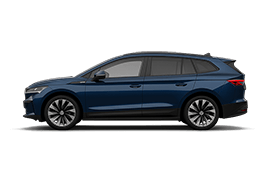
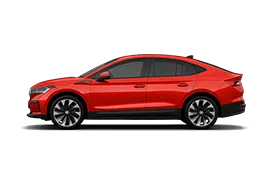
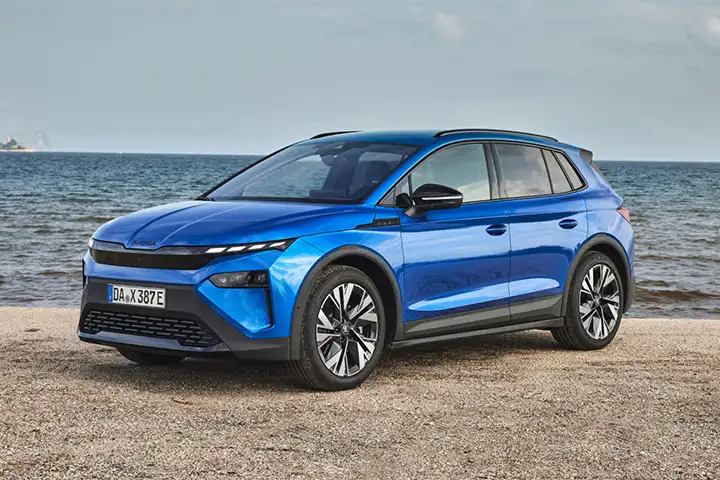
2025 Skoda Elroq RS 84 kWh 340 hp Battery, Horsepower, Range










EVspecsHub Score — Skoda Elroq RS 79 kWh (2024)
Independent rating vs all passenger EVs on sale 2025–2026
Range
549 km WLTP · 79 kWh usable · AWD · 20" wheels
7.0
good
Battery
79 kWh usable · NMC · 400V · no V2G
7.0
good
Charging
185 kW DC max · 26 min 10→80% · no V2L/V2H/V2G
5.0
avg
Performance
0–100 km/h 5.4 s · 250 kW · AWD
8.0
good
Efficiency
16.2 kWh/100 km WLTP · AWD tax vs RWD variants
5.0
avg
Cargo
470 L boot · no frunk · 470 L combined
5.7
avg
Value
€53,050 · $56,800 · €96.6/km · $103.5/km WLTP
5.0
avg
Verdict: The Elroq RS is the only AWD in the family, and the 8.0 for Performance reflects that — 5.4 s with both axles pulling is genuinely quick for a compact SUV. At 185 kW DC it's also the fastest charger in the Elroq lineup. The trade-off: at €96.6/km you're paying a real premium for the RS badge, efficiency drops to 5.0, and you still get the same 470 L boot with no frunk. For buyers who want Skoda AWD in the Elroq body — this is it, full stop. Everyone else should look hard at the 85.
© EVspecsHub.com · All passenger EVs 2025–2026 · March 2026 · Methodology v6.7
6.1
out of 10
EVspecsHub Score
📊 Using this score in your review?
Free to use — just credit EVspecsHub.com
Free to use — just credit EVspecsHub.com
▸ Score data table (methodology v6.7)
| Criterion | Score | Key data | 10/10 = |
|---|---|---|---|
| Range | 7.0 | 549 km WLTP · 500–599 km band | 800+ km |
| Battery | 7.0 | 79 kWh usable · NMC · 400V (no bonus) · 70–79 kWh band | 110+ kWh |
| Charging | 5.0 | 185 kW DC · 26 min 10→80% · no V2L/V2H/V2G · 150–199 kW band | 400+ kW |
| Performance | 8.0 | 5.4 s → 7.0 + AWD +1.0 = 8.0 · 250 kW | sub-3s AWD |
| Efficiency | 5.0 | 16.2 kWh/100 km WLTP · 16.0–16.9 band | <12 kWh/100 km |
| Cargo | 5.7 | 470 L boot · no frunk · SUV penalty −0.3 · 500–649 L band | 1100+ L |
| Value | 5.0 | €53,050 · €96.6/km · $103.5/km · €90–109/km band | <€45/km |
| Overall | 6.1 / 10 | EVspecsHub Score v6.7 · EVspecsHub.com · March 2026 | |
Skoda Elroq RS 2025 (MY25): The AWD Elroq That Stops More Than the 85 — And Why That's Fine
549 km WLTP. 250 kW combined. 185 kW DC. The fastest Skoda ever made — and also the one that, on a real motorway trip, stops for charge more often than the single-motor 85 despite having a bigger battery. That contradiction is the whole story of the RS. I went through owner reports, technical teardowns, and real efficiency logs from the first year. Here's what actually matters — especially the things that won't be in the brochure.
Quick context: the RS launched in April 2025 at Milan Design Week and went on sale summer 2025. It's relatively new — some owner data is still building. One important note: the MY26 update changes the RS battery and DC charging spec — more on that in the MY26 section on this page. This block covers MY25 cars currently on the road.
1 Battery & Motor Chemistry — NMC, PMSM + ASM, and Why the Mix Matters NMC · 84 kWh gross · PMSM rear + ASM front
Short answer: the Elroq RS MY25 uses NMC (Nickel Manganese Cobalt) chemistry. There is no LFP version of the RS. But the RS has something no other Elroq has: two physically different types of motor. The rear is an APP550 permanent magnet synchronous motor (PMSM). The front is an asynchronous induction motor (ASM). Skoda doesn't explain this anywhere in consumer-facing material — and understanding it tells you a lot about how the RS actually behaves. Figures valid for cars built from launch through MY26 production cutover (mid-2026).
Why PMSM rear + ASM front — the engineering reason
| Motor type | Position | Key property | Why this combination |
|---|---|---|---|
| APP550 — PMSM (permanent magnet) | Rear axle | High efficiency, strong low-speed torque | Handles most power delivery and regen at all times |
| ASM (asynchronous induction) | Front axle | Zero drag when disengaged | Can be fully decoupled at cruise — no magnetic resistance |
The practical effect: at motorway cruise, the RS runs as a rear-wheel-drive car. The front ASM is fully disengaged — contributing zero drag, zero consumption. It only engages when the rear wheels lose traction, or when you accelerate hard enough to demand front axle contribution. A twin-PMSM setup would create constant magnetic drag from both axles at all speeds — worse efficiency at cruise. The PMSM+ASM combination is used across all VW Group MEB AWD vehicles for this reason, but Skoda doesn't explain it anywhere a buyer would look.
✅ NMC charging habit for the RS: Set daily charge limit to 80% — gives you ~63.2 kWh and roughly 439 km WLTP equivalent. Use 100% before long trips. On a 79 kWh pack, the 80% vs 100% gap is 15.8 kWh — roughly 95–110 km. Worth keeping in reserve rather than using daily. NMC cells degrade faster with frequent high-SoC sits compared to keeping the average lower.
✅ Heat pump check: R744 sticker in the engine bay = heat pump fitted. R-1234YF = not fitted. The RS costs from £46,560 in the UK and the heat pump is still a paid option. Several RS buyers found out after the first winter. Check the sticker on delivery — don't trust the order confirmation alone.
2 Pack & Powertrain — 84/79 kWh, Two Different Motor Technologies 84 kWh gross · APP550 rear · ASM front · AWD
84 kWh gross, 79 kWh usable — the largest pack in the MY25 Elroq range, 2 kWh gross more than the 85's 82 kWh. The BMS holds a 5 kWh buffer (6.0%). Combined output is 250 kW (340 hp) and 679 Nm — the fastest production Skoda ever made. Ground clearance drops to 170 mm, 16 mm lower than every other Elroq. DCC adaptive dampers are standard here, optional everywhere else. The wheelbase is 4 mm longer than RWD variants — the front motor hardware physically takes more space.
Pack & powertrain specs — cross-checked from official press documentation
| Parameter | Value |
|---|---|
| Gross capacity | 84 kWh |
| Usable capacity (BMS-protected) | 79 kWh |
| BMS buffer | ~5 kWh (6.0%) — not stated by Skoda |
| Cell chemistry | NMC (Nickel Manganese Cobalt) |
| Rear motor type | APP550 PMSM — same unit as single-motor Elroq 85 |
| Front motor type | ASM (asynchronous induction) — not stated on consumer pages |
| Combined output | 250 kW (340 hp) / 679 Nm (501 lb-ft) |
| Drive | AWD — ASM front fully decouples at cruise, RWD mode default |
| 0–100 km/h | 5.4 s — fastest production Skoda ever |
| Top speed | 180 km/h (112 mph) |
| Ground clearance | 170 mm (6.7 in) — 16 mm lower than all other Elroq variants |
| Suspension drop | 15 mm front / 10 mm rear vs standard Elroq |
| DCC adaptive dampers | Standard (15 stages) — optional on 85/60/50 |
| Steering | Progressive variable-ratio — standard RS, optional lower trims |
| Front brake discs | Two-piston calipers — upgraded vs single-piston on 85 |
| Rear brakes | Drum — same as all Elroq variants |
| Wheelbase | 2,769 mm (109.0 in) — 4 mm longer than RWD Elroqs |
| Kerb weight | 2,229–2,342 kg (4,914–5,163 lb) — heavier than 85 by ~100–90 kg |
| Battery warranty | 8 years / 160,000 km — 70% capacity guarantee |
| MY26 note | Battery changes to 82/77 kWh, DC drops to 165 kW in MY26 update |
⚠ Drum brakes on a 340 hp AWD SUV — deliberate: The RS keeps drum brakes at the rear, same as every other Elroq. Skoda's position: the motors handle the majority of deceleration through regen, so bigger rear discs would add unsprung mass without meaningful benefit. Owners coming from ICE performance cars find this surprising. It works in practice, but it's worth knowing before delivery.
3 DC Charging — 185 kW and the AWD Thermal Effect NMC · 185 kW peak · 26 min 10–80% · MY25
185 kW is the highest DC peak in the MY25 Elroq range — the RS kept the original cell spec that the single-motor 85 lost in June 2025. The peak window runs from low SoC through roughly 25–30% on a warm preconditioned battery. At 10–80% in 26 minutes, the RS is two minutes faster than the 85 despite filling more capacity — the higher peak makes up the difference.
One thing specific to the RS that doesn't appear in any documentation: battery thermal load after a hard run. The AWD system distributes energy across two motors and the battery can run hotter after sustained full-power driving than on the 85. Several owners noted charging speed was slightly lower after a brisk mountain pass or spirited motorway run — the BMS managing cell temperature cautiously on a warm battery arriving at a charger. It's not a fault. It's the physics of running 250 kW through a 79 kWh pack. Give it five minutes parked before plugging in if you've been driving hard.
⚠ Cold battery without preconditioning: Below 10°C, the RS starts DC sessions at 30–50 kW just like the other variants. With 79 kWh to fill, a cold slow session hurts more here than anywhere else in the range. Trigger preconditioning from the infotainment charging menu before arriving — on MY25 you don't need to route to the charger in navigation.
DC Charging Curve — Elroq RS MY25 CCS2 / warm preconditioned battery / NMC 79 kWh · 185 kW peak
EVspecsHub.comBased on technical documentation and MEB AWD platform data cross-referenced with owner sessions. 185 kW peak from low SoC on warm preconditioned battery. Slight thermal reduction after sustained hard driving — normal AWD behaviour.
Elroq RS MY25 — DC Charging Power by SOC
CCS2 · warm preconditioned battery · 185 kW peak · technical data cross-referenced with owner sessions
| State of charge (SOC) | Charging power (kW) | Notes |
|---|---|---|
| 5% | ~120 kW | Ramp-up from very low SoC |
| 10% | ~160 kW | Rising toward peak |
| 15–30% | ~175–185 kW | Peak window — warm battery, preconditioned |
| 35% | ~155 kW | Gentle step-down begins |
| 45% | ~120 kW | Sustained mid-range — higher than post-June 85 |
| 55% | ~90 kW | Continued taper |
| 65% | ~65 kW | BMS protecting cells |
| 75% | ~40 kW | Approaching typical stop point |
| 80% | ~25 kW | Standard 26 min stop completes here |
| 90% | ~12 kW | Not worth waiting at DC |
| 100% | ~5 kW | Use AC overnight — not DC for daily charging |
MY25 spec · Cold battery (<10°C) without preconditioning: 30–50 kW cap · slight thermal reduction after hard driving — give 5 min before plugging in · figures valid for MY25 NMC cars
EVspecsHub.comAC Charging at Home
On-board AC charger: 11 kW (3-phase). Full 0–100% on an 11 kW wallbox: around 8 hours. On 7.4 kW single-phase: about 12 hours. Same as the 85 — 79 kWh is a large pack, plan accordingly on a single-phase home install.
4 Real-World Range — The AWD Efficiency Trade-Off Explained 79 kWh · AWD · APP550 + ASM
549 km WLTP (341 mi) — less than the single-motor 85's 574 km, despite 2 kWh more usable capacity. That gap comes entirely from AWD weight and drivetrain losses. The RS is around 100–90 kg heavier than the 85, and even with the ASM front motor fully decoupled at cruise, the additional mass and front axle hardware cost efficiency.
In real-world driving, owners averaged around 3.4 mi/kWh versus the 85's 3.8 mi/kWh — a consistent gap in matched conditions. That still gives 269 miles (433 km) from a full charge in mild mixed driving, which is fine. But on a sustained 120 km/h motorway run in mild weather, the RS delivers roughly 390–420 km versus the 85's 430–460 km. The bigger battery doesn't fully compensate. One summer test session on fast country roads returned 20 kWh/100 km — 460–480 km realistic range in those conditions — the best case for spirited driving. At 80% charge — the NMC daily recommended limit — plan on ~63.2 kWh and around 439 km WLTP equivalent.
⚠ Bigger battery, shorter motorway range than the 85: The RS has more kWh but consumes more per km. On a 120 km/h motorway run in mild weather, the RS delivers roughly 390–420 km vs the 85's 430–460 km. If pure motorway range is the priority, the single-motor 85 is the better choice. The RS makes sense when you want AWD traction, winter confidence, and 5.4-second acceleration — not when you want the longest range between stops.
Real-World Range by Condition — Elroq RS MY25 20" wheels · NMC 79 kWh · AWD
EVspecsHub.comBased on technical documentation and owner reports. AWD efficiency penalty vs single-motor 85: ~3.4 mi/kWh (RS) vs ~3.8 mi/kWh (85) in matched conditions. RS has the larger pack but higher consumption per km.
Elroq RS MY25 — Real-World Range by Condition
NMC · 79 kWh usable · AWD · 20" wheels · owner-logged and technical data · figures valid for MY25 cars
| Condition | Range (km) | Range (mi) | vs WLTP | Notes |
|---|---|---|---|---|
| WLTP official | 549 km | 341 mi | 100% | Lab conditions — less than single-motor 85 despite bigger battery |
| Daily at 80% charge (NMC recommended) | ~439 km | ~273 mi | 80% | Effective daily range for pack health |
| City / mixed, mild 15–20°C | 420–440 km | 261–273 mi | ~79% | ~3.4 mi/kWh owner average |
| Motorway 110–120 km/h, mild | 390–420 km | 242–261 mi | ~74% | 35–40 km less than single-motor 85 — AWD penalty real |
| Fast roads / spirited driving (summer) | 460–480 km | 286–298 mi | ~85% | 20 kWh/100 km — best-case spirited conditions |
| Cold ~0°C, no heat pump | 300–330 km | 186–205 mi | ~56% | AWD + cold + no HP = big drop |
| Cold ~0°C, with heat pump | 350–380 km | 218–236 mi | ~65% | Heat pump worth ~50 km in winter |
| kWh/100 km (mixed mild) | ~18.2 kWh/100 km | — | vs ~16.4 kWh/100 km for single-motor 85 | |
Based on technical documentation and owner reports · AWD efficiency penalty consistent at ~3.4 vs 3.8 mi/kWh vs single-motor 85 · figures valid for MY25 cars
EVspecsHub.com5 Cargo, Ground Clearance & What's Actually Different 470 L boot · 170 mm clearance · staggered tyres
Same body as all Elroqs — 470 litres (16.6 cu ft) with seats up, 1,580 litres (55.8 cu ft) folded. Loading sill at 702 mm (27.6 in). No frunk in MY25 — the 21 L frunk with gas struts arrives with the MY26 update across all Elroq variants. What's different from every other Elroq is underneath and around the car.
Ground clearance drops to 170 mm — 16 mm lower than the standard Elroq's 186 mm. That's the combination of lowered sport suspension (15 mm front / 10 mm rear) and the standard 20" wheels. Owners with steep driveways, high parking kerbs, or aggressive speed bumps noticed this quickly. A few also noted catching the front splitter on steep supermarket ramp entries. Check your daily environment before ordering if you regularly navigate tight urban terrain.
One interior detail specific to RS owners: the microsuede dashboard is premium and looks genuinely good, but shows scuff marks from hands and sleeve contact after a few months. More of a maintenance consideration than a fault — a soft cloth wipe brings it back — but it comes up enough in forum threads to mention.
Skoda Elroq RS MY25 — Cargo & Interior Dimensions
Manufacturer-verified data · owner-measured details
| Parameter | Value | Notes |
|---|---|---|
| Boot volume — seats up | 470 L (16.6 cu ft) | ✔ manufacturer-verified — identical to all Elroq variants |
| Boot volume — seats folded | 1,580 L (55.8 cu ft) | ✔ manufacturer-verified |
| Loading sill height | 702 mm (27.6 in) | ✔ manufacturer-verified — same as standard Elroq |
| Frunk | None — MY25 | 21 L frunk with gas struts arrives with MY26 across all Elroq variants |
| Ground clearance | 170 mm (6.7 in) | ✔ manufacturer-verified · 16 mm lower than all other Elroq variants — check steep driveways |
| Suspension drop vs standard | 15 mm front / 10 mm rear | Confirmed in official RS chassis documentation |
| DCC adaptive dampers | Standard (15 stages) | Optional on 85/60/50 — standard only on RS |
| Microsuede dashboard | Standard on RS | Premium finish — shows scuff marks with regular hand contact |
| Mamba Green paint | RS-exclusive colour | Not available on any other Elroq trim |
| Headroom — front | 1,056 mm (41.6 in) | ✔ manufacturer-verified |
| Headroom — rear | 990 mm (39.0 in) | ✔ manufacturer-verified |
| Overall length | 4,488 mm (176.7 in) | ✔ manufacturer-verified |
| Wheelbase | 2,769 mm (109.0 in) | ✔ manufacturer-verified · 4 mm longer than RWD variants — AWD front hardware |
| Kerb weight | 2,229–2,342 kg (4,914–5,163 lb) | ✔ manufacturer-verified · heavier than 85 — AWD hardware adds ~100 kg |
Dimensions cross-checked against manufacturer technical documentation · ground clearance and suspension drop from official RS chassis data · microsuede and Mamba Green notes from owner forum threads
EVspecsHub.com6 Heat Pump, V2L, DCC and the Questions Nobody Answers MY25 specific
Heat Pump
Still not standard on the most expensive Elroq. From £46,560 in the UK — and the heat pump is a £1,100 option. Without it, the RS — heaviest Elroq, largest pack — burns the most energy on cabin heating in cold conditions. The winter range gap between 300–330 km and 350–380 km is real. Use the R744 sticker check in the engine bay to confirm it was actually fitted on your delivery.
V2L — Not Available MY25, Status for MY26 Unclear
V2L is not available on the MY25 Elroq RS. The MY26 update confirms V2L for the standard Elroq 85 RWD — but the official MY26 press release does not explicitly confirm V2L for the RS. Given the RS uses the same updated platform, it's reasonable to expect it — but I won't confirm it until Skoda publishes full RS MY26 specs. This section will be updated. For now: MY25 RS has no V2L in any form.
⚠ V2L on RS — not confirmed for MY26: The MY26 press release confirms V2L for the standard 85 RWD. The RS is listed in the MY26 spec table but V2L availability for the RS specifically is not explicitly confirmed. Do not assume — check with Skoda when MY26 full specifications are published.
DCC Adaptive Dampers — Standard Here, Optional Everywhere Else
This is the RS's most underrated spec advantage. 15 adjustable stages, standard fit. On other Elroq trims, DCC is an option most owners don't spec — then they notice the ride quality on rough roads. The RS sits lower than every other Elroq, on larger wheels, and still rides better than an un-DCC'd SportLine 85 on broken surfaces. Multiple owners who drove both confirmed this. The combination of sport-lowered suspension and adaptive dampers is what makes the RS work as a daily car rather than just a track toy.
Battery Preconditioning
Standard on MY25 RS. Trigger manually from infotainment charging menu — no navigation destination required. On the RS especially: given the 79 kWh pack and the consequences of a cold start at 30 kW, this is the single most important charging habit. Always use it in winter before any DC stop.
Apple CarPlay / Android Auto
Wireless, standard. The RS adds a head-up display with augmented reality navigation as standard — optional on lower trims. Same 13-inch screen, same occasional wireless CarPlay drop, wired fallback available.
Other Things Owners Keep Asking About
- Towing capacity MY25: 1,200 kg (2,646 lb) braked / 750 kg (1,653 lb) unbraked — same as the 85. Tow bar factory option. Note: MY26 RS towing not yet confirmed — will update when full specs publish.
- One-pedal driving: B mode plus four regen levels via steering wheel paddles — the most adjustable regen in the Elroq range. Still no true one-pedal full stop on MY25 — friction brakes for the final halt. MY26 adds this.
- Glovebox RHD: Same as all Elroq variants — smaller than expected on right-hand drive builds due to conversion layout. Consistent forum note, first noticed on a real road trip.
- Mamba Green availability: RS-exclusive colour, not available on any other Elroq trim. Lead times at launch were longer than other RS colours — ask your dealer for current availability.
- Frunk — MY25 vs MY26: No frunk on any MY25 Elroq. MY26 adds 21 L with gas struts across all variants including RS.
7 Wheels, Staggered Tyres & What That Means for Winter 5×112 · CB 57.1 mm · staggered fitment · 10.8 m turning
The RS is the only Elroq with a staggered tyre setup — wider rears than fronts. This is a detail Skoda doesn't clearly highlight in the UK spec sheet, and it matters significantly for anyone buying winter wheels.
Skoda Elroq RS MY25 — Wheel & Tire Specifications
Manufacturer-verified factory specs · staggered fitment — unique to RS in Elroq range
| Parameter | Specification |
|---|---|
| Bolt pattern (PCD) | 5×112 |
| Center bore (CB) | 57.1 mm |
| Lug bolt thread | M14×1.5 |
| Wheel tightening torque | 120 Nm (89 lb-ft) |
| Standard 20" — front | 235/50R20 |
| Standard 20" — rear | 255/45R20 — wider than front |
| Optional 19" — front | 235/55R19 |
| Optional 19" — rear | 255/50R19 |
| Optional 21" — front | 235/45R21 |
| Optional 21" — rear | 255/40R21 |
| Staggered fitment | Yes — only Elroq variant with different front/rear tyre widths |
| Winter wheel note | Staggered set needed, or equal-width on 19" — can't use widest rear size on front |
| Range penalty 20" → 21" | ~20–30 km (12–19 mi) additional estimated |
| Turning circle | 10.8 m (35.4 ft) — vs 9.3 m on all RWD Elroqs |
| Aftermarket fitment | 57.1 mm CB is standard VAG — wide compatibility |
Tyre sizes cross-checked against manufacturer technical documentation · staggered fitment confirmed from official RS spec · AWD turning circle wider due to front motor hardware
EVspecsHub.comThe staggered fitment is the critical winter wheels consideration. You can't use the wider rear tyre (255) on the front. If you want matching front and rear, you're sourcing a staggered winter set — or going equal-width at 19" spec where the difference is smaller. The 10.8 m turning circle versus 9.3 m on RWD Elroqs is the AWD front hardware physically taking more space. In tight urban parking, it's a real difference — factor it in if you have a narrow garage or use multi-storey car parks regularly.
📋 Full technical specifications — all Elroq variants:
Note: Range figures based on owner-logged data and technical documentation from first-year RS ownership. Charging curve reconstructed from manufacturer technical data and MEB AWD platform behaviour — Skoda does not publish cell-level DC data for the RS. Motor types (APP550 PMSM rear, ASM front) cross-checked against official manufacturer documentation and VW Group MEB AWD implementations. MY26 battery change (84/79 → 82/77 kWh) and DC change (185 → 165 kW) confirmed from official Skoda MY26 press release dated 23 March 2026. Suspension drop, ground clearance, and brake specs from official RS chassis documentation. Wheel sizes from manufacturer technical specification data. Data compiled as of April 2026. Figures valid for MY25 cars.Back to contents
Share this data
Free to use — please include a visible link to EVspecsHub.com
✓ Link copied!