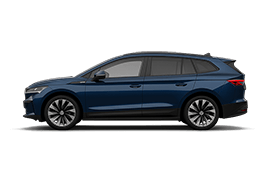
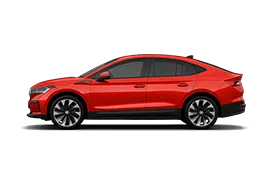
2024 Skoda Elroq 60 63 kWh 204 hp Battery, Horsepower, Range






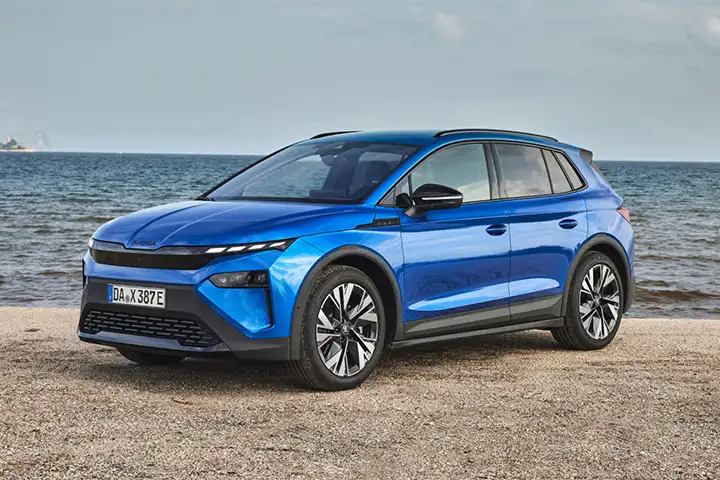




EVspecsHub Score — Skoda Elroq 60 59 kWh (2024)
Independent rating vs all passenger EVs on sale 2025–2026
Range
430 km WLTP · 59 kWh usable · RWD · 19" wheels
6.0
avg
Battery
59 kWh usable · NMC · 400V · no V2G
5.0
avg
Charging
165 kW DC max · 24 min 10→80% · no V2L/V2H/V2G
5.0
avg
Performance
0–100 km/h 8.0 s · 150 kW · RWD
4.0
weak
Efficiency
15.7 kWh/100 km WLTP · consistent with 50 variant
6.0
avg
Cargo
470 L boot · no frunk · 470 L combined
5.7
avg
Value
€36,900 · $39,500 · €85.8/km · $91.9/km WLTP
6.0
avg
Verdict: The Elroq 60 is the sweet spot of the range — 430 km WLTP, 165 kW DC, and a price point that makes sense at €85.8/km. Efficiency holds at 6.0, same as the 50. Performance at 4.0 is the honest weak point — 8.0 s in a 2024–2025 context isn't impressive — but most buyers in this segment don't buy it for the sprint times. Sold out in Germany through spring 2026 due to high demand, which tells its own story.
© EVspecsHub.com · All passenger EVs 2025–2026 · March 2026 · Methodology v6.7
5.4
out of 10
EVspecsHub Score
📊 Using this score in your review?
Free to use — just credit EVspecsHub.com
Free to use — just credit EVspecsHub.com
▸ Score data table (methodology v6.7)
| Criterion | Score | Key data | 10/10 = |
|---|---|---|---|
| Range | 6.0 | 430 km WLTP · 400–499 km band | 800+ km |
| Battery | 5.0 | 59 kWh usable · NMC · 400V (no bonus) · 50–59 kWh band | 110+ kWh |
| Charging | 5.0 | 165 kW DC · 24 min 10→80% · no V2L/V2H/V2G · 150–199 kW band | 400+ kW |
| Performance | 4.0 | 8.0 s → 4.0 + RWD +0 = 4.0 · 150 kW | sub-3s AWD |
| Efficiency | 6.0 | 15.7 kWh/100 km WLTP · 15.0–15.9 band | <12 kWh/100 km |
| Cargo | 5.7 | 470 L boot · no frunk · SUV penalty −0.3 · 500–649 L band | 1100+ L |
| Value | 6.0 | €36,900 · €85.8/km · $91.9/km · €75–89/km band | <€45/km |
| Overall | 5.4 / 10 | EVspecsHub Score v6.7 · EVspecsHub.com · March 2026 | |
Skoda Elroq 60 2024: The Home-Charging EV That Works Better Than the Spec Sheet Suggests
420 km WLTP. 58 kWh usable. 105 kW DC peak. NMC chemistry for now — LFP arriving with MY26 mid-2026. The Elroq 60 is the version most people actually buy, and it's built around a specific owner: someone charging at home most of the time, doing the occasional longer trip, and not needing to pay for 77 kWh of battery they'll rarely use. I went through owner threads from across Europe, charging logs, and long-term impressions. Here's the practical reality that the spec page skips.
One thing upfront: the MY26 update switches the 60 to LFP chemistry — the only Elroq variant making that switch. That changes daily charging habits significantly. Everything about MY26 is in the separate update section on this page. This block covers MY25 cars: NMC chemistry, currently in showrooms and on the road.
1 Battery Chemistry — NMC Now, LFP Coming with MY26 NMC · 61 kWh gross · 58 kWh usable · MY25
Short answer: the Elroq 60 MY25 uses NMC (Nickel Manganese Cobalt) chemistry. With the MY26 update (mid-2026 rollout), the 60 switches to LFP (Lithium Iron Phosphate) — making it the first and only Elroq variant to use LFP. The 85, 85x, and RS all stay NMC. If you're buying a new 60 now, you're getting NMC. That means daily charging to 80% for pack health. If you wait for MY26, LFP means 100% every night, no compromise. That's a more meaningful difference for this trim than for any other in the range. Figures valid for MY25 cars.
✅ Why LFP matters specifically for the 60: The 60 is the trim most owners charge exclusively at home overnight. LFP is perfect for exactly that pattern — 100% every night, no degradation concern. On NMC (MY25), 80% daily gives you ~46 kWh and around 336 km WLTP equivalent. With MY26 LFP you'd start every morning with the full 58 kWh — roughly 420 km WLTP equivalent. That's a real difference for a commuter car, not a footnote.
NMC (MY25) vs LFP (MY26) — what changes in daily use
| Question | MY25 — NMC · 58 kWh usable | MY26 — LFP · 58 kWh usable |
|---|---|---|
| Daily charge limit | 80% recommended — ~46 kWh per day | 100% fine daily — full 58 kWh every morning |
| Practical daily range | ~336 km WLTP-equivalent at 80% | ~420 km WLTP-equivalent at 100% |
| Occasional 100% | OK before long trips, not every day | No issue — do it whenever you want |
| Cycle lifespan | ~1,000–1,500 cycles to 80% capacity | 2,000–3,000+ cycles — effectively outlasts the car |
| Cold weather | Noticeable drop below 5°C (41°F) | Larger drop below 0°C — less sensitive at mild cold |
| SoC gauge accuracy | Accurate across full range | Can show flat curve mid-range — known LFP behaviour |
| Peak DC charge rate | 105 kW — unchanged in MY26 | 105 kW — unchanged |
| 10–80% charge time | 26 min | 26 min — unchanged |
| Best for | Mixed — home charging + occasional DC stop | City & home-charging dominant — LFP ideal fit |
The pack sits at a nominal ~370 V inside a 400 V architecture. Gross capacity is 61 kWh — the figure from the official press documentation, not on Skoda's consumer product page. Usable is 58 kWh, with roughly 3 kWh held back by the BMS at both ends. Use 58 kWh for trip planning and charge cost calculations. At 80% daily charge, work with ~46 kWh for realistic daily range estimates.
2 Battery Pack — 9 Modules, 61/58 kWh, APP310 61 kWh gross · NMC · APP310
Nine modules — three fewer than the 85's twelve. That's the primary reason the 60 is around 90–100 kg lighter, and you feel it: quicker direction changes in town, slightly less weight to haul up long climbs. The motor is the APP310, producing 310 Nm of torque and 140 kW. Skoda doesn't name it anywhere on consumer pages; owners on German forums worked out the designation because the number matches the peak torque figure — same way the 85's APP550 was identified. The APP310 is shared with the Elroq 50, not with the 85.
Pack and drivetrain specs — cross-checked from official press documentation
| Parameter | Value |
|---|---|
| Gross capacity | 61 kWh |
| Usable capacity (BMS-protected) | 58 kWh |
| BMS buffer | ~3 kWh (~4.9%) — not stated by Skoda |
| Cell chemistry — MY25 | NMC (Nickel Manganese Cobalt) |
| Cell chemistry — MY26 | LFP (Lithium Iron Phosphate) — from mid-2026 |
| Pack structure | 9 modules — confirmed in official press documentation |
| Nominal pack voltage | ~370 V (400 V system architecture) |
| Motor designation | APP310 — shared with Elroq 50, not stated on consumer pages |
| Motor output | 140 kW (190 hp) / 310 Nm (229 lb-ft) |
| Drive | Single rear motor — RWD |
| Axle ratio | 3.895 — confirmed in manufacturer technical data |
| Front brake discs | Single-piston floating caliper (vs twin-piston on 85) |
| Rear brakes | Drum — optimised for regen-first braking |
| 0–100 km/h | 8.5 s |
| Top speed | 160 km/h (99 mph) — limited vs 180 on 85 |
| Ground clearance | 186 mm (7.3 in) at kerb weight |
| Kerb weight | ~1,930–2,050 kg — ~90–100 kg lighter than 85 |
| Battery warranty | 8 years / 160,000 km — 70% capacity guarantee |
✅ Quick check — heat pump fitted or not: Find the refrigerant sticker inside the engine bay near the service port. R744 = heat pump fitted. R-1234YF = not fitted — regardless of what the order confirmation says. Owners have used this to catch incorrect deliveries and verify used-car specs. Works on all MEB-platform Elroq and Enyaq variants.
⚠ Top speed 160 km/h — not 180: The 60 is limited to 160 km/h versus 180 km/h on the 85. On Autobahn runs above 130 km/h, consumption climbs faster on the 60, and with the smaller pack the range margin shrinks more noticeably. The 60 is calibrated for the 130 km/h speed limits covering most of Europe — above that it costs more per kilometre than the 85.
3 DC Charging — 105 kW and Why That's Fine for Most Owners NMC · 105 kW peak · 26 min 10–80%
105 kW peak — significantly less than the 85's 135 kW, but the session maths work out differently than you'd expect. With 58 kWh to fill versus 77 kWh, the 60 reaches 80% faster in real minutes: 26 minutes from 10–80% versus 28 on the 85. You're charging less energy at a lower rate, and the net stop time is shorter. On a road trip, the 60 and 85 spend similar time at a charger per stop — the 60 just needs stops more often on longer legs.
Based on owner logs, the 60's charging curve has one genuinely good trait: it holds the peak window longer relative to pack size than the 85. Power stays close to 100 kW from about 10% through 35% SoC, which is the window most road-trip stops use. It's only above 50% that the taper gets steep. Most owners doing a motorway stop pull off at 75–80% and are back on the road well within 30 minutes.
⚠ Cold battery without preconditioning — the most common winter complaint: Below 10°C with a cold battery, sessions start at 20–35 kW. Owners who didn't know about manual preconditioning spent the first 10–15 minutes of a charging stop wondering if the charger was broken. It wasn't. On MY25, trigger preconditioning from the infotainment charging menu before you leave — you don't need to set the charger as a nav destination.
DC Charging Curve — Elroq 60 MY25 CCS2 / warm preconditioned battery / NMC 58 kWh · 105 kW peak
EVspecsHub.comBased on owner-logged DC sessions. Peak holds well through 35% SoC — shorter sessions than 85 due to smaller pack. Always precondition before a DC stop in cold weather.
Elroq 60 MY25 — DC Charging Power by SOC
CCS2 · warm preconditioned battery · 105 kW peak · owner-logged sessions
| State of charge (SOC) | Charging power (kW) | Notes |
|---|---|---|
| 5% | ~70 kW | Ramp-up from very low SoC |
| 10% | ~90 kW | Rising toward peak |
| 15–35% | ~100–105 kW | Peak window — holds well, good mid-range behaviour |
| 40% | ~90 kW | Gentle taper begins |
| 50% | ~70 kW | Steeper taper above this point |
| 60% | ~50 kW | BMS protecting cells |
| 70% | ~30 kW | Approaching typical stop point |
| 80% | ~15–18 kW | Standard road-trip stop — 26 min total from 10% |
| 90% | ~8 kW | Not worth waiting at DC |
| 100% | ~3–5 kW | Use AC overnight — never DC for daily top-up |
105 kW peak · Cold battery (<10°C) without preconditioning caps at 20–35 kW regardless of SOC · figures valid for MY25 NMC cars
EVspecsHub.comAC Charging at Home
On-board AC charger: 11 kW (3-phase). Full 0–100% on an 11 kW wallbox: about 6.5 hours. On a 7.4 kW single-phase supply: around 9 hours. Most UK homes are single-phase, so the 11 kW on-board charger gets bottlenecked at the supply. In Germany, the Netherlands, and much of Scandinavia where 3-phase at home is common, the difference matters. With 58 kWh, a full overnight charge is easier to complete than on the 85 regardless of supply type.
4 Real-World Range — Owner Logs From the Road 58 kWh · RWD · APP310
420 km WLTP (261 mi). Mixed city and suburban driving in mild weather gets you to 340–370 km (211–230 mi) from a full charge — genuinely close to WLTP by EV standards. At motorway pace of 110–120 km/h the range drops to 280–310 km (174–193 mi) in mild conditions. One UK owner logged 3.7 mi/kWh over a mixed cold-weather route — 350 km (218 mi) from a full charge. That's the most honest single number I've seen from real driving on the 60. At 80% charge — recommended daily limit for NMC — plan on roughly 46 kWh and ~336 km WLTP equivalent per charge.
⚠ WLTP vs motorway gap: At 110–120 km/h in mild weather, real range lands at 280–310 km — about 67–74% of WLTP. Normal for the platform and class, but the gap between 420 km on the sticker and 290 km on the motorway catches people who haven't owned an EV before. Build in a 20–25% buffer when planning longer trips.
⚠ Winter without heat pump: At around 0°C with a resistive heater and no heat pump, owners report 220–250 km (137–155 mi) from a full charge on mixed driving. With the heat pump, the same conditions give roughly 260–290 km (162–180 mi). That 40 km gap compounds across a full winter of daily commuting — and at 58 kWh it's proportionally larger than on the 85.
Real-World Range by Condition — Elroq 60 MY25 19" wheels · NMC 58 kWh
EVspecsHub.comOwner-logged data from forum threads and UK/central European owner reports. Actual range varies with driving style, HVAC use, and tyre spec.
Elroq 60 MY25 — Real-World Range by Condition
NMC · 58 kWh usable · 19" wheels · owner-logged data · figures valid for MY25 cars
| Condition | Range (km) | Range (mi) | vs WLTP | Notes |
|---|---|---|---|---|
| WLTP official | 420 km | 261 mi | 100% | Lab conditions — not real-world driving |
| Daily at 80% charge (NMC recommended) | ~336 km | ~209 mi | 80% | Effective daily range for pack health |
| City / mixed, mild 15–20°C | 340–370 km | 211–230 mi | ~83% | Typical summer commute — owner average |
| Motorway 110–120 km/h, mild | 280–310 km | 174–193 mi | ~70% | Most realistic long-trip planning figure |
| Motorway 70–75 mph (UK), cold | 200–225 km | 124–140 mi | ~52% | Cold + speed combination hurts most |
| Cold ~0°C, no heat pump | 220–250 km | 137–155 mi | ~54% | Resistive heater pulling hard from small pack |
| Cold ~0°C, with heat pump | 260–290 km | 162–180 mi | ~63% | Heat pump worth ~40 km / 25 mi in winter |
| Owner cold-weather mixed (UK) | ~350 km | ~218 mi | ~83% | 3.7 mi/kWh — owner-logged, mixed route |
| kWh/100 km (city/mixed mild) | ~15.7 kWh/100 km | — | ~3.8 mi/kWh in best conditions | |
Owner-logged data from forum threads and UK/central European owner reports · cold range confirmed via owner winter driving reports · figures valid for MY25 NMC cars
EVspecsHub.com5 Cargo & Interior Dimensions — Measured, Not Estimated 470 L boot · no frunk MY25
Same body as the 50 and 85 — 470 litres (16.6 cu ft) with seats up, 1,580 litres (55.8 cu ft) with seats folded. Loading sill at 702 mm (27.6 in) — high enough that dog owners bring it up constantly in forum threads. The rear seats fold 60:40 but not flat: there's a noticeable ramp angle that makes sliding long flat loads in awkward. Owners who tried loading a flat-pack wardrobe or a long board found it needed lifting rather than sliding. The ski hatch sidesteps this — a 120 cm ski bag fits through with the rear seats up, owner-tested.
MY25 has no frunk. The 21-litre frunk with gas struts arrives with MY26 (mid-2026). If front storage matters for charging cables and small valuables, that's the version to wait for. One detail consistent in owner posts: the removable storage unit in the rear footwell centre eats into middle-seat legroom — most owners remove it if they ever carry three adults.
Skoda Elroq 60 MY25 — Cargo & Interior Dimensions
Manufacturer-verified data · owner-measured details from forum threads
| Parameter | Value | Notes |
|---|---|---|
| Boot volume — seats up | 470 L (16.6 cu ft) | ✔ manufacturer-verified |
| Boot volume — seats folded | 1,580 L (55.8 cu ft) | ✔ manufacturer-verified |
| Loading sill height | 702 mm (27.6 in) | ✔ manufacturer-verified · high — dog owners notice this daily |
| Rear seat fold angle | Not fully flat — ramp remains | Confirmed by owners — awkward for long flat loads |
| Ski hatch | Yes | 120 cm ski bag fits with rear seats up — owner-tested |
| Cable net under parcel shelf | Yes (standard) | More useful day-to-day than an underfloor tray — consistent owner verdict |
| Rear footwell centre storage | Removable | Takes middle seat legroom — can be removed |
| Frunk | None — MY25 | 21 L frunk with gas struts arrives with MY26 (mid-2026) |
| Headroom — front | 1,056 mm (41.6 in) | ✔ manufacturer-verified |
| Headroom — rear | 990 mm (39.0 in) | ✔ manufacturer-verified · tight for owners over 190 cm (6'3") |
| Seat width — front | 1,506 mm (59.3 in) | ✔ manufacturer-verified |
| Seat width — rear | 1,488 mm (58.6 in) | ✔ manufacturer-verified · three adults possible, not roomy |
| Overall length | 4,488 mm (176.7 in) | ✔ manufacturer-verified |
| Wheelbase | 2,765 mm (108.9 in) | ✔ manufacturer-verified — long for this body, rear legroom benefits |
| Ground clearance | 186 mm (7.3 in) | ✔ manufacturer-verified at kerb weight |
Dimensions cross-checked against manufacturer technical documentation · fold angle, ski hatch fitment, and footwell storage confirmed via owner forum threads
EVspecsHub.com6 Heat Pump, One-Pedal, CarPlay and the Daily-Use Details MY25 specific
Heat Pump
Not standard — optional across all trims, around €1,000–€1,100 depending on market. On the 60, the case for it is stronger than on the 85: you're working with a smaller pack, so a 40 km winter range difference is proportionally larger. Owners above 48° latitude who bought without it and then drove through winter are consistently vocal about the regret. If you're in the UK, Germany, or anywhere north — just order it. The R744 / R-1234YF refrigerant sticker in the engine bay is the definitive check for used-car buyers.
V2L — Not Available on MY25, Arrives with MY26
Neither V2L nor V2H available on MY25. No socket, no adapter, no OTA path. V2L arrives with MY26 — both a 230V boot socket and a charging-port adapter. The most-asked question in Elroq communities for the entire MY25 cycle, and the answer is finally changing with the update. If V2L is on your list, MY26 is the car.
Battery Preconditioning
Available on MY25, genuinely useful. Warms the battery before a DC stop so you arrive at full charging speed instead of spending 10–15 minutes at 25 kW wondering if the charger is broken. Trigger it manually from the infotainment charging menu — no navigation destination required. With a 58 kWh pack, starting cold at 25 kW instead of 100 kW is a much bigger relative hit than on the 85. Don't skip it in winter.
Apple CarPlay / Android Auto
Both wireless, standard on all MY25 trims. The 13-inch screen runs Skoda's Android-based system. Wireless CarPlay occasionally drops and needs a reboot — wired fallback available. Most owners use CarPlay or Android Auto full-time and treat native navigation as a backup.
Other Things Owners Keep Asking About
- Towing capacity MY25: 1,000 kg (2,205 lb) braked at 12% / 750 kg (1,653 lb) unbraked. Lower than the 85's 1,200 kg. Tow bar is a factory option. Note: MY26 keeps the same towing figures for the 60 — no change there.
- One-pedal driving: B mode increases regen but the car won't stop fully on regen alone. Friction brakes engage for the final stop — not true one-pedal. Forum threads are full of owners who expected otherwise coming from other EVs. MY26 adds two adjustable regen levels in B mode including full stop.
- Rear USB ports: Two USB-C at the front are standard. Rear ports only from Edition trim upward. Owners with children on SE L notice on the first long trip.
- No tailgate interior handle: No grab handle on the inside of the boot lid to pull it closed. Small thing, but consistently mentioned by owners of the manual tailgate.
- Frunk — MY25 vs MY26: MY25 has no frunk. MY26 adds 21 L with gas struts. If front storage matters, that's the version to wait for.
7 Wheels, Tires & What Actually Fits 5×112 · CB 57.1 mm
Skoda Elroq 60 MY25 — Wheel & Tire Specifications
Manufacturer-verified factory specs · cross-checked via owner CoC documents
| Parameter | Specification |
|---|---|
| Bolt pattern (PCD) | 5×112 |
| Center bore (CB) | 57.1 mm |
| Lug bolt thread | M14×1.5 |
| Wheel tightening torque | 120 Nm (89 lb-ft) |
| SE L / Edition 19" tyre | 235/55R19 |
| SportLine 20" tyre | 235/50R20 |
| Offset range (ET) | ET40–45 depending on wheel style |
| Range penalty 19" → 20" | ~15–25 km (9–16 mi) estimated from owner comparisons |
| Aftermarket fitment | 57.1 mm CB is standard VAG — wide compatibility |
| Turning circle | 9.3 m (30.5 ft) |
Bolt pattern, CB, thread size cross-checked against manufacturer technical data · offsets confirmed via owner CoC documents and fitment threads
EVspecsHub.comThe 57.1 mm centre bore is standard VAG — wide aftermarket compatibility, same as 85. On 19" with standard suspension, the ride is comfortable enough for daily use without DCC. Moving to SportLine 20" on the 60 is more of a compromise than on the 85: the 60's lighter weight makes road imperfections more noticeable on larger wheels, and with a smaller battery, the 15–25 km range penalty matters more per charge.
📋 Full technical specifications — all Elroq variants:
Note: Range figures based on owner-logged driving data and forum reports across UK and central European owners. Charging curve reconstructed from real session logs — Skoda does not publish cell-level DC data. Cold-weather range based on owner winter reports. Battery chemistry (NMC MY25 / LFP MY26), pack structure, and motor designation (APP310 · 140 kW) cross-checked against official manufacturer technical documentation including MY26 press release dated 23 March 2026. Interior dimensions verified against manufacturer specification data. Wheel specs cross-checked against manufacturer data and owner CoC documents. Data compiled as of April 2026. Figures valid for MY25 NMC cars.Back to contents
Share this data
Free to use — please include a visible link to EVspecsHub.com
✓ Link copied!