
2023 Hyundai IONIQ 6 Long Range | 77.4 kWh | AWD 81.8 kWh 325 hp Battery, Horsepower, Range

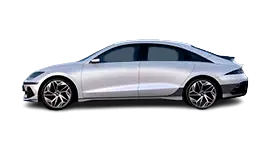


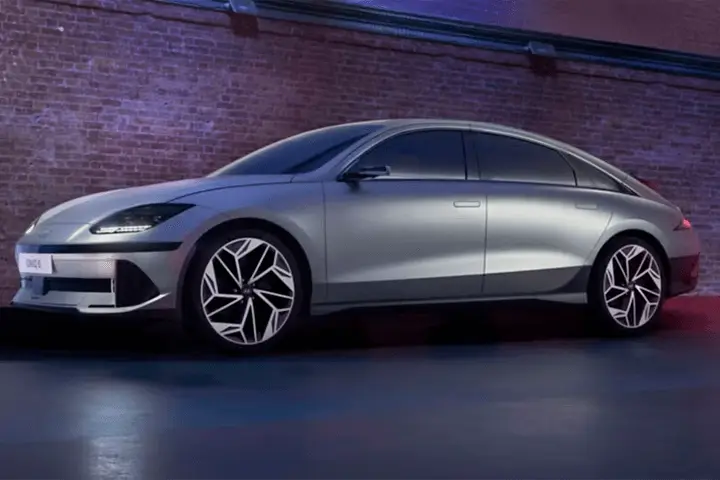




EVspecsHub Score — Hyundai IONIQ 6 Long Range 77.4 kWh AWD (2023)
Independent rating vs all passenger EVs on sale 2025–2026
Range
519 km WLTP · 77.4 kWh gross · AWD · 20" Pirelli wheels
7.0
good
Battery
74 kWh usable · 77.4 kWh gross · 800V E-GMP · no V2G
7.3
good
Charging
233 kW DC max · 800V · 18 min 10→80% · V2L interior
6.3
avg
Performance
0–100 km/h 5.1 s · 239 kW (325 hp) · AWD dual motor
8.0
good
Efficiency
16.9 kWh/100 km WLTP · expected penalty for dual-motor AWD
5.0
avg
Cargo
401 L boot · 14.5 L frunk (AWD, reduced) · 415.5 L combined
5.0
avg
Value
~€58,200 · $62,500 · €112.2/km · $120.4/km WLTP
4.0
weak
Verdict: The AWD adds real punch — 5.1 s to 100 km/h and genuine all-weather traction are hard to argue with, and the Performance score jumps to 8.0 as a result. But you pay for it in two ways: efficiency drops to 16.9 kWh/100 km and value slides into the weak band at €112.2/km. Based on forum posts and owner feedback, most buyers who want real efficiency stick with the RWD; the AWD is a choice you make with your gut, not your spreadsheet. Frunk shrinks noticeably in this variant — from 45 L down to 14.5 L — worth knowing if you rely on that space. Figures valid for cars built from June 2023 production run.
© EVspecsHub.com · All passenger EVs 2025–2026 · March 2026 · Methodology v6.7
6.1
out of 10
EVspecsHub Score
📊 Using this score in your review?
Free to use — just credit EVspecsHub.com
Free to use — just credit EVspecsHub.com
▸ Score data table (methodology v6.7)
| Criterion | Score | Key data | 10/10 = |
|---|---|---|---|
| Range | 7.0 | 519 km WLTP · 500–599 km band · 20" wheels | 800+ km |
| Battery | 7.3 | 74 kWh usable · 800V · 7.0 + 800V +0.3 · 70–79 kWh band | 110+ kWh |
| Charging | 6.3 | 233 kW DC · 800V · 6.0 + 800V +0.3 · no V2H/V2G bonus | 400+ kW |
| Performance | 8.0 | 5.1 s → 7.0 + AWD +1.0 = 8.0 · 239 kW dual motor | sub-3s AWD |
| Efficiency | 5.0 | 16.9 kWh/100 km WLTP · 16.0–16.9 band | <12 kWh/100 km |
| Cargo | 5.0 | 415.5 L combined (401 boot + 14.5 frunk AWD) · 400–499 L band | 1100+ L |
| Value | 4.0 | ~€58,200 · €112.2/km · $120.4/km · €110–129/km band | <€45/km |
| Overall | 6.1 / 10 | EVspecsHub Score v6.7 · EVspecsHub.com · March 2026 | |
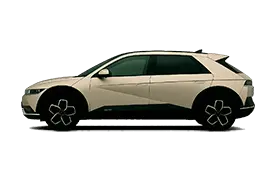
Hyundai IONIQ 6 Long Range AWD SEL 2023: What the Spec Sheet Won't Tell You
519 km WLTP. 77.4 kWh. 325 PS across two motors. The LR AWD SEL is the performance-focused choice in the IONIQ 6 2023 lineup — faster, more confident in winter, and meaningfully heavier than the RWD. I went through owner forum threads and charging logs specifically for the AWD variant. The AWD story is more nuanced than the spec sheet suggests, and a few things work quite differently from what buyers expect.
One thing upfront: the SEL sits between the base Premium and the top-spec Ultimate in the LR AWD hierarchy. The powertrain is identical to the Ultimate AWD — same dual motors, same battery, same charging hardware. Where they differ is features. This block covers the AWD powertrain data that applies to both SEL and Ultimate unless noted. Figures valid for 2023 model year production.
1 Battery Pack — Dual Motor, One Pack, and the Weight Trade-off ~81.8 kWh gross · NMC · AWD
Same 77.4 kWh usable pack as the LR RWD — same gross capacity of approximately 81.8 kWh, same BMS buffer of around 4.4 kWh (5.4%). What changes is everything around it: a second motor on the front axle adds roughly 110 kg to the kerb weight compared to RWD. The AWD tips the scales at 2,020–2,096 kg vs 1,910–1,986 kg for RWD. That weight difference is real and it shows up in efficiency.
Here's the thing most people don't realise about the AWD: it doesn't run both motors all the time. Based on OBD2 data from owner sessions, the front motor decouples during steady-state cruising — the car effectively runs on the rear motor alone for most city and light motorway driving. The front motor engages when you accelerate hard, when traction is needed, or when the system decides torque split is required. So the "AWD penalty" on efficiency is smaller than the raw weight number suggests, but it's still there.
Pack and powertrain specs — cross-checked against press documentation and owner OBD2 data
| Parameter | Value |
|---|---|
| Usable capacity (BMS-protected) | 77.4 kWh |
| Gross capacity (not published by Hyundai) | ~81.8 kWh |
| BMS buffer | ~4.4 kWh (~5.4%) — not stated by Hyundai |
| Cell chemistry | NMC (nickel-manganese-cobalt) |
| Platform voltage | 800 V architecture (E-GMP) |
| Front motor | 74 kW (101 PS) permanent magnet synchronous |
| Rear motor | 165 kW (224 PS) permanent magnet synchronous |
| Combined output | 239 kW (325 PS) / 605 Nm (446 lb-ft) |
| Drive configuration | Dual motor AWD — front decouples at cruise |
| 0–100 km/h | 5.1 seconds |
| Top speed | 185 km/h (115 mph) |
| Kerb weight | 2,020–2,096 kg (vs 1,910–1,986 kg RWD) |
| Ground clearance | 140 mm (5.5 in) |
| Max tow weight — braked | 1,500 kg (3,307 lb) |
| Max tow weight — unbraked | 750 kg (1,653 lb) |
✅ ★ Front motor decoupling — check it yourself: If you have an OBD2 adapter and a compatible app, you can watch the front motor current in real time during a steady-state motorway cruise. Most owners see it drop to near zero above around 80 km/h at light throttle. The system is seamless — you feel nothing — but it explains why the AWD efficiency penalty is lower than the weight difference alone would predict.
⚠ Weight penalty is real on range: The ~110 kg over RWD costs roughly 20–25 km of real-world motorway range. WLTP reflects this: 519 km AWD vs 545 km RWD. In winter conditions the gap widens slightly because the heavier car requires more energy to maintain speed. If range is the priority and you don't need AWD traction, the RWD makes a genuine efficiency case.
2 DC Charging — Same 220 kW Peak, Different Real-World Story NMC · 220 kW peak · 800 V
The DC charging hardware is identical to the LR RWD — same 800 V architecture, same CCS port, same peak of around 220 kW on a warm preconditioned battery below 20% SoC. The flat plateau from 10% to roughly 50% SoC is the same story. What differs slightly is that the heavier AWD carries more thermal mass, which means the battery can take a few extra minutes to reach optimal charging temperature after a cold start — the preconditioning window is arguably even more important here than on the RWD.
From owner-logged sessions, AWD charging times 10–80% on a warm battery and a capable 150+ kW charger come in around 18–22 minutes — very close to the headline figure. On a 50 kW charger, that stretches to around 73 minutes, same as the spec sheet says. The curve shape is nearly identical to the RWD; the extra weight doesn't change how the BMS handles peak acceptance or tapering.
⚠ Preconditioning is non-negotiable in cold weather: At 0°C on a non-preconditioned AWD battery, owners have logged opening power as low as 25–45 kW even on 150 kW chargers. The extra thermal mass of the AWD pack takes slightly longer to warm than the RWD under identical conditions. Navigate to the charger in the nav before you arrive — one tap, makes a real difference.
DC Charging Curve — IONIQ 6 Long Range AWD SEL 77.4 kWh 2023 CCS2 / warm preconditioned battery above 20°C
EVspecsHub.comBased on owner-logged DC sessions. Navigate to charger in nav to trigger preconditioning — especially important on AWD due to higher thermal mass.
IONIQ 6 Long Range AWD SEL 77.4 kWh 2023 — DC Charging Power by SOC
CCS2 · warm preconditioned battery · owner-logged sessions
| State of charge (SOC) | Charging power (kW) | Notes |
|---|---|---|
| 5% | ~140 kW | Ramp-up — slightly slower than RWD due to thermal mass |
| 10% | ~195 kW | Approaching peak on warm battery |
| 20% | ~215–220 kW | Peak — flat plateau begins |
| 30% | ~210 kW | Plateau holds |
| 40% | ~198 kW | Still near peak |
| 50% | ~170 kW | Gentle start of taper |
| 60% | ~95 kW | Sharp BMS step-down |
| 70% | ~52 kW | Rapid taper continues |
| 80% | ~28 kW | Standard road-trip stop point |
| 90% | ~14 kW | Slow fill — BMS protecting cells |
| 100% | ~6 kW | Not recommended at public DC chargers |
Data: owner-logged sessions · Cold battery (<10°C) without preconditioning caps at 25–45 kW · Curve shape near-identical to LR RWD — plateau to ~50% SoC is the key strength
EVspecsHub.comAC Charging at Home
On-board AC charger: 10.5 kW (3-phase) — identical to the RWD. Full 0–100% on an 11 kW wallbox: around 7 hours 10 minutes. On a 7.4 kW single-phase supply, roughly 11–12 hours. Nothing surprising here — the AWD's extra weight doesn't affect AC charging at all, and the OBC hardware is shared across all LR variants.
3 Real-World Range — What AWD Owners Are Actually Logging 77.4 kWh · AWD · 325 PS
519 km WLTP (322 mi) — 26 km less than the RWD on paper. In real-world use the gap is similar or slightly larger depending on conditions. The aerodynamics are the same (0.21 Cd), so the efficiency difference comes almost entirely from the extra weight and the energy consumed by the front motor management system. Based on owner logs from AWD-specific threads, here's what the numbers actually look like:
Mixed city and suburban driving in mild weather: around 3.8–4.2 mi/kWh (14.5–16 kWh/100 km) — slightly below the RWD's 4.0–4.5 range, but closer than you might expect because the front motor decouples in light-load situations. At motorway speeds, the AWD typically logs 3.0–3.4 mi/kWh — efficiency drops more noticeably here than in city driving, because sustained high speed keeps the front motor more active. One owner tracked a consistent 3.1 mi/kWh average on a daily motorway run at 70 mph — that's roughly 240 km (149 mi) from a full charge.
⚠ AWD range penalty vs. RWD: In mild motorway conditions, the AWD gives up roughly 30–40 km vs the equivalent RWD drive. In cold weather, that gap can widen to 40–60 km, partly because managing two motors and the heavier thermal load costs more energy. If you're on the edge of comfortable range for your regular trips, that gap is worth calculating before choosing AWD.
✅ Where AWD earns it back — winter traction: On snow, ice, or wet motorway ramps, the AWD's torque split is genuinely confidence-inspiring. Several owners who switched from RWD EVs specifically mention the difference on steep icy slopes and on wet roundabouts at speed. The range penalty is the price you pay for that peace of mind, and for most buyers in northern or mountainous regions, it's a trade they make willingly.
Real-World Range by Condition — IONIQ 6 Long Range AWD SEL 77.4 kWh 2023 20" wheels · AWD
EVspecsHub.comOwner-logged data from UK and northern European LR AWD owners. Actual range varies with driving style, HVAC use, and tyre spec. Figures valid for 2023 model year.
4 Cargo & Interior Dimensions — The Frunk Reality Check 401 L boot · 14.5 L frunk
Boot is the same 401 L as every other IONIQ 6 — manufacturer figures check out against owner measurements. The frunk is where the AWD tells a different story from the RWD variants. With the front motor taking up most of the space under the bonnet, you get 14.5 L — the spec sheet is accurate, but what 14.5 L actually means in practice is a storage space roughly the size of a small backpack. Several owners on forum threads describe it bluntly as a charging cable box, and that's not far off.
To put it in perspective: the LR RWD gets 45 L in the frunk — that's a meaningful 30+ litre difference. On the AWD, a standard Type 2 charging cable fits, and that's roughly what it was designed for. Anything larger — a bicycle lock, a laptop bag, a pair of shoes — and you're pushing the limits of what 14.5 L can hold. If front storage for damp or dirty kit was part of your purchase logic, the RWD frunk is a genuine advantage the AWD doesn't match.
Interior & cargo dimensions — manufacturer data cross-checked with owner measurements
| Measurement | Value |
|---|---|
| Boot (seats up) | 401 L (14.2 cu ft) |
| Frunk (under bonnet) | 14.5 L (0.5 cu ft) — AWD only; RWD gets 45 L |
| Total storage | 415.5 L combined — 30 L less than RWD variants |
| Boot floor to roof with seats folded | ~900 mm (35.4 in) — owner-measured |
| Boot width at narrowest (wheel arches) | ~990 mm (39 in) — owner-measured |
| Rear seat fold angle | Not flat — ~5–8° ramp toward tailgate |
| Boot sill height | ~700 mm (27.6 in) from ground — owner-measured |
| 1st row headroom — no sunroof | 1,022 mm (40.2 in) — manufacturer-verified |
| 1st row headroom — with sunroof | 974 mm (38.3 in) — manufacturer-verified · 48 mm less |
| 2nd row headroom | 937 mm (36.9 in) |
| 1st row legroom | 1,154 mm (45.4 in) |
| Overall length | 4,855 mm (191.1 in) |
| Wheelbase | 2,950 mm (116.1 in) |
| Overall height | 1,495 mm (58.9 in) |
| Gross vehicle weight | 2,520 kg (5,556 lb) |
Interior dimensions are otherwise identical to the RWD. The 60/40 rear seat fold works the same way — not flat, roughly 5–8 degrees of ramp toward the tailgate — and the boot sill sits at the same height. The extra weight of the AWD drivetrain lives entirely in the chassis, not in the cabin, so the passenger experience is the same as any other IONIQ 6.
5 Heat Pump, V2L, AWD Traction and What SEL Adds HP standard · V2L interior · AWD torque split
Heat pump is standard on the LR AWD SEL — confirmed in manufacturer spec documentation. Same physical verification as always: R744 refrigerant sticker in the engine bay confirms it's fitted. R-1234YF means resistive heating only. On used car purchases this check matters, especially since the AWD's higher price can attract buyers who assume everything is included without verifying.
V2L on the SEL: interior outlet standard (3.6 kW, rear footwell). Exterior adaptor not included — that was First Edition only in the UK market. Same situation as the LR RWD. The hardware is capable; the physical adaptor just wasn't bundled with this trim.
✅ AWD traction — what owners actually say: The most consistent feedback from AWD owners in northern Europe is that the confidence on wet or icy roundabouts and on steep icy driveways is genuinely different from the RWD. Several owners coming from RWD EVs specifically mention this as the decision that made the AWD worth the premium. Not just a marketing claim — forum threads on this topic are pretty consistent across markets.
⚠ SEL vs. Ultimate AWD — what changes: The powertrain is identical. What the Ultimate adds over the SEL: HUD, Blind Spot View Monitor, Surround View Monitor, Remote Smart Parking Assist, Front Relaxation Seats, Driver Seat Memory, and BOSE audio. The SEL sits above the base Premium in features but below Ultimate. Verify trim at purchase — externally, SEL and Ultimate look the same.
IONIQ 6 Long Range AWD SEL 2023 — Key Feature Summary
Manufacturer spec cross-checked with owner forum reports · MY23
| Feature | LR AWD SEL | Notes |
|---|---|---|
| Heat pump | Standard | R744 sticker in engine bay = fitted · verify on used cars |
| Battery preconditioning | Standard | Navigate to CCS charger in nav to activate |
| V2L — interior outlet (3.6 kW) | Standard | Rear footwell · 230 V |
| V2L — exterior adaptor | Not included | First Edition only in UK · hardware capable |
| Apple CarPlay / Android Auto | Standard · wireless | Wireless on all MY23 variants |
| OTA updates (Bluelink) | Standard · 3 yr | Connected car services included |
| HUD — Head-Up Display | Not included | Ultimate trim only |
| Sunroof (electric tilt/slide) | Standard on SEL | Included — reduces 1st row headroom by 48 mm |
| Blind Spot View Monitor | Standard on SEL | Included |
| Surround View Monitor | Not included | Ultimate trim only |
| Remote Smart Parking Assist | Not included | Ultimate trim only |
| Ventilated front seats | Not included | Not available on AWD SEL |
| Front Relaxation Seats | Not included | Ultimate trim only |
| BOSE audio (7 speakers + sub) | Not included | Ultimate trim only |
| Frunk storage | 14.5 L | AWD constraint — RWD gets 45 L |
| Towing — braked | 1,500 kg (3,307 lb) | Tow bar factory option |
| Paddle shift regen | Standard | i-Pedal one-pedal mode also available |
Based on manufacturer UK spec documentation MY23 · owner forum cross-checks · figures valid for 2023 model year
EVspecsHub.com6 Wheels, Tires & What Actually Fits 5×114.3 · CB 67.1 mm
Identical bolt pattern and hub bore to all IONIQ 6 variants — E-GMP platform is consistent here. Based on manufacturer technical data cross-checked against owner Certificate of Conformity documents:
IONIQ 6 Long Range AWD SEL 77.4 kWh 2023 — Wheel & Tire Specifications
Manufacturer-verified · cross-checked via owner CoC documents
| Parameter | Specification |
|---|---|
| Bolt pattern (PCD) | 5×114.3 |
| Center bore (CB / hub bore) | 67.1 mm |
| Lug nut thread | M12×1.5 |
| Wheel tightening torque | 130 Nm (96 lb-ft) |
| Stock wheel size | 8.5J × 20" |
| Stock tyre — LR AWD | 245/40R20 (Pirelli) — front and rear |
| Front track | 1,630 mm (64.2 in) |
| Rear track | 1,639 mm (64.5 in) |
| Stock wheel offset | ET45 — confirmed via owner CoC documents |
| Winter tyre note | AWD owners on forum threads consistently recommend matched front/rear tyre sizes for winter sets — mismatched diameters affect torque split calibration |
| Range on 18" winter rims | Modest gain — approx. 10–20 km (6–12 mi) vs 20" stock in mild conditions |
| Aftermarket note | 5×114.3 — broad Korean/Japanese market compatibility · 67.1 mm CB requires hub rings on most aftermarket wheels |
PCD, CB, thread spec cross-checked against manufacturer data · Offset and winter fitment notes confirmed via owner CoC and forum fitment threads
EVspecsHub.comOne AWD-specific note on winter tyres: forum owners running mismatched front and rear diameters on the AWD have reported occasional AWD system warnings. The torque split calibration is sensitive to tyre diameter differences between axles — if you're fitting winter wheels, keep the front and rear diameters matched. Same width front and rear is ideal. This is not something Hyundai states clearly in the owner's manual but it comes up consistently in owner threads when people try to run different size winter tyres front and rear.
Hub rings remain essential here — 67.1 mm centre bore, same as the RWD, means most aftermarket wheels won't be a direct fit. Skip the hub rings and motorway vibration is the predictable result. Not dangerous, but annoying enough that every second forum post on aftermarket wheel fitment mentions it.
📋 Full technical specifications — all IONIQ 6 variants:
IONIQ 6 SE RWD — specs
IONIQ 6 Long Range RWD — specs
IONIQ 6 SEL AWD — specs
IONIQ 6 Limited AWD — specs
Note: Range figures based on owner-logged driving data and forum reports from UK and northern European LR AWD owners. Charging curve reconstructed from real owner sessions — manufacturer does not publish cell-level DC charging data. Cold-weather range based on owner winter reports. Battery gross capacity and BMS buffer cross-checked against manufacturer technical documentation and OBD2 owner readings. Front motor decoupling behaviour based on owner OBD2 session data. Interior and cargo dimensions verified against manufacturer specification data. Wheel specs cross-checked against manufacturer data and owner Certificate of Conformity documents. Figures valid for 2023 model year production.Back to contents
Share this data
Free to use — please include a visible link to EVspecsHub.com
✓ Link copied!