EVspecsHub.com EVspecsHub

2021 Hyundai IONIQ 5 SE Standard Range RWD 63.0 kWh 170 hp Battery, Horsepower, Range

The Hyundai IONIQ 5 SE Standard Range offers accessible electric travel with a 63.0 kWh usable battery capacity (battery size) and an EPA-est. 394 km (245 mi) range. All specifications verified against official Hyundai data and type‑approval documents.

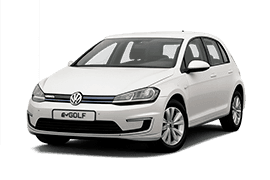
Used Volkswagen e-Golf Problems and Fixes (2013 – 2020).

Used Volkswagen e-Golf Problems and Fixes (2013 – 2020).

TESLA FORD HONDA CHEVROLET RIVIAN HYUNDAI KIA LUCID VOLKSWAGEN SKODA AUDI BMW MERCEDES RENAULT VOLVO PEUGEOT BYD XIAOMI TOYOTA NISSAN…

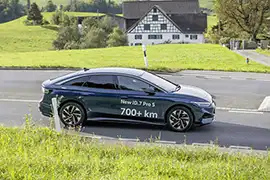
Volkswagen ID.7 Pro S — 794 km on one charge with max Battery

Volkswagen ID.7 Pro S — 794 km on one charge…

Volkswagen ID.7 Pro S — 794 km on one charge TESLA FORD HONDA CHEVROLET RIVIAN HYUNDAI KIA LUCID VOLKSWAGEN SKODA…

Volkswagen ID.4: American vs. European Versions, Key Differences

Volkswagen ID.4: American vs. European Versions, Key Differences

The Volkswagen ID.4 has become a significant player in the electric SUV market, but it’s important to understand that the…

POPULAR cars…

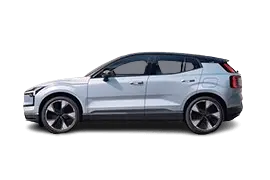
Side profile of Volvo EX30 electric SUV, showing 2,650 mm wheelbase, coupe-like roofline, and clean body lines
EX30 (2023-pr.)
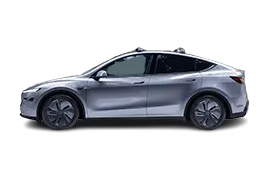
2025 Tesla Model Y Performance with dual motors, 0–100 km/h in 3.5 seconds, and long‑range battery
Model Y (2025-pr.)
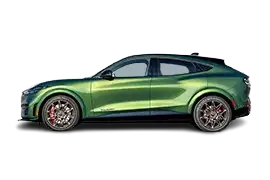
Side profile of the Ford Mustang Mach-E, showing its aerodynamic body, coupe-like roofline, and EV styling cues
Mustang Mach-E (2020-pr.)
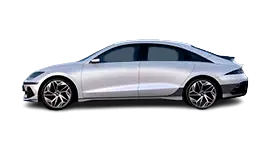
Side profile of the Hyundai Ioniq 6 illustrating its unique curved, streamliner silhouette and long 2950mm wheelbase on the E-GMP platform.
IONIQ 6 (2023-pr.)
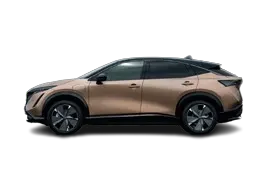
Side profile of the Nissan Ariya electric crossover, emphasizing its sleek, coupe-like silhouette, sloped roofline, and prominent wheel arches, optimized for efficiency and performance.
Ariya (2024-pr.)
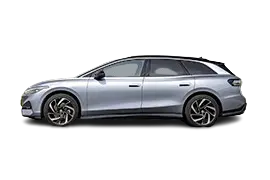
Volkswagen ID.7 Tourer side profile with 2,971 mm wheelbase, 86 kWh battery, and 200 kW fast charging.
ID.7 Tourer (2024-pr.)
Tesla Model 3 side profile showing sleek body lines and alloy wheels
Model 3 (2023-pr.)
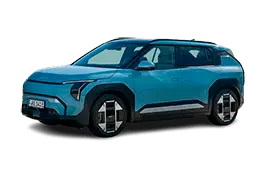
Kia EV3 side view compact electric SUV dimensions and profile
EX30 (2023-pr.)

Hyundai IONIQ 5

SE Standard Range RWD |  2021–

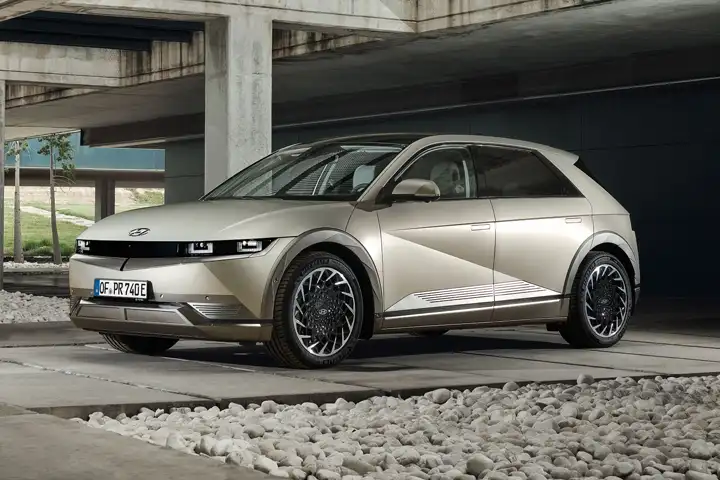
Hyundai Ioniq 5 front view, showcasing its futuristic design and pixel LED headlights.
Hyundai Ioniq 5
battery capacity
Capacity
range –
Range
power output
Power
acceleration
Acceleration
63 kWh
384 km

125 kW

8.5 s

Technical Data & Performance

Model Years2021–present
Trim (Variant)IONIQ 5 - SE Standard Range RWD
Power (Horsepower)125 kW (170 hp)
Top Speed185 km/h (115 mph)
Torque350 Nm (258 lb-ft)
Acceleration8.5 sec (0–100 km/h)
8.5 sec (0–62 mph)
DriveRWD Rear-wheel drive
Motor detailsSingle Permanent Magnet Synchronous Motor

Battery & Charging

Battery Capacity & Size58.0 kWh usable,
63.0 kWh gross
Max Range384 km (239 mi) / WLTP
394 km (245 mi) / EPA
Consumption15.1 kWh/100 km
Battery TypeLithium-ion Polymer
Cell Format / Supplier(NMC) (SK Innovation)
Battery Voltage800 V
V2L SupportedYes / 3.6 kW
Heat pumpYes
AC Home ChargingType2 / 1-phase - 7.4 kW (Max Power)
Type2 / 3-phase - 11 kW (Max Power)
DC Fast ChargingCCS2, 175 kW (Max Power)
18 min. (10–80%)

Dimensions & Body

Type5 door, SUV
Seating capacity5
Length4635 mm (182.5 in)
Width1890 mm (74.4 in)
Height1600 mm (63.0 in)
Wheelbase3000 mm (118.1 in)
Ground Clearance160 mm (6.3 in)
Curb weight1835 kg (4045 lb)
Gross weight2430 kg (5357 lb)
Trunk Volume527 L (18.6 ft³)
1590 L (56.2 ft³) max
TowingUnbraked: 750 kg (1653 lb), Braked: 1600 kg (3527 lb)
Drag Coefficient0.29
PlatformHyundai E-GMP
Estimated Market Price
* for reference only
EUR 39,000 / USD 40,000

⚠️ Please note: actual vehicle specifications may vary depending on market, trim level, or available regional packages.

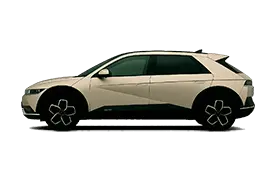
Hyundai Ioniq 5 side view, showing its unique profile, retractable door handles, and long wheelbase.
IONIQ 5 (2021-pr.)
Side profile of the Hyundai Ioniq 6 illustrating its unique curved, streamliner silhouette and long 2950mm wheelbase on the E-GMP platform.
IONIQ 6 (2023-pr.)
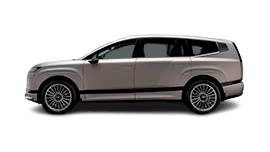
Hyundai Ioniq 9 180
IONIQ 9 (2025-pr.)
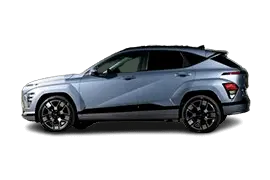
Side profile of Hyundai KONA Electric 2024, 4355 mm long, 2660 mm wheelbase, 65.4 kWh battery, 514 km WLTP range.
KONA Electric (2024-pr.)

The Evolution of the Hyundai IONIQ 5: Key Changes and Specifications


Generation I (2021: Production Start)

  • Models & Motors:
    • Standard Range 2WD: Single rear-mounted motor (RWD) with 125 kW (170 hp) and 350 Nm of torque.
    • Long Range 2WD: Single rear-mounted motor (RWD) with 160 kW (218 hp) and 350 Nm.
    • Long Range AWD: Dual-motor (AWD) setup with a combined output of 225 kW (306 hp) and 605 Nm.
  • Battery:
    • Standard Range: 58 kWh usable capacity.
    • Long Range: 72.6 kWh usable capacity (later increased to 77.4 kWh for most markets).
  • Charging: Ultra-fast DC charging with an 800V architecture, allowing up to 350 kW peak charging speed. AC charging up to 11 kW. Bidirectional V2L (Vehicle-to-Load) functionality.

2024: New Models & Feature Updates

  • Models & Motors:
    • IONIQ 5 N: The first high-performance variant is introduced. Dual-motor (AWD) with a total output of 448 kW (609 hp) and 740 Nm of torque (with N Grin Boost mode, power increases to 478 kW / 650 hp and 770 Nm).
    • IONIQ 5 N-Line: A new trim with sporty design elements but without the performance upgrades of the full N model.
  • Battery: IONIQ 5 N features a larger 84 kWh battery pack.
  • Key Features: Introduction of new software features, including N Grin Boost, N e-shift, and N Pedal for the IONIQ 5 N model.

2025: Production Facelift (MY25)

  • Battery: New, slightly larger 84 kWh battery pack replaces the previous 77.4 kWh battery for Long Range models, improving range.
  • Design: Revised front and rear bumpers, a redesigned rear spoiler, and updated wheel designs.
  • Interior & Usability: The center console is redesigned with the wireless phone charger repositioned. Physical buttons for frequently used functions (e.g., heated/ventilated seats) are added, addressing a common complaint. A rear window wiper is now included.
  • Charging: For the North American market, the NACS (North American Charging System) port is added, making it the first non-Tesla to be sold with a native NACS connector.

POPULAR cars…

2025 Tesla Model Y Performance with dual motors, 0–100 km/h in 3.5 seconds, and long‑range battery
Model Y (2025-pr.)
Side profile of the Ford Mustang Mach-E, showing its aerodynamic body, coupe-like roofline, and EV styling cues
Mustang Mach-E (2020-pr.)
Side profile of the Hyundai Ioniq 6 illustrating its unique curved, streamliner silhouette and long 2950mm wheelbase on the E-GMP platform.
IONIQ 6 (2023-pr.)
Side profile of the Nissan Ariya electric crossover, emphasizing its sleek, coupe-like silhouette, sloped roofline, and prominent wheel arches, optimized for efficiency and performance.
Ariya (2022-pr.)
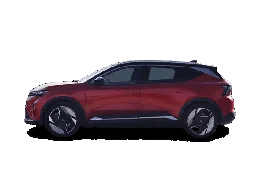
Renault Scenic E-Tech profile view showcasing vehicle dimensions, wheel design, and aerodynamics.
Scenic E-Tech (2023-pr.)
Volkswagen ID.7 Tourer side profile with 2,971 mm wheelbase, 86 kWh battery, and 200 kW fast charging.
ID.7 Tourer (2024-pr.)
Tesla Model 3 side profile showing sleek body lines and alloy wheels
Model 3 (2023-pr.)
Side profile of Volvo EX30 electric SUV, showing 2,650 mm wheelbase, coupe-like roofline, and clean body lines
EX30 (2023-pr.)

Common Issues with Used Hyundai IONIQ 5

The Hyundai IONIQ 5 has proven to be a popular and innovative EV, but like all complex vehicles, it has a few known issues that potential buyers should be aware of. These are not always major mechanical failures but rather common problems that have been widely documented by owners and in technical service bulletins.


First Generation (2022 - Present)

ICCU Failure & 12V Battery Draining Problems

The most widely reported and serious issue with the IONIQ 5 involves the Integrated Charging Control Unit (ICCU). The ICCU is responsible for managing both the main high-voltage battery charging and the charging of the 12V auxiliary battery. A fault in this unit can prevent the 12V battery from charging, leading to a sudden loss of all electrical systems and, in some cases, a complete loss of drive power while in motion. This has been the subject of several recalls and is a significant failure point.

Common Solutions: Hyundai has issued multiple software updates to address this issue. For affected vehicles, a service appointment with a dealer is required for a diagnosis. The fix typically involves a software update and, if the unit is damaged, a replacement of the ICCU and its fuse. Always check a used car's service history to ensure the latest recall updates have been applied.

Inconsistent Charging Speeds Issues

Some owners have reported inconsistent and sometimes slow charging speeds, particularly with Level 2 (AC) home chargers and public DC fast chargers. While the IONIQ 5 is known for its fast-charging capability, the car may throttle charging speeds due to various factors, including the temperature of the charging port itself. Some users have also noted problems with scheduled charging failing or the car not charging at all.

Common Solutions: Hyundai has released software updates to manage charging temperatures more effectively, which can help prevent the car from reducing charging speeds. Owners can also ensure their home chargers and charging ports are free of debris. Checking for the latest software updates at a dealership is a crucial step.

Infotainment & Software Glitches Problems

As a modern, tech-heavy vehicle, the IONIQ 5 is susceptible to software bugs. Owners have reported a variety of minor issues, including the infotainment system freezing, rebooting unexpectedly, or the Bluetooth connection dropping. While generally not a safety concern, these can be a source of frustration and are a known weakness.

Common Solutions: Most of these issues can be resolved with over-the-air (OTA) software updates. Hyundai regularly pushes fixes for these glitches. A simple soft reset of the infotainment system (holding down the power button) can also temporarily solve the problem. Ensuring the car has the latest software version is key to a smooth experience.

Suspension & Squeaking Noises Issues

A smaller but frequently mentioned issue is a creaking or squeaking noise coming from the suspension, particularly when driving over bumps. While not a safety defect, it can be a persistent and annoying sound for some owners. This is a common weakness in some vehicles.

Common Solutions: This problem often requires a dealer visit for diagnosis. The issue is usually linked to specific suspension components that may need to be lubricated or replaced under warranty. It is a known fault that Hyundai service departments are familiar with.


Conclusion

The Hyundai IONIQ 5 is a groundbreaking EV, but it is not without its flaws. The most significant concern is the potential for ICCU failure, which has been addressed by recalls. For any used IONIQ 5, the first and most important step is to verify that all recalls and service campaigns have been performed by a Hyundai dealership. While other issues like software glitches and charging inconsistencies exist, they are generally less critical and can often be resolved with software updates or minor service. The strong manufacturer support and proactive recalls demonstrate Hyundai's commitment to fixing these problems, making a used IONIQ 5 a viable option as long as a buyer is aware of these common points of concern.


* Disclaimer: The information presented here is compiled from owner discussions in online communities, forums, and various open public sources. The accuracy, completeness, and reliability of this data cannot be guaranteed, and it should be used for informational purposes only.

Frequently Asked Questions FAQ about the Hyundai IONIQ 5 SE Standard Range | Specs Battery capacity size

About EVspecsHub

EVspecsHub is a non-profit informational platform dedicated to providing free electric vehicle specifications. Any future ads will support hosting and maintenance costs to keep our content accessible.

Scroll to Top