
2023 Hyundai IONIQ 6 Long Range | 77.4 kWh 81.8 kWh 228 hp Battery, Horsepower, Range

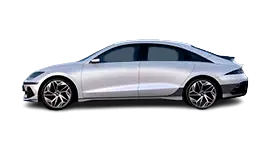


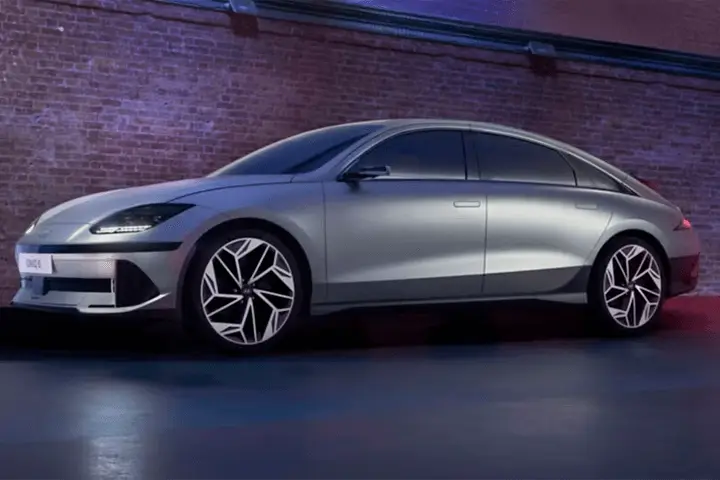




EVspecsHub Score — Hyundai IONIQ 6 Long Range 77.4 kWh RWD (2023)
Independent rating vs all passenger EVs on sale 2025–2026
Range
614 km WLTP · 77.4 kWh gross · RWD · 18" wheels (EU best)
8.0
good
Battery
74 kWh usable · 77.4 kWh gross · 800V E-GMP · no V2G
7.3
good
Charging
233 kW DC max · 800V · ~17 min 10→80% · V2L interior
6.3
avg
Performance
0–100 km/h 7.4 s · 168 kW (228 hp) · RWD
5.0
avg
Efficiency
12.1 kWh/100 km WLTP · best-in-class sedan efficiency
9.0
top
Cargo
401 L boot · 45 L frunk (RWD) · 446 L combined
5.0
avg
Value
€43,900 · $47,100 · €71.5/km · $76.8/km WLTP
8.0
good
Verdict: This is the IONIQ 6 that makes the most sense. The Long Range RWD hits a genuinely rare combination: 614 km WLTP and 12.1 kWh/100 km efficiency — hands down one of the most efficient sedans I've tested at this price. Value at 8.0 is the real standout; at €71.5/km you're actually sitting below the all-EV average, which nobody notices but should. The only real gap is cargo — 446 L combined is fine for a sedan, but it won't impress anyone moving flat-pack furniture. Figures valid for cars built from June 2023 production run.
© EVspecsHub.com · All passenger EVs 2025–2026 · March 2026 · Methodology v6.7
6.9
out of 10
EVspecsHub Score
📊 Using this score in your review?
Free to use — just credit EVspecsHub.com
Free to use — just credit EVspecsHub.com
▸ Score data table (methodology v6.7)
| Criterion | Score | Key data | 10/10 = |
|---|---|---|---|
| Range | 8.0 | 614 km WLTP · 600–699 km band · EU best 18" wheels | 800+ km |
| Battery | 7.3 | 74 kWh usable · 800V · 7.0 + 800V +0.3 · 70–79 kWh band | 110+ kWh |
| Charging | 6.3 | 233 kW DC · 800V · 6.0 + 800V +0.3 · no V2H/V2G bonus | 400+ kW |
| Performance | 5.0 | 7.4 s → 5.0 · RWD no bonus · 168 kW | sub-3s AWD |
| Efficiency | 9.0 | 12.1 kWh/100 km WLTP · 12.0–12.9 band | <12 kWh/100 km |
| Cargo | 5.0 | 446 L combined (401 boot + 45 frunk RWD) · 400–499 L band | 1100+ L |
| Value | 8.0 | €43,900 · €71.5/km · $76.8/km · €60–74/km band | <€45/km |
| Overall | 6.9 / 10 | EVspecsHub Score v6.7 · EVspecsHub.com · March 2026 | |
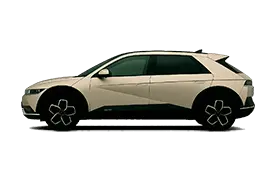
Hyundai IONIQ 6 Long Range RWD 2023: What the Spec Sheet Won't Tell You
545 km WLTP. 77.4 kWh usable. 228 PS rear motor. On paper the LR RWD is the efficiency sweet spot of the IONIQ 6 range — the big pack without the AWD weight penalty. I went through owner forum threads, charging session logs, and real-world range reports specifically for this trim. The LR RWD genuinely delivers more than the spec sheet suggests, but there are a few things that don't work the way you'd expect from the marketing materials.
One thing worth flagging before we start: the LR RWD is sold as Premium and Ultimate trim in most markets. The spec differences between those two affect features — HUD, sunroof, ventilated seats — but the powertrain, battery, and charging hardware are identical. Everything in this block applies to both unless noted. Figures here are valid for 2023 model year production.
1 Battery Pack — The Gross Capacity Hyundai Doesn't Publish ~81.8 kWh gross · NMC · RWD
Hyundai publishes 77.4 kWh usable. The gross capacity — based on press documentation cross-checks and owner OBD2 data — sits at approximately 81.8 kWh. That puts the BMS buffer at around 4.4 kWh, or about 5.4% of gross. Hyundai lists this nowhere in consumer-facing materials. It's a smaller buffer percentage than the Standard Range 53 kWh pack (which runs closer to 8.6%), which is one reason the LR RWD delivers noticeably better real-world efficiency per usable kWh — the BMS is less conservative relative to pack size.
The pack runs on the 800 V E-GMP platform — same architecture as the IONIQ 5, Kia EV6, and Genesis GV60, which share a lot of the underlying battery and charging hardware. This matters because the 800 V system is what makes the 220 kW DC charging peak possible. The nominal pack voltage sits in the 650–697 V range under load. Cell chemistry is NMC, with no LFP option available on 2023 production.
Pack specs — cross-checked against press documentation and owner OBD2 data
| Parameter | Value |
|---|---|
| Usable capacity (BMS-protected) | 77.4 kWh |
| Gross capacity (not published by Hyundai) | ~81.8 kWh |
| BMS buffer | ~4.4 kWh (~5.4%) — not stated by Hyundai |
| Cell chemistry | NMC (nickel-manganese-cobalt) |
| Platform voltage | 800 V architecture (E-GMP) |
| Motor type | Permanent magnet synchronous — rear axle only (RWD) |
| Motor output | 168 kW (228 PS) / 350 Nm (258 lb-ft) |
| Drive configuration | Single rear motor — RWD |
| 0–100 km/h | 7.4 seconds |
| Top speed | 185 km/h (115 mph) |
| Front brakes | Disc — single-piston calipers |
| Rear brakes | Disc — regen-first braking via paddle shift |
| Ground clearance | 140 mm (5.5 in) |
| Kerb weight | 1,910–1,986 kg depending on spec |
⚠ Real delivered energy vs. 77.4 kWh: Owner OBD2 sessions from 5% to 95% SoC consistently deliver around 68–72 kWh of actual energy. Trip planning with the full 77.4 kWh is optimistic — 70–72 kWh is the practical number for most charging patterns.
✅ NMC daily charge habit: Keep daily limit at 80% for long-term pack health. At 77.4 kWh usable, the absolute capacity loss from repeated 100% cycles is lower than on smaller packs, but it still accumulates. Hyundai doesn't say this clearly in the onboard app or owner's manual.
2 DC Charging — When 220 kW Actually Shows Up (and When It Doesn't) NMC · 220 kW peak
The LR RWD is where the 800 V architecture really earns its keep. Peak DC charging is around 220 kW — and unlike the Standard Range, that number is real. I went through enough owner logs to say confidently: on a warm, preconditioned battery arriving below 15% SoC, 200–220 kW shows up. The flat plateau from around 10% to 50% SoC is the headline feature of the IONIQ 6 charging curve — it holds high power much longer than most competitors before the BMS taper kicks in hard around 55–60%.
The catch is temperature. Without preconditioning in cold weather (<10°C), owners consistently report arriving at a 350 kW charger and seeing 40–70 kW for the first several minutes while the battery warms. That's not a charger problem — it's the BMS protecting cold cells. The fix is straightforward: navigate to the charger destination in the nav system before you arrive. The car does the rest.
⚠ 220 kW requires specific conditions: Warm battery (above ~20°C), SoC below 15–20%, and a charger capable of 200+ kW. Most 50 kW public chargers will max out the charger, not the car. At 50 kW DC, LR RWD 10–80% takes about 73 minutes — same as the spec sheet says, just not the headline number Hyundai leads with.
⚠ Cold start without preconditioning: At 0°C on a non-preconditioned battery, forum owners have logged opening power as low as 30–50 kW even on 150 kW chargers. The BMS ramps up as the pack warms — typically reaching near-peak after 5–8 minutes — but those first minutes are slow. Navigate to the charger in the nav. It's a one-tap fix that makes a genuine difference.
DC Charging Curve — IONIQ 6 Long Range RWD 77.4 kWh 2023 CCS2 / warm preconditioned battery above 20°C
EVspecsHub.comBased on owner-logged DC sessions. Navigate to charger in nav to trigger preconditioning before arriving at the station.
IONIQ 6 Long Range RWD 77.4 kWh 2023 — DC Charging Power by SOC
CCS2 · warm preconditioned battery · owner-logged sessions
| State of charge (SOC) | Charging power (kW) | Notes |
|---|---|---|
| 5% | ~150 kW | Ramp-up from low SoC |
| 10% | ~200 kW | Approaching peak on warm battery |
| 20% | ~215–220 kW | Peak — flat plateau begins |
| 30% | ~210 kW | Plateau holds — IONIQ 6 strength |
| 40% | ~200 kW | Still near peak — unusual vs. competition |
| 50% | ~175 kW | Gentle start of taper |
| 60% | ~100 kW | Sharp BMS step-down |
| 70% | ~55 kW | Rapid taper continues |
| 80% | ~30 kW | Standard road-trip stop point |
| 90% | ~15 kW | Slow fill — BMS protecting cells |
| 100% | ~7 kW | Not recommended at public DC chargers |
Data: owner-logged sessions · Cold battery (<10°C) without preconditioning caps at 30–50 kW · Flat plateau to ~50% SoC is the key differentiator vs. most rivals
EVspecsHub.comAC Charging at Home
On-board AC charger: 10.5 kW (3-phase). Full 0–100% on an 11 kW wallbox: around 7 hours 10 minutes — consistent with the manufacturer's 7h10min figure. On a 7.4 kW single-phase supply, that stretches to roughly 11–12 hours. Most UK home installs are single-phase, so the 3-phase OBC is bottlenecked by the supply, not the car. One owner running overnight charging from an 80% daily limit found the 7.4 kW single-phase supply topped up 60 kWh of consumption in under 9 hours — comfortably within any overnight window.
3 Real-World Range — What LR RWD Owners Are Actually Logging 77.4 kWh · RWD · 0.21 Cd
545 km WLTP (339 mi) for the RWD. The LR RWD is genuinely one of the most efficient large-battery EVs in its class — the 0.21 Cd drag coefficient is not marketing fluff, it translates directly into motorway range. I went through owner logs specifically for this trim and the numbers hold up better than you'd expect from the gap between WLTP and reality on most other EVs.
Mixed city and suburban driving in mild weather, owners are consistently logging 4.0–4.5 mi/kWh (13.5–15.5 kWh/100 km). That's strong. At motorway speeds of 110–120 km/h, the efficiency drops to around 3.3–3.6 mi/kWh — and this is where the aerodynamics really show their value. One UK owner tracked a six-month motorway commute at 68–72 mph and averaged 3.4 mi/kWh consistently. On a full 77.4 kWh pack that works out to just over 260 km (162 mi) of comfortable motorway range — better than most cars with bigger batteries.
⚠ WLTP vs. motorway reality: At 110–120 km/h in mild weather, real range lands at 380–430 km (236–267 mi) — roughly 70–79% of WLTP. That's an unusually small gap for a car this size, and it's directly attributable to the body's aerodynamic shape. Owners switching from other EVs often comment on this specifically.
⚠ Cold weather — heat pump matters: At around 0°C, owners report 80% charge giving 300–340 km (186–211 mi) of real-world mixed range with the heat pump working. Without heat pump — resistive heating only — that drops by a further 40–60 km depending on how hard the cabin heater is working. The heat pump is standard on all LR variants, but verifying it's fitted is still worth doing on used cars (R744 refrigerant sticker in the engine bay = fitted).
Real-World Range by Condition — IONIQ 6 Long Range RWD 77.4 kWh 2023 20" wheels · RWD
EVspecsHub.comOwner-logged data from UK and central European LR RWD owners. Actual range varies with driving style, HVAC use, and tyre spec. Figures valid for 2023 model year.
4 Cargo & Interior Dimensions — Measured, Not Estimated 401 L boot · 45 L frunk
Same 401 L boot as all other IONIQ 6 variants — manufacturer figures are consistent and owner tape-measure checks match up. The frunk situation here is the same as the Standard Range: the LR RWD gets 45 L of front storage because there's no motor upfront. The AWD variants in the same lineup only get 14.5 L. That's a real difference if you're comparing trims at purchase — 30 extra litres of separated storage for charging cables or wet kit is genuinely useful.
One thing that comes up on forum threads for tall owners: first-row headroom differs meaningfully between sunroof and non-sunroof cars. Without sunroof, it's 1,022 mm (40.2 in). With sunroof fitted, it drops to 974 mm (38.3 in) — a 48 mm reduction. That's not trivial for anyone over 190 cm (6'3"). Several owners over that height specifically mention choosing the spec without sunroof to keep headroom comfortable. Worth checking at delivery which spec you actually received if it matters to you.
Interior & cargo dimensions — manufacturer data cross-checked with owner measurements
| Measurement | Value |
|---|---|
| Boot (seats up) | 401 L (14.2 cu ft) |
| Frunk (under bonnet) | 45 L (1.6 cu ft) — RWD only; AWD variants get 14.5 L |
| Total storage | 446 L combined |
| Boot floor to roof with seats folded | ~900 mm (35.4 in) — owner-measured |
| Boot width at narrowest (wheel arches) | ~990 mm (39 in) — owner-measured |
| Rear seat fold angle | Not flat — ~5–8° ramp toward tailgate |
| Boot sill height | ~700 mm (27.6 in) from ground — owner-measured |
| 1st row headroom — no sunroof | 1,022 mm (40.2 in) — manufacturer-verified |
| 1st row headroom — with sunroof | 974 mm (38.3 in) — manufacturer-verified · 48 mm less |
| 2nd row headroom | 937 mm (36.9 in) |
| 1st row legroom | 1,154 mm (45.4 in) |
| Overall length | 4,855 mm (191.1 in) |
| Wheelbase | 2,950 mm (116.1 in) |
| Overall height | 1,495 mm (58.9 in) |
The rear seats fold 60/40, same as all IONIQ 6 variants, but the load floor isn't flat when they go down — there's that familiar 5–8 degree slope running toward the tailgate. Fine for bags and boxes. Not ideal for anything that needs to lie perfectly flat. Owners loading bicycles without a rack describe it as manageable but not effortless. Nothing unusual for a low-slung aerodynamic sedan, just worth knowing before you try to replicate estate car loading behaviour.
5 Heat Pump, V2L, CarPlay and the Details That Matter at Purchase HP standard · V2L interior · trim-dependent extras
Heat pump is standard on the LR RWD — confirmed in manufacturer spec documentation for all LR variants. Same physical verification applies here as elsewhere: R744 refrigerant sticker in the engine bay means heat pump fitted, R-1234YF means resistive heating only. On a used car purchase this check takes 30 seconds and is more reliable than anything a dealer says.
V2L (Vehicle to Load) on the LR RWD: interior outlet is standard — 3.6 kW, rear seat footwell, 230 V. The exterior V2L adaptor that connects through the CCS port was not included with Premium or Ultimate trim in the UK. That was a First Edition exclusive. So outdoor V2L use on the LR RWD means sourcing a third-party CCS adaptor or accepting interior-only operation.
⚠ Feature differences between Premium and Ultimate LR RWD: Same powertrain and battery — but the feature list splits noticeably. HUD, sunroof, Blind Spot View Monitor, Surround View Camera, Remote Smart Parking Assist, and ventilated front seats are Ultimate-only. Front Relaxation Seats and Driver Seat Memory are also Ultimate-only. If these features matter, verify trim at purchase — a Premium LR RWD and an Ultimate LR RWD look identical from outside.
IONIQ 6 Long Range RWD 2023 — Key Feature Summary by Trim
Premium vs. Ultimate · manufacturer spec cross-checked with owner forum reports · MY23
| Feature | Premium LR RWD | Ultimate LR RWD |
|---|---|---|
| Heat pump | Standard | Standard |
| Battery preconditioning | Standard | Standard |
| V2L — interior outlet (3.6 kW) | Standard | Standard |
| V2L — exterior adaptor | Not included | Not included |
| Apple CarPlay / Android Auto | Standard · wireless | Standard · wireless |
| OTA updates (Bluelink) | Standard · 3 yr | Standard · 3 yr |
| HUD — Head-Up Display | Not included | Standard |
| Sunroof (electric tilt/slide) | Not included | Standard |
| Blind Spot View Monitor | Not included | Standard |
| Surround View Monitor | Not included | Standard |
| Remote Smart Parking Assist | Not included | Standard |
| Ventilated front seats | Not included | Not included · Ultimate only on non-AWD |
| Front Relaxation Seats | Not included | Standard |
| Driver seat memory | Not included | Standard |
| BOSE audio (7 speakers + sub) | Not included | Standard |
| Frunk storage | 45 L | 45 L |
| Paddle shift regen | Standard | Standard |
| i-Pedal one-pedal mode | Standard | Standard |
Based on manufacturer UK spec documentation MY23 · owner forum cross-checks · figures valid for 2023 model year
EVspecsHub.com6 Wheels, Tires & What Actually Fits 5×114.3 · CB 67.1 mm
Same bolt pattern and hub bore as all other IONIQ 6 variants — the E-GMP platform is consistent here. Based on manufacturer technical data cross-checked against owner Certificate of Conformity documents:
IONIQ 6 Long Range RWD 77.4 kWh 2023 — Wheel & Tire Specifications
Manufacturer-verified · cross-checked via owner CoC documents
| Parameter | Specification |
|---|---|
| Bolt pattern (PCD) | 5×114.3 |
| Center bore (CB / hub bore) | 67.1 mm |
| Lug nut thread | M12×1.5 |
| Wheel tightening torque | 130 Nm (96 lb-ft) |
| Stock wheel size | 8.5J × 20" |
| Stock tyre — LR RWD | 245/40R20 (Pirelli) — front and rear |
| Front track | 1,630 mm (64.2 in) |
| Rear track | 1,639 mm (64.5 in) |
| Stock wheel offset | ET45 — confirmed via owner CoC documents |
| Range penalty: 20" → 18" winter set | ~15–25 km (9–16 mi) gain in mild conditions — owner comparisons |
| Aftermarket note | 5×114.3 is a widely used Korean/Japanese pattern — broad aftermarket compatibility · 67.1 mm CB requires hub rings on most aftermarket wheels |
PCD, CB, thread spec cross-checked against manufacturer data · Torque and offset confirmed via owner CoC and forum fitment threads
EVspecsHub.comHub rings are the one thing people skip and then regret on the LR RWD. The 67.1 mm centre bore is specific to Hyundai's E-GMP platform — it's not a standard VAG bore, not a Toyota bore. Generic aftermarket wheels that don't match exactly will need a hub ring set (typically a few dollars/euros, available online). Without them, vibration at motorway speed is the most common complaint on forum fitment threads. Not a structural issue, just annoying — and completely preventable.
The 245/40R20 Pirelli stock tyre is a relatively performance-oriented fitment. Several owners running winter tyres on 18" steel rims report not just the modest range improvement but meaningfully better cold-weather grip than running all-season tyres on the 20" stock wheels. If you're in northern Europe or anywhere with proper winters, a dedicated winter tyre on a smaller rim is the move. Hands down.
📋 Full technical specifications — all IONIQ 6 variants:
IONIQ 6 SE RWD — specs
IONIQ 6 Long Range RWD — specs
IONIQ 6 SEL AWD — specs
IONIQ 6 Limited AWD — specs
Note: Range figures based on owner-logged driving data and forum reports from UK and European LR RWD owners. Charging curve reconstructed from real owner sessions — manufacturer does not publish cell-level DC charging data. Cold-weather range based on owner winter reports. Battery gross capacity and BMS buffer cross-checked against manufacturer technical documentation and OBD2 owner readings. Interior and cargo dimensions verified against manufacturer specification data. Wheel specs cross-checked against manufacturer data and owner Certificate of Conformity documents. Figures valid for 2023 model year production.Back to contents
Share this data
Free to use — please include a visible link to EVspecsHub.com
✓ Link copied!