EVspecsHub.com EVspecsHub

2024 Honda Prologue FWD 85.0 kWh 212 hp Battery, Horsepower, Range

The Honda Prologue Electric (available in EX, Touring trims) provides maximum range and efficiency from its large 85 kWh Ultium battery (battery size, type). This EV offers an impressive estimated EPA range of up to 308 mi (496 km), depending on configuration. All specs verified with official sources.

Used Volkswagen e-Golf Problems and Fixes (2013 – 2020).

Used Volkswagen e-Golf Problems and Fixes (2013 – 2020).

TESLA FORD HONDA CHEVROLET RIVIAN HYUNDAI KIA LUCID VOLKSWAGEN SKODA AUDI BMW MERCEDES RENAULT VOLVO PEUGEOT BYD XIAOMI TOYOTA NISSAN…
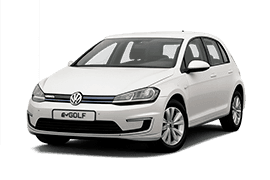
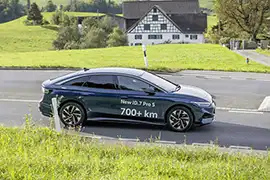
Volkswagen ID.7 Pro S — 794 km on one charge with max Battery

Volkswagen ID.7 Pro S — 794 km on one charge…

Volkswagen ID.7 Pro S — 794 km on one charge TESLA FORD HONDA CHEVROLET RIVIAN HYUNDAI KIA LUCID VOLKSWAGEN SKODA…
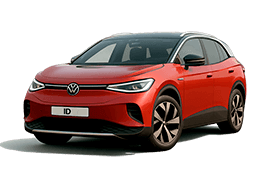
Volkswagen ID.4: American vs. European Versions, Key Differences

Volkswagen ID.4: American vs. European Versions, Key Differences

The Volkswagen ID.4 has become a significant player in the electric SUV market, but it’s important to understand that the…
POPULAR cars…

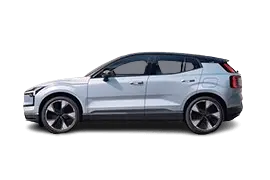
Side profile of Volvo EX30 electric SUV, showing 2,650 mm wheelbase, coupe-like roofline, and clean body lines
EX30 (2023-pr.)
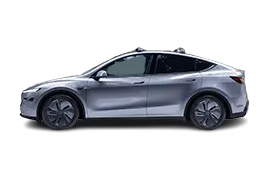
2025 Tesla Model Y Performance with dual motors, 0–100 km/h in 3.5 seconds, and long‑range battery
Model Y (2025-pr.)
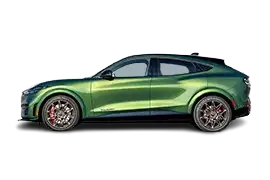
Side profile of the Ford Mustang Mach-E, showing its aerodynamic body, coupe-like roofline, and EV styling cues
Mustang Mach-E (2020-pr.)
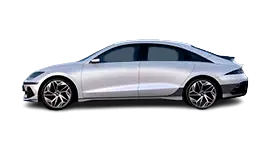
Side profile of the Hyundai Ioniq 6 illustrating its unique curved, streamliner silhouette and long 2950mm wheelbase on the E-GMP platform.
IONIQ 6 (2023-pr.)
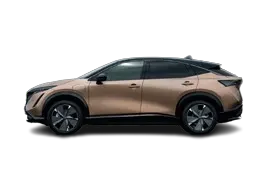
Side profile of the Nissan Ariya electric crossover, emphasizing its sleek, coupe-like silhouette, sloped roofline, and prominent wheel arches, optimized for efficiency and performance.
Ariya (2024-pr.)
Volkswagen ID.7 Tourer side profile with 2,971 mm wheelbase, 86 kWh battery, and 200 kW fast charging.
ID.7 Tourer (2024-pr.)
Tesla Model 3 side profile showing sleek body lines and alloy wheels
Model 3 (2023-pr.)
Kia EV3 side view compact electric SUV dimensions and profile
EX30 (2023-pr.)

Honda Prologue

FWD |  2024–

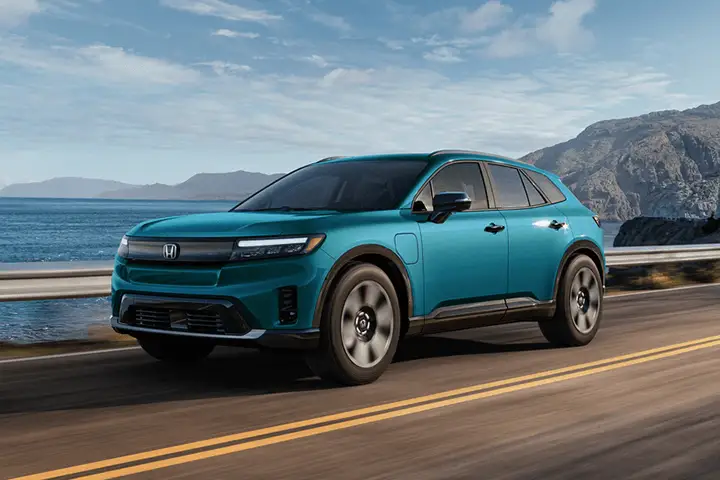
Front view of the Honda Prologue electric SUV (MY2025), showing sleek LED headlights, wide aerodynamic grille design, and optimized bumper styling for improved efficiency with Ultium platform architecture and DC fast‑charging capability.
Honda Prologue
battery capacity
Capacity
range –
Range
power output
Power
acceleration
Acceleration
85 kWh
496 km

158 kW

6.9 s

TRIM (VARIANT) :

Technical Data & Performance

Model Years2024–present
Trim (Variant)Prologue - FWD
Power (Horsepower)158 kW (212 hp)
Top Speed185 km/h (115 mph)
Torque320 Nm (236 lb-ft)
Acceleration6.9 sec (0–100 km/h)
6.9 sec (0–62 mph)
DriveFWD Front-wheel drive
Motor detailsSingle Permanent Magnet Synchronous Motor | General Motors (GM)
Motor codeGM Ultium Motor

Battery & Charging

Battery Capacity & Size83.0 kWh usable,
85.0 kWh gross
Max Range496 km (308 mi) / EPA
Consumption20.3 kWh/100 km
Battery TypeNCMA (Nickel Cobalt Manganese Aluminum)
Cell Format / SupplierPouch | LG Chem / Ultium Cells LLC
Battery Voltage400 V
Electrical Architecture400 V
Battery UpdatesThe battery remains unchanged. The increase in range for the 2025 MY was achieved via an upgraded front power unit and its control software.
V2L SupportedNo
Heat pumpYes
AC Home ChargingUS: Type1 / 1-phase - 11.5 kW (Max Power)
DC Fast ChargingUS: CCS1, 150 kW (Max Power)
41 min. (10–80%)
Charging UpdatesDC Fast Charging: 41 min (Estimated 10–80%) / 35 min (Official 20–80%)

Dimensions & Body

Type5 door, SUV
Seating capacity5
ClassD‑Segment SUV
Length4877 mm (192.0 in)
Width1989 mm (78.3 in)
Height1643 mm (64.7 in)
Wheelbase3094 mm (121.8 in)
Ground Clearance201 mm (7.9 in)
Curb weight2237 kg (4932 lb)
Gross weight2860 kg (6300 lb)
Trunk Volume714 L (25.2 ft³)
1634 L (57.7 ft³) max
TowingUnbraked: 680 kg (1500 lb), Braked: 680 kg (1500 lb)
Drag Coefficient0.3
PlatformGM BEV3 (uses Ultium architecture)
Additional InformationIn MY2025 with the upgraded motor range increased by +12 miles (+20 km) to 308 miles (496 km) compared to 296 miles (476 km) in MY2024. The drag can be reasonably estimated in the range of ~0.29–0.30.
Estimated Market Price
* for reference only
USD 47,400

⚠️ Please note: actual vehicle specifications may vary depending on market, trim level, or available regional packages.

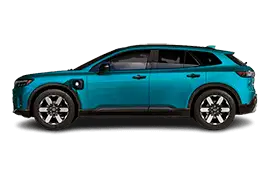
Honda M-NV (2025) electric SUV side profile, compact crossover design with aerodynamic alloy wheels, efficient battery placement for balanced weight distribution, and extended 480–500 km electric driving range.
M-NV (2020–pr.)
Side profile of the Honda Prologue electric SUV (MY2025), highlighting its long 3094 mm wheelbase, coupe‑inspired roofline, flush door handles, and aerodynamic bodywork with upgraded Ultium battery pack (85 kWh) supporting up to 308 miles EPA range
Prologue (2024-pr.)
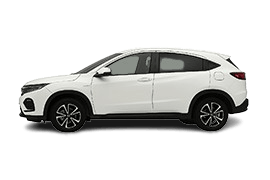
Honda X Nv Sport Ev (2021) 180
X-NV (2022-pr.)
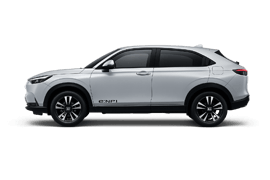
Honda Enp1 (2023) 180
e:NP1 (2023-pr.)
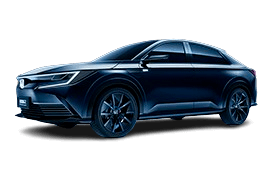
Honda Enp2 Prototype 180
e:NP2 (2024-pr.)
Honda Ens2 Prototype 180
e:NS2 (2024-pr.)

The Introduction of the Honda Prologue: Key Specifications and Features

Generation I (2024: Launch Model Year)

The Honda Prologue is the brand’s first high-volume, fully-electric SUV for the North American market, marking a new chapter in Honda’s electric vehicle strategy. A notable fact is its development partnership; the Prologue is built on General Motors’ (GM) Ultium platform, making it a “cousin” to models like the Chevrolet Blazer EV.

  • Platform & Design:
    • Built on the GM Ultium platform.
    • Design utilizes Honda’s “neo-rugged” language, conceived at the Honda Design Studio in Los Angeles.
    • Large dimensions, comparable in size to the Honda Passport, with a long wheelbase of 121.8 inches (3,094 mm).
  • Battery:
    • Single battery option with a capacity of 85 kWh (Ultium lithium-ion, liquid-cooled).
  • Models & Motors:
    • Prologue EX / Touring (2WD): Single permanent magnet synchronous AC motor (FWD) with 158 kW (212 hp) and 320 Nm of torque.
    • Prologue EX / Touring / Elite (AWD): Dual-motor (AWD) setup with a combined output of 215 kW (288 hp) and approximately 451 Nm of torque.
  • Range (EPA Estimated, MY2024):
    • 2WD models achieve an estimated range of up to 296 miles (476 km).
    • AWD models achieve an estimated range of up to 273–281 miles (439–452 km) (Elite trim is slightly lower).
  • Charging:
    • Max DC fast charging speed up to 155 kW. Honda states this can add approximately 65 miles of range in 10 minutes.
    • Onboard AC charging capacity of 11.5 kW.
  • Interior & Technology:
    • Features a standard 11-inch digital instrument cluster and an 11.3-inch central infotainment touchscreen.
    • Notable for retaining physical buttons for climate control and other standard features.
    • Includes standard Google Built-in features (Google Maps, Google Assistant, Google Play) and full Honda Sensing® safety suite.
    • Elite trim exclusively offers a Head-Up Display (HUD) and 21-inch aluminum alloy wheels.

Generation II (2025: Updated Model Year)

For MY2025, Honda introduced an upgraded motor configuration that improves efficiency and extends the EPA-estimated driving range:

  • Range (EPA Estimated, MY2025):
    • 2WD models: up to 308 miles (496 km) (+12 miles / +20 km vs. MY2024).
    • AWD models: up to 294 miles (473 km) (+13 miles / +21 km vs. MY2024).
  • Other specifications: Battery capacity, charging speeds, and interior features remain unchanged from MY2024.

POPULAR cars…

2025 Tesla Model Y Performance with dual motors, 0–100 km/h in 3.5 seconds, and long‑range battery
Model Y (2025-pr.)
Side profile of the Ford Mustang Mach-E, showing its aerodynamic body, coupe-like roofline, and EV styling cues
Mustang Mach-E (2020-pr.)
Side profile of the Hyundai Ioniq 6 illustrating its unique curved, streamliner silhouette and long 2950mm wheelbase on the E-GMP platform.
IONIQ 6 (2023-pr.)
Side profile of the Nissan Ariya electric crossover, emphasizing its sleek, coupe-like silhouette, sloped roofline, and prominent wheel arches, optimized for efficiency and performance.
Ariya (2022-pr.)
Renault Scenic E-Tech profile view showcasing vehicle dimensions, wheel design, and aerodynamics.
Scenic E-Tech (2023-pr.)
Volkswagen ID.7 Tourer side profile with 2,971 mm wheelbase, 86 kWh battery, and 200 kW fast charging.
ID.7 Tourer (2024-pr.)
Tesla Model 3 side profile showing sleek body lines and alloy wheels
Model 3 (2023-pr.)
Side profile of Volvo EX30 electric SUV, showing 2,650 mm wheelbase, coupe-like roofline, and clean body lines
EX30 (2023-pr.)

Common Issues and Problems with the Used Honda Prologue


First Generation (2024 - Present)

Software & Infotainment Issues

Early owners have reported problems with the infotainment system and HondaLink connectivity. These include screen glitches, Bluetooth pairing faults, and difficulties linking charging accounts (e.g., EVGo). While not safety-critical, these weaknesses affect daily usability.

Common Solutions: Honda has been releasing over-the-air (OTA) updates to address these issues. Buyers should verify that the vehicle has the latest software installed.

Driver Assistance System Problems

Some drivers have experienced phantom braking issues when using adaptive cruise control, as well as occasional false warning messages from ADAS sensors. These faults are not unique to the Prologue but are shared with other Honda and GM Ultium-based vehicles.

Common Solutions: Ensuring the latest ADAS calibration and software updates are applied reduces the likelihood of these problems.

HVAC & Heat Pump Issues

Owners in colder climates have noted weaknesses in the HVAC system and heat pump performance, which can reduce effective driving range. Complaints include slow cabin heating and reduced efficiency in extreme temperatures.

Common Solutions: Monitoring OTA updates and checking for service bulletins is recommended. Pre-conditioning the cabin while plugged in helps mitigate these issues.

Camera & Sensor Problems

Some reports mention that the rear-view camera image is too dark at night, which can be considered a usability fault. Sensor calibration issues have also been noted in isolated cases.

Common Solutions: Dealers can perform camera and sensor recalibration. Software patches may improve image processing in future updates.


Conclusion

The Honda Prologue is still a very new EV, so widespread long-term failures have not yet been established. Current owner feedback highlights mostly software-related issues, minor ADAS problems, and HVAC weaknesses. For any used Prologue, the most important step is to confirm that all software updates and technical service bulletins have been applied. As the model matures, more data will emerge on its long-term reliability.


* Disclaimer: The information presented here is based on early owner reports, EV community discussions, and verified public sources. It reflects initial user experiences rather than a complete long-term reliability record.

Frequently Asked Questions FAQ about the Honda Prologue Electric | FULL Specs max Range Battery size, type

About EVspecsHub

EVspecsHub is a non-profit informational platform dedicated to providing free electric vehicle specifications. Any future ads will support hosting and maintenance costs to keep our content accessible.

Scroll to Top