EVspecsHub.com EVspecsHub

2020 Honda M-NV Base 61.3 kWh 163 hp Battery, Horsepower, Range

The Honda M-NV 2023 is available in two trims: Shangcheng (Base) / 120 kW and Shangyi (Top) / 120 kW. It offers a reliable China-only EV experience with a 61.3 kWh NMC battery providing a 480 km (298 mi) NEDC range. Power output is 120 kW (163 hp).

Used Volkswagen e-Golf Problems and Fixes (2013 – 2020).

Used Volkswagen e-Golf Problems and Fixes (2013 – 2020).

TESLA FORD HONDA CHEVROLET RIVIAN HYUNDAI KIA LUCID VOLKSWAGEN SKODA AUDI BMW MERCEDES RENAULT VOLVO PEUGEOT BYD XIAOMI TOYOTA NISSAN…

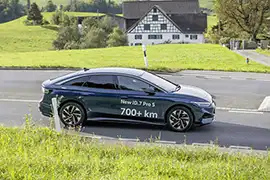
Volkswagen ID.7 Pro S — 794 km on one charge with max Battery

Volkswagen ID.7 Pro S — 794 km on one charge…

Volkswagen ID.7 Pro S — 794 km on one charge TESLA FORD HONDA CHEVROLET RIVIAN HYUNDAI KIA LUCID VOLKSWAGEN SKODA…

Volkswagen ID.4: American vs. European Versions, Key Differences

Volkswagen ID.4: American vs. European Versions, Key Differences

The Volkswagen ID.4 has become a significant player in the electric SUV market, but it’s important to understand that the…

POPULAR cars…

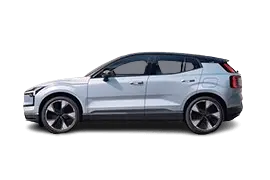
Side profile of Volvo EX30 electric SUV, showing 2,650 mm wheelbase, coupe-like roofline, and clean body lines
EX30 (2023-pr.)
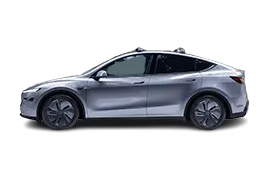
2025 Tesla Model Y Performance with dual motors, 0–100 km/h in 3.5 seconds, and long‑range battery
Model Y (2025-pr.)
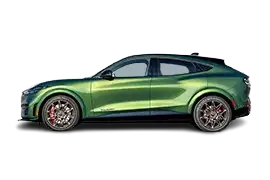
Side profile of the Ford Mustang Mach-E, showing its aerodynamic body, coupe-like roofline, and EV styling cues
Mustang Mach-E (2020-pr.)
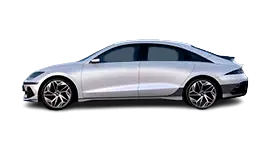
Side profile of the Hyundai Ioniq 6 illustrating its unique curved, streamliner silhouette and long 2950mm wheelbase on the E-GMP platform.
IONIQ 6 (2023-pr.)
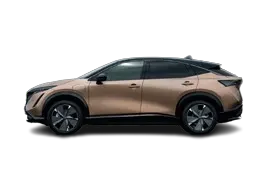
Side profile of the Nissan Ariya electric crossover, emphasizing its sleek, coupe-like silhouette, sloped roofline, and prominent wheel arches, optimized for efficiency and performance.
Ariya (2024-pr.)
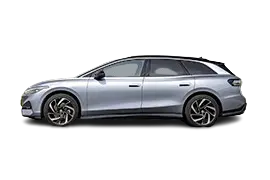
Volkswagen ID.7 Tourer side profile with 2,971 mm wheelbase, 86 kWh battery, and 200 kW fast charging.
ID.7 Tourer (2024-pr.)
Tesla Model 3 side profile showing sleek body lines and alloy wheels
Model 3 (2023-pr.)
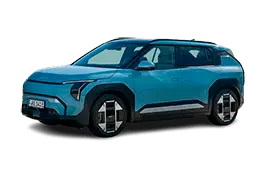
Kia EV3 side view compact electric SUV dimensions and profile
EX30 (2023-pr.)

Honda M-NV

Base |  2020–2022

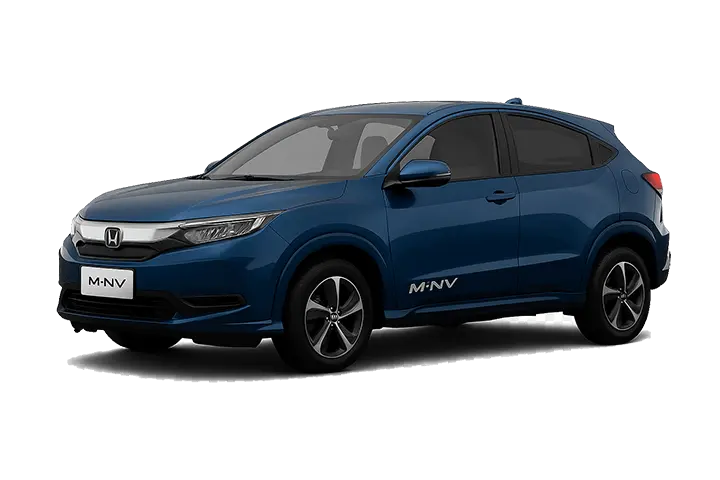
Honda M-NV (2025) electric SUV front view with sleek LED headlights, grille‑less aerodynamic design, and visible charging port, highlighting its 61.3 kWh battery, 480–500 km range, and 163–218 hp electric powertrain for urban EV driving.
Honda M-NV
battery capacity
Capacity
range –
Range
power output
Power
acceleration
Acceleration
61 kWh
480 km

120 kW

8.5 s

Technical Data & Performance

Model Years2020–2022
Trim (Variant)M-NV - Base
Power (Horsepower)120 kW (163 hp)
Top Speed140 km/h (87 mph)
Torque280 Nm (207 lb-ft)
Acceleration8.5 sec (0–100 km/h)
8.5 sec (0–62 mph)
DriveFWD Front-wheel drive
Motor detailsSingle PMSM | Dongfeng-Honda

Battery & Charging

Battery Capacity & Size61.3 kWh gross
Max Range480 km (298 mi) / NEDC
Consumption13.7 kWh/100 km
Battery TypeNMC/NCA (ternary lithium)
Cell Format / SupplierPrismatic modules | CATL
Battery Voltage355 V
Electrical Architecture400 V
V2L SupportedNo
Heat pumpNo
AC Home ChargingCN: GB/T / 1-phase - 7.4 kW (Max Power)
DC Fast ChargingCN: GB/T, 60 kW (Max Power)
30 min. (10–80%)

Dimensions & Body

Type5 door, SUV
Seating capacity5
ClassB-Segment (Small SUV)
Length4324 mm (170.2 in)
Width1785 mm (70.3 in)
Height1637 mm (64.4 in)
Wheelbase2610 mm (102.8 in)
Ground Clearance195 mm (7.7 in)
Curb weight1610 kg (3549 lb)
Gross weight2040 kg (4495 lb)
Trunk Volume437 L (15.4 ft³)
1214 L (42.9 ft³) max
TowingNot Supported
PlatformHonda HR-V/Vezel
Estimated Market Price
* for reference only
USD 15,100

⚠️ Please note: actual vehicle specifications may vary depending on market, trim level, or available regional packages.

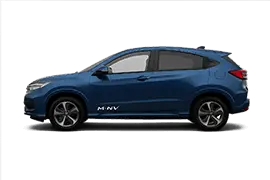
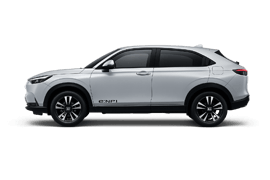
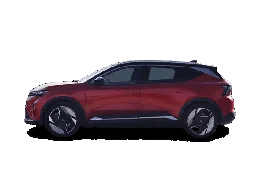
Honda M-NV (2025) electric SUV side profile, compact crossover design with aerodynamic alloy wheels, efficient battery placement for balanced weight distribution, and extended 480–500 km electric driving range.
M-NV (2020–pr.)
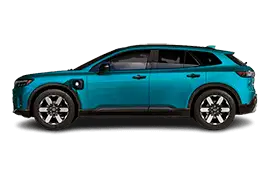
Side profile of the Honda Prologue electric SUV (MY2025), highlighting its long 3094 mm wheelbase, coupe‑inspired roofline, flush door handles, and aerodynamic bodywork with upgraded Ultium battery pack (85 kWh) supporting up to 308 miles EPA range
Prologue (2024-pr.)
Honda X Nv Sport Ev (2021) 180
X-NV (2022-pr.)
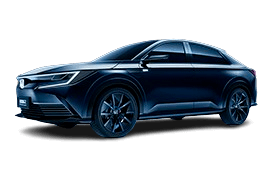
Honda Enp1 (2023) 180
e:NP1 (2023-pr.)
Honda Enp2 Prototype 180
e:NP2 (2024-pr.)
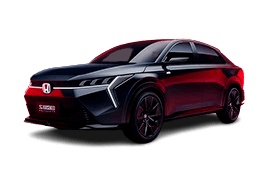
Honda Ens2 Prototype 180
e:NS2 (2024-pr.)

The Evolution of the Honda M-NV: Key Changes and Specifications


Launch Edition (2020: Production Start)

  • Platform & Market:
    • Built on a modified version of the Honda HR-V/X-NV platform, specifically for the Chinese market (Dongfeng-Honda JV).
    • It was designed with a more distinct, sporty crossover look compared to its sibling, the X-NV.
  • Motor & Powertrain:
    • Single Front Motor (FWD): A Permanent Magnet Synchronous Motor.
    • Power Output: 120 kW (163 hp).
    • Maximum Torque: 280 Nm.
  • Battery & Range:
    • Battery Capacity (Gross/Usable): 61.3 kWh (Lithium-ion).
    • Range (NEDC): Up to 480 km.
  • Charging: DC Fast Charging capability included, with slower charging rates compared to later updates.

2023–2024: Powertrain and Efficiency Upgrade

  • Models & Motors: The M-NV received significant efficiency and power upgrades in later model years, often without a formal name change, but with a new technical specification (160 kW variants became common).
  • Powertrain Modernization:
    • The maximum output of the single Front Motor (FWD) was substantially increased.
    • New Power Output: 160 kW (218 hp).
    • Maximum Torque: 310 Nm.
    • Interesting Fact: This upgrade represents a +33% power increase over the launch model, moving the car from a primarily city EV to a more dynamic urban crossover.
  • Battery & Range:
    • Minor battery revisions, with capacity often cited around 61.3 kWh, but with improved utilization.
    • Range (CLTC): Increased to up to 500 km (a newer, generally stricter Chinese test cycle than NEDC).
  • Charging & Safety:
    • Improved Fast Charging Speed: Faster DC charging times were implemented (e.g., 30% to 80% in approximately 30 minutes).
    • Safety Tech: Top trims began featuring advanced driver-assistance systems (ADAS) like Adaptive Cruise Control.

POPULAR cars…

2025 Tesla Model Y Performance with dual motors, 0–100 km/h in 3.5 seconds, and long‑range battery
Model Y (2025-pr.)
Side profile of the Ford Mustang Mach-E, showing its aerodynamic body, coupe-like roofline, and EV styling cues
Mustang Mach-E (2020-pr.)
Side profile of the Hyundai Ioniq 6 illustrating its unique curved, streamliner silhouette and long 2950mm wheelbase on the E-GMP platform.
IONIQ 6 (2023-pr.)
Side profile of the Nissan Ariya electric crossover, emphasizing its sleek, coupe-like silhouette, sloped roofline, and prominent wheel arches, optimized for efficiency and performance.
Ariya (2022-pr.)
Renault Scenic E-Tech profile view showcasing vehicle dimensions, wheel design, and aerodynamics.
Scenic E-Tech (2023-pr.)
Volkswagen ID.7 Tourer side profile with 2,971 mm wheelbase, 86 kWh battery, and 200 kW fast charging.
ID.7 Tourer (2024-pr.)
Tesla Model 3 side profile showing sleek body lines and alloy wheels
Model 3 (2023-pr.)
Side profile of Volvo EX30 electric SUV, showing 2,650 mm wheelbase, coupe-like roofline, and clean body lines
EX30 (2023-pr.)

Common Issues and Problems with the Used Honda M-NV


First Generation (2020 - Present)

12V Auxiliary Battery Failures & Starting Issues

One of the most frequently reported electrical weaknesses for the Honda M-NV, a common point of concern across many EVs built on legacy platforms, involves the 12V auxiliary battery. A sudden depletion of this small lead-acid battery is often cited, preventing the car from "waking up" and engaging the high-voltage system. This failure is usually linked to a parasitic electrical draw, a fault in the DC-DC converter responsible for maintaining the 12V battery's charge from the main traction pack, or simply the short lifespan (often 2-3 years) of the specific lead-acid unit used.

Common Solutions: Owners often resort to trickle charging the 12V battery if the car is unused for extended periods. For used models, immediate replacement of the existing 12V battery with a high-quality AGM or deep-cycle unit is recommended. If the issue persists, a dealer or specialized EV technician must diagnose any excessive parasitic draw (e.g., from the Telematics Control Unit or infotainment) that remains active while the car is off.

Infotainment System & Localized Software Problems

As an EV heavily reliant on software, the M-NV has experienced various infotainment glitches and system failures, particularly concerning its integration with local services. Owners report issues with the central screen freezing, unexpected reboots, or intermittent faults with multimedia and navigation functions. Since this car is an import to many markets, the software often lacks full English localization or compatibility, causing frustration for non-Chinese speaking owners.

Common Solutions: Most minor software failures can be temporarily fixed by performing a system soft-reset (often by holding the power button). However, for deep-seated localization or core functional problems, the solution requires specialized technicians who can flash an updated firmware package or install third-party localization/navigation software. Verifying the system is running the latest available firmware is essential.

Inconsistent or Non-Functional Charging Issues

Although the M-NV supports standard charging protocols, some owners have encountered charging failures and inconsistencies, particularly when using third-party portable charging kits or public AC/DC stations. The car may fail to initiate charging, display a generic "Unable to Charge" error, or suddenly terminate the charging session. These issues are often rooted in a communication fault between the car's Onboard Charger (OBC) and the charging station, especially when the station does not fully comply with the Chinese GB/T standard.

Common Solutions: A simple restart of the charging station or using the "charge now" function (bypassing delayed or scheduled charging, which can sometimes be a software weakness) often resolves transient failures. If the issue is persistent with the portable charger, it may require replacement or an inspection of the charging system's circuit at a service center to ensure proper grounding and signal integrity.

Brake System Noise & Component Weaknesses

Some owners have noted unusual noises and component weaknesses relating to the braking system, which can sometimes manifest as a creaking or squealing noise from the suspension/brake assembly, particularly at low speeds or when utilizing the regenerative braking feature aggressively. While not a safety failure, these persistent noises can be a source of discomfort and point to potential tolerance issues in the brake pad or caliper assembly. In some cases, the interaction between regenerative braking and mechanical brakes can amplify these noises.

Common Solutions: The problem usually requires inspection by a technician. The fix typically involves lubricating the brake components (caliper pins, pads) or, in some cases, replacing specific brake pads with a different compound to eliminate the low-speed squeak. Regular inspection of the brake fluid and system integrity is also advisable.


Conclusion

The Honda M-NV provides a compelling entry into the urban EV market, but a prospective used buyer must be vigilant regarding key electrical issues typical of the platform. The most frequent and critical problem is the 12V battery failure, which is a known weakness requiring proactive maintenance or replacement. Since the vehicle was designed for the Chinese market, software and localization faults also represent a common frustration. Verifying the car has undergone all necessary software updates and addressing the 12V battery immediately upon purchase are the most critical steps to ensuring a reliable ownership experience.


* Disclaimer: The information presented here is compiled from owner discussions in online communities, forums, and various open public sources, particularly those focused on imported Chinese EVs. The accuracy, completeness, and reliability of this data cannot be guaranteed, and it should be used for informational purposes only.

Frequently Asked Questions FAQ about the Honda M‑NV Electric SUV | Specs, 480 km Range, NMC Battery 61.3 kWh

About EVspecsHub

EVspecsHub is a non-profit informational platform dedicated to providing free electric vehicle specifications. Any future ads will support hosting and maintenance costs to keep our content accessible.

Scroll to Top