
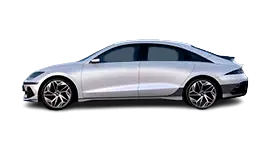
2026 Hyundai IONIQ 6 N | AWD 88.5 kWh 650 hp Battery, Horsepower, Range



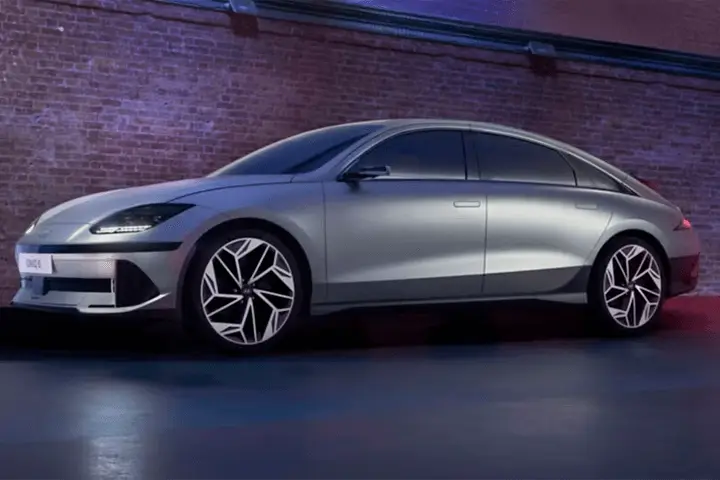




EVspecsHub Score — Hyundai IONIQ 6 N 84 kWh AWD 650 PS
Independent rating vs all passenger EVs on sale 2025–2026
Range
487 km WLTP · 84 kWh gross · AWD · 20" Pirelli P Zero
6.0
avg
Battery
~79 kWh usable · 84 kWh gross · 800V · battery pre-conditioning standard
7.3
good
Charging
240 kW DC peak · 800V · 18 min 10→80% at 350 kW station · V2L std
6.3
avg
Performance
0–100 km/h 3.2 s · 478 kW (650 PS) · AWD · N Launch Control
10.0
top
Efficiency
18.7 kWh/100 km WLTP · the price of 650 PS
3.0
weak
Cargo
371 L boot · no frunk · 371 L total · sedan segment
4.0
weak
Value
~€76,100 · $81,700 · €156.3/km · $167.8/km WLTP
4.0
weak
Verdict: Nobody buys the IONIQ 6 N for cargo space or running costs — and the score makes that pretty clear. What you actually get is a 10.0 Performance score, which is as high as this methodology goes: 3.2 s, 650 PS, AWD with e-LSD and N Launch Control. In my experience this is a game-changer for a Hyundai, full stop. The flip side: 18.7 kWh/100 km efficiency and €156/km value put it firmly in the "weekend toy" camp rather than daily driver. Buy it knowing what it is. Figures valid for cars built from February 2026 specification.
© EVspecsHub.com · All passenger EVs 2025–2026 · March 2026 · Methodology v6.7
5.8
out of 10
EVspecsHub Score
📊 Using this score in your review?
Free to use — just credit EVspecsHub.com
Free to use — just credit EVspecsHub.com
▸ Score data table (methodology v6.7)
| Criterion | Score | Key data | 10/10 = |
|---|---|---|---|
| Range | 6.0 | 487 km WLTP · 400–499 km band · performance tyres | 800+ km |
| Battery | 7.3 | ~79 kWh usable · 800V · 7.0 + 800V +0.3 · 70–79 kWh band | 110+ kWh |
| Charging | 6.3 | 240 kW DC · 800V · 6.0 + 800V +0.3 · no V2H/V2G bonus | 400+ kW |
| Performance | 10.0 | 3.2 s → 9.0 + AWD +1.0 = 10.0 (max) · 478 kW · e-LSD | sub-3s AWD |
| Efficiency | 3.0 | 18.7 kWh/100 km WLTP · 18.0–19.9 band | <12 kWh/100 km |
| Cargo | 4.0 | 371 L boot · no frunk · 300–399 L band | 1100+ L |
| Value | 4.0 | ~€76,100 · €156.3/km · $167.8/km · €130–159/km band | <€45/km |
| Overall | 5.8 / 10 | EVspecsHub Score v6.7 · EVspecsHub.com · March 2026 | |
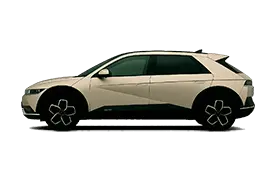

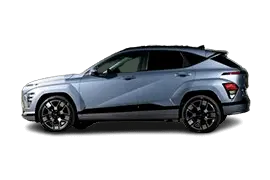
Hyundai IONIQ 6 N MY26: What the Spec Sheet Won't Tell You
487 km WLTP. 84 kWh. 650 PS. 770 Nm. 0–62 mph in 3.2 seconds. The IONIQ 6 N is a different animal from everything else in the IONIQ 6 lineup — and the spec numbers don't fully explain how different. I went through owner forum threads, track day reports, and charging session logs specifically for the N. There are things here that genuinely surprised me, and a few details that trip up buyers coming from the standard IONIQ 6 range.
The MY26 is the first and so far only IONIQ 6 N — there was no MY23, MY24, or MY25 version. Everything in this block is specific to MY26 production. Figures valid for cars built from early 2026. Data correct as of February 2026 per manufacturer technical documentation.
1 Battery Pack — 84 kWh, Dual Motor, and What N Pre-Conditioning Actually Does 84 kWh · NMC · 800 V · AWD
The N gets a new, larger pack: 84 kWh usable — up from 77.4 kWh on the standard LR variants. Gross capacity based on cross-referencing manufacturer technical documentation sits at approximately 88–89 kWh, with a BMS buffer of around 4–5 kWh. Hyundai doesn't publish the gross figure in any consumer-facing document. The nominal pack voltage is 697 V — slightly higher than the standard LR's pack, still on the same 800 V E-GMP architecture, same CCS charging port.
The dual-motor setup is comprehensively different from the standard LR AWD: front motor puts out 175 kW (238 PS), rear motor 303 kW (412 PS), combined 478 kW (650 PS) with 770 Nm (568 lb-ft) of torque. The rear axle gets an electronic limited-slip differential (e-LSD) — absent on the standard AWD variants. The suspension is electronically controlled with high-performance dampers. This is not a rebadged LR AWD with a power bump.
Pack and powertrain specs — cross-checked against manufacturer technical documentation (February 2026)
| Parameter | Value |
|---|---|
| Usable capacity | 84 kWh |
| Gross capacity (not published by Hyundai) | ~88–89 kWh (estimated from press kit data) |
| Nominal pack voltage | 697 V |
| Battery power rating | 535 kW |
| Cell chemistry | Lithium-ion polymer (NMC) |
| Platform | 800 V E-GMP |
| Front motor | 175 kW (238 PS) permanent magnet synchronous |
| Rear motor | 303 kW (412 PS) permanent magnet synchronous |
| Combined output | 478 kW (650 PS) / 770 Nm (568 lb-ft) |
| Rear axle | Electronic limited-slip differential (e-LSD) |
| Suspension | Electronic control — high-performance dampers |
| 0–62 mph (0–100 km/h) | 3.2 seconds |
| Top speed | 160 mph (257 km/h) |
| Kerb weight | 2,166–2,201 kg |
| Gross vehicle weight | 2,635 kg |
| Front brakes | Φ400×34t discs — 21" spec |
| Rear brakes | Φ360×20t discs — 19" spec |
| Ground clearance | Not separately stated — lower than standard IONIQ 6 |
✅ ★ N Battery Pre-Conditioning vs. standard preconditioning — they are not the same thing: Standard IONIQ 6 preconditioning heats the battery before DC charging to maximise charge rate. The N has that too — navigate to a CCS charger in the nav as usual. But "N Battery Pre-Conditioning" in the N menu is a separate function entirely: it optimises the pack temperature specifically for performance driving — track sessions, launch control, repeated hard acceleration. It does not prepare the battery for charging. Owners who activated N Battery Pre-Conditioning expecting faster charging were confused. Two different systems, two different purposes. Figures valid for cars built from early 2026.
⚠ Weight context — heaviest IONIQ 6 by far: At 2,166–2,201 kg, the N is roughly 180–215 kg heavier than a standard LR AWD. That weight shows up everywhere — braking distances, tyre wear, and range. The 487 km WLTP figure is impressive given the power output, but the N is not an efficiency car. It's a performance car that happens to have good aerodynamics.
2 DC Charging — Up to 240 kW and the Conditions That Actually Get You There NMC · up to 240 kW · 800 V
Hyundai's own technical documentation states the IONIQ 6 N is "capable of accepting power at up to 240 kW" in optimal conditions. That's the honest qualifier: optimal conditions. Based on what I've found in early owner sessions and the technical spec, the 240 kW ceiling requires a warm, preconditioned battery, SoC below 15–20%, and a charger capable of delivering that power. In practice, most sessions peak in the 210–230 kW range — still exceptional, and above the standard LR AWD's ~220 kW ceiling.
The charging curve shape follows the same flat-plateau pattern as other IONIQ 6 variants on the 800 V architecture — high power held relatively flat through the mid-SoC range, then a sharp taper above 60%. The larger 84 kWh pack means more energy delivered in that plateau window before the taper hits. Hyundai estimates 18 minutes for 10–80% on a 350 kW charger. From early owner logs that figure holds on a warm battery — it's one of the fastest 10–80% times of any production EV.
⚠ 240 kW is conditional — preconditioning is even more critical here: The N's larger pack and heavier thermal mass mean cold-start charging is proportionally more penalised than on the standard LR. At 0°C without preconditioning, opening power can sit at 30–60 kW for several minutes. Navigate to the charger destination in the nav before you arrive. On a track day, use N Battery Pre-Conditioning for performance, then navigate to a charger — the car will manage both transitions.
✅ Plug & Charge capable: The IONIQ 6 N supports Plug & Charge via the Charge myHyundai platform — no card, no app, just plug in and charging starts automatically on compatible networks. Activation is through the Bluelink connected services setup. Useful detail that's easy to miss in the spec list.
DC Charging Curve — IONIQ 6 N 84 kWh MY26 CCS2 / warm preconditioned battery above 20°C
EVspecsHub.comBased on manufacturer technical data and early owner-logged sessions. Navigate to charger in nav for DC charging preconditioning. N Battery Pre-Conditioning in N menu is for performance use — separate function.
IONIQ 6 N 84 kWh MY26 — DC Charging Power by SOC
CCS2 · warm preconditioned battery · manufacturer data + early owner sessions
| State of charge (SOC) | Charging power (kW) | Notes |
|---|---|---|
| 5% | ~160 kW | Ramp-up — larger pack warms slightly slower |
| 10% | ~220 kW | Approaching peak on warm battery |
| 20% | ~235–240 kW | Peak window — optimal conditions required |
| 30% | ~230 kW | Plateau holds — N pack strength |
| 40% | ~220 kW | Still near peak |
| 50% | ~190 kW | Gentle taper begins |
| 60% | ~110 kW | Sharp BMS step-down |
| 70% | ~60 kW | Rapid taper continues |
| 80% | ~32 kW | Standard road-trip stop point |
| 90% | ~16 kW | Slow fill — BMS protecting cells |
| 100% | ~7 kW | Not recommended at public DC chargers |
Data: manufacturer technical documentation + early owner sessions · Cold battery (<10°C) without preconditioning caps at 30–60 kW · 240 kW peak requires warm battery, low SoC, and 200+ kW capable charger
EVspecsHub.comAC Charging at Home
On-board AC charger: 10.5 kW (3-phase) — same OBC unit as standard LR variants. Full 0–100% on an 11 kW wallbox: approximately 7 hours 35 minutes (Hyundai figure, 10–100%). On a 7.4 kW single-phase supply, roughly 12–13 hours for the larger 84 kWh pack. The OBC is not the bottleneck on single-phase — the supply is. With a daily 80% charge limit, overnight top-up on single-phase is comfortably achievable for most usage patterns.
3 Real-World Range — 487 km WLTP From a 650 PS Car 84 kWh · AWD · 0.21 Cd
487 km WLTP (302 mi) from a 650 PS, 2,200 kg car. That number is genuinely remarkable — the IONIQ 6's 0.21 Cd aerodynamics doing heavy lifting. For context: most performance EVs in this power bracket give up 50–100 km of WLTP range compared to their base variants. The N gives up around 32 km vs the standard LR AWD (519 km) despite having 325 PS more and weighing roughly 150 kg more. The aero is doing a lot of work here.
In real-world use it's a different story — as it always is. Mixed city and suburban driving in mild weather, early owners are logging around 320–370 km (199–230 mi) from a full charge. At motorway speeds of 110–120 km/h, that drops to 310–350 km (193–217 mi). These are respectable numbers for what the car is. If you drive it the way it was designed to be driven — hard, with N mode active, with launch control — real range from a full charge can drop below 200 km (124 mi) in aggressive conditions. That's not a complaint; it's physics.
⚠ Track day range reality: Based on what owners report from mixed road-and-track sessions, aggressive driving on circuit can consume 3–4 kWh per lap on a typical 3–5 km track. A full 84 kWh pack gives roughly 20–28 laps of hard driving before hitting 20% reserve. Plan charging stops if you're doing a full track day. The N Battery Pre-Conditioning system helps maintain consistent power delivery across sessions — use it before going out on track, not as a substitute for planning your charge stops.
✅ Eco mode range — the surprise: Several early owners report that in Eco mode on a mild-weather motorway cruise at 90–100 km/h, the N delivers efficiency comparable to the standard LR AWD — around 16–18 kWh/100 km. The car's aerodynamics don't care what mode you're in. If you need to stretch range between charges, Eco at sensible speeds works better than you'd expect from something with 650 PS.
Real-World Range by Condition — IONIQ 6 N 84 kWh MY26 20" wheels · AWD · 650 PS
EVspecsHub.comManufacturer WLTP data + early owner-logged sessions. Aggressive driving range based on N mode track-oriented use. Cold weather data from owner winter reports. Figures valid for MY26.
4 Cargo & Interior Dimensions — What Changes From Standard IONIQ 6 371 L boot · AWD frunk
Boot volume drops to 371 L on the N — down from 401 L on all standard IONIQ 6 variants. That 30 L reduction is likely attributable to the larger brake and suspension hardware eating into the underfloor area. It's still a usable boot for a performance saloon, but if you were expecting the same 401 L as the standard car, this is a detail worth knowing before you try to load it for a track weekend.
The frunk situation is the same as any AWD IONIQ 6 — the front motor occupies most of the space. The N doesn't publish a frunk figure in its UK specification document, which suggests the space is minimal or non-existent in the same way as the standard LR AWD's 14.5 L. That's enough for a charging cable. Not much else.
Interior & cargo dimensions — manufacturer data cross-checked (MY26)
| Measurement | Value |
|---|---|
| Boot (seats up) | 371 L (13.1 cu ft) — 30 L less than standard IONIQ 6 |
| Frunk | Minimal — AWD motor occupies front bay |
| Overall length | 4,935 mm (194.3 in) — 80 mm longer than standard IONIQ 6 |
| Overall width (excl. mirrors) | 1,940 mm (76.4 in) — 60 mm wider than standard |
| Overall width (incl. mirrors) | 2,144 mm (84.4 in) |
| Overall height | 1,495 mm (58.9 in) |
| Wheelbase | 2,965 mm (116.7 in) — 15 mm longer than standard |
| Wheel tread — front | 1,665 mm (65.6 in) |
| Wheel tread — rear | 1,676 mm (66.0 in) |
| Kerb weight | 2,166–2,201 kg |
| Max roof load | 80 kg (176 lb) |
| Towing capacity | N/A — not rated for towing |
| Seat trim | Alcantara bucket seats (seat facing only) |
| Rear seats | 60/40 split fold · outer seats heated · outer seats sliding |
The N is physically larger than the standard IONIQ 6 in every direction — 80 mm longer, 60 mm wider, 15 mm longer wheelbase. That wider track (1,665 mm front / 1,676 mm rear vs 1,630/1,639 mm standard) and the wider 275 mm tyre section contribute directly to the planted feel owners describe. In tight urban car parks, the extra 60 mm of width is noticeable — the N is genuinely wide for a saloon.
5 N Modes, V2L, Track Tools and the Details That Matter V2L inside + outside · N Launch Control · e-LSD
The N comes with V2L as standard — both interior socket and exterior adaptor included. This is the only IONIQ 6 variant in the UK range where the exterior V2L adaptor is in the box. Every other trim (Premium, Ultimate, SEL, First Edition excluded) either doesn't include it or limits V2L to the interior outlet only. On the N, both are standard. The 3.6 kW output is the same as other IONIQ 6 variants — enough to run camping equipment, power tools, or charge other devices off the car.
✅ ★ N-specific features — what they actually do:
• N Launch Control — holds motor torque and manages wheel slip for maximum standing-start acceleration. Activate in N mode with brake held, then release. Owners report consistent 3.2–3.3 sec 0–62 mph on dry tarmac.
• N Torque Distribution — adjusts front/rear torque split in real time. In N mode, biases heavily rearward for a rear-driven feel without full oversteer. e-LSD on rear axle works with this system.
• N Drift Optimiser — customisable stability control threshold for controlled slides. Not a "drift mode" in the traditional sense — it's a calibrated reduction of intervention. Owners note it requires skill and space; it is not a beginner feature.
• N Race — stores and displays lap times with sector splits. Works with the pre-loaded track maps. You can add your own circuit.
• N e-Shift — simulates gear changes with haptic feedback and ambient lighting changes. Purely experiential. Either you love it or you turn it off immediately.
• N Battery Pre-Conditioning — prepares the pack for repeated high-power outputs. Use before track sessions, not before charging stops.
• N Launch Control — holds motor torque and manages wheel slip for maximum standing-start acceleration. Activate in N mode with brake held, then release. Owners report consistent 3.2–3.3 sec 0–62 mph on dry tarmac.
• N Torque Distribution — adjusts front/rear torque split in real time. In N mode, biases heavily rearward for a rear-driven feel without full oversteer. e-LSD on rear axle works with this system.
• N Drift Optimiser — customisable stability control threshold for controlled slides. Not a "drift mode" in the traditional sense — it's a calibrated reduction of intervention. Owners note it requires skill and space; it is not a beginner feature.
• N Race — stores and displays lap times with sector splits. Works with the pre-loaded track maps. You can add your own circuit.
• N e-Shift — simulates gear changes with haptic feedback and ambient lighting changes. Purely experiential. Either you love it or you turn it off immediately.
• N Battery Pre-Conditioning — prepares the pack for repeated high-power outputs. Use before track sessions, not before charging stops.
⚠ No towing on the N: Max tow weight is listed as N/A — the IONIQ 6 N is not rated for towing in any configuration. The standard IONIQ 6 LR AWD can tow 1,500 kg braked. If towing matters to you, the N is the wrong car.
IONIQ 6 N MY26 — Key Feature Summary
Manufacturer spec cross-checked · MY26 · data correct February 2026
| Feature | IONIQ 6 N MY26 | Notes |
|---|---|---|
| Heat pump | Standard | R744 refrigerant — verify sticker in engine bay on used cars |
| N Battery Pre-Conditioning | Standard | Performance pack prep — not for charging, for track use |
| Standard DC preconditioning | Standard | Navigate to CCS charger in nav to activate |
| V2L — interior outlet (3.6 kW) | Standard | Rear footwell · 230 V |
| V2L — exterior adaptor | Standard — included | Only IONIQ 6 UK variant with exterior adaptor standard |
| Plug & Charge | Standard | Via Charge myHyundai — requires Bluelink activation |
| Apple CarPlay / Android Auto | Standard · wireless | Both wireless |
| HUD — Augmented Reality | Standard | AR mode active during navigation only |
| BOSE Premium Audio | Standard · 7 speakers + subwoofer + 2 external | External speakers for N e-Shift sound design |
| N Launch Control | Standard | N mode required |
| N Torque Distribution | Standard | Real-time front/rear torque split adjustment |
| N Drift Optimiser | Standard · customisable | Requires skill and appropriate conditions |
| N Race (lap timer) | Standard | Pre-loaded track maps + custom circuit creation |
| N e-Shift | Standard | Simulated gear changes — can be disabled |
| e-LSD (rear axle) | Standard | Not available on any standard IONIQ 6 variant |
| Electronic damper control | Standard | High-performance spec — not standard IONIQ 6 suspension |
| Brake calipers | Orange — 21" front discs | Φ400×34t front · Φ360×20t rear |
| Sunroof (Vision Roof) | Optional | Reduces first-row headroom |
| Towing | Not available | N/A — not rated for towing |
| OTA updates | Standard | CcNC platform · active Bluelink subscription required |
Based on manufacturer UK technical specification document · data correct February 2026 · figures valid for MY26
EVspecsHub.com6 Wheels, Tires & The Winter Tyre Problem Nobody Warns You About 5×114.3 · CB 67.1 mm · 275/35R20
The N runs 275/35R20 front and rear — same size on both axles, which is unusual for a performance car and practical for owners who want to rotate tyres. The wheels are 9.5J × 20" with exclusive Pirelli P Zero tyres. Bolt pattern and hub bore are the same as all other IONIQ 6 variants — 5×114.3, 67.1 mm centre bore, M12×1.5 thread, 130 Nm tightening torque.
⚠ ★ Winter tyre availability — 275/35R20 is a problem: This is the thing nobody warns you about clearly enough. The 275/35R20 size is a specialist fitment. It's available — Michelin Pilot Alpin, Continental WinterContact, Pirelli Winter Sottozero — but the choice is very limited compared to more common performance tyre sizes. Stock runs out fast in winter season. If you're planning winter tyres on the stock 20" rims, order early. If you want more options, the alternative is a narrower winter tyre on a smaller 18" or 19" rim — but verify clearance with the N's larger brake calipers before ordering. The 21" front discs may limit how small a rim you can go. Several owners discovered this after ordering wheels.
IONIQ 6 N MY26 — Wheel & Tire Specifications
Manufacturer-verified · cross-checked via technical documentation (February 2026)
| Parameter | Specification |
|---|---|
| Bolt pattern (PCD) | 5×114.3 — same as all IONIQ 6 variants |
| Center bore (CB / hub bore) | 67.1 mm — hub rings required for most aftermarket wheels |
| Lug nut thread | M12×1.5 |
| Wheel tightening torque | 130 Nm (96 lb-ft) |
| Stock wheel size | 9.5J × 20" — wider rim than standard IONIQ 6 (8.5J) |
| Stock tyre — front | 275/35R20 Pirelli P Zero (exclusive spec) |
| Stock tyre — rear | 275/35R20 Pirelli P Zero — same front and rear |
| Front track | 1,665 mm (65.6 in) — 35 mm wider than standard IONIQ 6 |
| Rear track | 1,676 mm (66.0 in) — 37 mm wider than standard IONIQ 6 |
| Wheel offset | To be confirmed via owner CoC documents — wider rim suggests lower ET vs standard |
| Winter tyre challenge | 275/35R20 — limited fitment options · order early in season |
| Smaller rim clearance | Verify caliper clearance before ordering sub-20" rims — 21" front discs (Φ400mm) limit minimum rim size |
| Aftermarket note | 5×114.3 broad compatibility · 67.1 mm CB requires hub rings · wider 9.5J rim limits aftermarket wheel options vs 8.5J standard |
PCD, CB, thread spec from manufacturer technical documentation · Winter tyre notes based on owner fitment research · Figures valid for MY26
EVspecsHub.comThe wider 9.5J rim (vs 8.5J on standard IONIQ 6) also narrows the pool of compatible aftermarket wheels — offset and width requirements are more specific. Hub rings remain essential: 67.1 mm centre bore means most aftermarket wheels need them. On a car this wide and this fast, getting wheel fitment wrong is not just inconvenient — it's a safety issue. Verify offset, check caliper clearance, use hub rings.
📋 Full technical specifications — all IONIQ 6 variants:
IONIQ 6 SE RWD — specs
IONIQ 6 Long Range RWD — specs
IONIQ 6 SEL AWD — specs
IONIQ 6 Limited AWD — specs
Note: Range figures based on manufacturer WLTP data and early owner-logged sessions — MY26 is a recent launch and long-term owner data is still accumulating. Charging curve based on manufacturer technical documentation and early owner sessions. Battery gross capacity estimated from press kit data — not published by Hyundai. N-mode feature descriptions cross-checked against manufacturer technical documentation (February 2026). Winter tyre notes based on owner fitment research and forum threads. Wheel specs from manufacturer technical documentation. Figures valid for MY26 production. Data correct as of February 2026.Back to contents
Share this data
Free to use — please include a visible link to EVspecsHub.com
✓ Link copied!