
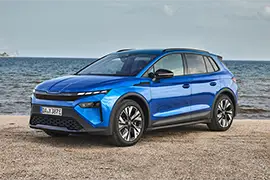
2024 Skoda Elroq 50 55 kWh 170 hp Battery, Horsepower, Range
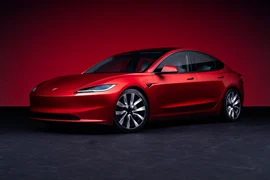









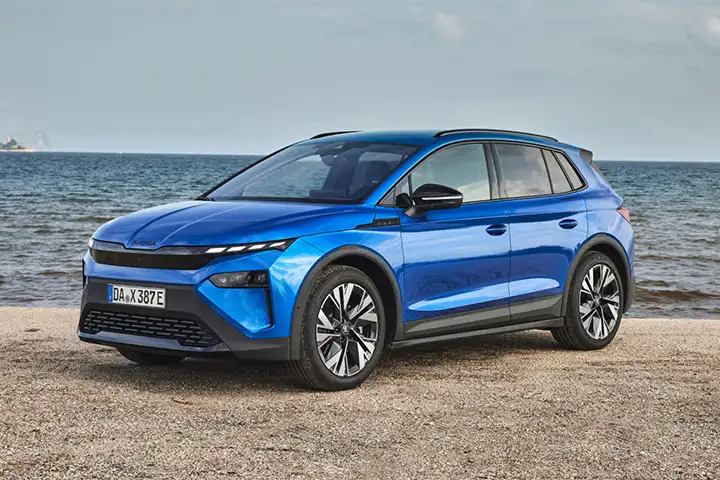




EVspecsHub Score — Skoda Elroq 50 52 kWh (2024)
Independent rating vs all passenger EVs on sale 2025–2026
Range
377 km WLTP · 52 kWh usable · RWD · 19" wheels
5.0
avg
Battery
52 kWh usable · NMC · 400V · no V2G
5.0
avg
Charging
145 kW DC max · 25 min 10→80% · no V2L/V2H/V2G
4.0
weak
Performance
0–100 km/h 9.0 s · 125 kW · RWD
2.0
weak
Efficiency
15.7 kWh/100 km WLTP · solid for compact SUV
6.0
avg
Cargo
470 L boot · no frunk · 470 L combined
5.7
avg
Value
€33,900 · $36,300 · €89.9/km · $96.4/km WLTP
6.0
avg
Verdict: The Elroq 50 is Skoda's entry point into compact electric SUVs — and the score reflects exactly that. At €89.9/km it's not overpriced for what you get, and 15.7 kWh/100 km efficiency is genuinely decent. But a 9.0 s 0–100 km/h and 145 kW peak DC dragging Performance and Charging into weak territory is hard to ignore against the 2025–2026 field. Works well as a city and commuter car; anyone planning regular highway runs should step up to the 60 or 85.
© EVspecsHub.com · All passenger EVs 2025–2026 · March 2026 · Methodology v6.7
4.8
out of 10
EVspecsHub Score
📊 Using this score in your review?
Free to use — just credit EVspecsHub.com
Free to use — just credit EVspecsHub.com
▸ Score data table (methodology v6.7)
| Criterion | Score | Key data | 10/10 = |
|---|---|---|---|
| Range | 5.0 | 377 km WLTP · 300–399 km band | 800+ km |
| Battery | 5.0 | 52 kWh usable · NMC · 400V (no bonus) · 50–59 kWh band | 110+ kWh |
| Charging | 4.0 | 145 kW DC · 25 min 10→80% · no V2L/V2H/V2G · 100–149 kW band | 400+ kW |
| Performance | 2.0 | 9.0 s → 2.0 + RWD +0 = 2.0 · 125 kW | sub-3s AWD |
| Efficiency | 6.0 | 15.7 kWh/100 km WLTP · 15.0–15.9 band | <12 kWh/100 km |
| Cargo | 5.7 | 470 L boot · no frunk · SUV penalty −0.3 · 500–649 L band | 1100+ L |
| Value | 6.0 | €33,900 · €89.9/km · $96.4/km · €75–89/km band | <€45/km |
| Overall | 4.8 / 10 | EVspecsHub Score v6.7 · EVspecsHub.com · March 2026 | |




Skoda Elroq 50 2024 (MY25): The Entry EV That's Now Discontinued — And Still Worth Understanding
377 km WLTP. 145 kW DC peak. 52 kWh usable. NMC chemistry. The Elroq 50 was the entry point of the range — and as of early 2026, it's been discontinued in the UK and several European markets, with the 60 now being the starting point. If you're researching the 50, you're most likely considering a used purchase, or you're in a market where it's still available on old stock. Either way — the spec sheet doesn't tell you what cold weather does to range, why DC sessions start at 30 kW in January, or what the boot actually fits. I went through owner forum threads, charging logs, and real measurements. Here's what's missing.
⚠ Elroq 50 discontinued in the UK as of February 2026: Skoda removed the Elroq 50 SE from the UK price list in February 2026. The Elroq range now starts with the 60 in most European markets. If you're buying new, check availability in your specific market. For used buyers — the data in this block is valid for MY25 cars built through the production run. Figures valid for cars built from June 2025.
1 Battery Chemistry — NMC, 52 kWh Usable, and What That Means Daily NMC · 55 kWh gross · 52 kWh usable
Short answer: the Elroq 50 uses NMC (Nickel Manganese Cobalt) chemistry throughout its production run. There is no LFP version of the 50 — the chemistry switch to LFP applies only to the Elroq 60 with the MY26 update. The 50 stays NMC from launch through discontinuation. Gross capacity is 55 kWh; usable is 52 kWh. Figures valid for cars built from June 2025.
NMC — what it means for Elroq 50 owners in practice
| Question | Elroq 50 (NMC · 52 kWh usable) | Notes |
|---|---|---|
| Daily charge limit | 80% recommended — ~41.6 kWh per day | Preserves long-term pack health |
| Practical daily range at 80% | ~302 km WLTP-equivalent | Use this for daily planning, not 377 km |
| Occasional 100% | OK before long trips, not every day | Early 50s showed accelerated degradation with frequent 100% DC |
| Cold weather | Noticeable drop below 5°C (41°F) | Heat pump saves ~30–40 km in winter |
| Cycle lifespan | ~1,000–1,500 cycles to 80% capacity | Keep daily charge at 80% for best longevity |
| vs Elroq 60 LFP (MY26) | 80% daily limit is the key disadvantage | LFP on 60 MY26 allows 100% daily — different chemistry, different rules |
⚠ Degradation note specific to the 50: A small number of early Elroq 50s showed 5–8% capacity loss within the first two years — roughly double the expected rate. Common factor: frequent DC charging to 100% at motorway stops. With only 52 kWh usable, owners on longer routes are more tempted to charge to 100% at every stop. Keeping daily charge at 80% and reserving 100% for genuine long trips is the clearest way to keep the 8-year warranty meaningful. Skoda doesn't state this clearly in the consumer app.
✅ NMC charging habit for the 50: Set daily limit to 80% — gives you ~41.6 kWh and roughly 302 km WLTP equivalent. Use 100% when you actually need the full 377 km window. The gap between 80% and 100% on the 50 is only ~10 kWh, which translates to roughly 75 km — worth reserving rather than using daily.
The pack sits at a nominal ~350 V inside a 400 V architecture. Gross is 55 kWh — in press documentation but not on any consumer page. Usable is 52 kWh, with a ~3 kWh BMS buffer. Use 52 kWh for trip planning and charge cost calculations.
2 Battery Pack — 8 Modules, 55/52 kWh, APP310 55 kWh gross · NMC · APP310
Eight modules — one fewer than the 60's nine, three fewer than the 85's twelve. That's the primary reason the 50 is the lightest Elroq, and why the handling feels slightly more agile than the heavier 85 in tight conditions. The motor is the APP310 — same family as the 60 but producing 125 kW (170 hp) rather than 140 kW, with the same 310 Nm of torque. Skoda doesn't name the motor on any consumer page; owners on German forums confirmed it from the torque figure. The axle ratio is also different from the 60 and 85: 4.389 versus 3.895 — a taller reduction that sacrifices some efficiency at motorway speeds in exchange for better city torque response.
Pack and drivetrain specs — cross-checked from official press documentation
| Parameter | Value |
|---|---|
| Gross capacity | 55 kWh |
| Usable capacity (BMS-protected) | 52 kWh |
| BMS buffer | ~3 kWh (5.5%) — not stated by Skoda |
| Cell chemistry | NMC (Nickel Manganese Cobalt) — throughout production run |
| Pack structure | 8 modules — confirmed in official press documentation |
| Nominal pack voltage | ~350 V (400 V system architecture) |
| Motor designation | APP310 — derated vs. 60, not stated on consumer pages |
| Motor output | 125 kW (170 hp) / 310 Nm (229 lb-ft) |
| Drive | Single rear motor — RWD |
| Axle ratio | 4.389 — different from 60/85 (3.895), confirmed in manufacturer data |
| Front brake discs | Single-piston floating caliper |
| Rear brakes | Drum — optimised for regen-first braking |
| 0–100 km/h | 9.0 s |
| Top speed | 160 km/h (99 mph) |
| Ground clearance | 186 mm (7.3 in) at kerb weight |
| Battery warranty | 8 years / 160,000 km — 70% capacity guarantee |
✅ Quick check for heat pump: Refrigerant sticker in the engine bay near the service port. R744 = heat pump fitted. R-1234YF = not fitted. Especially relevant for used 50s where order confirmations sometimes don't match what was actually delivered.
3 DC Charging — When 145 kW Actually Happens NMC · 145 kW peak · 25 min 10–80%
145 kW is the headline. Based on owner-logged sessions: that peak only shows up below roughly 20% SoC on a warm, preconditioned battery. After 20%, power steps down quickly. By 40–50% SoC, owners regularly log 55–65 kW even at 150 kW stations — and the charger is not the problem, the BMS is tapering to protect the cells. Average from 10–80% in good conditions: around 80–90 kW, which is still enough to cover 10–80% in the claimed 25 minutes. But the 145 kW headline does most of its work in the first few minutes.
One thing worth knowing for the 50 specifically: because the pack is smaller, the temptation to charge to 100% at every motorway stop is stronger. Based on forum threads, owners who consistently did that saw noticeably higher degradation in the first year than owners who charged to 80% and moved on. The 50's smaller pack means each full DC session is a bigger percentage stress on the cells than on the 60 or 85.
⚠ Cold battery without preconditioning: Below 10°C with no preconditioning, sessions start at 15–30 kW. On MY25, trigger preconditioning manually from the infotainment charging menu — no navigation destination required. One owner described waiting 15 minutes at a February motorway charger before the battery warmed up enough to accept above 50 kW. Don't skip it in winter.
DC Charging Curve — Elroq 50 MY25 CCS2 / warm preconditioned battery / NMC 52 kWh · 145 kW peak
EVspecsHub.comBased on owner-logged DC sessions. Peak 145 kW only briefly below 20% SoC. Smaller pack vs 60/85 — each full DC stop is proportionally harder on NMC cells. Keep daily DC charging to 80%.
Elroq 50 MY25 — DC Charging Power by SOC
CCS2 · warm preconditioned battery · 145 kW peak · owner-logged sessions
| State of charge (SOC) | Charging power (kW) | Notes |
|---|---|---|
| 5% | ~90 kW | Ramp-up from very low SoC |
| 10% | ~120 kW | Rising toward peak |
| 15–20% | ~135–145 kW | Peak window — brief, warm battery only |
| 25% | ~110 kW | First noticeable step-down |
| 35% | ~80 kW | Continues tapering |
| 45% | ~55–65 kW | Often mistaken for a slow charger |
| 55% | ~40–45 kW | BMS protecting cells |
| 65% | ~30 kW | Slow but steady |
| 75% | ~18–22 kW | Approaching typical road-trip stop point |
| 80% | ~12–15 kW | Standard stop — 25 min total from 10% |
| 90% | ~7 kW | Not worth waiting at DC |
| 100% | ~3–5 kW | Use AC overnight — avoid frequent DC 100% on NMC |
Owner-logged sessions · Cold battery (<10°C) without preconditioning: 15–30 kW cap · frequent DC charging to 100% linked to higher degradation on early 50s · figures valid for cars built from June 2025
EVspecsHub.comAC Charging at Home
On-board AC charger: 11 kW (3-phase). Full 0–100% on an 11 kW wallbox: roughly 5.5 hours — faster than the 60 and 85 simply because the pack is smaller. On a 7.4 kW single-phase supply: about 8.5 hours. For used 50 buyers who home-charge overnight, the smaller pack is an advantage here — a full charge completes easily within a standard overnight window even on single-phase.
4 Real-World Range — Owner Logs, Not Press Numbers 52 kWh · RWD · APP310
377 km WLTP (234 mi). Mixed city and suburban driving in mild weather gives around 290–320 km (180–199 mi) from a full charge — roughly 77–85% of WLTP, good for the class. Motorway at 110–120 km/h drops that to around 250–275 km (155–171 mi). The honest number I keep coming back to from owner logs: 3.0–3.3 mi/kWh on steady UK motorway runs, which works out to 155–170 mi (250–275 km) from 100%. At 80% charge — the recommended NMC daily limit — plan on ~41.6 kWh and roughly 302 km WLTP equivalent.
One thing my own observation from multiple forum threads made clear: the 50's smaller battery makes the range-per-stop calculation noticeably tighter than the 60 on motorway trips. The WLTP gap between 50 and 60 is 43 km — but the usable energy difference (52 vs 58 kWh) means real-world that gap is closer to 40–50 km per charge. On a 500 km drive, that's an extra stop. Worth factoring in before choosing the 50 over the 60 for anything beyond city use.
⚠ WLTP vs motorway reality: At 110–120 km/h in mild weather, real range lands at 250–275 km — about 66–73% of WLTP. Normal for the platform, but the gap from 377 km sticker to 260 km motorway catches first-time EV buyers off guard every time.
⚠ Winter range without heat pump: At ~0°C with resistive heating only, owners report 180–210 km (112–130 mi) from a full charge. That's a 40–45% drop from WLTP. With the heat pump, the same conditions give roughly 220–250 km (137–155 mi). On a 52 kWh pack, that 30–40 km heat pump difference is proportionally larger than on the 85 — don't skip it if you're above 48° latitude.
Real-World Range by Condition — Elroq 50 MY25 19" wheels · NMC 52 kWh
EVspecsHub.comOwner-logged data from forum threads across UK and central European owners. Actual range varies with driving style, HVAC use, and tyre spec.
Elroq 50 MY25 — Real-World Range by Condition
NMC · 52 kWh usable · 19" wheels · owner-logged data · figures valid for cars built from June 2025
| Condition | Range (km) | Range (mi) | vs WLTP | Notes |
|---|---|---|---|---|
| WLTP official | 377 km | 234 mi | 100% | Lab conditions |
| Daily at 80% charge (NMC recommended) | ~302 km | ~188 mi | 80% | Effective daily range for pack health |
| City / mixed, mild 15–20°C | 290–320 km | 180–199 mi | ~82% | Typical summer commute |
| Motorway 110–120 km/h, mild | 250–275 km | 155–171 mi | ~69% | Most realistic long-trip number |
| Motorway 70–75 mph (UK) | 220–245 km | 137–152 mi | ~60% | UK speed limit combined with mild cold |
| Cold ~0°C, no heat pump | 180–210 km | 112–130 mi | ~52% | Biggest range hit — heat pump matters more here than on 85 |
| Cold ~0°C, with heat pump | 220–250 km | 137–155 mi | ~61% | Heat pump worth ~30–40 km / ~20 mi in winter |
| kWh/100 km (motorway mild) | ~18.9–20.8 kWh/100 km | — | 3.0–3.3 mi/kWh owner-logged motorway average | |
Owner-logged data from UK and central European forum threads · cold range from owner winter reports · figures valid for cars built from June 2025
EVspecsHub.com5 Cargo & Interior Dimensions — Measured, Not Estimated 470 L boot · no frunk
Same body as the 60 and 85 — 470 litres (16.6 cu ft) with seats up, 1,580 litres (55.8 cu ft) folded. Loading sill at 702 mm (27.6 in) — high, and dog owners bring this up constantly. The rear seats fold 60:40 but not flat: there's a ramp angle that makes sliding long rigid items awkward rather than simple. The ski hatch works well for this — pass-through for long narrow items without folding the full seat. No frunk on any MY25 Elroq, 50 included.
One practical note specific to 50 owners on tight budgets: the cable net under the parcel shelf is standard on base trims and consistently rated as one of the better practical touches. It beats an underfloor tray for daily cable access — but check your specific trim level as some base configurations have it as an option rather than standard.
Skoda Elroq 50 MY25 — Cargo & Interior Dimensions
Manufacturer-verified data · owner-measured details from forum threads
| Parameter | Value | Notes |
|---|---|---|
| Boot volume — seats up | 470 L (16.6 cu ft) | ✔ manufacturer-verified |
| Boot volume — seats folded | 1,580 L (55.8 cu ft) | ✔ manufacturer-verified |
| Loading sill height | 702 mm (27.6 in) | ✔ manufacturer-verified · high — dog owners notice this daily |
| Rear seat fold angle | Not flat — ramp remains | Confirmed by owners — awkward for long flat loads |
| Ski hatch | Yes | Best solution for long narrow items without folding full seat |
| Cable net under parcel shelf | Standard / optional by trim | Owners rate this highly for day-to-day cable access |
| Frunk | None | No factory or retrofit option — MY26 across all variants adds 21 L |
| Rear flat floor | Minimal tunnel — near flat | MEB platform advantage over ICE-derived rivals |
| Headroom — front | 1,056 mm (41.6 in) | ✔ manufacturer-verified |
| Headroom — rear | 990 mm (39.0 in) | ✔ manufacturer-verified · borderline for owners over 190 cm (6'3") |
| Seat width — front | 1,506 mm (59.3 in) | ✔ manufacturer-verified |
| Seat width — rear | 1,488 mm (58.6 in) | ✔ manufacturer-verified |
| Overall length | 4,488 mm (176.7 in) | ✔ manufacturer-verified |
| Overall width (excl. mirrors) | 1,884 mm (74.2 in) | ✔ manufacturer-verified |
| Overall height | 1,625 mm (64.0 in) | ✔ manufacturer-verified |
| Wheelbase | 2,765 mm (108.9 in) | ✔ manufacturer-verified — same as Enyaq, long for this body |
| Ground clearance | 186 mm (7.3 in) | ✔ manufacturer-verified at kerb weight |
Dimensions cross-checked against manufacturer technical documentation · fold angle and practical loading notes confirmed via owner forum threads
EVspecsHub.com6 Heat Pump, V2L, CarPlay and the Questions Nobody Answers MY25 specific
Heat Pump
Not standard — a paid option on all trims, around £1,000–£1,100 depending on market. On the 50, the case for it is stronger than on the 60 or 85: you're working with the smallest pack in the range, so the winter range difference between 180 km and 220 km is proportionally bigger. Owners above 48° latitude who bought without it and drove through a northern European winter are consistently clear about the regret. The R744 / R-1234YF refrigerant sticker check applies here too.
Battery Preconditioning
Available on MY25. Trigger manually from the infotainment charging menu — no navigation destination required. On the 50, with only 52 kWh to charge, arriving at a cold battery session at 15–30 kW instead of 90+ kW is a bigger relative hit than on the larger variants. Always use it in winter.
V2L / V2H
Not available. No socket, no adapter, no announced path. Platform-level limitation on the standard MEB architecture. If bidirectional charging matters, the Elroq is the wrong car.
Apple CarPlay / Android Auto
Both wireless, standard on all trims. The 13-inch screen connects without a cable. Occasional wireless drop requiring a reboot — wired fallback available. Most owners use CarPlay or Android Auto full-time.
Other Things Owners Keep Asking About
- Towing capacity: 1,000 kg (2,205 lb) braked at 12% / 750 kg (1,653 lb) unbraked. Same as the 60. Tow bar is a factory option.
- One-pedal driving: B mode increases regen but won't stop fully on regen alone — friction brakes engage for the final stop. Not true one-pedal.
- Charging port cover bug: Early 50 builds had the port cover latch freeze or jam in dirty/cold conditions. Lubricating the latch pin is the fix — worth checking on delivery in winter climates, and something to look at when buying used.
- DCC adaptive dampers: Optional. Standard suspension on 19" is fine for daily use. On 20" without DCC the ride gets noticeably firmer on rough roads.
- Rear USB ports: Two USB-C front standard. Rear ports from Edition trim up — entry buyers notice this quickly on the first longer trip.
- 50 vs 60 for used buyers: The 60 is now the entry Elroq. Used 50s will typically be priced lower — but factor in the smaller pack, more frequent DC stops on longer trips, and the NMC degradation risk from previous owners' charging habits.
7 Wheels, Tires & What Actually Fits 5×112 · CB 57.1 mm
Skoda Elroq 50 MY25 — Wheel & Tire Specifications
Manufacturer-verified factory specs · cross-checked via owner CoC documents
| Parameter | Specification |
|---|---|
| Bolt pattern (PCD) | 5×112 |
| Center bore (CB) | 57.1 mm |
| Lug bolt thread | M14×1.5 |
| Wheel tightening torque | 120 Nm (89 lb-ft) |
| Stock 19" tyre | 235/55R19 |
| Optional 20" tyre | 235/50R20 |
| Offset range (ET) | ET40–45 depending on wheel style |
| Range penalty 19" → 20" | ~15–25 km (9–16 mi) estimated from owner comparisons |
| Aftermarket fitment | 57.1 mm CB is standard VAG — wide compatibility |
| Turning circle | 9.3 m (30.5 ft) |
Bolt pattern, CB, thread size cross-checked against manufacturer technical data · offsets confirmed via owner CoC documents
EVspecsHub.comStandard VAG 57.1 mm centre bore — wide aftermarket compatibility. On the 50, 19" is the clear practical choice: the range penalty from moving to 20" hurts more on a 52 kWh pack than on the 85. Stock 235/55R19 is also the most efficient option from the configurator.
📋 Full technical specifications — all Elroq variants:
Note: Elroq 50 discontinued in the UK as of February 2026 — confirmed via manufacturer price list update. Range figures based on owner-logged driving data and forum reports across UK and central European owners. Charging curve reconstructed from real session logs — Skoda does not publish cell-level DC data. Cold-weather range based on owner winter reports. Battery chemistry (NMC throughout), pack structure (8 modules), and motor designation (APP310 · 125 kW) cross-checked against official manufacturer technical documentation. Interior dimensions verified against manufacturer specification data. Wheel specs cross-checked against manufacturer data and owner CoC documents. Degradation note based on early owner forum reports. Data compiled as of April 2026. Figures valid for cars built from June 2025.Back to contents
Share this data
Free to use — please include a visible link to EVspecsHub.com
✓ Link copied!