Common Issues with Used Nissan Leaf
The Nissan Leaf, as one of the first mass-produced electric vehicles, offers a simple, reliable platform. However, its design, particularly in early models, led to specific issues that are critical for used buyers to check.
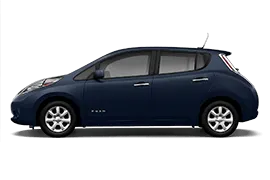
First Generation (2011 - 2017)
The earliest Leafs are fantastic as cheap, local commuters, but they suffer from severe limitations and weaknesses due to their pioneering design.
Severe Battery Degradation (Lack of Thermal Management)
This is the single most important and costly issue. The first-generation Leaf battery pack (24 kWh and 30 kWh) lacks active liquid cooling, relying only on passive air cooling. In warm climates and with frequent DC rapid charging (CHAdeMO), the battery degrades much faster than expected, leading to a significant loss of range and capacity bars on the dashboard gauge. This degradation renders many high-mileage or hot-climate models nearly unusable for anything but very short trips.
Heating and HVAC Failures
Early models, particularly 2013-2017, are prone to failures of the electric heater element or the heat pump system. Symptoms include a complete loss of cabin heating or cooling. This can be an expensive fix, often requiring replacement of a major component.
Brake System Actuator Failure
The regenerative braking system, which relies on an electric brake booster, has a known weak point in the actuator unit. Owners may experience brake warning lights or a loss of regenerative braking. This is a common failure that can be costly to repair.
Onboard Charger Failures
Some owners have reported failures of the onboard AC charging unit, which is essential for Level 1 and Level 2 charging. Replacing this unit can be a significant expense, especially on older, low-value cars.
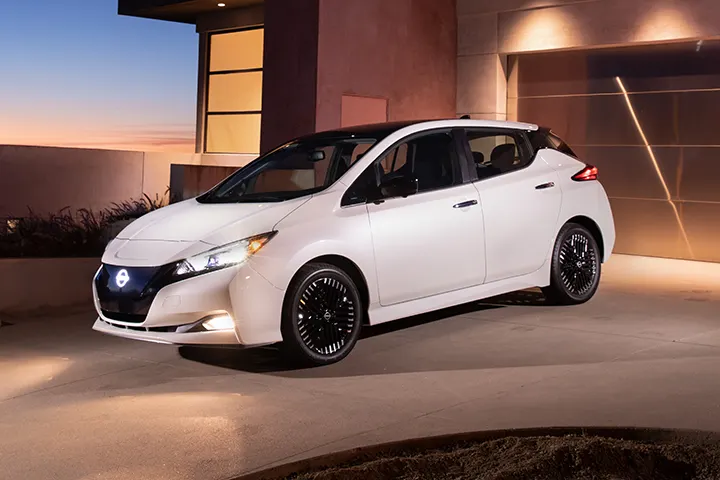
Second Generation (2018 - 2024)
The second-generation Leaf (with 40 kWh and 62 kWh batteries) improved in many areas but retained the core architectural weakness of passive battery cooling.
Continued Battery Degradation (Still No Active Cooling)
While the newer battery chemistries are more robust, the lack of active thermal management means that degradation remains a primary concern, especially in hot regions or for drivers who rely on rapid charging. Though less severe than in Gen 1, high-mileage cars will still show range loss.
"Rapidgate" (40 kWh Models)
A specific issue affecting the 40 kWh battery version is a phenomenon dubbed "Rapidgate." After one or two DC rapid charges in quick succession, the battery temperature becomes too high, and the car's software drastically reduces subsequent rapid-charging speeds (often to less than 20-30 kW) to protect the battery. This severely limits the car's usefulness for long-distance travel or road trips.
12V Auxiliary Battery Issues
Like many EVs, the Leaf uses a standard 12V battery for accessories and to boot up the main system. This battery is prone to premature failure (often every 3-5 years) due to the car not keeping it adequately charged or due to minor parasitic drains. A dead 12V battery will leave the car completely immobilized.
Suspension and Mechanical Wear
Common to many high-mileage Nissans, the Leaf can develop squeaks, rattles, and clunking sounds from the front and rear suspension (worn bushings, drop links) and issues with the axle/CV joints that can cause a clicking noise on acceleration. These are typical wear-and-tear issues but are frequently reported.
Conclusion
The Nissan Leaf remains an extremely reliable car from a drivetrain perspective (motor/inverter), with most major failures linked to the design compromises of the battery and supporting systems. A pre-purchase inspection must include checking the Battery State of Health (SoH), preferably using the LeafSpy app, and verifying the functionality of the heating system. The most significant risk lies with First-Generation models (2011 - 2017) and any model subjected to frequent rapid charging in a hot climate.
* Disclaimer: The information presented here is compiled from owner discussions in online communities, forums, and various open public sources. The accuracy, completeness, and reliability of this data cannot be guaranteed, and it should be used for informational purposes only.