EVspecsHub.com EVspecsHub

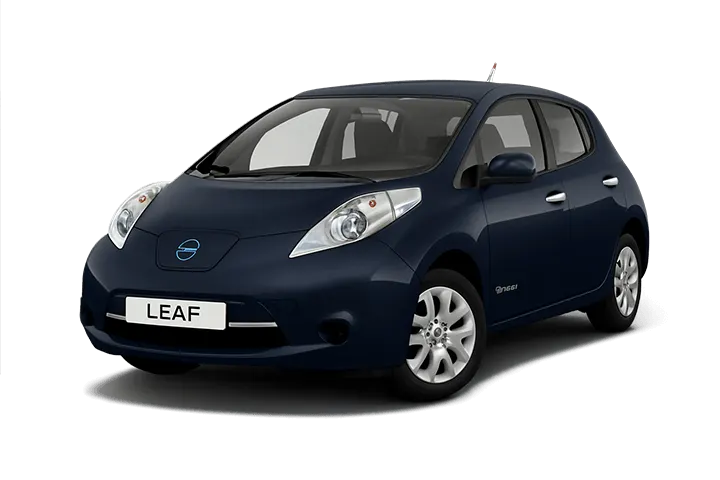
2016 Nissan Leaf 30 kWh 30 kWh 109 hp Battery, Horsepower, Range

The updated Nissan Leaf Gen 1 (ZE0) (2016 – 2017 Model Year) delivered extended electric performance thanks to an improved 30 kWh (28 kWh usable) battery pack, achieving an EPA-rated range of 172 km (107 mi). All specifications verified against official Nissan data and technical documentation.

Used Volkswagen e-Golf Problems and Fixes (2013 – 2020).

Used Volkswagen e-Golf Problems and Fixes (2013 – 2020).

TESLA FORD HONDA CHEVROLET RIVIAN HYUNDAI KIA LUCID VOLKSWAGEN SKODA AUDI BMW MERCEDES RENAULT VOLVO PEUGEOT BYD XIAOMI TOYOTA NISSAN…

Volkswagen ID.7 Pro S — 794 km on one charge with max Battery

Volkswagen ID.7 Pro S — 794 km on one charge…

Volkswagen ID.7 Pro S — 794 km on one charge TESLA FORD HONDA CHEVROLET RIVIAN HYUNDAI KIA LUCID VOLKSWAGEN SKODA…

Volkswagen ID.4: American vs. European Versions, Key Differences

Volkswagen ID.4: American vs. European Versions, Key Differences

The Volkswagen ID.4 has become a significant player in the electric SUV market, but it’s important to understand that the…

POPULAR cars…

Side profile of Volvo EX30 electric SUV, showing 2,650 mm wheelbase, coupe-like roofline, and clean body lines
EX30 (2023-pr.)
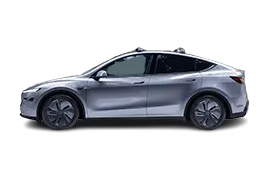
2025 Tesla Model Y Performance with dual motors, 0–100 km/h in 3.5 seconds, and long‑range battery
Model Y (2025-pr.)
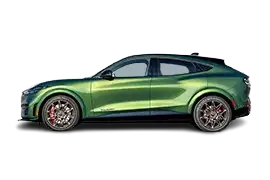
Side profile of the Ford Mustang Mach-E, showing its aerodynamic body, coupe-like roofline, and EV styling cues
Mustang Mach-E (2020-pr.)
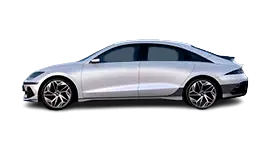
Side profile of the Hyundai Ioniq 6 illustrating its unique curved, streamliner silhouette and long 2950mm wheelbase on the E-GMP platform.
IONIQ 6 (2023-pr.)
Side profile of the Nissan Ariya electric crossover, emphasizing its sleek, coupe-like silhouette, sloped roofline, and prominent wheel arches, optimized for efficiency and performance.
Ariya (2024-pr.)
Volkswagen ID.7 Tourer side profile with 2,971 mm wheelbase, 86 kWh battery, and 200 kW fast charging.
ID.7 Tourer (2024-pr.)
Tesla Model 3 side profile showing sleek body lines and alloy wheels
Model 3 (2023-pr.)
Kia EV3 side view compact electric SUV dimensions and profile
EX30 (2023-pr.)

Nissan Leaf

30 kWh |  2016–2017

2010 Nissan Leaf electric hatchback with 24 kWh battery and 175 km NEDC range
Nissan Leaf 2010
battery capacity
Capacity
range –
Range
power output
Power
acceleration
Acceleration
30 kWh
172 km

80 kW

10.9 s

Technical Data & Performance

Model Years2016–2017
Trim (Variant)Leaf - 30 kWh
Power (Horsepower)80 kW (109 hp)
Top Speed145 km/h (90 mph)
Torque254 Nm (187 lb-ft)
Acceleration10.9 sec (0–100 km/h)
10.9 sec (0–62 mph)
DriveFWD Front-wheel drive
Motor detailsSingle Permanent Magnet Synchronous Motor

Battery & Charging

Battery Capacity & Size28 kWh usable,
30 kWh gross
Max Range172 km (107 mi) / EPA
250 km (155 mi) / NEDC
Consumption15.2 kWh/100 km
Battery TypeLithium-ion
Cell Format / SupplierLithium-ion Manganese Oxide (LMO) Nissan/AESC
Battery Voltage400 V
V2L SupportedYes / 1 kW
Heat pumpYes (2013 – 2017 : AZEO only)
AC Home ChargingType1 / 1-phase - 6.6 kW (Max Power)
Type1 / 3-phase - 6.6 kW (Max Power)
DC Fast ChargingCHAdeMO, 50 kW (Max Power)
30 min. (10–80%)

Dimensions & Body

Type5 door, Hatchback
Seating capacity5
Length4445 mm (175.0 in)
Width1770 mm (69.7 in)
Height1550 mm (61.0 in)
Wheelbase2700 mm (106.3 in)
Ground Clearance160 mm (6.3 in)
Curb weight1495 kg (3294 lb)
Gross weight2010 kg (4431 lb)
Trunk Volume330 L (11.7 ft³)
680 L (24.0 ft³) max
TowingNot Supported
Drag Coefficient0.31
PlatformNissan EV Platform
Estimated Market Price
* for reference only
EUR 30,000 / USD 31,900

⚠️ Please note: actual vehicle specifications may vary depending on market, trim level, or available regional packages.

Side profile of the Nissan Ariya electric crossover, emphasizing its sleek, coupe-like silhouette, sloped roofline, and prominent wheel arches, optimized for efficiency and performance.
Ariya (2022-pr.)
Nissan E Nv200 Evalia (2014–2017) 180
e-NV200 Evalia (2014-2023)
2010 Nissan Leaf electric hatchback with 24 kWh battery and 175 km NEDC range
Leaf (2018-2024)
2025 Nissan Leaf (Gen 3 forecast) with 52 kWh next generation battery
Leaf (2025-pr.)
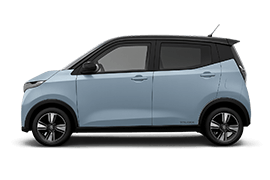
Nissan Sakura (2022–) 180
Sakura (2022-pr.)
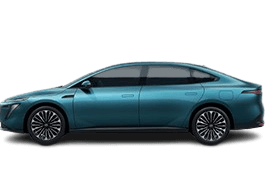
Nissan N 7 510 Air (2023–) 180
N-7 (2024-pr.)
Nissan Townstar 2022. 180
Townstar EV (2022-pr.)
Nissan Interstar E 2024 180
Interstar-e (2024-pr.)

The Evolution of the Nissan Leaf: Key Changes and Specifications


Generation I (ZE0: 2010 – 2017)

  • Production Start: 2010
  • Motor: 80 kW (107 hp) / 280 Nm AC synchronous electric motor (Front-Wheel Drive).
  • Initial Battery (2010 – 2015): 24 kWh lithium-ion battery pack (approx. 22 kWh usable).
    • Range (EPA Est.): Approx. 117 km (73 miles).
    • Onboard AC Charger: Standard 3.6 kW (optional 6.6 kW).
  • Mid-Cycle Upgrade (2013 Refresh):
    • Mechanical: Motor, inverter, and charger unit relocated from the rear cargo area to the front (under the hood), increasing cargo volume by approximately 40 liters.
    • Charging: Optional 6.6 kW onboard AC charger was made more widely available/standard on higher trims (reducing Level 2 charging time). DC Quick Charging (CHAdeMO) became optional on the base model (S) and standard on others.
    • Efficiency: Aerodynamic, energy management, and regenerative braking improvements to increase range.
    • Driving Mode: Introduction of the ‘B-Mode’ for more aggressive regenerative braking.
  • Battery Upgrade (2016): A 30 kWh lithium-ion battery pack (approx. 28 kWh usable) was introduced, initially for SV and SL trims (later standard on all 2017 models).
    • Range (EPA Est.): Increased to 172 km (107 miles) with the 30 kWh battery.

Generation II (ZE1: 2018 – 2024)

  • Production Start: 2017 (for 2018 model year)
  • Motor & Power: New e-powertrain provides 110 kW (147 hp) and 320 Nm of torque (a 37% increase in power).
  • Standard Battery: 40 kWh lithium-ion battery pack.
    • Range (EPA Est.): Approx. 243 km (151 miles).
    • Energy Density: New battery cell structure provided a 67% increase in energy density compared to the original 2010 model while maintaining the same physical pack dimensions.
  • Chassis & Driving Tech:
    • Rigidity: Torsional rigidity improved by 15%.
    • e-Pedal: Introduced as standard, enabling one-pedal driving for acceleration, deceleration, and stopping.
    • ProPILOT Assist: Available single-lane driving assistance technology.
  • “Plus” Model Introduction (2019):
    • Model Name: Leaf e+ (or Leaf Plus in North America).
    • Motor & Power: Higher output motor providing 160 kW (214 hp) and 340 Nm of torque.
    • Battery: Larger 62 kWh lithium-ion battery pack (approx. 59 kWh usable).
    • Range (EPA Est.): Up to 364 km (226 miles) for the Plus model.
    • DC Charging: Max DC fast charging speed increased to 100 kW for the 62 kWh battery.
  • Ongoing Changes (2023 Facelift):
    • Lineup: Trim levels simplified (e.g., in the US, down to S and SV Plus).
    • Styling: Minor visual refresh of the front fascia, grille, and wheels.

POPULAR cars…

2025 Tesla Model Y Performance with dual motors, 0–100 km/h in 3.5 seconds, and long‑range battery
Model Y (2025-pr.)
Side profile of the Ford Mustang Mach-E, showing its aerodynamic body, coupe-like roofline, and EV styling cues
Mustang Mach-E (2020-pr.)
Side profile of the Hyundai Ioniq 6 illustrating its unique curved, streamliner silhouette and long 2950mm wheelbase on the E-GMP platform.
IONIQ 6 (2023-pr.)
Side profile of the Nissan Ariya electric crossover, emphasizing its sleek, coupe-like silhouette, sloped roofline, and prominent wheel arches, optimized for efficiency and performance.
Ariya (2022-pr.)
Renault Scenic E-Tech profile view showcasing vehicle dimensions, wheel design, and aerodynamics.
Scenic E-Tech (2023-pr.)
Volkswagen ID.7 Tourer side profile with 2,971 mm wheelbase, 86 kWh battery, and 200 kW fast charging.
ID.7 Tourer (2024-pr.)
Tesla Model 3 side profile showing sleek body lines and alloy wheels
Model 3 (2023-pr.)
Side profile of Volvo EX30 electric SUV, showing 2,650 mm wheelbase, coupe-like roofline, and clean body lines
EX30 (2023-pr.)

Common Issues with Used Nissan Leaf

The Nissan Leaf, as one of the first mass-produced electric vehicles, offers a simple, reliable platform. However, its design, particularly in early models, led to specific issues that are critical for used buyers to check.

First Generation (2011 - 2017)

The earliest Leafs are fantastic as cheap, local commuters, but they suffer from severe limitations and weaknesses due to their pioneering design.

Severe Battery Degradation (Lack of Thermal Management)

This is the single most important and costly issue. The first-generation Leaf battery pack (24 kWh and 30 kWh) lacks active liquid cooling, relying only on passive air cooling. In warm climates and with frequent DC rapid charging (CHAdeMO), the battery degrades much faster than expected, leading to a significant loss of range and capacity bars on the dashboard gauge. This degradation renders many high-mileage or hot-climate models nearly unusable for anything but very short trips.

Heating and HVAC Failures

Early models, particularly 2013-2017, are prone to failures of the electric heater element or the heat pump system. Symptoms include a complete loss of cabin heating or cooling. This can be an expensive fix, often requiring replacement of a major component.

Brake System Actuator Failure

The regenerative braking system, which relies on an electric brake booster, has a known weak point in the actuator unit. Owners may experience brake warning lights or a loss of regenerative braking. This is a common failure that can be costly to repair.

Onboard Charger Failures

Some owners have reported failures of the onboard AC charging unit, which is essential for Level 1 and Level 2 charging. Replacing this unit can be a significant expense, especially on older, low-value cars.

Second Generation (2018 - 2024)

The second-generation Leaf (with 40 kWh and 62 kWh batteries) improved in many areas but retained the core architectural weakness of passive battery cooling.

Continued Battery Degradation (Still No Active Cooling)

While the newer battery chemistries are more robust, the lack of active thermal management means that degradation remains a primary concern, especially in hot regions or for drivers who rely on rapid charging. Though less severe than in Gen 1, high-mileage cars will still show range loss.

"Rapidgate" (40 kWh Models)

A specific issue affecting the 40 kWh battery version is a phenomenon dubbed "Rapidgate." After one or two DC rapid charges in quick succession, the battery temperature becomes too high, and the car's software drastically reduces subsequent rapid-charging speeds (often to less than 20-30 kW) to protect the battery. This severely limits the car's usefulness for long-distance travel or road trips.

12V Auxiliary Battery Issues

Like many EVs, the Leaf uses a standard 12V battery for accessories and to boot up the main system. This battery is prone to premature failure (often every 3-5 years) due to the car not keeping it adequately charged or due to minor parasitic drains. A dead 12V battery will leave the car completely immobilized.

Suspension and Mechanical Wear

Common to many high-mileage Nissans, the Leaf can develop squeaks, rattles, and clunking sounds from the front and rear suspension (worn bushings, drop links) and issues with the axle/CV joints that can cause a clicking noise on acceleration. These are typical wear-and-tear issues but are frequently reported.

Conclusion

The Nissan Leaf remains an extremely reliable car from a drivetrain perspective (motor/inverter), with most major failures linked to the design compromises of the battery and supporting systems. A pre-purchase inspection must include checking the Battery State of Health (SoH), preferably using the LeafSpy app, and verifying the functionality of the heating system. The most significant risk lies with First-Generation models (2011 - 2017) and any model subjected to frequent rapid charging in a hot climate.


* Disclaimer: The information presented here is compiled from owner discussions in online communities, forums, and various open public sources. The accuracy, completeness, and reliability of this data cannot be guaranteed, and it should be used for informational purposes only.

Frequently Asked Questions FAQ about the Nissan Leaf AZE0 30 kWh : Battery & Range Specs 2016 – 2017

About EVspecsHub

EVspecsHub is a non-profit informational platform dedicated to providing free electric vehicle specifications. Any future ads will support hosting and maintenance costs to keep our content accessible.

Scroll to Top