Used Volkswagen e-Golf Problems and Fixes (2013 – 2020).
TESLA FORD HONDA CHEVROLET RIVIAN HYUNDAI KIA LUCID VOLKSWAGEN SKODA AUDI BMW MERCEDES RENAULT VOLVO PEUGEOT BYD XIAOMI TOYOTA NISSAN…
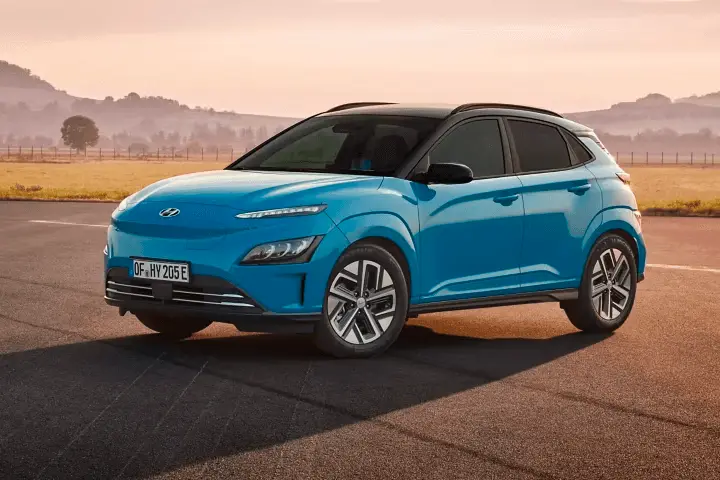
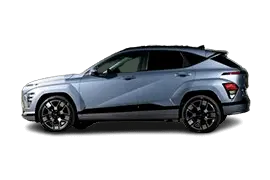
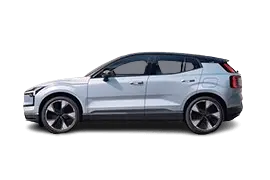
The Hyundai KONA Electric 39.2 kWh offers accessible electric performance with a 39.2 kWh usable battery size and a robust 100 kW (136 hp) motor. It provides an estimated WLTP range of 305 km (190 mi) and supports 11 kW AC charging. All specs verified with official sources.
TESLA FORD HONDA CHEVROLET RIVIAN HYUNDAI KIA LUCID VOLKSWAGEN SKODA AUDI BMW MERCEDES RENAULT VOLVO PEUGEOT BYD XIAOMI TOYOTA NISSAN…
Volkswagen ID.7 Pro S — 794 km on one charge TESLA FORD HONDA CHEVROLET RIVIAN HYUNDAI KIA LUCID VOLKSWAGEN SKODA…
The Volkswagen ID.4 has become a significant player in the electric SUV market, but it’s important to understand that the…
100 kW
TRIM (VARIANT) :
Technical Data & Performance | |
| Model Years | 2018–2023 |
| Trim (Variant) | KONA Electric - 39.2 kWh |
| Power (Horsepower) | 100 kW (136 hp) |
| Top Speed | 155 km/h (96 mph) |
| Torque | 395 Nm (291 lb-ft) |
| Acceleration | 9.9 sec (0–100 km/h) 9.9 sec (0–62 mph) |
| Drive | FWD Front-wheel drive |
| Motor details | Single Front: PMSM | Hyundai Mobis |
| Extra Info | Following the 2020/2021 facelift (in certain markets primarily EU-spec) the maximum torque was reduced from 395 Nm to 255 Nm (from 291 to 188 lb-ft). |
Battery & Charging | |
| Battery Capacity & Size | 39.2 kWh usable, 42.0 kWh gross |
| Max Range | 305 km (190 mi) / WLTP |
| Consumption | 14.3 kWh/100 km |
| Battery Type | NCM (Nickel-Cobalt-Manganese) |
| Cell Format / Supplier | Pouch Cells | LG Energy Solution (LG Chem) |
| Battery Voltage | 327 V |
| Electrical Architecture | 400 V |
| Battery Updates | Early production (pre-2020) used NCM 622 chemistry. Post-2020 (and for replacement batteries) a more stable NCM 712 or NCM 811 was often used (depending on the market) which also resulted in increased charging power. |
| V2L Supported | No |
| Heat pump | Yes |
| AC Home Charging | Type2 / 1-phase - 7.2 kW (Max Power) Type2 / 3-phase - 11 kW (Max Power) |
| DC Fast Charging | CCS2, 100 kW (Max Power) 47 min. (10–80%) |
| Charging Updates | AC: Early models: 7.2 kW (1ph). Since 2020/2021 MY: 11 kW (3ph). DC: Early models: 50-77 kW. Since 2020-2021 MY/Battery Update: peak power increased to 100 kW. |
Dimensions & Body | |
| Type | 5 door, SUV |
| Seating capacity | 5 |
| Class | B-Segment | B-SUV (Compact SUV) |
| Length | 4180 mm (164.6 in) |
| Width | 1800 mm (70.9 in) |
| Height | 1555 mm (61.2 in) |
| Wheelbase | 2600 mm (102.4 in) |
| Ground Clearance | 158 mm (6.2 in) |
| Curb weight | 1535 kg (3384 lb) |
| Gross weight | 2020 kg (4453 lb) |
| Trunk Volume | 332 L (11.7 ft³) 1114 L (39.3 ft³) max |
| Towing | Unbraked: 300 kg (661 lb), Braked: 300 kg (661 lb) |
| Drag Coefficient | 0.29 |
| Platform | Hyundai-Kia E-GMP |
|
Estimated Market Price * for reference only |
EUR 35,000 |
⚠️ Please note: actual vehicle specifications may vary depending on market, trim level, or available regional packages.
The most critical issue in early production (2018 - 2020) was defective high-voltage cells from LG Energy Solution. In rare cases this caused internal thermal events. Hyundai launched a global recall, first limiting charge to 80% via software update, then replacing entire packs for affected VINs. Owners on forums stress checking service history to confirm battery replacement. Vehicles built after mid‑2020 generally received revised packs.
Many owners report a ticking or grinding noise from the drivetrain, nicknamed the “Wheel of Fortune”. This is linked to wear or failure in the Gear Reduction Unit (GRU). In severe cases, both GRU and motor required replacement. Community advice: early gear oil changes (though not official Hyundai maintenance) help reduce metal particle buildup.
Frequent complaints involve premature failure of the 12V auxiliary battery, which can immobilize the car. Owners note the 12V is not always recharged effectively by the HV system. Common fix: replace with a higher-quality AGM battery. Many recommend carrying a jump pack.
Another recurring weakness is the charging port lock actuator. Failures cause the cable to jam or fail to lock, preventing charging. Solution: actuator replacement under warranty. Emergency release levers are located near the port or trunk.
Owners report scheduled charging glitches where charging does not start at set times. The new infotainment system occasionally freezes or lags. Hyundai addresses this with OTA updates and dealer patches. Soft reboots often help.
Drivers frequently complain about the ISLA system misreading signs and issuing intrusive warnings, sometimes slowing the car unnecessarily. The system can be disabled temporarily, but reactivates after restart. A software patch is awaited.
The Hyundai KONA Electric is praised for efficiency and range, but Gen I (2018 - 2023) had notable battery recall and GRU issues. For used models, confirming recall completion is essential. Gen II (2024-) shows improved hardware reliability, with current concerns limited to software bugs and driver-assist sensitivity. The long Hyundai warranty remains a strong advantage.
* Disclaimer: The information presented here is compiled from owner discussions in online communities, forums, and various open public sources. The accuracy, completeness, and reliability of this data cannot be guaranteed, and it should be used for informational purposes only.
The KONA Electric offers a range of up to 305 km (190 mi) / WLTP under WLTP standards, depending on driving conditions and trim.
It supports DC fast charging up to 100 kW, reaching 10–80% in about 47 minutes at compatible stations. AC charging is 11 kW from a home wallbox.
No, V2L (Vehicle-to-Load) or bidirectional charging is not supported in the standard model.
The 2018 Hyundai KONA Electric 39.2 kWh has a trunk capacity of 332 L (11.7 ft³) standard, expandable to 1114 L (39.3 ft³) with rear seats folded. Frunk availability hasn't been officially confirmed yet.
The 2018 Hyundai KONA Electric 39.2 kWh measures 4180 mm (164.6 in) in length, 1800 mm (70.9 in) in width, and 1555 mm (61.2 in) in height. The wheelbase is 2600 mm (102.4 in).
The ground clearance of the KONA Electric is 158 mm (6.2 in).
Unbraked trailer: 300 kg (661 lb). Braked trailer: 300 kg (661 lb).
The KONA Electric features a motor delivering 100 kW (136 hp) and 395 Nm (291 lb-ft) of torque.
2018 Hyundai KONA Electric 39.2 kWh common issues and main problems:
EVspecsHub is a non-profit informational platform dedicated to providing free electric vehicle specifications. Any future ads will support hosting and maintenance costs to keep our content accessible.