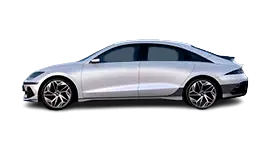
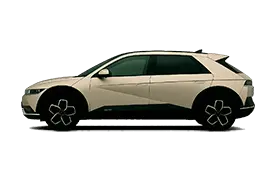
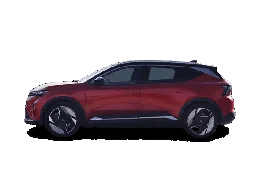
Common Issues with Used Hyundai IONIQ 5
The Hyundai IONIQ 5 has proven to be a popular and innovative EV, but like all complex vehicles, it has a few known issues that potential buyers should be aware of. These are not always major mechanical failures but rather common problems that have been widely documented by owners and in technical service bulletins.
First Generation (2022 - Present)
ICCU Failure & 12V Battery Draining Problems
The most widely reported and serious issue with the IONIQ 5 involves the Integrated Charging Control Unit (ICCU). The ICCU is responsible for managing both the main high-voltage battery charging and the charging of the 12V auxiliary battery. A fault in this unit can prevent the 12V battery from charging, leading to a sudden loss of all electrical systems and, in some cases, a complete loss of drive power while in motion. This has been the subject of several recalls and is a significant failure point.
Common Solutions: Hyundai has issued multiple software updates to address this issue. For affected vehicles, a service appointment with a dealer is required for a diagnosis. The fix typically involves a software update and, if the unit is damaged, a replacement of the ICCU and its fuse. Always check a used car's service history to ensure the latest recall updates have been applied.
Inconsistent Charging Speeds Issues
Some owners have reported inconsistent and sometimes slow charging speeds, particularly with Level 2 (AC) home chargers and public DC fast chargers. While the IONIQ 5 is known for its fast-charging capability, the car may throttle charging speeds due to various factors, including the temperature of the charging port itself. Some users have also noted problems with scheduled charging failing or the car not charging at all.
Common Solutions: Hyundai has released software updates to manage charging temperatures more effectively, which can help prevent the car from reducing charging speeds. Owners can also ensure their home chargers and charging ports are free of debris. Checking for the latest software updates at a dealership is a crucial step.
Infotainment & Software Glitches Problems
As a modern, tech-heavy vehicle, the IONIQ 5 is susceptible to software bugs. Owners have reported a variety of minor issues, including the infotainment system freezing, rebooting unexpectedly, or the Bluetooth connection dropping. While generally not a safety concern, these can be a source of frustration and are a known weakness.
Common Solutions: Most of these issues can be resolved with over-the-air (OTA) software updates. Hyundai regularly pushes fixes for these glitches. A simple soft reset of the infotainment system (holding down the power button) can also temporarily solve the problem. Ensuring the car has the latest software version is key to a smooth experience.
Suspension & Squeaking Noises Issues
A smaller but frequently mentioned issue is a creaking or squeaking noise coming from the suspension, particularly when driving over bumps. While not a safety defect, it can be a persistent and annoying sound for some owners. This is a common weakness in some vehicles.
Common Solutions: This problem often requires a dealer visit for diagnosis. The issue is usually linked to specific suspension components that may need to be lubricated or replaced under warranty. It is a known fault that Hyundai service departments are familiar with.
Conclusion
The Hyundai IONIQ 5 is a groundbreaking EV, but it is not without its flaws. The most significant concern is the potential for ICCU failure, which has been addressed by recalls. For any used IONIQ 5, the first and most important step is to verify that all recalls and service campaigns have been performed by a Hyundai dealership. While other issues like software glitches and charging inconsistencies exist, they are generally less critical and can often be resolved with software updates or minor service. The strong manufacturer support and proactive recalls demonstrate Hyundai's commitment to fixing these problems, making a used IONIQ 5 a viable option as long as a buyer is aware of these common points of concern.
* Disclaimer: The information presented here is compiled from owner discussions in online communities, forums, and various open public sources. The accuracy, completeness, and reliability of this data cannot be guaranteed, and it should be used for informational purposes only.