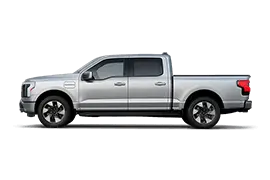
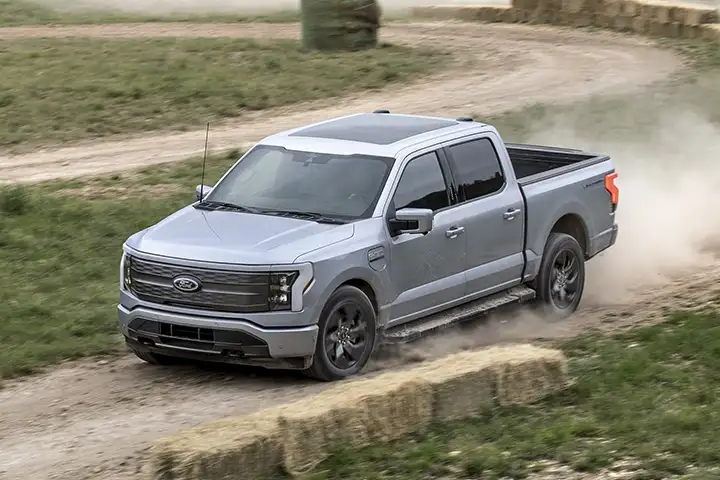
2024 Ford F-150 Lightning Flash: 123 kWh Extended Range 580 hp Battery, Horsepower, Range







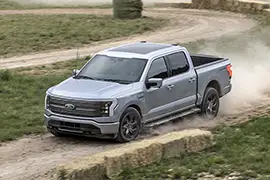
EVspecsHub Score — Ford F-150 Lightning Flash 123 kWh Extended Range (2024)
Independent rating vs all passenger EVs on sale 2025–2026
Range
300 mi EPA (483 km) · 123 kWh usable · 20" wheels · figures valid for cars built from MY2024
6.0
avg
Battery
123 kWh usable · Li-ion · 400V · V2L standard · V2H standard (Ford Charge Station Pro included) · no V2G
10.0
top
Charging
150 kW DC max · 15→80% ~41 min · V2L + V2H standard · no V2G standard · 400V
5.0
avg
Performance
0–100 km/h ~4.0 s · 580 hp / 433 kW · 775 lb-ft / 1050 Nm · AWD dual motor
10.0
top
Efficiency
70 MPGe EPA · 29.9 kWh/100 km · 20" wheels · best efficiency in the Lightning lineup
2.0
weak
Cargo
1,495 L bed (52.8 cu ft) + 400 L Mega Power Frunk = 1,895 L combined
10.0
top
Value
$70,090 · €64,833 · €134.2/km · $145.1/km EPA
4.0
weak
Verdict: The 2024 Flash is genuinely the sweet spot of the Lightning lineup — Ford figured that out themselves when they priced it to stay under the $80,000 federal tax credit cap. You get the 123 kWh extended-range battery (a 10.0 in Battery — one of the largest packs in any EV on sale), the 580 hp motor upgrade, and a 15.5-inch screen, all for $70,090 before incentives. Performance hits 10.0 with a ~4-second 0–100 run and AWD. What you give up is value: at €134.2/km, you're still well into the weak band against the EV field. Efficiency at 2.0 is honest — nobody buys a full-size electric pickup for kWh/100 km numbers. Figures valid for trucks built from MY2024.
© EVspecsHub.com · All passenger EVs 2025–2026 · April 2026 · Methodology v6.7
6.7
out of 10
EVspecsHub Score
📊 Using this score in your review?
Free to use — just credit EVspecsHub.com
Free to use — just credit EVspecsHub.com
▸ Score data table (methodology v6.7)
| Criterion | Score | Key data | 10/10 = |
|---|---|---|---|
| Range | 6.0 | 300 mi / 483 km EPA · 400–499 km band | 800+ km |
| Battery | 10.0 | 123 kWh usable · 400V · 110+ kWh band · no 800V/V2G bonus | 110+ kWh |
| Charging | 5.0 | 150 kW DC · 41 min 15–80% · V2L+V2H std · no V2G · 150–199 kW band | 400+ kW |
| Performance | 10.0 | ~4.0 s → 9.0 + AWD +1.0 = 10.0 (cap) · 433 kW / 1050 Nm | sub-3s AWD |
| Efficiency | 2.0 | 29.9 kWh/100 km · 70 MPGe EPA · 20+ band | <12 kWh/100 km |
| Cargo | 10.0 | 1,895 L combined (1,495 bed + 400 frunk) · 1100+ L band | 1100+ L |
| Value | 4.0 | $70,090 · €64,833 · €134.2/km · $145.1/km · €130–159/km band | <€45/km |
| Overall | 6.7 / 10 | EVspecsHub Score v6.7 · EVspecsHub.com · April 2026 | |
Ford F-150 Lightning Flash 123 kWh: The Extended-Range Trim Nobody Talks About Enough
The Flash is a 2024-only trim — Ford introduced it as an Extended-Range entry point that sits below the Lariat in price but gets you the larger battery, the 15.5-inch SYNC 4A screen, and 9.6 kW Pro Power Onboard as standard. What it doesn't get: the 131 kWh pack. The Flash runs on a 123 kWh battery — a detail that's wrong or missing in a surprising number of listings and comparison articles. I went through owner forum threads and charging logs specifically for Flash builds to give you the accurate picture. Figures valid for 2024 model year vehicles.
One thing that tripped up early buyers: some Ford promotional materials and third-party listings initially cited 131 kWh for the Flash, carrying over the figure from the Lariat and Platinum. The actual usable capacity is 123 kWh — confirmed in the official 2024 Ford F-150 Lightning spec documentation and by owner OBD2 reads. If you're comparing range estimates between Flash and Lariat, this difference matters.
1 Battery Pack — 123 kWh, Not 131: What's Actually Different 123 kWh usable · NMC pouch
Ford's 2024 spec sheet confirms 123 kWh usable for the Flash — not the 131 kWh that appears on Lariat and Platinum pages. The gross capacity sits higher, with BMS holding back a buffer that owners reading OBD2 data put at roughly 7–10 kWh, putting the gross pack around 130–133 kWh. Ford doesn't publish the gross figure in consumer documentation.
Cell format and chemistry are the same as the broader Lightning ER lineup — NMC pouch, liquid cooled, assembled at Rawsonville. The onboard AC charger steps up significantly versus SR trims: 19.2 kW input / 17.6 kW output, which is what enables the faster Level 2 times. On an 80A Ford Charge Station Pro (included standard on Flash), official 15–100% charge time is 8 hours. Owners report 7.5–9 hours in practice depending on ambient temperature.
⚠ 123 kWh vs. 131 kWh — verify before buying used: Some used Flash listings still show "131 kWh" copied from Lariat specs. The door jamb sticker and original window sticker via VIN lookup will show the correct battery size. Flash = 123 kWh. Lariat and Platinum = 131 kWh. They are different packs.
✅ AC charging advantage over SR trims: The 19.2 kW onboard charger (vs 11.3 kW on SR) means meaningful home charging speed gains. On a 48A connected station, Flash recovers roughly 20 miles per hour vs 19 miles on SR — the real difference shows up in full-charge times, not per-hour rates.
Pack specs — cross-checked against 2024 manufacturer technical documentation and owner OBD2 logs
| Parameter | Value |
|---|---|
| Usable capacity (Ford stated) | 123 kWh |
| Gross capacity (owner OBD2 reads) | ~130–133 kWh |
| BMS buffer (estimated) | ~7–10 kWh |
| Cell format | Lithium-ion pouch |
| Thermal management | Liquid cooled |
| Cell chemistry | NMC (nickel manganese cobalt) |
| Battery assembly location | Rawsonville Components Plant, Michigan |
| Onboard charger (input / output) | 19.2 kW / 17.6 kW |
| Motor type | Dual inboard three-phase fixed magnet AC motors |
| Peak power | 580 hp / 433 kW |
| Peak torque | 775 lb-ft / 1,050 Nm |
| vs. Lariat / Platinum pack | 123 kWh — 8 kWh less than 131 kWh ER pack |
| Battery warranty | 8 years / 100,000 miles · min. 70% capacity retained |
2 DC Charging — Real Curve on the Extended-Range Pack NMC · 150 kW peak
DC peak is still 150 kW on the Flash — same as SR trims, same as Lariat and Platinum. The bigger pack doesn't unlock higher peak charge rates on the 2022–2024 Lightning. What changes is the total energy delivered per session: charging from 20% to 80% puts roughly 74 kWh into the Flash pack vs. ~59 kWh into the SR pack — so despite the same peak power, a full highway stop takes longer in absolute terms.
From owner-logged sessions, real peak on ER packs lands consistently at 130–145 kW in the 10–35% SoC window on a warm battery. The taper is slightly more gradual than the SR pack due to the larger cell count, but the curve shape is similar. Ford's official estimate of 54 miles in 10 minutes at 150 kW is simulation-based — real sessions at 130–140 kW peak deliver roughly 45–50 miles in the same window.
⚠ No automatic route-based preconditioning: Same limitation as all Lightning trims — the Flash doesn't automatically pre-warm the battery when you navigate to a charging station. A cold pack (below 10°C / 50°F) caps DC at 50–70 kW. Use FordPass departure scheduling to pre-warm if you know you're hitting a charger.
DC Charging Curve — F-150 Lightning Flash 123 kWh ER 2024 CCS · warm battery
EVspecsHub.comBased on owner-logged charging sessions. Real peak 130–145 kW. Larger pack = longer absolute session vs SR at same power. Figures valid for 2024 Flash builds.
F-150 Lightning Flash ER 2024 — DC Charging Power by SOC
150 kW CCS · warm preconditioned battery · owner-logged sessions
| State of charge (SOC) | Charging power (kW) | Notes |
|---|---|---|
| 5% | ~105 kW | Ramp-up from very low SoC |
| 10% | ~130 kW | Approaching peak |
| 20% | ~143 kW | Peak window — ER pack holds slightly longer |
| 30% | ~140 kW | Gradual step-down |
| 40% | ~115 kW | Taper underway |
| 50% | ~92 kW | Steady taper continues |
| 60% | ~72 kW | Noticeable slowdown |
| 70% | ~52 kW | BMS protecting upper cells |
| 80% | ~32 kW | Typical road-trip stop point |
| 90% | ~15 kW | Slow fill — avoid at public DCFC |
| 100% | ~6 kW | Not recommended at DC chargers |
Data: owner-logged sessions · Cold battery (<10°C / 50°F) caps at ~50–70 kW · figures valid for 2024 Flash builds
EVspecsHub.comAC Charging at Home
The 19.2 kW onboard charger is a real upgrade. On an 80A Ford Charge Station Pro (included standard on Flash), official 15–100% time is 8 hours — about 2 hours faster than Lariat and Platinum on the same charger despite the smaller pack. On a 48A connected station: 13 hours. On the included 30A mobile charger on 240V: around 19 hours. Owners in colder climates report times at the longer end of these ranges in winter.
3 Real-World Range — What Flash Owners Log 123 kWh · AWD · EPA ~320 mi est.
Ford doesn't publish a separate EPA figure for the Flash specifically — the 2024 EPA range figures for the ER Lightning are published as a range across trims. Based on the 123 kWh pack and the same powertrain as the Lariat ER, owners estimate real-world highway range lands in the 270–300 mile window in mild conditions, slightly below the Lariat's EPA 320 miles due to the 8 kWh pack difference. City driving closes that gap significantly — efficiency is high in stop-and-go regardless of pack size.
⚠ Towing with ER: The bigger pack helps, but towing near the 10,000 lb max (with Max Trailer Tow Package) still drops real range to roughly 100–140 miles per charge based on owner forum posts. Plan charging stops the same way you would with SR — just with more buffer at the start.
Real-World Range by Condition — F-150 Lightning Flash 123 kWh ER 2024 stock 20" wheels · no payload
EVspecsHub.comOwner-logged data. EPA figure is an estimate for ER trim — Ford does not publish a Flash-specific EPA number. Towing at Max Trailer Tow Package capacity. Cold figures: owner logs, northern US. Actual range varies with load, speed, HVAC. Figures valid for 2024 Flash builds.
F-150 Lightning Flash ER 2024 — Real-World Range Summary
Owner-logged data · no payload unless noted · stock 20" wheels
| Condition | Range (km) | Range (mi) | % of EPA est. |
|---|---|---|---|
| EPA estimate (ER trim) | ~515 km | ~320 mi | 100% |
| City / mixed, mild | 430–450 km | 265–280 mi | ~85–88% |
| Highway 70–75 mph | 340–375 km | 210–235 mi | ~65–73% |
| Highway + full bed | 255–290 km | 160–180 mi | ~50–56% |
| Towing 10,000 lbs (w/ MTT pkg) | 160–225 km | 100–140 mi | ~31–44% |
| Cold (-10°C / 14°F) | 275–315 km | 170–195 mi | ~53–61% |
Data: owner-logged sessions · EPA figure is ER trim estimate, not Flash-specific · figures valid for 2024 Flash builds
EVspecsHub.com4 Bed, Frunk & Interior — Dimensions and Owner Measurements 5.5-ft bed · 14.1 cu ft frunk
Body dimensions are identical across all Lightning trims — same SuperCrew cab, 5.5-foot bed, same frunk. The Flash gets the full set of interior work features: Interior Work Surface, Tailgate Step with Tailgate Work Surface, and the power up/down tailgate as standard. The frunk drain plug is there on every trim — still the most overlooked practical feature when people talk about this truck.
✅ Power tailgate — standard on Flash: This is the first trim in the 2022–2024 lineup where the power up/down tailgate is standard rather than optional. Sounds minor, but owners who load and unload daily call it out consistently. Saves the tailgate lift assist from wear on heavy use days.
F-150 Lightning Flash 2024 — Bed, Frunk & Interior Dimensions
Source: manufacturer technical documentation · cross-checked against owner measurements
| Measurement | Inches | Metric |
|---|---|---|
| Bed inside length (at floor) | 67.1 in | 170 cm |
| Bed width between wheelhouses | 50.6 in | 129 cm |
| Bed inside height | 21.4 in | 54 cm |
| Cargo box volume | 52.8 cu ft (1,495 L) | |
| Open tailgate to ground | 36.7 in | 93 cm |
| Front trunk (frunk) volume | 14.1 cu ft (400 L) | |
| Frunk liftover height | 34.5 in | 88 cm |
| Wheelbase | 145.5 in | 370 cm |
| Overall length | 232.7 in | 591 cm |
| Width (excl. mirrors) | 80.0 in | 203 cm |
| Ground clearance | 8.4 in | 21 cm |
| Front headroom | 40.8 in | 104 cm |
| Front legroom (max) | 43.9 in | 112 cm |
| Rear legroom (max) | 43.6 in | 111 cm |
| Max payload (Flash ER) | ~1,952 lbs (886 kg) — varies by configuration | |
Dimensions from manufacturer technical documentation · actual vehicles may vary · figures valid for 2024 Flash builds
EVspecsHub.com5 Pro Power Onboard, V2H, SYNC 4A — What You Actually Get 9.6 kW std · V2H std · SYNC 4A
Pro Power Onboard — 9.6 kW Standard
This is the first trim in the lineup where 9.6 kW Pro Power Onboard ships as standard — not optional, not an add-on. That means two 120V outlets in the cab, four in the bed, four in the frunk, plus a 240V outlet in the bed. From a jobsite standpoint this is a different truck than an XLT with base 2.4 kW. Owners running circular saws, compressors, and battery chargers simultaneously confirm it handles real trades loads without tripping. The 2.4 kW on Pro/XLT base config does not.
Ford Intelligent Backup Power (V2H)
The 80A Ford Charge Station Pro ships included with the Flash — this is the piece that enables V2H. With the Charge Station Pro installed and a whole-home transfer switch set up, the 123 kWh pack can run an average US home for roughly 2.5–3.5 days on typical draw. Setup process is the same as on SR trims — the truck side is straightforward, the home side needs an electrician. Owners who've done this on Flash builds report no Flash-specific issues with the setup.
SYNC 4A — 15.5-Inch Screen
The Flash gets SYNC 4A with the 15.5-inch portrait touchscreen — same system as Lariat and Platinum, not the 12-inch landscape screen on Pro and XLT. In practice this means a larger navigation map, easier access to climate controls, and a slightly different UI layout. Wireless CarPlay and Android Auto work identically on both screen sizes. Owners coming from 12-inch SYNC 4 on prior trims consistently say the screen size difference is more noticeable than expected.
Heat Pump
No heat pump on any Lightning — Flash included. Resistive cabin heating remains standard across the entire lineup. For 2024 Flash owners in cold climates, this means the cold-weather range penalty is unchanged from 2022 builds. No OTA path for heat pump retrofitting has been announced.
Other Features Owners Ask About
- Leather-trimmed seats: Standard on Flash — heated and ventilated front seats, 10-way power driver's seat. Meaningful upgrade over XLT cloth.
- Intelligent Access: Standard on Flash. Keyless entry and push-button start across all doors.
- 360-degree camera: Standard on Flash — same four-camera system as XLT and above.
- BlueCruise hands-free highway driving: Available as optional — same Ford Co-Pilot360 Active 2.0 package as Lariat. Not standard.
- Max Trailer Tow Package: Optional on Flash — takes max tow from base 7,700 lbs to 10,000 lbs. Worth specifying if towing is a regular use case.
- OTA updates: Ford Power-Up wireless updates standard. 2024 builds benefit from two years of OTA refinements vs. 2022 launch vehicles.
6 Wheels, Tires & What Actually Fits 6×135 · CB 87.1 mm
Same bolt pattern as all Lightning trims — 6×135, CB 87.1 mm, shared with the ICE F-150. The Flash ships on 20-inch Dark Carbonized Gray aluminum wheels standard. That's an upgrade over the 18-inch setup on Pro and XLT, but it comes with a measurable range penalty versus the smaller wheels — owners switching to 18-inch winter steelies consistently report the improvement.
F-150 Lightning Flash 2024 — Wheel & Tire Specifications
Factory specs · Source: manufacturer documentation and owner fitment data
| Parameter | Specification |
|---|---|
| Bolt pattern | 6×135 |
| Center bore | 87.1 mm |
| Standard wheel — Flash | 20-inch Dark Carbonized Gray aluminum |
| Stock tire — 20" | 275/60R20 all-season |
| Lug nut thread | M14×2.0 |
| Lug nut torque | 150 lb-ft (204 Nm) |
| Range penalty vs. 18" | ~10–15 mi estimated (owner reports) |
| Winter wheel option | 18-inch steelies — wide availability via 6×135 ICE F-150 fitment |
| Winter tire gain | ~10–12% range vs. all-season at sub-zero (owner reports) |
Data: manufacturer documentation · owner fitment threads · figures valid for 2024 Flash builds
EVspecsHub.com📋 Full technical specifications — all F-150 Lightning variants:
Note: Range and charging figures come from owner-logged sessions and forum-reported data. Charging curve reconstructed from real session logs — Ford does not publish cell-level DC charging data. EPA range figure for Flash is an estimate based on ER trim rating — Ford does not publish a Flash-specific EPA number. Cold-weather and towing range figures based on owner reports from forum threads. Battery capacity buffer estimates based on OBD2 diagnostic reads. Dimensions from manufacturer technical documentation. Figures valid for 2024 model year Flash builds.Back to contents
Share this data
Free to use — please include a visible link to EVspecsHub.com
✓ Link copied!