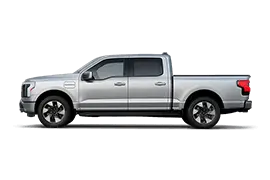
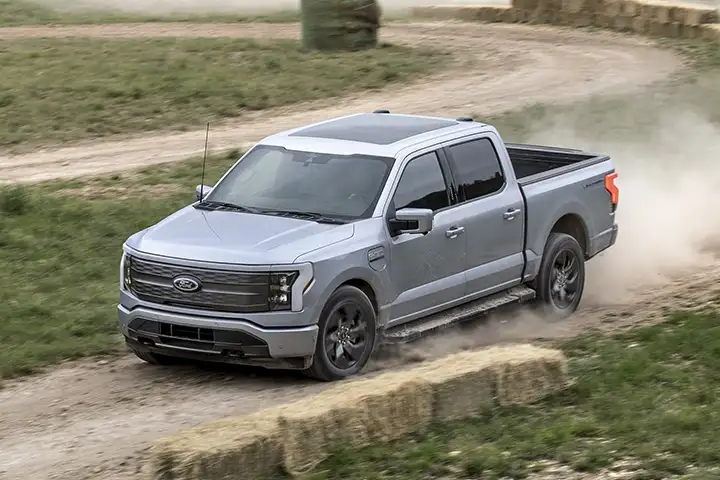
2022 Ford F-150 Lightning Pro: 98 kWh Standard Range 452 hp Battery, Horsepower, Range




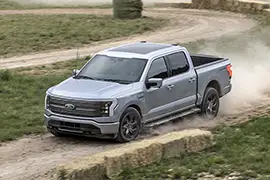
EVspecsHub Score — Ford F-150 Lightning Pro 98 kWh Standard Range (2022)
Independent rating vs all passenger EVs on sale 2025–2026
Range
230 mi EPA (370 km) · 98 kWh usable · 18" wheels · figures valid for cars built through MY2022
5.0
avg
Battery
98 kWh usable · Li-ion pouch · 400V · V2H standard (Ford Charge Station Pro optional) · no V2G
9.0
top
Charging
150 kW DC max · 15→80% ~44 min · V2L + V2H · no V2G standard · 400V
5.0
avg
Performance
0–100 km/h ~5.0 s · 452 hp / 337 kW · 775 lb-ft / 1050 Nm · AWD dual motor
9.0
top
Efficiency
68 MPGe EPA · 30.8 kWh/100 km · expected for 3-tonne pickup · 18" wheels
2.0
weak
Cargo
1,495 L bed (52.8 cu ft) + 400 L Mega Power Frunk = 1,895 L combined
10.0
top
Value
$39,974 · €36,975 · €99.9/km · $108.0/km EPA
6.0
avg
Verdict: The Pro SR is the entry point to Lightning ownership — and honestly, for a work truck, the value case is solid. At $39,974 it scores a respectable 6.0 for Value, and that 98 kWh battery lands a 9.0 in the Battery category — one of the largest packs in any EV at launch. AWD dual-motor pushes Performance to 9.0. What drags the overall number down is efficiency: at 30.8 kWh/100 km, the physics of a 3-tonne pickup truck simply can't compete with a sedan on an absolute scale. The 370 km EPA range (5.0) also means you're planning around the charger more than most EV drivers. For a commercial buyer who charges at the depot nightly, those are manageable trade-offs. Figures valid for trucks built through MY2022.
© EVspecsHub.com · All passenger EVs 2025–2026 · April 2026 · Methodology v6.7
6.6
out of 10
EVspecsHub Score
📊 Using this score in your review?
Free to use — just credit EVspecsHub.com
Free to use — just credit EVspecsHub.com
▸ Score data table (methodology v6.7)
| Criterion | Score | Key data | 10/10 = |
|---|---|---|---|
| Range | 5.0 | 230 mi / 370 km EPA · 300–399 km band | 800+ km |
| Battery | 9.0 | 98 kWh usable · 400V · 95–109 kWh band · no 800V/V2G bonus | 110+ kWh |
| Charging | 5.0 | 150 kW DC · 44 min 15–80% · V2L+V2H · no V2G · 150–199 kW band | 400+ kW |
| Performance | 9.0 | ~5.0 s → 8.0 + AWD +1.0 = 9.0 · 337 kW / 1050 Nm | sub-3s AWD |
| Efficiency | 2.0 | 30.8 kWh/100 km · 68 MPGe EPA · 20+ band | <12 kWh/100 km |
| Cargo | 10.0 | 1,895 L combined (1,495 bed + 400 frunk) · 1100+ L band | 1100+ L |
| Value | 6.0 | $39,974 · €36,975 · €99.9/km · $108.0/km · €90–109/km band | <€45/km |
| Overall | 6.6 / 10 | EVspecsHub Score v6.7 · EVspecsHub.com · April 2026 | |
Ford F-150 Lightning Pro 98 kWh: What the Work Truck Spec Sheet Leaves Out
98 kWh usable. 230 miles EPA. 150 kW DC. Those are the numbers Ford puts on the sticker — and none of them answer the questions that come up once you actually own a Pro SR. I went through owner forum threads, FordPass charging logs, and OBD2 session data to fill in what the press kit leaves blank. Everything here is specific to the Pro trim with the Standard-Range battery. Figures valid for vehicles built from late 2021 through model year 2022.
Quick context: the Pro SR is the entry-level Lightning — lowest price, highest payload (2,235 lbs), but also the smallest battery, the weakest onboard generator (2.4 kW), and the most stripped feature set. That combination makes it a great work truck and a mediocre road-trip truck. Both things are true at the same time.
1 Battery Pack — Real Capacity, Cells, and the Buffer Ford Doesn't Publish 98 kWh usable · NMC pouch
Ford publishes 98 kWh "usable" — that's the number on every spec sheet. What's not on the spec sheet is the gross capacity. Based on FordPass diagnostic data and OBD2 reads shared by owners, the actual gross pack sits around 105–108 kWh. That means BMS is protecting roughly 7–10 kWh of buffer you never touch. Ford doesn't acknowledge this figure anywhere in consumer documentation.
The battery type — lithium-ion pouch with liquid cooling — is stated in the official tech spec. What's not stated: cell supplier. According to owner teardown reports and disassembly posts from early 2022 production vehicles, Samsung SDI supplied cells for the first production batches assembled at the Rawsonville Components Plant in Michigan. Later builds may reflect supply chain changes — Ford hasn't disclosed this officially.
✅ How to check your pack health: Connect an OBD2 adapter with a Ford-compatible app. Look for "HV Battery State of Health" parameter — it reads out as a percentage of original capacity. Useful when buying used. Ford doesn't surface this number in FordPass for standard users.
⚠ Spec discrepancy: Ford's consumer page and configurator state "98 kWh of usable energy." Gross capacity (~105–108 kWh) and BMS buffer (~7–10 kWh) are not disclosed anywhere in public documentation.
Pack specs — cross-checked against manufacturer technical documentation and owner OBD2 logs
| Parameter | Value |
|---|---|
| Usable capacity (Ford stated) | 98 kWh |
| Gross capacity (owner OBD2 reads) | ~105–108 kWh |
| BMS buffer (estimated) | ~7–10 kWh |
| Cell format | Lithium-ion pouch |
| Thermal management | Liquid cooled |
| Cell chemistry | NMC (nickel manganese cobalt) |
| Cell supplier — early 2022 builds | Samsung SDI (owner teardown reports) |
| Battery assembly location | Rawsonville Components Plant, Michigan |
| Onboard charger (input / output) | 11.3 kW / 10.5 kW |
| Motor type | Dual inboard three-phase fixed magnet AC motors |
| Peak power | 452 hp / 337 kW |
| Peak torque | 775 lb-ft / 1,050 Nm |
| Battery warranty | 8 years / 100,000 miles · min. 70% capacity retained |
The 11.3 kW input vs. 10.5 kW output gap on the AC charger — about 0.8 kW of conversion loss — is listed in the official 2022 tech spec PDF but never explained on the consumer-facing pages. It means your actual charge rate at the wall outlet reads ~10.5 kW, not 11.3 kW. Small difference in practice, but it catches people out when calculating charge times.
2 DC Charging — What 150 kW Actually Delivers on the Standard-Range Pack NMC · 150 kW peak
Ford claims 150 kW DC peak for the SR battery. That's technically reachable — but only in a narrow SoC window on a warm, preconditioned pack. Based on owner-logged sessions, real peak lands between 130–145 kW, and that window closes fast. From around 40% SoC the taper is already significant. The official "41 miles in 10 minutes" figure is based on manufacturer simulations, not logged sessions, and assumes ideal conditions.
⚠ Cold weather charging: Owners consistently report cold battery caps DC charging at 50–70 kW regardless of SoC — roughly half the rated peak. Unlike some competitors, the SR Lightning has no dedicated battery preconditioning routed via navigation. Pre-warming is available via FordPass departure scheduling but not automatic on charge station arrival.
DC Charging Curve — F-150 Lightning Pro 98 kWh SR 2022 CCS · warm battery
EVspecsHub.comBased on owner-logged charging sessions. Real peak 130–145 kW, not 150 kW. Figures valid for 2022 Standard-Range builds.
F-150 Lightning Pro SR 2022 — DC Charging Power by SOC
150 kW CCS · warm preconditioned battery · owner-logged sessions
| State of charge (SOC) | Charging power (kW) | Notes |
|---|---|---|
| 5% | ~100 kW | Ramp-up from very low SoC |
| 10% | ~130 kW | Approaching peak |
| 20% | ~140 kW | Near-peak window |
| 30% | ~135 kW | Slight step-down begins |
| 40% | ~110 kW | Taper underway |
| 50% | ~90 kW | Steady taper continues |
| 60% | ~70 kW | Noticeable slowdown |
| 70% | ~50 kW | BMS protecting upper cells |
| 80% | ~30 kW | Typical road-trip stop point |
| 90% | ~14 kW | Slow fill — avoid at public DCFC |
| 100% | ~6 kW | Not recommended at DC chargers |
Data: owner-logged sessions · Cold battery (<10°C / 50°F) caps at ~50–70 kW regardless of SOC · figures valid for 2022 Standard-Range builds
EVspecsHub.comAC Charging at Home
The Pro SR comes standard with the 30A Ford Mobile Charger — that gets you about 13 miles of range per hour on 240V. The 80A Ford Charge Station Pro (the one with Intelligent Backup Power capability for V2H) is available as an option, but requires a separate electrician install. On a standard 80A Ford Charge Station Pro, official estimated time to charge 15–100% is 10 hours. Owners report real-world times of 9–11 hours depending on ambient temperature and charge start SoC.
3 Real-World Range — EPA 230 Miles vs. What Owners Log 98 kWh · AWD · EPA 230 mi
230 miles EPA is the official figure for the Pro SR. From what I tracked across owner forum threads, that number holds reasonably well in mixed city driving with no payload. Put it on the highway at 70–75 mph, add a full truck bed, and owners are seeing 140–170 miles. Towing anything substantial cuts that to 80–120 miles — which is why the SR trim is genuinely better suited for daily local use than road trips.
⚠ Towing reality check: Ford's official max tow for Pro SR (without Max Trailer Tow Package) is 5,000 lbs. Owners who've towed near that rating consistently report real range of 80–110 miles per charge — roughly 35–40% of EPA. Worth planning stops aggressively if you're towing.
Real-World Range by Condition — F-150 Lightning Pro 98 kWh SR 2022 stock 18" wheels · no payload
EVspecsHub.comOwner-logged data. Towing figures: forum-reported sessions at rated capacity. Cold figures: owner logs from northern US states. Actual range varies with driving style, HVAC use, and load. Figures valid for 2022 Standard-Range builds.
F-150 Lightning Pro SR 2022 — Real-World Range Summary
Owner-logged data · no payload unless noted · stock 18" wheels
| Condition | Range (km) | Range (mi) | % of EPA |
|---|---|---|---|
| EPA official | 370 km | 230 mi | 100% |
| City / mixed, mild | 290–330 km | 180–205 mi | ~85–90% |
| Highway 70–75 mph | 225–275 km | 140–170 mi | ~60–70% |
| Highway + full bed | 175–210 km | 110–130 mi | ~50–55% |
| Towing 5,000 lbs | 130–175 km | 80–110 mi | ~35–45% |
| Cold (-10°C / 14°F) | 185–215 km | 115–135 mi | ~50–60% |
Data: owner-logged sessions · figures valid for 2022 Standard-Range Pro builds · results vary with load, speed, and temperature
EVspecsHub.com4 Bed, Frunk & Interior Dimensions — Measured and Cross-Checked 5.5-ft bed · 14.1 cu ft frunk
All Lightning variants — Pro included — come with the same SuperCrew body and 5.5-foot bed. The frunk is the real story: 14.1 cubic feet (400 liters) with a drain plug, four 120V outlets (on the Pro that's the 2.4 kW system), and a liftover height of 34.5 inches from the ground. That liftover is higher than most people expect when loading heavy gear — owners who use it for tool storage mention it regularly.
✅ Frunk drain plug: The frunk has a drain plug in the floor — owners use it to run a water hose through for a cooler/ice setup. Easy to miss if you've never looked for it. Useful for tailgate and jobsite use.
F-150 Lightning Pro 2022 — Bed, Frunk & Interior Dimensions
Source: manufacturer technical documentation · cross-checked against owner measurements
| Measurement | Inches | Metric |
|---|---|---|
| Bed inside length (at floor) | 67.1 in | 170 cm |
| Bed width between wheelhouses | 50.6 in | 129 cm |
| Bed inside height | 21.4 in | 54 cm |
| Cargo box volume | 52.8 cu ft (1,495 L) | |
| Open tailgate to ground | 36.7 in | 93 cm |
| Front trunk (frunk) volume | 14.1 cu ft (400 L) | |
| Frunk liftover height | 34.5 in | 88 cm |
| Wheelbase | 145.5 in | 370 cm |
| Overall length | 232.7 in | 591 cm |
| Width (excl. mirrors) | 80.0 in | 203 cm |
| Ground clearance | 8.4 in | 21 cm |
| Front headroom | 40.8 in | 104 cm |
| Front legroom (max) | 43.9 in | 112 cm |
| Rear legroom (max) | 43.6 in | 111 cm |
| Max payload (Pro SR) | 2,235 lbs (1,014 kg) — highest of all Lightning trims | |
Dimensions from 2022 manufacturer technical documentation · preproduction estimates · actual vehicles may vary slightly
EVspecsHub.comThe Pro's highest payload (2,235 lbs vs. 1,952 lbs on XLT High with ER) is one of the trim's genuine selling points. The lighter interior spec — vinyl seats, no heavy tech stack — directly contributes to that number. Worth knowing if you're buying this truck to actually work it.
5 Pro Power Onboard, V2H, and the Features Everyone Asks About 2.4 kW onboard · V2H optional
Pro Power Onboard — 2.4 kW
This is the single biggest practical gap between the Pro and every trim above it. The Pro SR comes standard with 2.4 kW Pro Power Onboard — two 120V outlets in the cab, two in the bed, and four in the frunk. Owners who've tried to run power tools on jobsites hit the limit fast: a standard circular saw pulls 1.4–1.8 kW at load. Add a second tool or a compressor and you're done. The 9.6 kW system (which adds a 240V outlet in the bed) is available as an option on Pro but is standard from Lariat upward. Forum threads on this topic are pretty consistent — the 2.4 kW works for phone charging and basic lighting, but falls short for serious trades work.
⚠ 9.6 kW Pro Power Onboard: Optional on Pro. If you're buying a Pro specifically for on-site power generation, confirm the 9.6 kW package is on the window sticker before purchase. It's easy to miss on used listings.
Ford Intelligent Backup Power (V2H)
Vehicle-to-home capability is available on the Pro SR — but only when paired with the 80A Ford Charge Station Pro, which is an option on Pro (included on ER trims). The Charge Station Pro needs professional installation and a whole-home transfer switch. Once set up, the truck can power a home during an outage. Based on owner forum posts, a typical US home draws 1–2 kW average — meaning the 98 kWh pack can run a house for 2–3 days before needing a recharge. Ford calls this "Ford Intelligent Backup Power." Actual V2L (plug-in outlet for arbitrary loads, not tied to home) is handled by the Pro Power Onboard system, not a dedicated V2L port.
✅ V2H setup tip: The 80A Ford Charge Station Pro is the key piece — not just the truck. Without the Charge Station Pro installed, backup power doesn't work even if you have the SR battery. Owners who bought the Pro thinking V2H was plug-and-play consistently hit this wall.
Apple CarPlay / Android Auto
Both wireless CarPlay and wireless Android Auto are standard on every Lightning trim, including the Pro. The Pro uses SYNC 4 with a 12-inch landscape touchscreen. The Lariat and Platinum step up to SYNC 4A with the 15.5-inch portrait screen — but CarPlay and Android Auto work the same way on both screen sizes.
Heat Pump
The Lightning does not use a heat pump — it uses a resistive electric heater for cabin warming. This is a notable omission versus some competitors in this segment. Owners in cold climates report meaningful range impact in winter months — resistive heating draws more from the pack than a heat pump would. Ford has not announced a heat pump retrofit or a Lightning variant with one.
⚠ No heat pump on any Lightning variant: Unlike some competitors, the Lightning relies on resistive heating. Cold-weather range impact is higher as a result. Factor this in if you're in the northern US or Canada.
Battery Preconditioning
The Lightning does not have automatic route-based battery preconditioning (the kind that warms the battery when you navigate to a charging station). Owners can schedule departure warm-up via FordPass, but the car won't pre-warm the battery automatically based on a charging destination the way some competitors do. This matters in cold weather — a cold pack caps DC charging at 50–70 kW instead of the rated 150 kW peak.
Other Features Owners Ask About
- 360-degree camera: Optional on Pro and XLT, standard from Lariat. Worth specifying if you're parking on tight jobsites.
- Intelligent Access (keyless entry): Optional on XLT, standard from Lariat. The Pro uses a physical key.
- Tailgate with lift assist: Standard on Pro and XLT. Power tailgate starts from Lariat (optional on XLT).
- Max Recline Seats: Not available on Pro. Optional on Platinum only.
- OTA software updates: Ford Power-Up wireless updates are standard on all trims including Pro. Ford has pushed several updates improving range efficiency and charging behavior.
- Tow Technology Package: Included on Pro at no extra charge (standard). Covers Pro Trailer Backup Assist, Trailer Brake Controller, and Smart Hitch — useful for anyone actually using the tow capacity.
6 Wheels, Tires & What Actually Fits 6×135 · CB 87.1 mm
Ford doesn't publish full wheel specs in consumer documentation — the full bolt pattern and centre bore data come from owner fitment guides and aftermarket wheel catalogues. From cross-referencing those sources with factory documentation:
F-150 Lightning Pro 2022 — Wheel & Tire Specifications
Factory specs · Source: manufacturer documentation and owner fitment data
| Parameter | Specification |
|---|---|
| Bolt pattern | 6×135 |
| Center bore | 87.1 mm |
| Standard wheel — Pro | 18-inch machined aluminum with black high gloss pockets |
| Stock tire — Pro 18" | 275/65R18 all-season |
| Lug nut thread | M14×2.0 |
| Lug nut torque | 150 lb-ft (204 Nm) |
| Range penalty — larger wheels | ~10–15 mi per inch increase in wheel diameter (owner estimates) |
| Aftermarket note | 6×135 pattern is shared with ICE F-150 — wide aftermarket availability |
| Winter tire note | Owners running dedicated winter sets report 10–12% range gain vs. all-season at sub-zero temps |
Data: manufacturer documentation · owner fitment threads · figures valid for 2022 Lightning builds
EVspecsHub.comThe 6×135 bolt pattern is the same as the standard ICE F-150 — this means a much wider aftermarket selection than some EV-specific bolt patterns. Owners swapping to dedicated winter wheels have found plenty of compatible options at reasonable prices. Torque spec matters on this truck: 150 lb-ft (204 Nm) — higher than most passenger cars, so torque wrench use is non-negotiable.
📋 Full technical specifications — all F-150 Lightning variants:
Note: Range and charging figures come from owner-logged sessions and forum-reported data. Charging curve reconstructed from real session logs — Ford does not publish cell-level DC charging data. Cold-weather and towing range figures based on owner reports from forum threads. Battery capacity buffer estimates based on OBD2 diagnostic reads shared by owners. Dimensions from 2022 Ford F-150 Lightning official technical documentation. Figures valid for vehicles built from late 2021 through model year 2022.Back to contents
Share this data
Free to use — please include a visible link to EVspecsHub.com
✓ Link copied!