Used Volkswagen e-Golf Problems and Fixes (2013 – 2020).
TESLA FORD HONDA CHEVROLET RIVIAN HYUNDAI KIA LUCID VOLKSWAGEN SKODA AUDI BMW MERCEDES RENAULT VOLVO PEUGEOT BYD XIAOMI TOYOTA NISSAN…
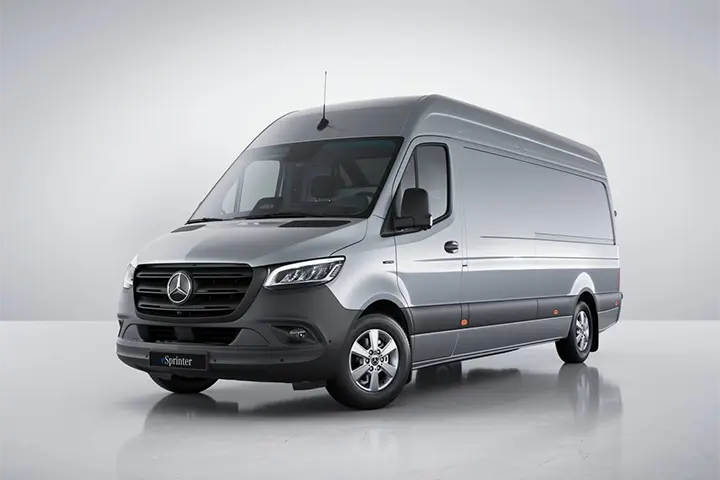
The eSprinter 100 kW / 56 kWh provides a practical, efficient electric van solution for urban logistics. This Standard Power variant features a 56 kWh usable battery capacity (battery size) with a dedicated rear-wheel-drive 100 kW (134 hp) motor, optimized for predictable, shorter daily routes.
TESLA FORD HONDA CHEVROLET RIVIAN HYUNDAI KIA LUCID VOLKSWAGEN SKODA AUDI BMW MERCEDES RENAULT VOLVO PEUGEOT BYD XIAOMI TOYOTA NISSAN…
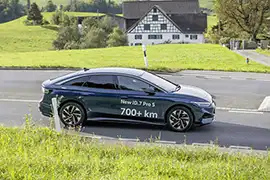
Volkswagen ID.7 Pro S — 794 km on one charge TESLA FORD HONDA CHEVROLET RIVIAN HYUNDAI KIA LUCID VOLKSWAGEN SKODA…
The Volkswagen ID.4 has become a significant player in the electric SUV market, but it’s important to understand that the…
100 kW
Technical Data & Performance | |
| Model Years | 2024–present |
| Trim (Variant) | eSprinter - 100 kW | 56 kWh |
| Power (Horsepower) | 100 kW (136 hp) |
| Top Speed | 121 km/h (75 mph) |
| Torque | 400 Nm (295 lb-ft) |
| Acceleration | 15.0 sec (0–100 km/h) 15.0 sec (0–62 mph) |
| Drive | RWD Rear-wheel drive |
| Motor details | Single (Rear PSM) | Mercedes-Benz (development and production) |
| Motor code | eATS 2.0 |
| Extra Info | Integrated transmission and power electronics in a single housing | Optimized liquid cooling and thermal management |
Battery & Charging | |
| Battery Capacity & Size | 56 kWh usable, 60 kWh gross |
| Battery Capacity Variants | New modular architecture (MY 2024). Entry‑level option; mainly EU markets. |
| Max Range | 200 km (124 mi) / WLTP |
| Consumption | 28.0 kWh/100 km |
| Battery Type | LFP (Lithium Iron Phosphate) |
| Cell Format / Supplier | Prismatic | Battery modules are assembled at Mercedes plants in Germany; with cells sourced from external partners. |
| Battery Voltage | 400 V |
| Electrical Architecture | 400 V |
| V2L Supported | No |
| Heat pump | No |
| AC Home Charging | Type2 / 1-phase - 7.4 kW (Max Power) Type2 / 3-phase - 9.6 kW (Max Power) |
| DC Fast Charging | CCS2, 50 kW (Max Power) 67 min. (10–80%) |
| Charging Updates | An option is available to increase the maximum DC fast-charging power up to 115 kW for all battery variants (56; 81 and 113 kWh). |
Dimensions & Body | |
| Type | 3 door, Van |
| Seating capacity | 2/3 |
| Class | N1 / N2 |
| Length | 7122 mm (280.4 in) |
| Width | 2020 mm (79.5 in) |
| Height | 2720 mm (107.1 in) |
| Wheelbase | 4318 mm (170.0 in) |
| Ground Clearance | 202 mm (8.0 in) |
| Curb weight | 2750 kg (6063 lb) |
| Gross weight | 3500 kg (7716 lb) |
| Trunk Volume | 9000 L (319.0 ft³) 14000 L (494.4 ft³) max |
| Towing | Unbraked: 750 kg (1653 lb), Braked: 1500 kg (3307 lb) |
| Drag Coefficient | 0.35 |
| Platform | Electric Versatility Platform (EVP) |
| Additional Information | Available configurations: L2 ≈ 6.0 m (≈ 236 in) / L3 ≈ 7.1 m (≈ 280 in); WB: L2 = 144" (≈ 3658 mm) / L3 = 170" (≈ 4318 mm); H1 ≈ 2.4 m (≈ 95 in) / H2 ≈ 2.7 m (≈ 107 in) / H3 ≈ 3.0 m (≈ 118 in); width ≈ 2.0 m (≈ 79 in). |
|
Estimated Market Price * for reference only |
EUR 55,000 |
⚠️ Please note: actual vehicle specifications may vary depending on market, trim level, or available regional packages.
The second generation is built on a new, modular architecture specifically designed for electric vans, known as the Electric Versatility Platform (EVP). This platform enables significantly more configurations, longer ranges, and improved efficiency, marking a major step in the eSprinter evolution.
The first-generation eSprinter, adapted from the diesel W907/W910, was not optimized for EV use. The largest battery offered only 47 kWh (usable), giving a WLTP range of about 150 km (93 miles). This limited it to short urban routes. The battery installation also reduced the van’s payload capacity compared to diesel models.
Common Solutions: Suitable only for predictable city deliveries with depot charging. Buyers should plan routes carefully and avoid long-distance use.
Only one configuration was available: L2 H2 with front-wheel drive. No choice of lengths, roof heights, or chassis cab versions, which restricted its versatility for commercial conversions.
Common Solutions: Businesses needing flexibility should consider the second-generation eSprinter (2024→) on the dedicated Electric Versatility Platform.
The first eSprinter often lacked MBUX infotainment and felt dated compared to rivals. Owners report less durable plastics and faster wear in high-mileage use. Some also mention minor glitches in the 12V electrical system.
Common Solutions: Check all interior electronics and ensure the 12V system is well maintained.
Early 2024 models had faulty welds in the rear axle electric drivetrain, risking sudden loss of drive power. The parking lock could also fail, though the mechanical brake remained functional.
Common Solutions: Mercedes-Benz issued a recall with complete rear axle replacement. Buyers must confirm this recall was performed.
A software fault in the Electronic Stability Program (ESP) could reduce brake assist, requiring higher pedal force and increasing stopping distance.
Common Solutions: Fixed by a dealer software update under recall campaigns.
Owners report MBUX screen freezes and steering wheel touch controls being hard to use, especially with gloves. These issues are common in forums and user reviews.
Common Solutions: Dealer software updates or OTA patches usually resolve glitches. A soft reset can help temporarily.
The used eSprinter shows clear evolution: Gen I suffers from low range, payload limits, and lack of body options, while Gen II offers better utility but had critical recalls in early production. Buyers should verify recall completion and ensure software updates are applied. Overall, the electric drivetrain is considered reliable, but attention to recalls and electronics is essential.
* Disclaimer: The information presented here is compiled from owner discussions in online communities, forums, and various open public sources. The accuracy, completeness, and reliability of this data cannot be guaranteed, and it should be used for informational purposes only.
The eSprinter offers a range of up to 200 km (124 mi) / WLTP under WLTP standards, depending on driving conditions and trim.
It supports DC fast charging up to 50 kW, reaching 10–80% in about 67 minutes at compatible stations. AC charging is 9.6 kW from a home wallbox.
No, V2L (Vehicle-to-Load) or bidirectional charging is not supported in the standard model.
The 2024 Mercedes-Benz eSprinter 100 kW | 56 kWh has a trunk capacity of 9000 L (319.0 ft³) standard, expandable to 14000 L (494.4 ft³) with rear seats folded. Frunk availability hasn't been officially confirmed yet.
The 2024 Mercedes-Benz eSprinter 100 kW | 56 kWh measures 7122 mm (280.4 in) in length, 2020 mm (79.5 in) in width, and 2720 mm (107.1 in) in height. The wheelbase is 4318 mm (170.0 in).
The ground clearance of the eSprinter is 202 mm (8.0 in).
Unbraked trailer: 750 kg (1653 lb). Braked trailer: 1500 kg (3307 lb).
The eSprinter features a motor (eATS 2.0) delivering 100 kW (136 hp) and 400 Nm (295 lb-ft) of torque.
2024 Mercedes-Benz eSprinter 100 kW | 56 kWh common issues and main problems:
EVspecsHub is a non-profit informational platform dedicated to providing free electric vehicle specifications. Any future ads will support hosting and maintenance costs to keep our content accessible.