EVspecsHub.com EVspecsHub

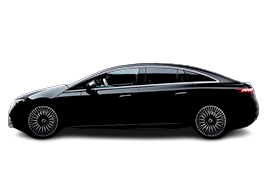
2022 Mercedes EQE 350+ 108.0 kWh 292 hp Battery, Horsepower, Range

The EQE 350+ Mercedes EQE 350 Plus offers a class-leading max Range up to 693 km (429 mi) (WLTP) with its 96.0 kWh usable, 108.0 kWh gross battery. View FULL Specs and Battery type. All specifications verified with official sources.

Used Volkswagen e-Golf Problems and Fixes (2013 – 2020).

Used Volkswagen e-Golf Problems and Fixes (2013 – 2020).

TESLA FORD HONDA CHEVROLET RIVIAN HYUNDAI KIA LUCID VOLKSWAGEN SKODA AUDI BMW MERCEDES RENAULT VOLVO PEUGEOT BYD XIAOMI TOYOTA NISSAN…
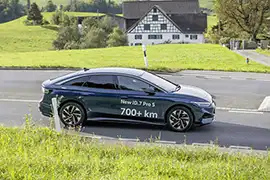
Volkswagen ID.7 Pro S — 794 km on one charge with max Battery

Volkswagen ID.7 Pro S — 794 km on one charge…

Volkswagen ID.7 Pro S — 794 km on one charge TESLA FORD HONDA CHEVROLET RIVIAN HYUNDAI KIA LUCID VOLKSWAGEN SKODA…
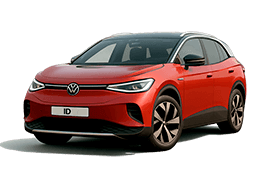
Volkswagen ID.4: American vs. European Versions, Key Differences

Volkswagen ID.4: American vs. European Versions, Key Differences

The Volkswagen ID.4 has become a significant player in the electric SUV market, but it’s important to understand that the…
POPULAR cars…

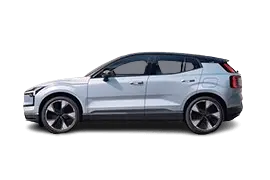
Side profile of Volvo EX30 electric SUV, showing 2,650 mm wheelbase, coupe-like roofline, and clean body lines
EX30 (2023-pr.)
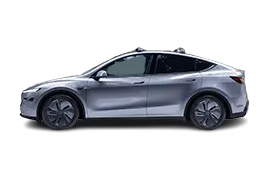
2025 Tesla Model Y Performance with dual motors, 0–100 km/h in 3.5 seconds, and long‑range battery
Model Y (2025-pr.)
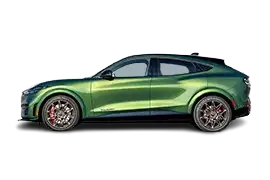
Side profile of the Ford Mustang Mach-E, showing its aerodynamic body, coupe-like roofline, and EV styling cues
Mustang Mach-E (2020-pr.)
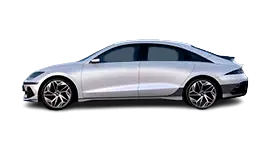
Side profile of the Hyundai Ioniq 6 illustrating its unique curved, streamliner silhouette and long 2950mm wheelbase on the E-GMP platform.
IONIQ 6 (2023-pr.)
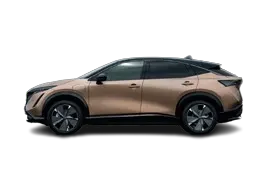
Side profile of the Nissan Ariya electric crossover, emphasizing its sleek, coupe-like silhouette, sloped roofline, and prominent wheel arches, optimized for efficiency and performance.
Ariya (2024-pr.)
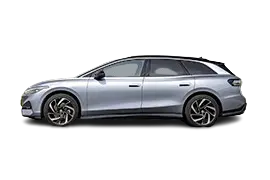
Volkswagen ID.7 Tourer side profile with 2,971 mm wheelbase, 86 kWh battery, and 200 kW fast charging.
ID.7 Tourer (2024-pr.)
Tesla Model 3 side profile showing sleek body lines and alloy wheels
Model 3 (2023-pr.)
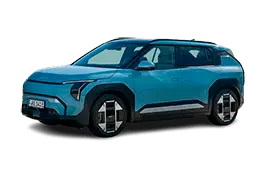
Kia EV3 side view compact electric SUV dimensions and profile
EX30 (2023-pr.)

Mercedes EQE

350+ |  2022–

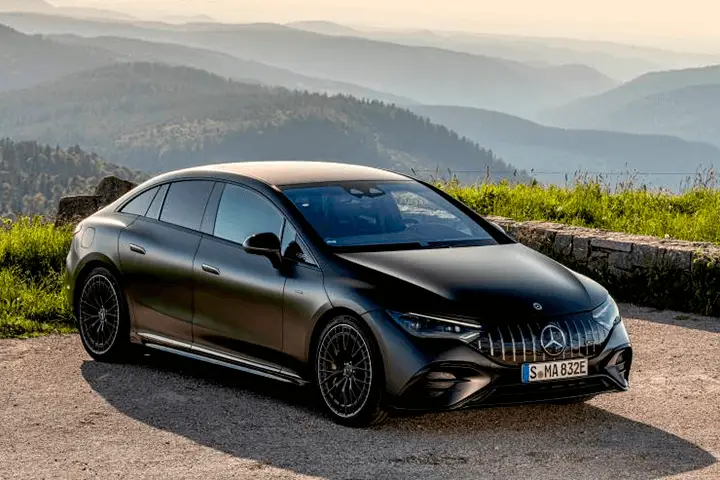
Mercedes‑Benz EQE front view electric sedan with LED headlights, aerodynamic grille, 90.6 kWh battery, 400‑V charging.
Mercedes‑Benz EQE
battery capacity
Capacity
range –
Range
power output
Power
acceleration
Acceleration
108 kWh
693 km

215 kW

6.4 s

Technical Data & Performance

Model Years2022–present
Trim (Variant)EQE - 350+
Power (Horsepower)215 kW (292 hp)
Top Speed210 km/h (130 mph)
Torque565 Nm (417 lb-ft)
Acceleration6.4 sec (0–100 km/h)
6.4 sec (0–62 mph)
DriveRWD Rear-wheel drive
Motor detailsSingle (Rear PSM) | Mercedes‑Benz Group (Untertürkheim)

Battery & Charging

Battery Capacity & Size96.0 kWh usable,
108.0 kWh gross
Battery Capacity VariantsInitially had 90.6 kWh usable capacity; upgraded to 96 kWh from 2024 MY (late 2023) for extended range.
Max Range693 km (429 mi) / WLTP
496 km (308 mi) / EPA
Consumption15.9 kWh/100 km
Battery TypeNCM (Nickel Cobalt Manganese)
Cell Format / SupplierPrismatic | Mercedes‑Benz AG / CATL / LG Chem
Battery Voltage328 V
Electrical Architecture400 V
V2L SupportedNo
Heat pumpYes
AC Home ChargingType2 / 1-phase - 7.4 kW (Max Power)
Type2 / 3-phase - 11 kW (Max Power)
DC Fast ChargingCCS2, 170 kW (Max Power)
32 min. (10–80%)
Charging Updatesthe standard onboard AC charger is 11 kW (3‑phase). A 22 kW AC onboard charger is available as an optional extra (option code 84B) in Europe and many other markets.

Dimensions & Body

Type4 door, Sedan
Seating capacity5
ClassE-segment (Executive Car)
Length4946 mm (194.7 in)
Width1906 mm (75.0 in)
Height1503 mm (59.2 in)
Wheelbase3120 mm (122.8 in)
Ground Clearance136 mm (5.4 in)
Curb weight2375 kg (5235 lb)
Gross weight2880 kg (6350 lb)
Trunk Volume430 L (15.2 ft³)
850 L (30 ft³) max
TowingUnbraked: 750 kg (1653 lb), Braked: 750 kg (1653 lb)
Drag Coefficient0.22
PlatformEVA2
Additional InformationAccording to owners’ subjective measurements; the usable volume with the rear seats folded is estimated at around 800–850 liters (≈ 28–30 cu ft)
Estimated Market Price
* for reference only
EUR 71,400 / USD 76,050

⚠️ Please note: actual vehicle specifications may vary depending on market, trim level, or available regional packages.

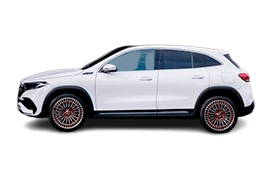
Mercedes Benz Eqa 2021 180
EQA (2021-pr.)
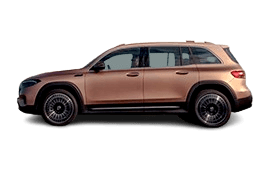
Mercedes Benz Eqb 2021 180
EQB (2021-pr.)
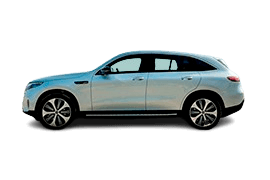
Mercedes Benz Eqc 2019 180
EQC (2019-2023)
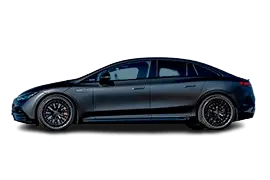
Mercedes‑Benz EQE side profile, coupe‑like roofline, long wheelbase, dual‑motor 4MATIC up to 687 hp.
EQE (2022-pr.)
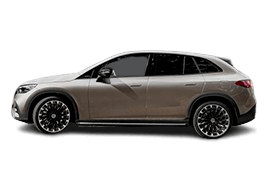
Mercedes Benz Eqe Suv 2022 180
EQE SUV (2022-pr.)
Mercedes Benz Eqs 2021 180
EQS (2021-pr.)
Mercedes Benz Eqs Suv 2022 180
EQS SUV (2024-pr.)
Mercedes Benz Eqs Suv 2022 180
EQS SUV (2022-2023)

The Evolution of the Mercedes-Benz EQE Sedan: Key Changes and Specifications


Generation I (V295) (2021: Global Unveiling, 2022: Production Start)

  • Platform & Design:
    • Built on the dedicated EVA2 electric platform (shared with the EQS).
    • Design Note: Features the aerodynamically efficient “one-bow” cab-forward profile, positioning the EQE as a luxury electric business sedan and all-electric sibling to the Mercedes E-Class.
  • Initial Models & Motors:
    • EQE 350+: Single rear PSM motor (RWD) with 215 kW (288 hp) and 530 Nm of torque.
    • EQE 350 4MATIC: Dual-motor (AWD) with 215 kW (288 hp) and 765 Nm.
    • EQE 500 4MATIC: Dual-motor (AWD) with 300 kW (402 hp) and 858 Nm.
    • AMG EQE 53 4MATIC+: Performance Dual-motor (AWD) with up to 505 kW (677 hp) and 1000 Nm (with boost).
  • Battery: Usable capacity of 90.6 kWh across the initial lineup.
  • Charging: DC fast charging capacity up to 170 kW.
  • Chassis Tech: Optional AIRMATIC Air Suspension and Rear-Axle Steering (up to 10 degrees).

2024: Technical Refinements and Standard Equipment Updates

  • Efficiency & Thermal Management:
    • A Heat Pump becomes standard equipment, utilizing waste heat to efficiently warm the cabin and pre-condition the battery, improving range in colder climates.
    • Improved regenerative braking software for a more refined and natural brake pedal feel.
  • Drivetrain Improvement:
    • 4MATIC (AWD) models gain the ability to automatically decouple the front motor when not needed, reducing energy consumption and extending range.
  • Functionality: A power-opening charge port door is now standard across all models.
  • Interior & Tech: Expanded availability of the MBUX Hyperscreen and over-the-air (OTA) software updates, keeping infotainment and driver-assistance features current.

2025: Battery Capacity Increase and Range Optimisation

  • Battery:
    • The EQE 350+ and EQE 500 4MATIC models receive an updated battery pack with increased usable capacity to 96.0 kWh.
    • The EQE 350+ (RWD) sees a resulting increase in estimated range, reaching up to an EPA-estimated 308 miles (or equivalent WLTP in other markets), positioning it among the longest-range electric sedans in its class.
  • Regeneration: Further minor software updates to the regenerative braking system for continued refinement of the driving experience.
  • Interior: Introduction of available features such as front headrest pillows and optional soft-close doors on non-AMG models, enhancing comfort and luxury appeal.
  • Market Positioning: With these updates, the EQE strengthens its role as a premium EV alternative to the Mercedes E-Class, competing directly with the BMW i5 and Tesla Model S in the global luxury EV sedan market.

POPULAR cars…

2025 Tesla Model Y Performance with dual motors, 0–100 km/h in 3.5 seconds, and long‑range battery
Model Y (2025-pr.)
Side profile of the Ford Mustang Mach-E, showing its aerodynamic body, coupe-like roofline, and EV styling cues
Mustang Mach-E (2020-pr.)
Side profile of the Hyundai Ioniq 6 illustrating its unique curved, streamliner silhouette and long 2950mm wheelbase on the E-GMP platform.
IONIQ 6 (2023-pr.)
Side profile of the Nissan Ariya electric crossover, emphasizing its sleek, coupe-like silhouette, sloped roofline, and prominent wheel arches, optimized for efficiency and performance.
Ariya (2022-pr.)
Renault Scenic E-Tech profile view showcasing vehicle dimensions, wheel design, and aerodynamics.
Scenic E-Tech (2023-pr.)
Volkswagen ID.7 Tourer side profile with 2,971 mm wheelbase, 86 kWh battery, and 200 kW fast charging.
ID.7 Tourer (2024-pr.)
Tesla Model 3 side profile showing sleek body lines and alloy wheels
Model 3 (2023-pr.)
Side profile of Volvo EX30 electric SUV, showing 2,650 mm wheelbase, coupe-like roofline, and clean body lines
EX30 (2023-pr.)

Common Issues and Problems with the Used Mercedes-Benz EQE Sedan


First Generation (V295) (2022 - Present)

Software Glitches & Electrical Faults

The Mercedes EQE Sedan, built on the EVA2 platform, often faces software glitches and electrical faults. Owners report MBUX infotainment issues such as freezing, slow response, or random reboots. Some vehicles display malfunction warnings like “Have High-Voltage System Checked,” which can limit driving functions or trigger safety systems unnecessarily.

Solutions: Most software problems are fixed via Over-the-Air (OTA) updates. Persistent faults require dealer diagnostics with Xentry and a full software flash. Always confirm a used EQE has received all software updates and recall fixes.

12V Auxiliary Battery Drain

The EQE relies on a 12V auxiliary battery for locks, displays, and high-voltage contactors. Owners frequently report 12V battery drain after the car sits idle for several days. Causes include modules not entering sleep mode or constant Keyless Go communication.

Solutions: Mercedes released power management software updates to reduce parasitic draw. Owners can store the key fob away from the car or use the double-lock function to disable proximity entry. In some cases, the 12V battery or control module must be replaced.

Charging System & Onboard Charger Failures

Some EQE and EQS models suffer from AC-to-DC converter failures, preventing charging on AC Level 2 home chargers or public AC stations. Fault codes often point to the N83 onboard charger module. This is a critical charging problem since it blocks home charging.

Solutions: Dealer diagnostics confirm the fault. The fix usually requires replacing the AC-to-DC converter unit. Buyers should check service records to ensure both AC and DC charging work reliably.

Premature Tire Wear

Owners highlight fast tire wear, sometimes before 20,000 miles (32,000 km). The EQE’s heavy weight, strong torque, and OE tire compounds designed for efficiency contribute to this common issue.

Solutions: Using stronger regenerative braking modes reduces mechanical brake use and tire stress. Replacing OE tires with EV-specific high-mileage compounds can extend life, though range may slightly decrease.


Conclusion

The Mercedes-Benz EQE Sedan delivers a premium EV experience but faces recurring software issues, 12V battery drain, charging faults, and premature tire wear. For used buyers, the priority is verifying a clean service history, completed OTA updates, and any technical service bulletins (TSBs). Addressing these points ensures a more reliable ownership experience.


* Disclaimer: The information presented here is compiled from owner discussions in online communities, forums, and various open public sources. The accuracy, completeness, and reliability of this data cannot be guaranteed, and it should be used for informational purposes only.

Frequently Asked Questions FAQ about the EQE 350+ Mercedes EQE 350 Plus | FULL Specs: max Range, Battery type

About EVspecsHub

EVspecsHub is a non-profit informational platform dedicated to providing free electric vehicle specifications. Any future ads will support hosting and maintenance costs to keep our content accessible.

Scroll to Top