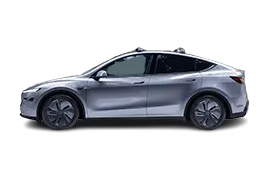
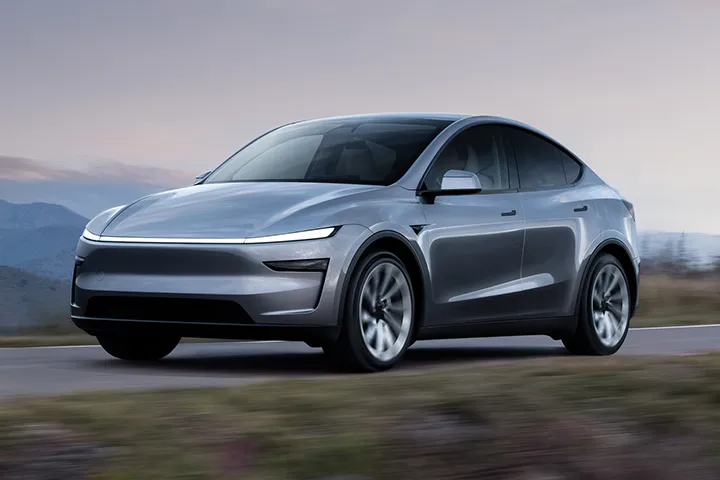
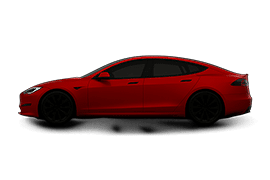
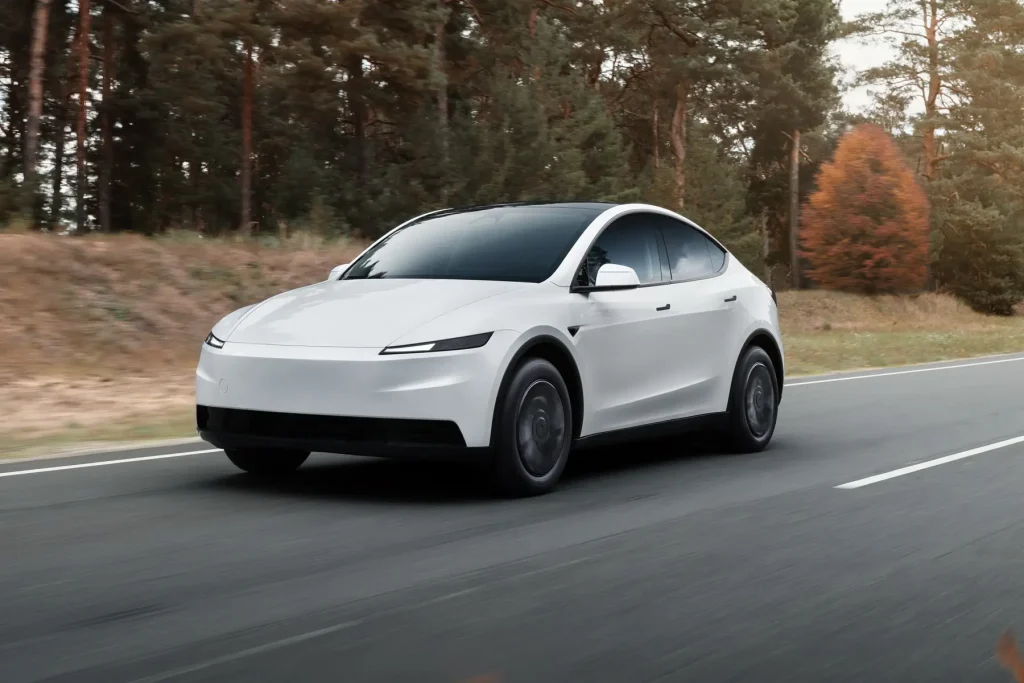
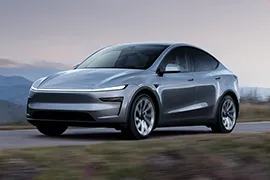
2025 Tesla Model Y RWD 62 kWh 295 hp Battery, Horsepower, Range
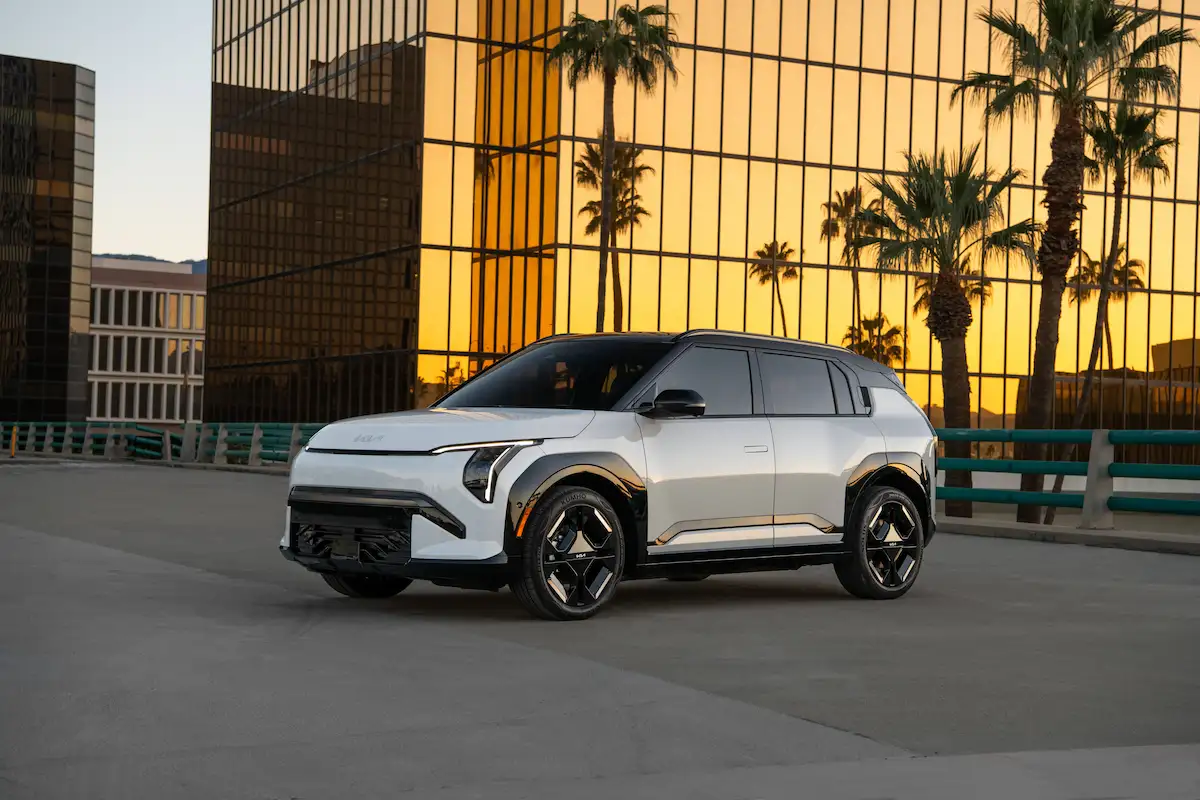
The 2025 Tesla Model Y RWD (Juniper) is a rear-wheel drive electric SUV with a 60 kWh usable battery capacity (LFP), 220 kW (299 hp), 500 km (311 mi) WLTP range and 175 kW DC fast charging. Acceleration 0–100 km/h in 5.9 sec, 10–80% charge in approximately 24 minutes. The most efficient and affordable trim in the Juniper lineup.Need more range or all-wheel grip? See the LR RWD page →, the LR AWD page →, or the Performance AWD page →.
POPULAR cars…
Tesla Model Y
RWD | 2025–
220 kW
TRIM (VARIANT) :
Technical Data & Performance | |
| Model Years | 2025–present |
| Trim (Variant) | Model Y - RWD |
| Power (Horsepower) | 220 kW (295 hp) |
| Top Speed | 201 km/h (125 mph) |
| Torque | 420 Nm (310 lb-ft) |
| Acceleration | 5.9 sec (0–100 km/h) 5.9 sec (0–62 mph) |
| Drive | RWD Rear-wheel drive |
| Motor details | Single — rear Permanent Magnet |
| Motor code | 3D6 |
| Regional Differences | Same motor and same 5.4s 0–60 mph worldwide — only the range label differs: 321 mi EPA vs 454 km WLTP. |
Battery & Charging | |
| Battery Capacity & Size | 60 kWh usable, 62 kWh gross |
| Battery Capacity Variants | US: NCA ~69.0 kWh / EU: LFP ~62.5 kWh |
| Max Range | 500 km (311 mi) / WLTP 455 km (283 mi) / EPA 490 km (304 mi) / CLTC |
| Consumption | 14.2 kWh/100 km |
| Battery Type | Litium Iron Phosphate |
| Cell Format / Supplier | NCA (Panasonic - Giga Nevada) / LFP (CATL - Giga Berlin |
| Battery Voltage | 330 V |
| V2L Supported | No |
| Heat pump | Yes |
| AC Home Charging | Type2 / 1-phase - 7.4 kW (Max Power) Type2 / 3-phase - 11 kW (Max Power) |
| DC Fast Charging | CCS2, 175 kW (Max Power) 24 min. (10–80%) |
| Charging Updates | Supercharger V3/V4 compatible: max peak 175 kW (LFP battery limits charging rate; sustained ~110–140 kW during 10–80%) |
| Regional Differences | US gets NCA ~69 kWh with ~225 kW peak — stay under 90%; EU gets LFP ~62.5 kWh with 175 kW but a flat curve — charge to 100% daily no problem. |
Dimensions & Body | |
| Type | 5 door, Touring SUV |
| Seating capacity | 5 |
| Length | 4790 mm (188.6 in) |
| Width | 1982 mm (78.0 in) |
| Height | 1624 mm (63.9 in) |
| Wheelbase | 2890 mm (113.8 in) |
| Ground Clearance | 167 mm (6.6 in) |
| Curb weight | 2003 kg (4416 lb) |
| Gross weight | 2448 kg (5398 lb) |
| Trunk Volume | 854 L (30.2 ft³) 2138 L (75.5 ft³) max |
| Towing | Unbraked: 750 kg (1653 lb), Braked: 1600 kg (3527 lb) |
| Drag Coefficient | 0.22 |
| Platform | Tesla 3/Y (Juniper revision) |
|
Estimated Market Price * for reference only |
EUR 42,000 / USD 39,990 |
⚠️ Please note: actual vehicle specifications may vary depending on market, trim level, or available regional packages.
Verdict: The Model Y RWD Juniper is still the efficiency leader in its class — 13.9 kWh/100 km puts it in the 8.0 band, and that's a real-world advantage owners notice on every charge. Range moves up to 7.0 under the revised methodology: 500 km WLTP is genuinely above average, not just middle of the pack. Battery gets a fairer 5.0 — 60 kWh is a mainstream figure, not weak. Value lands at 6.0 now: at €91.9/km it's 23% above the all-EV average, but that's a very different story from where it sat before — this is a mid-range price for a mid-range battery, and most owners on forum threads seem to accept that trade-off without much complaint.
© EVspecsHub.com · All passenger EVs 2025–2026 · March 2026 · Methodology v6.7
Free to use — just credit EVspecsHub.com
▸ Score data table (methodology v6.7)
| Criterion | Score | Key data | 10/10 = |
|---|---|---|---|
| Range | 7.0 | 500 km WLTP · 500–599 km band | 800+ km |
| Battery | 5.0 | ~60 kWh usable · LFP · 400V (no bonus) · 60–69 kWh band | 110+ kWh |
| Charging | 5.0 | ~175 kW DC · 400V · no V2L/V2H/V2G · 150–199 kW band | 400+ kW |
| Performance | 7.0 | 5.9 s → 7.0 + RWD +0 = 7.0 · 220 kW | sub-3s AWD |
| Efficiency | 8.0 | 13.9 kWh/100 km WLTP · 13.0–13.9 band | <12 kWh/100 km |
| Cargo | 8.0 | 971 L combined (854 boot + 117 frunk) · 800–949 L band | 1100+ L |
| Value | 6.0 | €45,970 · $49,300 · €91.9/km · $98.6/km · €90–109/km band | <€45/km |
| Overall | 6.7 / 10 | EVspecsHub Score v6.7 · EVspecsHub.com · March 2026 | |
Verdict (US market): The US Standard is the best value play in the Model Y lineup — $41,630 works out to €74.8/km, which sits right at the all-EV average, and that earns a solid 7.0 for Value. Same efficiency crown at 8.0 (13.9 kWh/100 km), same class-leading cargo at 8.0, range at 7.0. The real weak spot remains Performance: Tesla's US spec is officially 6.8 s 0–60 mph, a full second slower than the EU Juniper's 5.9 s — that's a software tune call, not a hardware difference. Battery gets a fairer 5.0 under the revised scale — 60 kWh is mainstream, not weak.
© EVspecsHub.com · US market · EPA figures · All passenger EVs 2025–2026 · March 2026 · Methodology v6.7
Free to use — just credit EVspecsHub.com
▸ Score data table (methodology v6.7 · US/EPA)
| Criterion | Score | Key data (US spec) | 10/10 = |
|---|---|---|---|
| Range | 7.0 | 321 mi EPA · 517 km abs. · 500–599 km band · NACS port | 800+ km |
| Battery | 5.0 | ~60 kWh usable · NCA Panasonic · 400V · no V2G · 60–69 kWh band | 110+ kWh |
| Charging | 6.0 | 225 kW Supercharger · NACS · 400V · no V2L/V2H/V2G · 200–249 kW band | 400+ kW |
| Performance & Dynamics | 5.0 | 6.8 s 0–60 mph / ~7.0 s 0–100 km/h · 220 kW · RWD · US software tune | sub-3s AWD |
| Efficiency | 8.0 | 13.9 kWh/100 km WLTP · 13.0–13.9 band · identical to EU build | <12 kWh/100 km |
| Cargo | 8.0 | 971 L combined (854 boot + 117 frunk) · 74 cu ft max · 800–949 L band | 1100+ L |
| Value | 7.0 | $41,630 · ~€38,700 · €74.8/km · $80.5/km · €75–89/km band | <€45/km |
| Overall | 6.6 / 10 | EVspecsHub Score v6.7 · US market · EPA figures · EVspecsHub.com · March 2026 | |
Complete Tesla Model Y Guide — what's on this page
- Real Owner Data — Beyond the Official Spec Sheet
- Generation Guide: What Actually Changed and Why It Matters
- Real Impressions — What It's Actually Like to Live With
- Known Problems & Fixes
- Model Y vs Competitors: How Real Buyers Choose
- New Juniper or Pre-Refresh — Which One Makes Sense in 2026?
- Official Specs, Owner Manual & Resources
Tesla Model Y specs by variant: Standard RWD Long Range RWD Long Range AWD Performance AWD
Tesla Model Y Juniper (2025): Real Owner Data — Beyond the Official Spec Sheet
Let me be upfront about what this page is. Tesla's spec sheets tell you 0–60 times and rated range — useful, but every other EV site has the same table. What's below is different: it's the stuff I and other owners actually went looking for after buying. BMS-logged battery capacity. Measured frunk depth. Charging curve at 20% vs 65%. Compressor RPM differences between early and late builds. The kind of data that doesn't exist in any press release.
This covers the 2025 Model Y Juniper across all four variants — Standard RWD, Long Range RWD, Long Range AWD, and Performance AWD. Where data differs by trim or factory (Fremont vs Austin vs Shanghai), I've flagged it clearly.
Four variants, and they're more different under the skin than Tesla's marketing suggests:
- Standard RWD: One rear motor, 60–62.5 kWh pack. Chemistry depends entirely on your market — LFP (CATL) in Europe and global markets; NCA 2170 (Panasonic) in the US. The big practical upside of LFP: charge to 100% every day — no battery anxiety, no "keep it at 80%" ritual. The trade-off: peak DC charging is capped at 175 kW vs 225 kW for the US NCA version.
- Long Range RWD: One rear motor, NMC 78.4 kWh (LG Energy Solution cells), built at Giga Shanghai. Same chemistry globally — no market split here.
- Long Range AWD: Dual motor, NCA 2170 cells — Fremont or Austin depending on your build date. The most discussed variant in owner communities by a wide margin.
- Performance AWD: Dual motor, new "3M" cell chemistry in the updated pack. Built for acceleration and handling — and currently running its charging curve conservatively while Tesla gathers thermal data.
1 Battery Pack — Cell Format, Chemistry & Real Usable Capacity By Variant
Tesla has never officially published cell-level specifications. The data below comes from OBD-II diagnostics, teardowns shared in owner communities, and factory sticker verification (all Teslas have a chemistry label inside the frunk — easily checked without dealer involvement).
Cell Format by Factory
- US Standard RWD (Fremont-built): 21×70 mm cylindrical cells (2170 format), Panasonic NCA chemistry. No LFP in the US — CATL cells don't qualify for the federal tax credit, and that's unlikely to change while Chinese tariffs remain in place. Confirmed by multiple TMC members who verified directly with Tesla engineers.
- Europe / Global Standard RWD (Giga Shanghai-built): CATL LFP, 62.5 kWh gross. Charge to 100% daily with no degradation concerns — a real practical difference from NCA. Peak DC charging capped at 175 kW, confirmed officially by Tesla Europe at launch.
- Long Range RWD — global (Giga Shanghai-built): LG Energy Solution NMC cells, 78.4 kWh gross, ~75 kWh usable. Same pack everywhere — no market split. SpeakEV confirmed 78 kWh net capacity for the LG pack.
- Austin-built LR AWD — still unclear: Some Texas-built Juniper LR AWD units may carry NMC 4680-format cells. I've seen delivery confirmation posts where Tesla service staff told buyers this directly — but the Juniper parts catalog has no structural battery section, which contradicts the claim. Until more teardown data comes in, the honest answer is: Fremont builds are definitively 2170 NCA, Texas-built LR AWD is genuinely unknown.
Real Usable Capacity (OBD-II Data, LR AWD)
The pack ships at roughly 82.1 kWh gross. Tesla's BMS uses about 77.5 kWh as its internal rated reference — that's what the range display on your screen is based on. So when the dash says "327 miles," you're not touching the full 82.1 kWh. You're drawing from around 76–77 kWh. The rest is buffer.
- At 10,000 miles (16,000 km), Texas-built LR AWD: OBD-II logged 75.56 kWh usable — sitting about 8% under the 82.1 kWh gross nameplate. Worth knowing: not all of that gap is degradation. Some of it is Tesla's own buffer management baked in from day one.
- Short-term degradation: One US AWD owner on daily 50% charging logged roughly 1.5% displayed capacity loss after 9,800 miles (15,770 km) over several months.
- Long-term data (pre-Juniper, same cell chemistry): Many owners of the 2021–2023 LR AWD report under 5% capacity loss at 60,000–80,000 miles (96,000–128,000 km) when avoiding frequent 100% charges and DC fast charging as a primary source.
2 DC Fast Charging — The Curve, The Drop-Off, The Fine Print All Variants
Tesla's published "up to 250 kW" peak figure applies only to Long Range packs — and even then only for a brief window near empty. Here's what owners have actually measured with data loggers and OBD tools across all three RWD configurations.
DC charging curve — Model Y Standard RWD 🇪🇺 Europe / Global
EVspecsHub.comLFP pack · 62.5 kWh gross · Supercharger V3 · preconditioned
LFP's signature: near-flat rate from 10% to 80%, then a sharp drop as the BMS enters the balancing phase. Peak is officially capped at 175 kW by Tesla Europe — lower than the US NCA version, but the plateau is much longer. The practical 10–80% session is faster than the peak numbers suggest.
▸ Data behind this chart
| SOC | Power (kW) | Notes |
|---|---|---|
| 5% | ~172 kW | Approaching peak — ramps up from cold start |
| 15% | ~175 kW | Peak — Tesla EU official cap |
| 25% | ~174 kW | LFP flat plateau |
| 35% | ~172 kW | Virtually unchanged |
| 45% | ~170 kW | Still holding well above 150 kW |
| 55% | ~165 kW | Very slight gradual decline |
| 65% | ~158 kW | Still above 150 kW |
| 75% | ~140 kW | Taper starts to accelerate near 80% |
| 85% | ~55 kW | Sharp LFP drop — BMS balancing |
| 95% | ~22 kW | Balancing phase — stop at 80% on road trips |
© EVspecsHub.com — free to use with credit link to EVspecsHub.com
DC charging curve — Model Y Standard RWD 🇺🇸 United States
EVspecsHub.comNCA 2170 pack (Panasonic) · ~60 kWh usable · Supercharger V3 · preconditioned
Higher peak than the EU LFP version (~225 kW vs 175 kW) but the taper starts earlier — by 50% SoC the rate has already dropped significantly. The smaller pack hits cell voltage ceilings sooner than the LR pack. Owner forum discussions confirm Standard trim is capped below the LR 250 kW ceiling.
▸ Data behind this chart
| SOC | Power (kW) | Notes |
|---|---|---|
| 5% | ~225 kW | Peak — Standard trim capped below LR |
| 15% | ~205 kW | Taper begins sooner — smaller pack |
| 25% | ~178 kW | Continued drop |
| 35% | ~148 kW | — |
| 45% | ~115 kW | NCA rate-limited |
| 55% | ~85 kW | — |
| 65% | ~62 kW | Slow fill |
| 75% | ~43 kW | BMS protecting cells |
| 85% | ~26 kW | — |
| 95% | ~13 kW | Not a practical road-trip stop point |
© EVspecsHub.com — free to use with credit link to EVspecsHub.com
DC charging curve — Model Y Long Range RWD 🇺🇸🇪🇺 Global
EVspecsHub.comNMC pack (LG Energy Solution) · 78.4 kWh gross · ~75 kWh usable · Supercharger V3 · preconditioned
Peaks at 250 kW near empty — but the window is brief, measured at ~690A at ~362V lasting just seconds. Owner reports consistently describe the pack at roughly 85 kW past 60% SoC. That's a BMS and cell chemistry decision, not a hardware limit of 400V architecture. Plan road-trip stops at 80%, not later.
▸ Data behind this chart
| SOC | Power (kW) | Notes |
|---|---|---|
| 5% | ~250 kW | Peak — ~690A at ~362V, window lasts seconds |
| 15% | ~228 kW | Still near peak below 20% |
| 25% | ~198 kW | Taper in progress |
| 35% | ~165 kW | — |
| 45% | ~130 kW | — |
| 55% | ~100 kW | — |
| 65% | ~82 kW | Owner reports: "~85 kW range after 60%" |
| 75% | ~58 kW | NMC rate-limited, slow fill |
| 85% | ~36 kW | BMS protecting cells |
| 95% | ~18 kW | Stop at 80% on road trips — don't wait for this |
© EVspecsHub.com — free to use with credit link to EVspecsHub.com
Performance AWD — New "3M" Pack
- Peak power (owner-measured): Early MYP Juniper owners are seeing the peak cap out at around 212 kW near empty, then it's already down to about 165 kW by 25% SoC. Not what the "up to 250 kW" spec implied.
- Why it's capped: Tesla said so directly — new cell chemistry, running it cautiously while they watch real-world thermal behaviour. OTA unlock was promised. Still waiting as of early 2026, no date on the table.
- What a timed session actually looked like: One published test hit 207 kW near 10% SoC, then it just kept dropping. By 50% the power was already in double digits. By 80% it was sitting near 50 kW. Full 10–80% took about 32 minutes and pulled 62 kWh.
Comparison Context — What 400V Competition Does Differently
Owners who've driven both a Model Y and a competing 800V EV keep pointing out the same thing: the Ioniq 5 and similar cars hold 175–220 kW all the way to 70% SoC. The Model Y is already down to around 85 kW after 60%. That's a BMS and cell chemistry decision, not something 400V architecture forces on you. Whether it matters depends entirely on how many long-distance trips you're doing with back-to-back Supercharger stops.
3 Heat Pump & HVAC — Super Manifold V2, Compressor Behavior Juniper-Specific
The Juniper got a redesigned heat pump component Tesla calls the Super Manifold V2 internally. It's one of the genuinely meaningful engineering changes in the refresh — but there's a catch that a lot of buyers missed.
Not All Junipers Have V2
Tesla's VP of Vehicle Engineering confirmed in a public interview that the V2 manifold would roll out factory by factory over roughly a year. If you took early Juniper delivery, you might have V1. Buying in 2026 or checking a late 2025 car? Worth a quick verify before assuming you got the updated hardware.
Compressor RPM — What the Numbers Actually Mean
One owner drove a 2023 pre-refresh and a 2025 Juniper back-to-back on the same day and measured both directly:
- 2025 Juniper (V2): Compressor peaks at around 7,220 RPM.
- 2023 pre-refresh: Peaks at around 9,000 RPM.
- What you actually feel: Jump into a hot car on a summer day and the Juniper's compressor is louder and vibrates more than the older car for the first couple of minutes. It's noticeable. Once the cabin cools down the fan drops to a quieter cruise speed than the pre-refresh ever did — but that startup burst catches people off guard the first time.
Winter Range Improvement vs Previous Generation
Owners in Germany and Scandinavia comparing the Juniper to their previous Model Y reported 15–18% range loss in sub-zero temperatures, versus 25–30% on first-generation cars without a heat pump. The improvement is real. But the Juniper isn't a cold-weather outlier — most current competitors with well-implemented heat pumps are in the same ballpark or marginally better.
4 Wheel & Tire Fitment — Factory Specs and Aftermarket Limits All Variants
The stuff Tesla leaves off the spec page — bolt pattern, offsets, TPMS quirks. What you need before touching the wheels.
Hub & Mounting Data (All Juniper Variants)
- Bolt pattern (PCD): 5×114.3 mm
- Center bore: 64.1 mm
- Lug nut: M14×1.50 thread, 21 mm hex socket
- Torque spec: 175 N·m (129 lb·ft)
Factory Tires by Variant
- Standard RWD — 19" Crossflow wheel: Tire size depends on your market — check the Tesla configurator for your region before assuming.
- Long Range — 19×9.5" rim, offset +45: Pirelli Scorpion MS 255/45R19 104W XL from the factory. Overall diameter 711 mm (28.0 in), roughly 741 revolutions per mile (460 per km). The 19" is also the range-friendliest option on this car.
- Performance — 21" Arachnid 2.0: The rim lip sits slightly proud of the tire sidewall, which makes it more kerb-sensitive than the LR wheel. Multiple press testers flagged this, and owners in dense urban areas confirmed it — parallel parking near a high kerb requires some attention.
Aftermarket Fitment Notes
- Offset range: Most aftermarket wheels are +30 to +40 — more aggressive than the factory +45. Go below +30 and you're into brake caliper clearance territory, plus suspension geometry shifts that can show up as uneven tire wear over time.
- Square vs staggered: Square setups work better on the Model Y. Tesla's stability systems and the car's center of mass are set up for even contact patches front and rear — staggered fitments fight that.
- Range impact: Heavy or oversized aftermarket wheels cut real-world range by 12–18% in owner data. Stay within one inch of factory diameter and the efficiency hit stays minimal.
5 Real-World Range — What Owners Are Actually Logging By Variant
Official ratings come from controlled test cycles that have almost nothing to do with how people actually drive. Here's what owners are logging in the real world — separated by variant because the three RWD configurations behave differently enough to matter.
Real-World Range — Standard RWD 🇪🇺 Europe / Global
EVspecsHub.comLFP · 19" wheels · WLTP 500 km (311 mi) · charge to 100% daily
WLTP 500 km official (Tesla Europe). LFP benefit: charge to 100% before every trip — no penalty. Winter penalty ~30–35% vs WLTP from owner reports in colder EU markets. Smaller pack means range drops more steeply at motorway speeds than LR variant.
▸ Data behind this chart
| Condition | Range (km) | Range (mi) | Notes |
|---|---|---|---|
| City / mixed, mild | 480–530 km | 298–330 mi | Regen-heavy, mild temps — beats WLTP |
| 110 km/h (68 mph) | ~400–420 km | ~249–261 mi | Consistent highway cruise, mild conditions |
| 130 km/h (81 mph) | ~320–350 km | ~199–218 mi | Aero drag dominant above 120 km/h |
| Winter <0°C, highway | ~240–280 km | ~149–174 mi | ~30–35% below WLTP; heat pump helps but pack is smaller |
© EVspecsHub.com — free to use with credit link to EVspecsHub.com
Real-World Range — Standard RWD 🇺🇸 United States
EVspecsHub.comNCA 2170 · 19" wheels · EPA 321 mi (517 km)
EPA 321 mi / 517 km (official Tesla). At 55 mph owner reports "over 400 mi" in mild conditions. At 70 mph: "330 mi is more realistic" (TMC Juniper RWD owner, 19" wheels). Winter ~28–30% below EPA. NCA chemistry: keep charge limit at 80–90% for daily use.
▸ Data behind this chart
| Condition | Range (km) | Range (mi) | Source / notes |
|---|---|---|---|
| City / mixed, mild | 480–530 km | 300–330 mi | Owner: "getting 21 miles more than rated" on city commute |
| 88 km/h (55 mph), highway | >644 km | >400 mi | TMC owner: "could do over 400 mi at 55 mph" |
| 113 km/h (70 mph), highway | ~531 km | ~330 mi | TMC owner: "70 mph I think 330 mi is more realistic" |
| Winter <0°F, highway | ~370 km | ~230 mi | ~28–30% below EPA; TMC winter range thread |
© EVspecsHub.com — free to use with credit link to EVspecsHub.com
Real-World Range — Long Range RWD 🇺🇸🇪🇺 Global
EVspecsHub.comNMC 78.4 kWh · 19" wheels · EPA 357 mi (574 km) · WLTP 622 km (386 mi)
EPA 357 mi / 574 km (official Tesla). WLTP 622 km (Tesla Europe). Owner 2026 LR RWD: 225 Wh/mi at 75 mph → ~333 mi; 205 Wh/mi at 55 mph → ~365 mi. Road trip NY–Outer Banks: 302 mi from 100% charge to 17% remaining. Sources: TMC LR RWD range and efficiency threads.
▸ Data behind this chart
| Condition | Range (km) | Range (mi) | Source / notes |
|---|---|---|---|
| City / mixed, mild | 570–620 km | 355–385 mi | Owner regularly exceeds rated range on local trips |
| 88 km/h (55 mph), highway | ~587 km | ~365 mi | 205 Wh/mi at 55 mph — TMC 2026 LR RWD owner |
| 120 km/h (75 mph), highway | ~536 km | ~333 mi | 225 Wh/mi at 75 mph — TMC 2026 LR RWD, 1,000 mi log |
| Winter <5°C, no preconditioning | ~290–320 km | ~180–200 mi | ~30–35% below EPA; TMC winter range thread |
| Winter <5°C, preconditioned | ~340–370 km | ~210–230 mi | +20–40 mi back vs cold start; nav to Supercharger triggers auto-precond. |
© EVspecsHub.com — free to use with credit link to EVspecsHub.com
Long Range AWD — Mild Weather
- Cruise at 110–115 km/h (68–71 mph), 15–25°C (59–77°F): 450–480 km (280–300 miles) from a full charge. I've seen this number come up across enough different owner trips that I'd call it reliable for planning purposes.
- Cruise at 130 km/h (81 mph): Down to around 370–400 km (230–250 miles). That's aero drag doing most of the work — at 130 it's the dominant factor, not what's happening in the battery or motor.
- City/mixed driving, mild weather: A lot of owners actually beat their EPA/WLTP figure here — city-weighted drives with heavy regen can push past 530 km (330 miles) on a full charge.
Long Range AWD — Winter Conditions (UK and Northern Europe)
- Below 5°C (41°F), LR AWD, 20" wheels, no preconditioning: 260–290 km (160–180 miles) on a full charge for a highway run. Not a worst case — that's a normal cold day with no prep.
- With preconditioning active: Add 20–40 km (12–25 miles) back. Just from starting with a warm pack. Sounds like a small thing until you're trying to make a stop without a detour.
- Actual worst case: Heavy heat load, short trips, sub-zero temps, motorway speeds — you're looking at 30–35% below EPA. I went through winter fleet data from 2024–2025 and the Model Y averaged about 86% of rated range in freezing conditions. Better than most of what's in this segment, but it's still a number you need to have in your head when route-planning in January.
Performance AWD — Cold Weather Baseline
Early MYP Juniper owners in moderate cold (5–10°C / 41–50°F) are seeing 300–340 km (185–210 miles) on highway runs. Solid cold-weather data specifically for the Juniper MYP is still thin as of early 2026 — most of what's out there comes from pre-Juniper MYP owners, who were getting 305–320 km (190–200 miles) in rough conditions.
6 Cargo & Interior Dimensions — Measured, Not Estimated 5-Seat Variants
Tesla's published 68 cubic feet figure uses SAE J1100 methodology — standardized blocks, not your actual luggage. The numbers below are tape measure results from owners. Use these when you're trying to figure out whether something actually fits.
Rear Trunk (5-Seat, Seats Up)
- Width at widest point (mid-trunk): ~108 cm (42.5 in)
- Width at narrowest (wheel arch intrusion): ~88 cm (34.6 in)
- Depth (liftgate lip to seatback face): ~94 cm (37.0 in)
- Trunk floor height above ground: ~60 cm (23.6 in) — not too high, most people load it without thinking about it
Rear Trunk (Seats Folded — Loading Length)
- Full internal loading length: ~198–202 cm (78–79.5 in) — most bikes go in without removing the front wheel, depending on frame geometry
- Flat floor: Yes — folded seatbacks are nearly flush with the trunk floor, small step at the transition but nothing that catches things
Frunk (Front Trunk)
- Width: ~91 cm (35.8 in)
- Depth (front to rear): ~35 cm (13.8 in)
- Height (opening to bottom): ~43 cm (16.9 in)
- Honest assessment: A carry-on suitcase or two grocery bags, no problem. A full checked-luggage bag laid flat — doesn't fit. Good for the charging cable so it's not eating trunk space.
Sub-Trunk Well (Under Trunk Floor, 5-Seat Only)
- Width: ~80 cm (31.5 in)
- Length: ~60 cm (23.6 in)
- Depth: ~35 cm (13.8 in)
- Best use: Tesla's portable charging kit lives here. Keeps the main trunk clean and means you don't have to dig for it at the occasional L2 stop.
Body Dimensions (Juniper, All Variants)
- Overall length: 4,790 mm (188.7 in)
- Width (without mirrors): 1,920 mm (75.6 in)
- Height: 1,624 mm (63.9 in)
- Wheelbase: 2,890 mm (113.8 in)
- Curb weight range: 1,901–1,997 kg (4,190–4,400 lb), depending on variant
📋 Full technical specifications by variant:
Note: Figures here come from owner-reported measurements, OBD-II logs, community teardown reports, and open technical discussions — not Tesla's official publications. Values shift by build date, factory, software version, and market. Confirm critical specs with a certified EV tech before any purchasing decision. Data current as of March 2026.Back to contents
Tesla Model Y Generation Guide: What Actually Changed and Why It Matters
A 2020 and a 2025 Model Y are not the same car. I know they look similar. I know Tesla didn't do a big flashy redesign every year. But the battery chemistry changed. The factories changed. The autopilot computer changed mid-run. The interior changed. If you're buying one — new or used — knowing which version you're actually getting matters more than most buyers realise until after they've signed.
1 2020 — Production Begins US Only
First deliveries in the US, March 2020, AWD only. The car came out of the gate sharing roughly 76% of its parts with the Model 3 — same platform, same battery architecture, most of the same powertrain hardware. At the time that was the point: fast to build, familiar to service.
- Long Range AWD: 384 hp / 283 kW, 510 Nm. EPA said 326 miles (525 km). 0–60 in 4.8 sec.
- Performance AWD: 456 hp / 336 kW, 660 Nm. 315 miles (507 km) EPA. 0–60 in 3.5 sec.
- Battery: ~75 kWh usable. Panasonic 2170 NCA chemistry. 400V.
- Build quality: Bad, honestly. Owners were posting photos of panel gaps you could fit a finger in, paint runs, misaligned doors. Tesla patched most of it during 2021, but buying an early 2020 example without an inspection is a gamble I wouldn't take.
2 2021–2022 — Expanding the Lineup & New Factories Global Rollout
This is when the Model Y went from a US product to a global one. New factories, new battery chemistry, and the first RWD variants.
RWD Models — LFP Chemistry
- Standard Range RWD (2021): 220–244 miles (354–393 km) EPA, CATL LFP cells. This matters more than it sounds — LFP lets you charge to 100% every day without worrying about degradation. With NCA/NMC you're supposed to stay at 80–90% for daily use. A lot of city drivers pick LFP for exactly this reason.
Giga Berlin & Giga Texas
- Giga Texas (Austin): Production started late 2021. Brought in single-piece rear casting and early 4680-format structural battery cells — up to ~82 kWh gross in some AWD configs. The 4680 program ran at this factory for a specific AWD variant before being phased out of the Juniper.
- Giga Berlin (Germany): European deliveries from March 2022. The main reason this factory exists is EU import duties — China-built cars get taxed heavily, Berlin-built ones don't. 2170 cells, same as Fremont.
3 2023–2024 — Range Improvements & HW4 Hardware Pre-Juniper
Nothing changed on the outside. Visually identical to the 2021–2022 car. But two things happened under the hood that split this era from what came before — and both matter if you're shopping used.
- Standard Range RWD: 260 miles (418 km) EPA now. ~60 kWh usable.
- Long Range RWD: Hit 330 miles (531 km) EPA. Battery sits at 75–78 kWh usable — but the chemistry depends on where and when the car was built. NMC in some markets, LFP in others. Ask before you buy.
- Long Range AWD: Held at ~310–330 miles (499–531 km) with better thermal management.
- HW4 / AI4 (mid-2023): New autopilot computer — 5 MP cameras, much more headroom for FSD processing. Cars from mid-2023 onward got HW4 as standard. Older cars have HW3 and can't be upgraded without replacing the entire computer assembly. This is the one spec that actually splits the pre- and post-mid-2023 cars into different tiers.
- DC fast charging: Up to 250 kW peak on updated packs. Sustained rate still depended on SoC and temperature — same story as before.
4 2025–2026 — Juniper Refresh Current Generation
Tesla announced Juniper January 10, 2025. China deliveries from February, US and Europe from March–April. This is the biggest update the Model Y has had since it launched — not a new platform, but basically everything you can see changed, and a lot you can't.
| 🇺🇸 United States | 🇪🇺 Europe | |
|---|---|---|
| Base RWD chemistry | NCA (Panasonic, Giga Nevada) | LFP (CATL, Giga Berlin) |
| Base RWD pack | ~69 kWh | 62.5 kWh |
| Base RWD range | 321 mi / 517 km (EPA) | 454 km / 282 mi (WLTP) |
| Base RWD DC peak | ~225 kW | 175 kW — but flat to ~80% SoC |
| Charge to 100% daily? | ⚠ No — keep at 80–90% (NCA) | ✅ Yes — LFP designed for it |
| Premium RWD / AWD chemistry | NCA (Panasonic) · 78.4 kWh | NMC (LG) · 78.4 kWh |
| Performance pack | ~78–80 kWh (NCA) | 84 kWh (NMC) — larger pack |
| EU-only variant | — | Standard LR RWD — stripped interior, 78.4 kWh NMC, WLTP 657 km |
| Base AWD available? | ✅ Yes — from Feb 2026, 294 mi EPA | ❌ No — AWD entry is Premium AWD |
| Why no LFP in US? | Federal tax credit excludes Chinese-sourced cells — CATL cells disqualify the car | No such restriction — LFP from Giga Berlin |
| Factory | Fremont (CA) · Austin (TX) | Giga Berlin (DE) · Giga Shanghai (CN export) |
Exterior & Aerodynamics
- Full-width LED light bars front and rear — the easiest way to spot a Juniper from across a car park. Note: the entry-level base trim (US and EU) omits the continuous rear light strip to cut costs.
- Drag coefficient: ~0.22 Cd, down from 0.23. Combined with revised wheels and the rear diffuser shape, it's part of what added 5–10% to real-world range alongside the thermal and tire changes.
- Top speed: Non-Performance trims now cut off at 125 mph (201 km/h) instead of 135 mph (217 km/h). Tesla made this call intentionally. The hardware can go faster — they just locked it out.
Interior
- Rear passenger screen: 8-inch display on Premium and Performance trims — rear passengers can now control their own climate and media. The base RWD/AWD trim does not include this screen.
- Ambient lighting, ventilated seats, 16" display: Premium and Performance trims only. Base trim gets cloth seats, no ambient lighting, and the standard 15.4" display.
- Acoustic glass: Double glazing on all windows across all trims. Owner reports consistently put the noise reduction at 20–30% versus pre-Juniper.
- Turn signal stalk: Back. After the stalkless steering wheel on the Model 3 Highland got a rough reception, Juniper kept the traditional stalk.
Trim Structure & Batteries — US vs Europe Side by Side
This is where the two markets genuinely diverge. Same body, same platform — but different battery chemistry, different pack sizes, different trim names, and at the base level, a completely different car under the skin. Tesla adapts its lineup per market and per factory. Here's what you're actually getting depending on where you buy:
Base RWD
- 🇺🇸 US: NCA 2170 (Panasonic, Giga Nevada). ~69 kWh pack. EPA 321 miles (517 km). Peak DC ~225 kW. Keep daily charge at 80–90% to limit degradation. 0–60 in 6.8 sec. $39,990. Stripped interior — no rear screen, covered glass roof, cloth seats.
- 🇪🇺 Europe: LFP (CATL, Giga Berlin / Shanghai). 62.5 kWh gross. WLTP 454 km (282 mi) on 18" wheels. Peak DC 175 kW — lower ceiling than the US version, but LFP holds that rate flat all the way to ~80% SoC. Charge to 100% daily, no degradation concern. €39,990 (DE). Same stripped interior as the US base.
Base AWD
- 🇺🇸 US: Added February 2026. Same NCA ~69 kWh pack as base RWD, dual motors. EPA 294 miles (473 km). 0–60 in 4.6 sec. $41,990. Same stripped spec as base RWD — no rear screen, covered roof.
- 🇪🇺 Europe: Not available in base AWD configuration as of early 2026. European entry into AWD is directly the Premium AWD.
Standard Long Range RWD (Europe only)
- 🇪🇺 Europe only: Launched January 2026, currently Germany and Netherlands. Stripped base interior (same as base RWD) but with the larger NMC 78.4 kWh pack. WLTP 657 km (408 mi) — the longest-range Model Y on the European market. €46,990 (DE). Peak DC 250 kW. Not available in the UK or US.
Premium RWD
- 🇺🇸 US: NCA (Panasonic). 78.4 kWh pack. EPA 357 miles (574 km). 0–60 ~5.4 sec. Peak DC 250 kW. Full interior — rear screen, ambient lighting, ventilated seats, 16" display. $44,990.
- 🇪🇺 Europe: NMC (LG Energy Solution). 78.4 kWh pack. WLTP 622 km (386 mi). 0–100 km/h ~5.6 sec. Peak DC 250 kW. Same full interior as US Premium. €49,990 (DE).
- Battery note: Same capacity (78.4 kWh), different cell chemistry — NCA in the US, NMC in Europe. NMC is standard practice outside the US; NCA is Panasonic's formula optimised for energy density. Both perform similarly in real-world use, but NCA is considered slightly more sensitive to high-SoC storage.
Premium AWD
- 🇺🇸 US: NCA (Panasonic). 78.4 kWh pack. EPA 327 miles on 19" (526 km), 303 miles on 20" (488 km). 0–60 ~4.6 sec. 7-seat option +$2,500. $51,990.
- 🇪🇺 Europe: NMC (LG). 78.4 kWh pack. WLTP ~590 km on 19" (367 mi). 0–100 km/h ~4.8 sec. Peak DC 250 kW. €52,990 (DE).
Performance AWD
- 🇺🇸 US: NCA (Panasonic). EPA 306 miles (492 km) on 21" wheels. 0–60 in 3.3 sec. Top speed 155 mph (250 km/h). Adaptive suspension, 16" QHD display. $58,880.
- 🇪🇺 Europe: NMC (LG). WLTP ~560 km on 21" (348 mi). 0–100 km/h in 3.5 sec. Same top speed. Launched August 2025 for Europe. Pack is 84 kWh gross in EU spec — slightly larger than the US 78.4 kWh figure.
- Battery note: EU Performance pack measured at 84 kWh gross vs ~78–80 kWh for the US version — a genuine difference, not just accounting. Likely explains the higher WLTP range vs what the US EPA figure would imply at equivalent conditions.
Thermal System — 4th-Generation Heat Pump
- Tesla calls it the Super Manifold V2. In cold conditions it uses roughly 10–15% less energy for cabin heating than the previous gen. The real-world winter range numbers back this up.
- Not every early Juniper got V2. Tesla staged the rollout factory by factory over several months. Car delivered in early 2025? Check with a diagnostic app before assuming you have the updated hardware.
5 2025 — Model Y L: The Long-Wheelbase Six-Seater China Only
Announced June 2025, first deliveries in China September 2025. Tesla added a stretched wheelbase and a genuine third row — the Model Y L. China only as of early 2026. Not the same as the US 7-seat option added to the Premium AWD in February 2026, which uses the standard-length body with a third row squeezed into the cargo area.
- Overall length: 4,976 mm — 179 mm longer than the standard car.
- Height: 1,668 mm — 44 mm taller.
- Wheelbase: 3,040 mm vs 2,890 mm on the standard Juniper.
- Drag: 0.216 Cd — slightly cleaner than the standard Juniper's 0.22. The longer roofline and revised rear spoiler helped.
- Weight: 2,088 kg — about 96 kg more than the dual-motor standard.
- Second row: Bench replaced by two captain chairs with heat, ventilation, and power recline. Third row folds 50:50.
Tesla Model Y Juniper (2025): Real Impressions — What It's Actually Like to Live With
The Juniper isn't a new car. Same platform, same basic shape. What it is: Tesla went through the complaints list that owners had been posting for four years and actually dealt with most of them. Here's what landed and what still needs work.
1 Ride Quality — The Biggest Win All Variants
Hands down the most noticeable improvement. The new frequency-selective dampers actually do their job — small bumps, expansion joints, rough city pavement all get absorbed way better without making the car feel floaty at speed. The bushings and subframes got reworked too. The overall result: the car tracks better and stops feeling twitchy on bad roads.
I drove it back-to-back against a 2023 on the same road. Same stretch, same speed. The difference isn't subtle — the Juniper stops sending every road seam straight into your spine. That Tesla "-20% road noise" claim actually holds up.
2 Cabin Noise — Finally a Real Difference All Variants
Double-pane acoustic glass on every window now. Before it was just the windshield and front sides. They also added sound deadening in the doors and floor. The combined effect hits you on the first highway drive.
130 km/h (80 mph), normal conversation, no raised voices. Road trips are genuinely less tiring. The A-pillar wind leak that old owners complained about is gone. Owner reports from multiple markets say the same thing — this isn't just one quiet test car on a smooth road.
3 Acceleration Feel & Aero All Variants
Off the line it feels sharper. Tesla adjusted the power delivery and trimmed the drag from 0.23 to ~0.22 Cd by reshaping the nose. On paper that Cd number is basically nothing. In traffic it shows up as the car just responding more immediately — merging, overtaking, pulling out of junctions.
One thing they changed that I'd want to know upfront: non-Performance top speed dropped from 135 mph to 125 mph (217 to 201 km/h). Daily driving — irrelevant. Autobahn regular or trackday person — that's a real cut, not cosmetic.
4 Cameras & Parking All Variants
5 MP cameras with better anti-glare coating on all positions. The jump shows most at night — headlight washout is down, rain smearing is down. B-pillar cameras for Autopilot are visibly sharper.
The front bumper parking camera is the one new owners mention most. You can see exactly where your bumper ends in a tight spot. After a week with it you stop thinking about it — until you get in someone else's car and realise you have no idea where their front is.
5 Winter Range — Heat Pump Actually Matters Now Cold Climate Owners
The 4th-gen heat pump (Tesla calls the updated assembly "Super Manifold V2") cuts cabin heating energy draw by around 10–15% compared to earlier Model Y builds. Owners in northern Europe and Canada are reporting noticeably stronger winter range — the kind of difference you feel on a week of cold-weather commutes, not just in one test drive.
Quick note: not every early Juniper got the V2 manifold from day one. Tesla rolled it out factory by factory over several months. If winter efficiency matters to you, it's worth checking your build date and confirming with a diagnostic app which manifold version your car has.
6 HW4 & Software Performance All Juniper Builds
HW4 (also called AI4) is now standard across the whole Juniper lineup. The additional RAM makes a real difference to everyday usability — menus open fast, the map renders without lag, FSD visualization is smoother. The occasional sluggish moment that crept into late HW3 cars after a few software updates is gone.
Camera resolution went from 1.2 MP to 5 MP with the HW4 hardware. For Autopilot and FSD, this means better detection in low light and rain. Pre-Juniper cars with HW3 cannot receive the camera hardware upgrade — the entire computer assembly would need replacement.
7 Interior Upgrades All Variants
- Rear passenger screen (8-inch): Rear passengers control climate and media without asking the driver. Sounds like a small thing until you have kids in the back on a three-hour drive.
- Ambient lighting: Full wrap-around strip including the front doors. Adds a genuinely premium feel at night.
- Ventilated front seats: Available on upper trims. Long overdue — owners had been asking for this since 2020.
- Turn signal stalk returned: The stalkless approach on the Model 3 Highland got a lot of criticism. The Juniper kept the traditional stalk from the start, which most owners consider the right call.
- Materials overall: Door panels and the dashboard top are softer. Steering wheel leather feels better in hand. Not luxury-car territory, but put a 2022 and a 2025 side by side and you notice it immediately.
8 What's Still Not Right Known Owner Complaints
No car is perfect, and the Juniper has a few things that still irritate owners:
- Front passenger seat — no height adjustment: You get forward/back and recline, that's it. Taller passengers who prefer sitting higher up notice this right away. For a car in this price range it feels like a cost-saving decision that shouldn't have been made.
- Charging curve drops early: After about 60% state of charge, the Supercharging rate falls to roughly 85 kW. Competitors at similar prices hold higher rates to 70–75%. For daily commuters it doesn't matter, but on long road trips with multiple charging stops it adds time.
- Performance variant charging cap: Early MYP Juniper owners found the peak locked at around 212 kW rather than the full 250 kW. Tesla said it's intentional while they monitor the new cell chemistry — an OTA unlock was promised but hadn't arrived as of early 2026.
- No V2 manifold in some early builds: Already mentioned above, but worth repeating — check before you buy if cold-weather efficiency is a priority.
Tesla Model Y Juniper vs Competitors: How Real Buyers Choose
I've spent time with most of these cars and gone through owner feedback from people who switched from a Model Y to something else — or came back. The Model Y isn't automatically the right answer anymore. Here's my take.
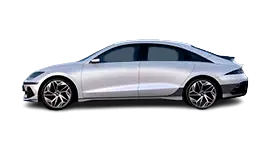
1 Hyundai Ioniq 5 (2025–2026) 800V Charging
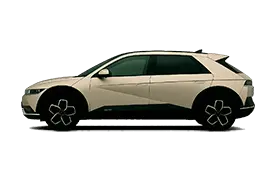
This is the one people are genuinely torn on. Not in a "well it depends on your use case" way — in a "I've seen owners switch to the Ioniq 5 and not look back" way. The charging speed gap is the main reason. The Ioniq 5 is on 800V architecture and pulls 220+ kW past 70% state of charge. The Model Y is already down near 85 kW by that point. On a long trip with three charging stops, you feel that difference in your actual time. Not on a spreadsheet. In a rest stop car park.
Where It Wins
- Charging speed: Peaks around 230–240 kW and holds it much longer. Ioniq 5 owners on road trips consistently finish and leave while the Tesla next to them is still sitting at 70%.
- Rear legroom: Flat floor, longer wheelbase. I put two 6-footers in the back of both cars. The Ioniq 5 wins that conversation clearly.
- Ride on rough roads: The Juniper closed the gap but owners coming from an Ioniq 5 still say Hyundai absorbs bad urban pavement better. I'd agree with that.
- Ioniq 5 N: 641 hp, adjustable regen, sounds like a car. The Model Y Performance doesn't have an answer to this trim.
Where It Falls Short
- Charging network: NACS port is there now so Superchargers work — but finding a 350 kW CCS stop on a road trip still needs planning. Tesla nav does that automatically.
- Cargo: Sloped rear, smaller frunk. You notice it when packing for a trip.
- Software: OTA updates are getting better but Tesla still moves faster. Things that get fixed overnight on a Tesla sometimes need a dealer trip on the Hyundai.
Long Range RWD — 84 kWh usable · 318 miles (512 km) EPA · From ~$48,000
800V · DC fast charge 10–80% in ~20 min on 350 kW CCS
2 Kia EV6 (2025–2026) Driver's Choice
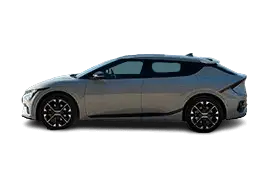
Same platform as the Ioniq 5, but these two feel nothing alike. The EV6 sits lower, the steering does something, and there's an energy to it that the Model Y just doesn't have. Owners who switched from Tesla mention the driving feel before anything else. The GT — 577 hp, 3.4 sec — was one of the best drives I had in this segment. The Model Y Performance is faster in a straight line. The EV6 GT is more fun. Different things.
Where It Wins
- Driving feel: Steering talks back. Body control is tighter. Owners who switched from Tesla to EV6 mention this more than anything else.
- Looks: More distinctive. Subjective obviously — but owners cite it constantly as a reason they chose it. They didn't want the most common EV on every street.
- Warranty: 10 years / 100,000 miles on the powertrain. Tesla gives 8 years. Both are solid — the Kia just looks better on paper.
- 800V charging: Same architecture as Ioniq 5, same fast-charging advantage over the Model Y on long trips.
Where It Falls Short
- Rear space: Tighter than the Ioniq 5 back there, and tighter than the Model Y. Tall passengers feel it on longer trips.
- Practicality: The low roofline looks great and costs you cargo. Two people, no problem. Family trip with luggage, it starts to feel cramped.
Long Range RWD — 84 kWh usable · 319 miles (513 km) EPA · From ~$47,000
800V · DC fast charge 10–80% in ~18 min on 350 kW CCS
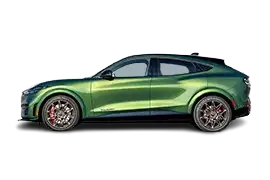
3 Ford Mustang Mach-E (2025–2026) US Value Pick
The Mach-E doesn't get the credit it deserves in most comparisons. Ford added the NACS port in 2025 so you get full Supercharger access — that removed the biggest reason people skipped it. The Rally trim in particular surprised me. Adjustable MagneRide suspension, wider track, and a handling balance that owners describe as the most fun you can have in an EV family SUV at this price. That's not something you'd ever say about the standard Mach-E, but the Rally is genuinely different.
Where It Wins
- Cargo: Biggest trunk in this group plus a real frunk. Moving stuff? The Mach-E beats the Model Y on raw volume.
- Supercharger access: NACS port standard on 2025 models.
- Price: From ~$39,000 — cheapest entry in this comparison.
- Rally handling: MagneRide dampers, wider track. Owners say it's the most fun EV SUV at this price. Can't disagree.
Where It Falls Short
- Software updates: Ford's OTA pace is slower. Fixes that land overnight on a Tesla sometimes need a dealer trip here.
- Resale: Historically weaker than the Model Y. Three or four years in, that gap is real money.
- Charging speed: 150 kW peak. At a highway charger the Ioniq 5 and EV6 are done and gone before the Mach-E hits 80%.
Extended Range RWD — 91 kWh usable · 300–320 miles (483–515 km) EPA · From ~$46,000
400V · DC fast charge peak 150 kW · 10–80% in ~38 min (Std) / ~36 min (Ext)
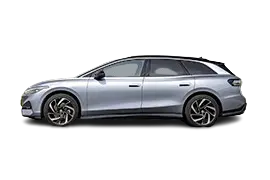
4 Volkswagen ID.4 / ID.5 (2025–2026) European Comfort
The ID.4 knows what it is. Not trying to win on charging speed or sprint times — it's a comfortable, spacious, well-built family car that happens to run on electricity. In Europe that works well. In the US it's a harder sell against the Model Y on value. But I've talked to owners who came from German ICE cars and feel more at home in the ID.4 than they ever did in a Tesla. The quality feel is different. Not faster, not smarter — just more solid.
Where It Wins
- Interior space: Flat floor, tall roof, wide cabin. Back seat passengers get more room than in a Model Y.
- Ride: Tuned for European roads. Even post-Juniper, the ID.4 is softer and more forgiving on broken surfaces.
- Build quality: Owners switching from Tesla comment on this first — panels fit properly, plastics feel deliberate, doors close like they mean it.
Where It Falls Short
- Charging speed: 135–175 kW peak depending on the pack. That's behind everyone else here on a fast charger.
- Performance: Standard variants feel slow even by modest EV standards. The GTX is better but still not exciting.
- Software: Early ID.4 owners went through some rough years with bugs. Much improved now, but Tesla OTA updates are still in a different league.
Pro S AWD — 82 kWh usable · 263 miles (423 km) EPA · 335 hp
400V · DC fast charge peak 175 kW · 10–80% in ~28 min
5 Chevrolet Equinox EV (2025–2026) Best Value
The Equinox EV genuinely surprised people when it came out — including me. $35,000, 300+ miles EPA, NACS port built in. It doesn't try to be exciting. It's a family crossover that charges at Superchargers and gets you where you're going. Owners who switched from ICE SUVs love it. Owners coming from a Tesla or Ioniq 5 notice the interior step-down quickly. Whether that trade-off makes sense depends entirely on what you're spending and what you actually need from the car.
Where It Wins
- Price: ~$35,000. Nothing in this comparison is close.
- Real-world range: Owners say the EPA figure is actually achievable in everyday driving. That's rarer than it should be.
- Supercharger access: NACS adapter included on 2025 models.
Where It Falls Short
- Interior: More basic materials and noticeably less premium feel than the Model Y or Ioniq 5. Fine for the price — but you feel the gap immediately if you've sat in both.
- Charging speed: 150 kW peak. Gets the job done, nothing more.
- Ecosystem: No FSD equivalent, thinner charging network, slower software updates.
LT / RS AWD — 65 kWh usable · 285–307 miles (459–494 km) EPA · 300 hp
400V · DC fast charge peak 150 kW · 10–80% in ~45 min · NACS adapter included
6 So Where Does the Model Y Juniper Actually Stand?
Honestly? Still ahead on the total package — but not by the gap it used to have. The Supercharger network is still the best reason to buy a Tesla. FSD is still in a league of its own for anyone who uses it. Resale value is still class-leading. And the Juniper finally fixed the ride and noise issues that sent people to Hyundai and VW for years.
But I won't pretend the competition isn't real anymore. The Ioniq 5 beats it at the charger. The EV6 beats it to drive. And if your budget is the Equinox's price, the Model Y isn't even in the conversation.
My honest take: if you do regular long highway trips in the US, the Supercharger network still tips it. If you're in Europe on public charging, or if most of your driving is local and you charge at home — go drive the Ioniq 5 before you sign anything. You might not come back.
Alternatives to the Tesla Model Y Juniper
Tesla Model Y Juniper (2025): Real Owner Problems & Known Fixes
I've gone through hundreds of owner threads and service reports to put this together. Not press-release stuff — actual complaints, actual fixes, and a few things Tesla keeps saying are "within spec" that honestly aren't. Here's what to watch for depending on which year you're looking at.
1 2020–2022 — Early Production Headaches High Risk Used
The first two years are where most of the serious complaints live. Tesla was ramping production hard — and it showed. A 2020 without full service history and a proper inspection before you sign? I'd walk away.
Build Quality & Panel Gaps
2020–2021 production had the lot — doors that didn't sit right, panel gaps you could see from five metres away, paint runs, trim that lifted at the edges. Tailgate corners and the top of the front door frames were the worst spots. Most of it can be sorted at a Tesla service centre, but some owners had to push hard before anyone acknowledged it wasn't acceptable. Go over every gap before you buy. Tailgate corners, top of the front doors. Take photos while the seller is watching.
Heat Pump Failures (2020–2021)
The early heat pump had a valve assembly that failed — cabin heat gone, sometimes full HVAC out, usually in cold weather when you least wanted it. Parts at the time ran $800–$1,500 USD plus labour. Tesla revised the components by 2022. But a high-mileage 2020 with no HVAC work in the history either got lucky or hasn't failed yet. Ask specifically for any climate system repairs in the service records.
Suspension & Steering Noise
Clunks and squeaks from the front suspension start appearing around 50,000–70,000 km (31,000–43,000 miles) on early cars — worn bushings and control arm issues are the most common cause. The front suspension U-joint can also dry out and squeak on every bump; this one's actually a cheap fix — owners have resolved it with a grease gun and a needle through the rubber boot, total cost about $25. Worth checking before assuming you need a full control arm.
Phantom Braking (Autopilot / FSD)
Phantom braking — the car suddenly slowing down for no visible reason on Autopilot — was a real and genuinely annoying problem on 2020–2022 cars with HW3. Tesla improved it significantly with software updates, but some owners with HW3 still experience it more than they should. HW4 cars (mid-2023 onward) are much better in this regard due to higher-resolution cameras.
2 2023–2024 — Better, But Not Perfect Moderate Risk
Manufacturing quality improved noticeably by 2023. Panel gaps got tighter, HVAC issues largely disappeared, and HW4 arrived mid-year. But a few problems carried over.
Suspension Noise (Still Present)
Squeaks and rattles from the suspension didn't fully go away in 2023–2024. Owners report them starting after 12–18 months of use rather than immediately. Usually it's bushings or stabilizer links — not structural, but annoying. The front left corner seems to be the most common source based on owner reports.
Tire Wear
The car weighs around 2,000 kg (4,400 lb) and hits full torque the moment you touch the pedal. Tires feel that. Front tires on RWD go at 30,000–50,000 km (18,500–31,000 miles) for a lot of owners — sooner if they skip rotations. Rotate every 10,000–12,000 km (6,000–7,500 miles), alignment check every 20,000 km (12,400 miles). When you're replacing, go EV-rated — standard compound tires wear faster and get louder on this platform than they should.
Software Quirks
Auto wipers that don't work well in light rain, occasional touchscreen sluggishness, unexpected alert popups — these are all still present in 2023–2024 cars. Most get patched over time via OTA, but there's always a window after a big software update where something breaks. Check the build date and software version when buying used — cars that haven't received updates in a while can have accumulated bugs.
3 2025 Juniper — New Car, New Issues Early Build Watch
The Juniper is a genuinely better car — most long-time owners say so. But it's a new production ramp, and new ramps always produce early-build issues. I've tracked the main ones coming out of owner communities since deliveries started in March 2025.
Steering Wheel Click / SCCM Fault
A clicking sound when turning the steering wheel and returning to center — documented across multiple early Juniper builds. Tesla service diagnosed the cause as an internal fault in the Steering Column Control Module (SCCM). The fix is module replacement; as of mid-2025 the part was on backorder at many service centers, meaning some owners waited 2–3 weeks for repair. At delivery: do a slow parking lot S-turn in both directions and listen carefully.
Highway Vibration (Steering Wheel / Chassis)
Steering wheel vibration at 120–135 km/h (75–84 mph) has been reported on a portion of early Juniper builds. In many cases a high-speed dynamic balance — not the standard slow-speed balance most shops default to — resolved it. If the standard balance doesn't fix it, specifically ask for a high-speed balance before accepting any other diagnosis.
Suspension Thump on Sharp Bumps
A double-bump or bobbling sound over sharp vertical inputs — reported by a notable share of Juniper owners from delivery. In some cases the sound turned out to be rear hatch latch play rather than suspension, fixed by tightening the latch mechanism. Worth checking that first before going down the suspension diagnosis route. If it's genuinely the suspension, Tesla service is aware of the complaint — bring a recording of the sound to your appointment.
Rear Seat Removal — Gone
A functional change many owners didn't expect: the Juniper's rear seats can no longer be removed without triggering error messages. Pre-Juniper cars allowed full removal for cargo. This matters if you regularly load oversized items or use the car commercially. It's not a fault — it's a design decision — but it catches people off guard.
4 What Actually Holds Up Well Reliable Bits
After all that, here's what almost never shows up in complaint threads because it just works:
- Electric motors: Solid across all years. I've seen owners post 150,000–200,000 km (93,000–124,000 miles) on original motors with nothing done. Drive unit failures happen — but they're rare for how many of these cars are running.
- Traction battery: Degradation on cars charged sensibly — kept at 80–90% daily, not left at 100% for weeks — is low. Under 5% loss after 4–5 years comes up often in owner data. The 8-year / 150,000-mile (241,000 km) warranty on LR and Performance trims is genuinely strong.
- Brakes: Regen does most of the slowing in everyday driving. Pads last. Some owners are still on originals at 80,000 km (50,000 miles) — rotors too. Get them inspected for caliper seizing though; they can corrode from underuse.
- OTA updates: Still nothing else touches this. Bugs that would need a dealer visit on any other brand fix themselves overnight. Not always, not immediately — but often enough that it genuinely matters.
Note: Pulled from owner forums, community threads, and public sources. Not guaranteed complete or error-free — use as a starting point. Data current as of early 2026.Back to Contents
Frequently Asked Questions FAQ about the Tesla Model Y RWD Specs 2025 – 500 km Range, 220 kW | EVSpecsHub
The Model Y offers a range of up to 500 km (311 mi) / WLTP under WLTP standards, depending on driving conditions and trim.
It supports DC fast charging up to 175 kW, reaching 10–80% in about 24 minutes at compatible stations. AC charging is 11 kW from a home wallbox.
No, V2L (Vehicle-to-Load) or bidirectional charging is not supported in the standard model.
The 2025 Tesla Model Y RWD has a trunk capacity of 854 L (30.2 ft³) standard, expandable to 2138 L (75.5 ft³) with rear seats folded. Frunk availability hasn't been officially confirmed yet.
The 2025 Tesla Model Y RWD measures 4790 mm (188.6 in) in length, 1982 mm (78.0 in) in width, and 1624 mm (63.9 in) in height. The wheelbase is 2890 mm (113.8 in).
The ground clearance of the Model Y is 167 mm (6.6 in).
Unbraked trailer: 750 kg (1653 lb). Braked trailer: 1600 kg (3527 lb).
The Model Y features a motor (3D6) delivering 220 kW (295 hp) and 420 Nm (310 lb-ft) of torque.
New Juniper or a Late Pre-Refresh Model Y — Which One Makes Sense in 2026?
People ask me this constantly. My answer hasn't changed much: the Juniper is the better car. But "better" costs money, and what you're paying for is mostly comfort and refinement — not range, not speed, not software. Whether that trade-off makes sense depends on your budget and how much time you actually spend in the car.
1 What the Juniper Actually Changed — In Real Driving Honest Take
After driving both back-to-back on the same road, the differences that hit you immediately are the suspension and the cabin noise. The frequency-selective dampers soak up small bumps and expansion joints in a way the old car just didn't — the Juniper feels more settled, less like it's reacting to every imperfection. And the double glazing all around makes a real difference on the highway — 20–30% less wind and road noise is noticeable from the first minute.
Everything else — the 4th-gen heat pump, ventilated seats, rear touchscreen, ambient lighting, updated front end — is real and adds up. But it's the ride and the quiet that you feel on a Tuesday morning commute, not just during a test drive.
Range? The Juniper picks up 5–10% over the equivalent pre-refresh trim — roughly 15–35 miles (25–55 km) EPA depending on variant. Mostly from aero tweaks, revised tires, and better thermal management. Solid, but nobody's going to feel it in daily driving.
2 Go With the Juniper If… New Build
- Comfort is your top priority. The ride and NVH improvements are hands down the biggest upgrade — if you spend a lot of time in the car or cover long distances regularly, you'll feel the difference every single day.
- You live somewhere cold. The updated heat pump genuinely saves 10–15% on heating energy in freezing temps. Over a full winter that adds up — both in range and in how fast the cabin warms up.
- You want the full package. Ventilated seats, rear passenger screen, ambient lighting, front parking camera — these feel like extras until you've had them for a week.
- You're keeping the car 5+ years. Full factory warranty, stronger resale position in the first few years, and you're not inheriting any early-production quirks from someone else's car.
3 A Late Pre-Refresh (2023–2024 LR AWD / Performance) Often Wins If… Used Smart Buy
- The price gap is $10,000–$20,000+. A well-specced 2024 LR AWD with HW4 gives you very close performance, the same FSD capability, and nearly the same range — for significantly less money.
- Road noise and ride firmness don't bother you much. Plenty of owners drove pre-Juniper Model Ys for years and loved them. The old car isn't rough — the Juniper is just noticeably more refined.
- You want the car now. New Juniper build slots have had wait times; a clean used 2024 is available today.
- You plan to upgrade again in 3–4 years anyway. In that case the Juniper's long-term warranty advantage matters less, and the used car's lower depreciation hit matters more.
4 My Take Bottom Line
If budget isn't tight and you want the most comfortable, polished Model Y you can get — buy the Juniper, ideally a build from late 2025 onward when the early production issues had settled. You'll feel the difference every day and won't have any regrets.
If you're staring at a $15,000 price gap between a clean 2024 LR AWD and a new Juniper — that's a real number that buys a lot of other things. The 2024 with HW4 is a very good car. The things the Juniper does better are real, but they're comfort and refinement improvements, not capability jumps. Drive both back-to-back on a road you know well — the suspension and cabin noise are the things that make the decision, not the spec sheet.
Tesla Model Y Specs, Owner Manual & Official Resources
Every number on this page traces back to one of the sources below. Official Tesla documents for specs and technical data; owner communities for real-world experience that the press kit doesn't cover.
Official Tesla Sources
- Official Tesla Model Y page (US) — trims, range figures, performance specs, and pricing.
- Official Tesla Model Y page (UK) — UK trims, WLTP range figures, pricing, and LFP RWD specs.
- Official Tesla Model Y page (Germany) — European trims, WLTP range figures, and regional pricing.
- Introducing New Model Y press material — Juniper refresh details, efficiency gains, and launch info. Published April 1, 2025; updated December 12, 2025.
- Tesla Model Y Owner's Manual — battery, dimensions, subsystem specs, and safety information.
Owner Communities & Forums
- Tesla Motors Club — Model Y subforum — largest independent Tesla forum covering all Model Y topics.
- TMC — Model Y Juniper tag — Juniper-specific threads: real-world issues, accessories, owner impressions.
- TMC — Waiting Room: New Model Y (Juniper) — orders, deliveries, configs, and first impressions.
- TMC — Juniper Model Y Performance Revealed — Performance variant specs, hardware upgrades, and availability.
- Speak EV — Tesla Model Y subforum — UK-focused EV community with an active Model Y section.
- Reddit — r/TeslaUK — UK owner community; real-world range, charging experience, and Juniper impressions from British drivers.
- TFF-Forum.de — Tesla Model Y — large German-language Tesla community; technical discussions, real-world data, and European ownership experience.
- Tesla Owners Online — Model Y General Discussion — active owner community, general and technical threads.
Where Tesla doesn't publish exact numbers — real usable battery capacity, for instance — I use independent test results, owner OBD-II measurements, and community data. Anything not from an official source is flagged as an estimate or calculated value.
Back to ContentsAbout This Page
Specs and real-world data for the 2025 Tesla Model Y Juniper — pulled from official materials, press kits, owner forums, and independent tests. One place with accurate numbers, no marketing copy.
Author
I'm Alex. EVs have been a hobby for years — not as a journalist, just someone who finds this space genuinely interesting. I go through official releases, dig into owner threads, watch real-world tests, and bring the most accurate data into one place. If something's wrong, there's a contact link at the bottom of the page.
Last Updated
March 2026
Sources: official Tesla materials, open public data, owner reports. Current as of the date above. Use as a reference — verify anything critical before acting on it.