Used Volkswagen e-Golf Problems and Fixes (2013 – 2020).
TESLA FORD HONDA CHEVROLET RIVIAN HYUNDAI KIA LUCID VOLKSWAGEN SKODA AUDI BMW MERCEDES RENAULT VOLVO PEUGEOT BYD XIAOMI TOYOTA NISSAN…
TESLA FORD HONDA CHEVROLET RIVIAN HYUNDAI KIA LUCID VOLKSWAGEN SKODA AUDI BMW MERCEDES RENAULT VOLVO PEUGEOT BYD XIAOMI TOYOTA NISSAN…
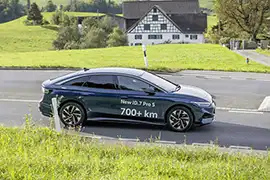
Volkswagen ID.7 Pro S — 794 km on one charge TESLA FORD HONDA CHEVROLET RIVIAN HYUNDAI KIA LUCID VOLKSWAGEN SKODA…
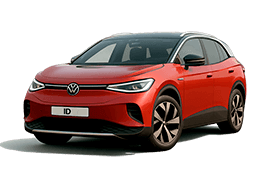
The Volkswagen ID.4 has become a significant player in the electric SUV market, but it’s important to understand that the…
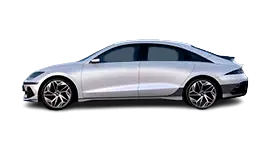


A comparison built on real ownership experience — not press fleet weekends
Forget the magazine stuff. I went through owner threads, Reddit posts, forum arguments — the kind of places where people say what they actually think because nobody's paying them to be diplomatic. People who bought these cars with their own money and have very specific opinions about what works and what doesn't.
After going through hundreds of those discussions — people who've owned one, then the other, sometimes back again — the picture that comes out is pretty different from what you get in a professional review. More useful too.
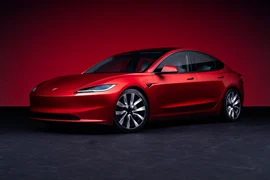
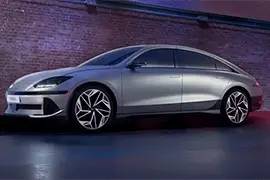
I looked at a bunch of side-by-side charging tests that owners ran themselves — not lab conditions, just real highway stops. The Ioniq 6 added close to 200 miles in 15 minutes. The Model 3 at the same charger, same session: roughly 130 miles. That gap is not subtle. One owner said he watched the Ioniq 6 next to him finish and pull out while his Tesla was still sitting at 61%. That sticks with you.
One owner who had driven both cars extensively put it bluntly: watching an Ioniq 6 pull into a charging station after a Model 3 and leave before it is something that happens regularly on long road trips now — and it genuinely surprises people who assumed Tesla had the charging game locked down.
One catch though: plug the Ioniq 6 into a Tesla Supercharger with an adapter and that advantage evaporates completely. Some owners got as low as 42 kW. So the fast charging story only holds up when you're on the right network.
Ask an Ioniq 6 owner why they went with it instead of the Model 3 and they'll skip straight past the specs. Every time. What they actually talk about: the cabin goes properly quiet over about 100 km/h, the suspension takes rough pavement without slapping you around, and two hours on the highway doesn't leave you tired in the way a firmer car does. Nobody notices good ride quality until they get back in something worse.
I've seen multiple stories from Tesla owners who wandered over at charging stops to look at an Ioniq 6 parked next to them — ended up spending 20 minutes looking around the interior, asking questions. The thing just draws people in.
The Model 3, by contrast, is described by owners — including Tesla loyalists — as over-sprung and firm. On rough urban roads, particularly in markets like Australia, the Tesla's suspension gets old fast. The glass roof without a proper sunshade comes up constantly too — owners in hot climates don't describe it as a minor thing, they describe it as genuinely affecting how comfortable the car is to sit in.
This one sparks the most arguments. Tesla's software is hands down the best in the segment — routing through chargers actually works, the app responds when you tap it, settings follow you car to car. It feels like one product, not five departments stapled together.
Ioniq 6 owners mostly admit this. The Hyundai's software does the job but it's clearly not where the engineering effort went. Some things reset every time you start the car — auto high beams, certain ADAS settings. The capacitive door buttons have a tiny lag that you stop noticing after a month, except you never actually stop noticing it. Small thing, multiplied by every single day.
One guy who came from a Tesla put it well: felt like the Hyundai's teams each built their own piece and then handed it off without much coordination. Not broken, just not seamless. After years of Tesla's everything-connected experience, you feel that gap.
That said, Tesla's "no physical buttons" thing has gone further than a lot of owners wanted. Removing the indicator stalk from the refreshed Model 3 was a genuine flashpoint — plenty of people who love Tesla's software still said that one crossed a line.
For years, buying a Tesla meant accepting some panel gaps, some misaligned trim, the occasional paint issue. It was part of the ownership folklore — you knew what you were signing up for.
The Ioniq 6 is just better built. Gaps are tighter, doors close with more weight to them, materials feel deliberate rather than budget-driven. Pretty much everyone coming from a Model 3 mentions this in the first five minutes.
But the Ioniq 6 isn't without its own interior quality complaints. The window control area and the cupholders are repeatedly called out as obvious cost-cutting spots — plastic that feels cheap next to everything around it. It's the kind of detail that wouldn't matter in isolation but stands out in a car that otherwise presents itself well.
For many people, this is what actually decides the purchase — and it varies enormously by location. One owner's story is pretty representative: both he and his wife loved the Tesla they already owned, and when she went looking for a new car, the Ioniq 6 was genuinely competitive on almost every metric. What pushed her to the Hyundai wasn't the car specs — it was the fact that the nearest Tesla service center was 200 miles away, while a Hyundai dealer was five miles from home. That kind of practical reality shapes ownership satisfaction in ways that no spec sheet captures.
Tesla's service model is a legitimate sore point for owners outside major metropolitan areas. Mobile service handles a lot of issues well, but for anything more complex, the distance to a service center becomes a real problem. Some owners felt their concerns weren't taken seriously, and a few described situations where they were told a problem was "by design" when they believed something was genuinely wrong with their vehicle.
Hyundai dealer quality, on the other hand, is wildly inconsistent. Some owners rave about their dealer experience. Others describe visits where service staff couldn't locate a known recall in their own system. The traditional dealership model has its advantages — competition, local accountability, physical proximity — but it also means your experience can differ dramatically based on which dealer you end up with.
The range comparison is more complicated than headline EPA numbers suggest, and owners who've actually tested both cars tend to be specific about conditions. In RWD configuration, the Ioniq 6 pulls ahead meaningfully — one real-world test put it at nearly 291 miles at a steady highway speed, compared to around 211 miles for the RWD Model 3. In AWD configurations the gap narrows or even flips depending on conditions and wheel size.
Canadian owners flagged something else: going with the 18-inch wheel option on the Ioniq 6 makes a real difference to range — worth thinking about if you're doing long trips regularly. And in Canada the price gap flips in places — sometimes the Ioniq 6 costs less than the equivalent Tesla while going further on a charge.
Owners who've run both cars hard agree on one thing: Tesla's EPA numbers flatter more than Hyundai's. The Ioniq 6 tends to land closer to what the sticker says when you're actually driving it.
Model 3 buyers want everything to work without them thinking about it. Supercharger network, navigation that handles the trip, app that responds, settings that sync. They want the car invisible. Tesla mostly delivers that.
Ioniq 6 buyers care about the driving itself — how the seat feels after two hours, whether the road noise creeps in, whether there's an actual button where a button should be. A few I read mentioned it directly: they didn't want the car everyone else has. Not a flex thing, just a preference for making a deliberate choice rather than the default one.
One owner who had owned a Model 3, then a Polestar 2, then an Ioniq 6, probably summarized it best when he said the Ioniq 6 is simply the most complete of the three — better leg room, better ride quality, faster charging when the infrastructure supports it, solid build quality, and enough technology to satisfy most people's daily needs.
But it's also about $2,000–3,000 more expensive in the US market than an equivalent Model 3, and it doesn't have the software ecosystem that Tesla owners take for granted.
Neither car is obviously right for everyone. The Tesla trusts software to solve problems. The Ioniq 6 trusts the physical side of driving. Both bets mostly pay off.
What got me reading through all of this: Ioniq 6 owners aren't just fine with their choice — they're actually happy about it. Genuinely enthusiastic, not just not-disappointed. For a car that's still pretty new, that says more than any spec comparison can.
Data approximate for 2025–2026 models (Long Range RWD configs). Actual values vary by trim, wheels, temperature and conditions.
Explore full technical specifications
EVspecsHub is a non-profit informational platform dedicated to providing free electric vehicle specifications. Any future ads will support hosting and maintenance costs to keep our content accessible.