EVspecsHub.com EVspecsHub

2025 BMW iX3 50 xDrive 469 hp Battery, Horsepower, Range
When the 2025 iX3 started reaching first owners in Europe, I went through everything I could find — forum threads, real charging session logs, people who'd switched from the G08 and were comparing notes. What came back wasn't always what the press launch suggested. That's what this page is built on, alongside the official specs. Looking for the older generation? The 2020–2024 G08 is a separate page →

Alex · EVspecsHub
Alex · EVspecsHub
EV owner since 2021 • Last updated: March 17, 2026

BMW iX3

50 xDrive |  2025–

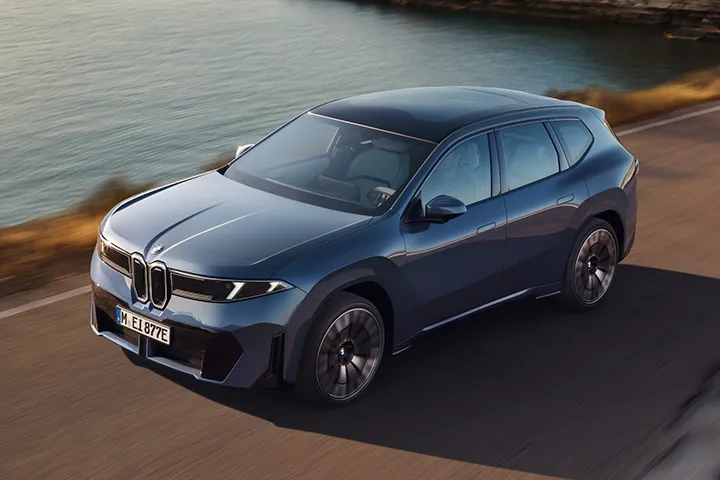
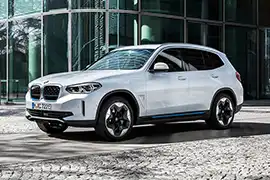
2025 BMW iX3 50 xDrive front three-quarter view by the sea – luxury electric SUV 720 by 480 pixels
BMW iX3 2025
battery capacity
Capacity
range –
Range
power output
Power
acceleration
Acceleration
109 kWh
805 km

345 kW

4.9 s

Technical Data & Performance

Model Years2025–present
Trim (Variant)iX3 - 50 xDrive
Power (Horsepower)345 kW (469 hp)
Top Speed210 km/h (130 mph)
Torque645 Nm (476 lb-ft)
Acceleration4.9 sec (0–100 km/h)
4.9 sec (0–62 mph)
DriveAWD All-wheel drive
Motor detailsDual The Gen6 EESM motors
Motor codeBMW eDrive

Battery & Charging

Battery Capacity & Size108.7 kWh usable
Max Range805 km (500 mi) / WLTP
Consumption15.1 kWh/100 km
Battery TypeLithium-ion
Cell Format / SupplierNMC (Nickel Manganese Cobalt) BMW
Battery Voltage800 V
V2L SupportedYes / 3.7 kW
Heat pumpYes
AC Home ChargingType2 / 1-phase - 7.4 kW (Max Power)
Type2 / 3-phase - 22 kW (Max Power)
DC Fast ChargingCCS2, 400 kW (Max Power)
21 min. (10–80%)

Dimensions & Body

Type5 door, SUV
Seating capacity5
Length4781 mm (188.3 in)
Width1895 mm (74.6 in)
Height1635 mm (64.4 in)
Wheelbase2897 mm (114.1 in)
Ground Clearance175 mm (6.9 in)
Curb weight2360 kg (5203 lb)
Gross weight2825 kg (6228 lb)
Trunk Volume520 L (18.4 ft³)
1750 L (61.8 ft³) max
TowingUnbraked: 750 kg (1653 lb), Braked: 2000 kg (4409 lb)
Drag Coefficient0.24
PlatformNeue Klasse

⚠️ Please note: actual vehicle specifications may vary depending on market, trim level, or available regional packages.

BMW iX3 50 xDrive 2025
EVspecsHub Score — BMW iX3 50 xDrive (NA5, 2025–2026)
Independent rating vs all passenger EVs on sale 2025–2026
EVspecsHub.com
Range
805 km WLTP · ~505 km 130 km/h
800+ km · top 5% all EVs
8.6
good
Battery
108.7 kWh usable · NMC · 800V
113.4 kWh gross · 4695 cells · dual 400V
8.8
good
Charging
400 kW DC max · 10→80% ~13 min · 800V
400 kW · 10/10 + 800V +0.3 + V2L/V2H/V2G +0.2 → cap 10.0
10.0
top
Performance & Dynamics
0–100 km/h · 4.9 s · 469 hp · AWD
4.9 s → 8.0 + AWD +1.0 = 9.0
9.0
top
Efficiency
13.6–15.1 kWh/100 km · 4.1 mi/kWh
15.1 kWh/100 km · above avg SUV
7.9
avg
Cargo
570 L boot · no frunk · Model Y: 854 L
570 L · below segment avg · no frunk
6.5
avg
Value
~£59k UK · ~€72k DE · £73/km WLTP
£73/km · 33% above all-EV avg
6.0
weak

Verdict: Leads on range, charging and dynamics — all near the top in 2026. Charging hits the 10.0 ceiling with 400 kW + 800V + V2L/V2H/V2G. Weak spots: 570 L boot without a frunk and £59k+ price tag.

© EVspecsHub.com · All passenger EVs 2025–2026 · March 2026 · Methodology v6.2

8.1
out of 10
EVspecsHub Score
📊 Using this score in your review?
Free to use — just credit EVspecsHub.com
▸ Score data table (methodology v6.2)
BMW iX3 50 xDrive (NA5, 2025–2026) — EVspecsHub Score v6.2. Charging: step-50 scale + 800V +0.3 + V2L/V2H/V2G +0.2, cap 10.0. Performance: 0–100 + AWD +1.0, cap 10.0. EVspecsHub.com, March 2026.
CriterionScoreKey data10/10 =
Range8.6805 km WLTP · ~505 km at 130 km/h800+ km
Battery8.8108.7 kWh usable · NMC · 800V115+ kWh
Charging10.0400 kW + 800V +0.3 + V2L/V2H/V2G +0.2 → cap 10.0400+ kW
Performance & Dynamics9.04.9 s → 8.0 + AWD +1.0 = 9.0sub-3s AWD
Efficiency7.915.1 kWh/100 km WLTP<12 kWh/100 km
Cargo6.5570 L · no frunk · Model Y 854 L1000+ L
Value6.0~£59k · £73/km vs avg £55/km<£40/km
Overall8.1 / 10EVspecsHub Score v6.2 · EVspecsHub.com · March 2026

BMW more…

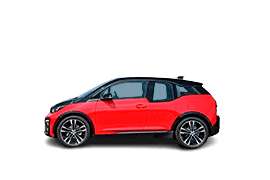
Bmw I3s 2017 180
i3 (2013-2022)
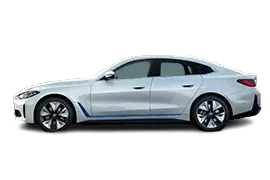
BMW i4 side profile electric sedan dimensions and aerodynamics
i4 (2023-pr.)
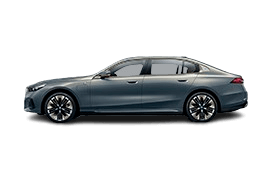
I5 2023 180
i5 (2023-pr.)
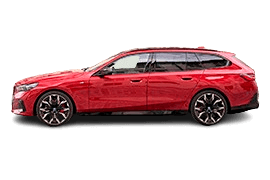
I5 Touring 2024 180
i5 Touring (2024-pr.)
Bmw I7 2022 180
i7 (2024-pr.)
2020 BMW iX3 electric SUV with 74.0 kWh NCM battery and 460 km WLTP range
iX (2020-2024)
Bmw Ix1 2022 180
iX1 (2023-pr.)

BMW iX3 50 xDrive (NA5, 2025–2026): What the Spec Sheet Won't Tell You

BMW's press materials give you 805 km WLTP and 400 kW peak charging. Both figures are real — and both tell you almost nothing about what happens on a January motorway run with the heat on. This page pulls together what I found digging through early owner threads, independent timed sessions, and BMW's own engineering workshops. The standard specs are already in the tables above. What follows is everything those tables leave out.

Right now there's one version to choose from: the 50 xDrive. Two motors, all-wheel drive, 345 kW (469 hp), 645 Nm (476 lb-ft). The iX3 40 with a single motor and 82.6 kWh pack is coming sometime in 2027 — completely different numbers, covered separately when it arrives.

1 Battery Pack — Cell Architecture & Real Capacity Numbers 50 xDrive

BMW publishes no cell-level data for the Neue Klasse in any consumer document. What's here comes from technical teardown threads and confirmed pack architecture that surfaced shortly after the first European deliveries.

What's Actually Inside

The old G08 iX3 used flat prismatic cells — 188 of them, module-based, 80.3 kWh gross. The NA5 is a clean break. Gen6 uses cylindrical cells, format 4695 (46 mm diameter × 95 mm height — not Tesla's 4680, different spec). Chemistry is NMC. The pack architecture decoded from technical threads: 960 cells, 5P192S configuration — 192 in series, 5 in parallel. Each cell has double-sided liquid cooling. Assumed cell voltage ~3.65 V, capacity ~32 Ah — which gives a gross pack of approximately 112–113.4 kWh. BMW quotes 108.7 kWh usable, leaving a ~4.7 kWh (4.1%) protective buffer.

The pack splits into two independent 400V halves (5P81S each). That's what lets the iX3 charge at full efficiency on both 800V and standard 400V DC hardware without an external converter — something worth knowing before you assume "800V car = 400V charger is slow."

US vs. Europe capacity gap: BMW North America confirmed the US iX3 is rated at 112.2 kWh usable vs. Europe's 108.7 kWh. Same physical pack, same cells — different warranty and testing framework. Not a bigger battery. Just different accounting.

2 DC Fast Charging — The Curve, The Drop-Off, The Fine Print 50 xDrive

BMW's engineers said it plainly at their Spain workshop: the charging curve is defined by cell chemistry and internal resistance — no software smoothing. The pack can't accept full current below ~10% SOC. Past that point it climbs to peak rate fast — and stays there for roughly three minutes before the cells naturally ease it back to a lower plateau. Nothing dramatic, just chemistry doing what chemistry does.

Someone logged a preconditioned session starting at 8% on an Ionity 350 kW station — the needle opened at 347 kW and didn't drop below 300 kW until around 45% SOC. Starting at 45% SOC on the same hardware, another session opened at 321 kW. Half-full battery, still pulling over 300 kW. One independently timed 10–80% run on 800V hardware: 13 minutes. BMW's official claim is 21 minutes. Thirteen requires optimal conditions, but it's a stopwatch result, not a press release.

Above 50% SOC the curve steps down — that's just physics. Here's how it actually looks:

DC charging curve — iX3 50 xDrive 800V station, preconditioned

EVspecsHub.com

NMC · 108.7 kWh usable · dual 400V architecture · preconditioned pack

Based on documented real-world sessions. Curve varies with pack temperature and charger hardware.

▸ Data behind this chart (charging power by state of charge)
BMW iX3 50 xDrive — DC fast charging power at each SOC level. 800V station, preconditioned battery. Based on real-world logged sessions.
State of charge (SOC) Charging power (kW) Notes
10%~350 kWPeak window, holds ~3 min
20%~340 kWSustained high plateau
30%~330 kWSustained high plateau
40%~318 kWStill above 300 kW
50%~275 kWTaper begins
60%~215 kWNoticeable drop-off
70%~155 kWContinued taper
80%~105 kWTypical road-trip stop point
90%~48 kWSlow fill, BMS protecting cells
100%~18 kWNot recommended at DC chargers

AC Charging — Two Different Cars by Market

Europe: 11 kW standard, 22 kW as a paid option (cuts full charge from ~10h to ~5h). US: 15.4 kW AC standard, full 0–100% in approximately 7.5 hours. V2L exports at 3.7 kW via adapter; V2H and V2G bidirectional included — first BMW EV with all three standard.

3 Real-World Range — What owners are actually logging 50 xDrive

The official numbers sit between 678 and 805 km (421–500 miles) on the WLTP cycle depending on which wheels you picked. EPA puts it around 644 km (400 miles) — not officially stamped yet, but that's the working figure. Neither tells you much about a January run with the heat on.

Real-World Range by Speed — iX3 50 xDrive 20" wheels, mild conditions

EVspecsHub.com

NMC · 108.7 kWh usable · 20" aero wheels

90 km/h (56 mph)
~720 km / 447 mi
120 km/h (75 mph)
~473 km / 294 mi
130 km/h (81 mph)
~505 km / 314 mi
150 km/h (93 mph)
~453 km / 281 mi
Winter, 130 km/h
~450 km / 280 mi

Sources: owner-logged sessions, independent timed tests. 22" wheels reduce range by up to 127 km (79 mi) WLTP vs. 20".

▸ Data behind this chart (range figures by speed and condition)
BMW iX3 50 xDrive — real-world range by speed. 20-inch aero wheels. Based on owner-logged sessions and independent tests.
Speed Range (km) Range (miles) Conditions
90 km/h (56 mph)~720 km~447 miMild, mixed Autobahn + rural
120 km/h (75 mph)~473 km~294 miMild, highway cruise
130 km/h (81 mph)~505 km~314 mi15°C ambient, highway
150 km/h (93 mph)~453 km~281 miSummer, Autobahn
130 km/h winter (81 mph)~450 km~280 mi0–8°C, highway, heat on

What those bars actually mean

A guy in Germany logging his daily commute — 90 km of Autobahn mixed with backroads and town traffic, outside temps around 2–8°C (36–46°F) — pulled 15.1 kWh/100 km over the full loop. At the end of it the car was showing 654 km (406 mi) left at 86% charge. Scale that to 100% and you're looking at roughly 760 km (472 mi) — more than BMW's own WLTP figure for his spec. Then he took it onto the motorway properly, cruise control at 150 km/h, and watched consumption climb to 20.7 kWh/100 km. Suddenly the realistic range is 450–470 km (280–292 mi). That jump — from mixed-use efficiency to sustained motorway pace — is the number worth putting in your head before a long trip, not the 805 km figure on the brochure.

From the UK, someone running mixed motorway and rural roads through winter with heating on averaged 3.4 mi/kWh (5.5 km/kWh) — which works out to just over 580 km (360 miles) a charge. A fleet test in Romania through mountain terrain in 0–10°C (32–50°F) finished drives with 25–31% still showing — suggesting a fully depleted real-world range of 500–600 km (311–373 miles) on genuinely varied roads.

Wheels — The Variable BMW Downplays

Standard 20" aero wheels are the efficiency choice, full stop. Wheel size shows up in the data too — someone running 22-inch wheels at 130 km/h in 9°C (48°F) logged around 440 km (273 miles). The same route in similar conditions on 20-inch aero wheels: roughly 505 km (314 miles). That's a 65 km (40 mile) gap from a configuration choice made at the dealership. The 21" M Sport option has the worst tire availability and highest replacement cost of all three sizes — worth knowing before you configure.

The planning rule that's settled out of German owner discussions: at 130 km/h in winter, count on ~450 km (280 miles), not 700. The car has a standard heat pump — so it's not the heating draining the pack the way it does in older EVs. The energy loss is almost entirely speed-driven.

⚠ One thing worth knowing before the first long German motorway run: with the camera mirrors folded, this car is about 2.17 m (85.4 in) wide. A lot of Autobahn construction zones narrow to 2.10 m (82.7 in). You'll be moving right.

📋 Full technical specifications by variant:
Note: The NA5 iX3 reached first European owners in early 2026 — long-term data is still accumulating. Figures here come from owner-logged sessions, independently documented tests, and BMW engineering workshops. EPA certification pending. The 112.2 kWh figure quoted for the US market vs. 108.7 kWh in Europe comes down to how each market's testing and warranty rules define accessible capacity — same physical pack, different accounting. Data pulled together as of March 2026.
Back to contents

BMW iX3 Generation Guide: What Actually Changed and Why It Matters

I've spent a lot of time going through what separated each generation of iX3 — and the honest answer is that the 2020 and 2026 cars share a name and not much else. The first one was an X3 with an electric motor bolted in. The second was engineered from scratch. Between them sits a 2022 update that quietly added more than it looked like from the outside. Here's what actually shifted, generation by generation.

1 Generation I — Launch (2020–2021, MY21) G08 First Series

July 2020, first car off BMW's Gen5 eDrive platform — the same system that later went into the i4 and iX. Worth flagging: this wasn't iX3-specific tech, it was a platform debut. BMW was running Gen5 in the real world for the first time, and the iX3 was the test bed. Some of the first-year limitations make more sense with that context.

  • Battery: 80.3 kWh gross, 74 kWh usable. 188 prismatic NMC cells, module-based pack, 345V nominal. Cells from CATL (primary) and Samsung SDI — BMW had signed a combined €10 billion supply deal with both. First time CATL cells appeared in a production BMW.
  • Motor: Single rear unit, 210 kW (286 hp), 400 Nm. Rear-wheel drive only — no AWD option anywhere in the first generation.
  • DC charging: 150 kW peak. 0–80% in 34 minutes. Reasonable for 2020, but the curve drops earlier than later cars.
  • AC charging: 11 kW, no 22 kW option.
  • Heat pump: Standard from day one — one thing BMW got right immediately.
  • WLTP range: 460 km (286 miles).
  • V2L / bidirectional: None.

One thing the spec sheet skips: the MY21 was on sale for under a year before the facelifted version started shipping. If you're shopping used 2020–2021 cars, check the build date — early examples have the older headlight design and the pre-LCI screen layout.

2 LCI Facelift — 2022–2024 (MY22–24) G08 Revised

Revealed August 2021 — barely twelve months after the original launched. The reason had nothing to do with the iX3 itself: the X3 combustion car was due a mid-life refresh, and the iX3 followed along since it shared the body. That context matters when reading the spec changes — the powertrain was left alone almost entirely. This was a software, screen, and safety update.

  • Battery and motor: unchanged. Same 80.3 kWh gross / 74 kWh usable, same 210 kW motor, same 150 kW DC peak. BMW confirmed this explicitly. Anyone expecting a capacity bump didn't get one.
  • DC charging curve: quietly tweaked. 10–80% dropped from 34 to 32 minutes on identical hardware — a software-side adjustment to the BMS charging strategy. Small, but real.
  • Screen: finally decent. The LCI brought the curved display setup — 12.3-inch instruments plus 14.9-inch touchscreen — replacing the two separate screens carried over from the 2017-era X3. Owners switching from pre-LCI cars noticed immediately.
  • BMW Driving Assistant Professional: made standard. Adaptive cruise, lane keeping, active side collision protection — previously optional, now included across all trims.
  • M Sport: standard on everything. Pre-LCI cars had it as an option. After the update, there was no non-M Sport configuration.
Buying a used G08? The LCI (production from September 2021) is the version worth finding. Same battery and motor, better software, better screen, standard safety kit. Pre-LCI cars aren't bad — they just feel a generation older inside. Build date matters more than model year here since the switchover happened mid-year.

3 Final G08 Year — 2024 Last of the Platform

G08 production ended October 2024. The last MY24 cars picked up a small but genuinely useful update that's easy to miss in used listings:

  • 22 kW AC charging added as a paid option (AC Charging Professional). First time the G08 could actually use 22 kW hardware properly. Full charge drops from ~7.5 hours to ~3.5 hours on a three-phase wallbox.
  • V2L arrived — late, but real. Vehicle-to-Load at 3.7 kW was bundled into the same AC Charging Professional package. Not every 2024 car has it — check the options list before buying.
  • iDrive 8.5 on late builds. Not an OTA update — only factory-fitted. Cars without it don't get it retrospectively.
  • Charging port: CCS2 throughout the entire G08 lifespan. No NACS, no port relocation. That gap versus the NA5 is visible and practical for anyone near Tesla Supercharger infrastructure.

4 Generation II — Neue Klasse (2025–, NA5) Current

This isn't a new iX3. It's a new car carrying the iX3 name. The Neue Klasse platform was built from scratch as an EV-only architecture — no shared floor with any combustion X3, no compromises around a gearbox tunnel. After going through everything BMW published and dug up in owner communities, the gap from G08 to NA5 is bigger than any BMW generation change I can think of in recent years.

Battery: the whole approach changed

The G08 used flat prismatic cells in separate modules — conventional, replaceable, modular. The NA5 uses cylindrical 4695-format cells (46 mm × 95 mm) packed directly into a structural floor — no modules, the battery housing IS the car's underbody. 960 cells, 5P192S configuration. Gross capacity ~113.4 kWh, usable 108.7 kWh in Europe and 112.2 kWh in the US — same physical pack, different market accounting on accessible SOC window. Energy density at cell level is 20% higher than Gen5. The supplier shift matters too: Gen5 prismatic cells came from CATL and Samsung SDI to BMW's spec; the NA5 cylindrical cells are produced to BMW's own proprietary format, not a standard supplier geometry.

Charging: not a refinement — a different league

  • Voltage: ~345V → 699V. Higher voltage means lower current for the same power — less heat, thinner cables, and thermal limits that kick in much later. This is why 400 kW is even possible.
  • DC peak: 150 kW → 400 kW. The G08's 150 kW was fine in 2020. The NA5's 400 kW is among the highest in any production car as of early 2026. Real-world documented sessions have opened at 347 kW from 8% SOC and held above 300 kW to 45%.
  • 10–80% time: 34 min → 21 min officially, 13 minutes in documented optimal-condition sessions.
  • AC charging: 11 kW standard (Europe) / 15.4 kW standard (US). 22 kW option in Europe.
  • Port: CCS2 (Europe) / NACS (US). First iX3 to ship NACS in North America — no adapter needed for Superchargers.
  • V2L + V2H + V2G: all standard. The G08 ended its life with V2L as a paid late addition. The NA5 ships with all three including Vehicle-to-Grid from the factory.

Drivetrain: inverted lineup

The entire G08 run was single motor, rear-wheel drive, no exceptions. The NA5 launched AWD-only: dual motor, 345 kW (469 hp), 645 Nm. The single-motor iX3 40 (82.6 kWh, 235 kW, RWD) comes in 2027. So the generation that started with only RWD now launches with only AWD — the efficient version arrives later.

Used G08 vs. new NA5 — the honest numbers: A late 2023–2024 G08 with AC Charging Professional will be available at real discounts as NA5 supply builds. The range gap matters less than you'd think for daily use. The gap that does matter is charging speed on long trips — the difference between 150 kW and 300+ kW is roughly 15–20 extra minutes per highway stop. If you charge at home overnight most of the time, the used G08 argument is harder to dismiss on value. If you regularly cover 400+ km in a day, the NA5 math is different.

Generation Comparison at a Glance

Spec G08 MY21 (2020–21) G08 LCI (2022–24) NA5 (2025–)
Platform CLAR (shared X3) CLAR (shared X3) Neue Klasse (EV-only)
Battery gross / usable 80.3 / 74 kWh 80.3 / 74 kWh 113.4 / 108.7 kWh
Cell format Prismatic NMC (CATL/SDI) Prismatic NMC (CATL/SDI) Cylindrical 4695 NMC
Voltage architecture ~345V (400V class) ~345V (400V class) 699V (800V class)
Motor / drive 210 kW, RWD single 210 kW, RWD single 345 kW, AWD dual
DC charging peak 150 kW 150 kW 400 kW
10–80% time ~34 min ~32 min 21 min (13 min documented)
AC charging 11 kW 11 kW (22 kW option MY24) 11/15.4 kW std, 22 kW option
Charging port (EU / US) CCS2 / — CCS2 / — CCS2 / NACS
V2L / V2H / V2G None V2L option (MY24 only) All three, standard
Heat pump Standard Standard Standard
WLTP range 460 km (286 mi) 460 km (286 mi) 678–805 km (421–500 mi)
Production location Shenyang, China Shenyang, China Debrecen, Hungary
Back to contents

BMW iX3 NA5 (2025–2026): Real Impressions — What It's Actually Like to Live With

I went through everything I could find from people who actually got their hands on this car — early European owners, forum members who'd owned the G08 and were comparing notes on the NA5, and those who spent serious time with it rather than a 20-minute press loop. What follows is the honest version: the things that kept people talking months after delivery, the things that annoyed them, and why so many G08 owners describe the switch as moving to a different category entirely.

1 Interior — A Real Step Up, One Honest Gap

Coming from a G08 or even a current X3, the NA5 cabin feels like a different brand. Soft-touch surfaces where the G08 had hard plastics. The rear seat space is one of the genuine surprises — the flat EV floor and purpose-built packaging give it knee room comparable to the X5 class. Someone 1.9m (6'2") tall still had 10 cm of headroom to spare. Two adults in the back is genuinely comfortable. Three is shoulder-tight, and nobody pretends otherwise.

The frunk gets used more than its 17-liter (0.6 cu ft) size suggests. Charging cables, a small bag, things you want accessible without digging through the boot. BMW built it from recycled marine plastic — something tucked away in the sustainability notes that most people stumble across only after they already own the car.

Two things missing at launch that shouldn't be: no ventilated front seats, no heated rear seats. At this price point — £59,000 / ~$60,000 — that's the complaint that comes up most consistently. Both are confirmed as incoming: heated rears from March 2026 production, ventilated fronts rolling out later in 2026. If you're buying early, check the build date.

2 Panoramic iDrive — You Come Around to It, Except One Part

The wide projection strip across the windscreen base looks like a gimmick in photos. In the car, after about 20 minutes, it stops registering as unusual. Because information sits 1.5 metres (5 ft) ahead rather than on a dashboard cluster, your eyes barely leave the road. Several people who were openly sceptical before delivery say they now couldn't go back to a conventional layout. The 17.9-inch touchscreen runs quickly, and those switching from iDrive 8.5 consistently describe iDrive X as meaningfully faster and more logical.

The steering wheel buttons don't get the same grace. Touch-sensitive, small, recessed into the rim, tightly grouped — they require deliberate thumb placement rather than muscle memory. BMW's own ADAS engineer acknowledged in an interview that removing too many physical controls creates real safety concerns. This is the place where that tension shows up most clearly. Also worth knowing: vent direction controls moved from physical sliders to the touchscreen. It works, but it needs eyes-on-screen time that a physical lever doesn't.

Apple vs. Android on Panoramic Vision: Apple Maps integrates into the projection display via CarPlay — Google Maps and Waze cannot, because Apple restricts that data sharing. Android Auto users can project both. Worth knowing if you're an iPhone user who navigates with Google Maps daily.

3 How It Drives — The Part Nobody Stopped Talking About

Kerb weight is 2,285 kg (5,038 lbs). That number appears constantly in owner discussions — always with the same follow-up: you genuinely can't feel it. Not in the way people say that to be polite. Body roll is nearly gone, the steering returns actual road feel, and the whole car moves with an agility that doesn't add up on paper. Those who drove it back-to-back with the Audi Q6 e-tron say it's not a close comparison on a twisty road.

The regeneration system gets specific praise. The Soft Stop function handles the last few metres of braking so smoothly that passengers who normally feel carsick in EVs with aggressive regen don't complain here. In Adaptive mode it reads the road ahead automatically — most owners leave it there and forget it exists, which is exactly how it should work. The lane-change function activated by glancing at the mirror comes up a lot: people expect a novelty, find themselves using it on every motorway run.

The A-pillar blind spot is a genuine issue in town. The Panoramic Display strip slightly reduces forward visibility over the bonnet at slow-speed junctions. The 360-degree camera resolves parking; slow urban traffic requires conscious adaptation. Almost every extended test flags this, worth knowing before you commit.

4 Charging — Where It Actually Changes the Experience

The G08 charged at 150 kW. The NA5 charges at 400 kW. G08 owners who drove the NA5 at launch events describe the difference as not just faster but a different relationship with public charging altogether — you stop planning around it. A documented session from 8% SOC on a 350 kW Ionity station opened at 347 kW and held above 300 kW through 45% state of charge. The automatic charging flap — which opens when the car recognises you approaching a familiar station — gets mentioned with disproportionate warmth. It's the kind of detail that makes a car feel thought-through rather than assembled from a feature list.

5 Compared to the G08 and the iX

The G08 was a good car on a platform designed for something else. Single rear motor only, 150 kW charging ceiling, and a rear floor that wasn't fully flat because the X3 body structure implied a tunnel that didn't exist. People who owned the G08 and spent time with the NA5 don't describe it as a better version — they describe it as a different kind of car. One person switching from an iX put it plainly: the iX is quieter and more comfortable on a long motorway run, air suspension does that. But the iX3 is sharper, charges at double the rate, and drives better. For people who actually want to drive, that's an easy call.

6 What's Actually Annoying

  • Steering wheel buttons: Touch-sensitive, small, recessed, clustered. Fine once you've memorised the layout; frustrating until you have.
  • Vent controls in the touchscreen: Physical sliders gone. Adjusting airflow direction takes more attention than it should when moving.
  • Fixed panoramic roof: No retract, no opacity control. BMW's data says few people used the mechanical shade. People who like an open roof have no option here.
  • A-pillar visibility: The Panoramic Display strip slightly cuts forward sightlines at slow-speed junctions. Not dangerous with cameras, but requires adaptation.
  • No ventilated seats at launch: Confirmed incoming. Early-build buyers are waiting.
  • Hood flutter above 140 km/h (87 mph): Caught in high-speed testing. Minor, but incongruous in a car at this price.
  • Running HUD and Panoramic Vision together: Too much information in one eyeline. Several testers switched the HUD off after a day and didn't miss it.
Overall: The NA5 is the first BMW EV where the driving character genuinely earns the badge. People expected another technically competent but emotionally neutral electric crossover. What they found was a car that handles like it cares, charges faster than almost anything else in the segment, and has an interior that finally matches what BMW charges for it. The irritations are real, but they're the kind that fade into the background after two weeks. What doesn't fade is how it drives — and how little time you actually spend standing next to a charger.
Back to contents

BMW iX3 NA5 (2025–2026): Real Owner Problems & Known Fixes

I'll be upfront: the NA5 only started reaching first owners in early 2026 — cars have been in people's hands for a matter of weeks, not years. There's no long-term failure data yet, because the cars haven't been around long enough to generate any. What follows is what's already surfaced in owner communities during the first weeks, plus the chronic issues that followed the G08 for years — worth checking whether the NA5 inherited them. It didn't, for the most part. But the new platform brings its own early quirks.

Before NA5 What the G08 Left Behind

The G08 ran on a platform designed for a petrol X3. That meant compromises everywhere — no flat rear floor, single rear motor only, 150 kW charging ceiling, and years of iDrive software that could go strange without warning. The NA5 shares nothing with it. Different architecture, different battery, different electronics. The G08's problems are not your problems if you're buying the NA5. The new platform has its own first-batch quirks — those are what you actually need to know about.

1 Digital Key+ & Contactless Door Unlock — The First Issue Out of the Box

This was the first thing that showed up in German owner communities once deliveries started. Someone wrote: two days into ownership, the contactless proximity unlock doesn't work. Not with the key fob, not with the phone. The dealer couldn't get it working at handover either. A second person on the same thread reported the same thing with a different car at the same dealer.

What the discussion uncovered: the full Digital Key Plus proximity unlock — where the car just opens as you approach — only works if your phone supports UWB (Ultra-Wideband). Without UWB, Digital Key still works, but you have to physically interact with the handle rather than walking up hands-free. One owner confirmed everything working fine with a Pixel Fold 10 and Pixel Watch 4. Another confirmed the same on an iPhone with UWB enabled.

So in most cases this isn't a car fault — it's a phone compatibility issue that dealers aren't explaining at handover. People leave thinking something's broken when the car is actually working as designed.

Fix: Check whether your phone supports UWB — most iPhones from 11 onwards and Android flagships from around 2020 do. If it does but still doesn't work, delete and re-pair the Digital Key via the My BMW app. If your phone has no UWB, the proximity function is physically unavailable — use the key card or fob.

2 Battery Heat After Hard Driving — Charging Slows Down at First

In one extended weekend test covering 1,000+ km with multiple fast-charge stops, the reviewer noted the charging speed is world-class — but battery heat slows it down after a few minutes if the pack arrived warm from sustained high-speed driving. This isn't unique to the iX3, it's what 400 kW peak charging does to any lithium pack at high C-rate. But it's worth knowing: pull off the Autobahn after a run at 150 km/h and plug in immediately, and the first few minutes of that session will be slower than a planned, preconditioned stop.

Fix: Set the charging stop as a navigation destination before you arrive. The system pretempers the battery automatically. Spontaneous stops after fast driving will still work — just expect a slower opening couple of minutes while thermals settle.

3 Hood Flutter Above 140 km/h (87 mph)

Picked up independently in multiple high-speed Autobahn tests. Above around 140 km/h the hood develops a light vibration. It's not a safety issue and doesn't affect driving. It's the kind of thing you only notice at speed, and on a car at this price it's the kind of thing that sits wrong. No official BMW response yet. A handful of owners have raised it through service — currently waiting on acknowledgement.

4 M Sport Seats — Tight for Larger Builds

Flagged in German test-drive threads: the M Sport seats are quite firmly bolstered. One tester wrote they fitted well for him and his partner, but added that for broader-framed people they could be snug. Not a defect — just worth knowing before you configure. The standard seats have less lateral bolstering and more room. If you're tall and broad, it's worth sitting in both before deciding.

5 Features Missing at Launch

  • No ventilated front seats at launch. Confirmed incoming later in 2026. If this matters to you, check the build date.
  • No heated rear seats on early builds. Available from March 2026 production onwards.
  • No "Dog Mode." BMW offers 30 minutes of parked climate control. For most people it's enough. For those who leave pets in the car regularly, it's something to know.
  • ADAS features vary by market. Some countries receive hands-free motorway driving; others don't at launch due to local regulatory approvals. Check what's activated in your market before delivery, not after.

6 Things That Aren't Actually Problems

The range estimate drops in the first days of ownership — that's the trip computer recalibrating to your driving style, not battery degradation. The suspension on 22-inch wheels is noticeably firmer than 20-inch — that's physics, not a fault. The iDrive controller is gone permanently — that's BMW's direction for 40 models, not a bug in this one car.

7 What People Aren't Complaining About

The most telling thing in the early owner communities isn't the complaints — it's how few there are compared to what the G08 generated in the same timeframe. The charging stays above 300 kW through 45% SOC, which genuinely changes how long-distance trips work. The regeneration calibration comes up repeatedly as the best people have experienced in any EV. Rear-seat legroom keeps surprising people who expected an X3-sized cabin and got something closer to an X5 inside. The G08 had a reputation for iDrive software going wrong without warning. The NA5's iDrive X is described across first accounts as fast, stable, and logical. It's early, but that's the picture so far.

Note: This is built from early owner community reports, forum threads, and extended real-world test sessions — not long-term ownership data, which doesn't exist yet. The NA5 has been in production since late 2025 and with customers since early 2026. Check back here as more data accumulates. Current as of March 2026.
Back to contents

BMW iX3 vs Competitors: How Real Buyers Choose

I went through a lot of threads where people explained what they almost bought instead — and why they didn't. Four names kept coming up: Model Y, Audi Q6 e-tron, Porsche Macan EV, Volvo EX60. None of these comparisons play out the way the spec sheets suggest they should.

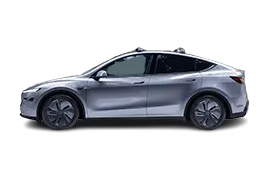
1 Tesla Model Y (2024–2025)

  • Battery: ~75 kWh usable (LR AWD).
  • Range: ~568 km WLTP / ~337 miles EPA.
  • Architecture: 400V, peak 250 kW DC.

This is the one people spend the most time on before landing on the iX3. The Supercharger network is a genuinely strong argument — not in theory but in practice. OTA updates that actually change how the car behaves, resale values that hold better than anything else in the class — these are real things, and I'm not dismissing them.

What tips it: the charging gap has completely flipped. Model Y peaks at 250 kW. The iX3 holds 300+ kW at 45% SOC. On a three-stop motorway day that accumulates into one fewer stop. Real winter highway numbers I found: iX3 returned ~315 miles, Model Y ~265 — both below WLTP, but the BMW fell less. CarPlay and Android Auto as standard also matter more than people expect until they're sharing a car with someone who lives on Google Maps.

Where Model Y still wins: Regular 400+ km days on public DC infrastructure — the Supercharger network is still the most reliable argument in most markets. The iX3's speed advantage matters at the charger; Tesla's network advantage matters in finding one that works.

2 Audi Q6 e-tron (2024–2025)

  • Battery: ~94.9 kWh usable.
  • Range: up to 625 km WLTP.
  • Architecture: 800V (PPE, shared with Porsche Macan), 270 kW peak DC.

The comparison that generates the longest threads in BMW communities — same buyer, same price, both 800V. The charging gap is real and documented: Q6 peaks at 270 kW, the iX3 at 400 kW. Both claim 21 minutes for 10–80%, but the iX3 holds peak rate longer, meaning higher average session power. One owner who ran Munich–Hamburg–Munich said the iX3 stopped twice and the Q6 would have needed three. That's the practical version of the 130 kW difference.

Where the Q6 has a case: buyers coming from a Q5 or Q7 find the Audi cabin more immediately familiar. More conventional layout, expected material quality, less of a leap. One former Audi owner who switched described it as "a lot to get used to" — then said three months in he'd stopped missing the Q6 entirely.

How it usually breaks: Long-distance charging efficiency and next-gen tech → iX3. Familiar premium cabin and Audi dealer continuity → Q6 e-tron.

3 Porsche Macan EV (2024–2025)

  • Battery: ~94 kWh usable.
  • Range: up to 613 km WLTP.
  • Architecture: 800V (PPE), 270 kW peak DC.

The Macan discussion is the most polarised of any I found. The Porsche's case rests on things the iX3 doesn't offer at launch: air suspension, rear-wheel steering, and driving feel that several experienced BMW owners describe as having a genuine edge at the limit. One person who'd owned iX variants was specific about this — the Macan's weight management through corners is sharper, full stop. The Macan Turbo Electric also outputs 639 hp. Nothing in the current iX3 lineup touches that.

The iX3 fires back where it matters for longer trips: 4.1 miles/kWh WLTP against the Macan's 3.3. Over 1,000 km that's an extra charge stop for the Porsche, which also tops out at 270 kW vs 400 kW. Cargo space isn't close — 61.8 cu ft for the iX3, 47.6 for the Macan. If you carry luggage regularly, the iX3 is the practical answer between these two.

The honest split: Air suspension, rear-wheel steering, outright driver feedback at the limit → Macan. Better efficiency, faster charging, more space, lower price → iX3. These genuinely are different cars for different priorities.

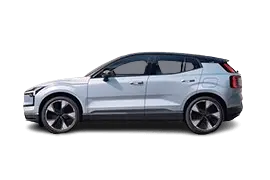
4 Volvo EX60 (2026–)

  • Battery: 83 / 95 / 117 kWh usable (three variants).
  • Range: 310–503 miles EPA / 385–810 km WLTP.
  • Architecture: 800V, 400 kW peak DC.

Two purpose-built EV platforms, same segment, same price, within months of each other — this one's worth watching. The EX60's argument is variety: three powertrain options versus one, a calmer interior character that people from non-BMW backgrounds find more immediately accessible, and a P12 that hits 503 miles WLTP and 3.9 seconds to 100 km/h. That's faster and longer-ranged than the sole iX3 spec.

The iX3's concrete counter: 500 miles of WLTP range from the base trim at £59,000 / ~$60,000. To match it in the EX60 you're adding £8,000 for the P12. Several cross-shoppers flagged exactly this — the Volvo's headline range required real extra spend. The iX3 is also more aerodynamically efficient (Cd 0.24 vs 0.26), which shows at motorway pace in real-world consumption.

How it usually breaks: Full range at base-spec pricing, driver-focused character, BMW badge → iX3. More variant choice, calmer interior, Volvo's established safety reputation → EX60. Neither is a wrong answer.

5 Where the iX3 Actually Lands

Going through everything: the iX3 wins when charging speed at highway pace, real-world range efficiency, and driving involvement matter most. It loses when someone needs air suspension right now (Macan), a dedicated charging network (Model Y), or more trim variety from launch (EX60). The buyers who end up second-guessing are almost always those who needed one thing the iX3 doesn't yet offer. Everyone else settles quickly — and stops thinking about what they almost bought.

Back to contents

Frequently Asked Questions FAQ about the BMW iX3 2025 : Full Specs | 50 xDrive | Range, 0‑100 , HorsePower

BMW iX3 Specs, Owner Manual & Official Resources

Every number on this page traces back to one of the sources below. Official BMW documents for specs and technical data; owner communities for real-world experience that the press kit doesn't cover.

Official BMW Sources

Technical Documentation & Manuals

  • eManuals.com — BMW iX3 — owner's manuals and technical documentation for all iX3 generations; covers systems, charging procedures, maintenance intervals, and safety information.

Owner Communities & Forums

  • iX3Talk.com — dedicated BMW iX3 owner forum: general discussion, real-world range, charging, specs comparison, modifications.
  • iXForums.com — iX3 subforum — active community covering all BMW i-electric models; orders, ownership, technical issues.
  • iX3-Forum.de — German-language dedicated iX3 community; technical threads, charging data, and European ownership experience.
  • Motor-Talk.de — BMW iX3 Neue Klasse (NA5) — large German automotive forum with dedicated NA5 iX3 board; real-world range, battery and charging discussions.
  • Reddit — r/iX3 — owner community; accessories, range reports, real-world charging data, issues, and Neue Klasse impressions.

Note: The new-generation BMW iX3 (Neue Klasse, NA5) debuts in the US in summer 2026. EPA range certification is pending at time of writing — official figures are BMW AG preliminary estimates based on EPA testing procedures. Where BMW doesn't publish exact numbers — usable battery capacity, real-world charging curves — I use owner reports and community data. Anything not from an official source is flagged as an estimate.

Back to Contents

About This Page

Specs and real-world data for the BMW iX3 2025 — pulled from official materials, press kits, owner forums, and independent tests. One place with accurate numbers, no marketing copy.

Author

I'm Alex. EVs have been a hobby for years — not as a journalist, just someone who finds this space genuinely interesting. I go through official releases, dig into owner threads, watch real-world tests, and bring the most accurate data into one place. If something's wrong, there's a contact link at the bottom of the page.

Last Updated

March 19, 2026

Sources: official Kia materials, open public data, owner reports. Current as of the date above. Use as a reference — verify anything critical before acting on it.

About EVspecsHub

EVspecsHub is a non-profit informational platform dedicated to providing free electric vehicle specifications. Any future ads will support hosting and maintenance costs to keep our content accessible.

Scroll to Top