











I've spent real time going through owner forum threads, warranty dispute histories, and actual repair invoices to put this together — not manufacturer specs or press summaries. The Leaf is genuinely cheap to run day-to-day. It also has a handful of problems that will cost you seriously if you don't know what to look for before you buy. This guide covers both sides without softening either one.
Worth knowing upfront: the exterior differences between a 2013 and a 2019 Leaf are subtle enough that people mix up generations at dealerships. You're choosing between two fundamentally different cars depending on which generation you land on — and the problems differ significantly.
1 Generations at a Glance — Which One Are You Actually Looking At?
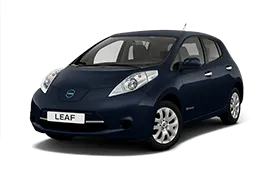
- Gen 1 (2011–2017): 24 kWh pack (2011–2015), optional 30 kWh from 2016. Distinctive "frog-eye" headlights on 2011–2012; cleaner face from 2013. CHAdeMO was optional on early trims, standard on SV/SL from 2013. Passive air cooling only. The 24 kWh pack is the most heat-sensitive battery Nissan ever sold in a consumer car.
- Gen 2 (2018–2024): Completely new body — more conventional, less frog-like. 40 kWh base pack (part number 295B0-5SA0A), 62 kWh e+ / Plus. The 62 kWh variant has a blue decorative strip under the front bumper and a blue CHAdeMO port cap. Door jamb weight sticker: 1,995 kg (4,398 lb) for 40 kWh vs 2,140 kg (4,718 lb) for 62 kWh — the easiest field check to confirm which variant you're looking at. Still no active cooling, but improved cell chemistry.
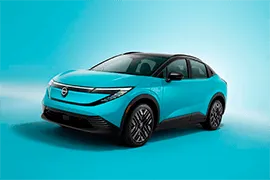
- Gen 3 (2025–): NACS charging port replaces CHAdeMO, revised platform. This guide focuses on used Gen 1 and Gen 2 cars — the ones actually available in the used market right now.
✅ The "lizard battery" detail: From 2015, Nissan revised the 24 kWh cell chemistry (nicknamed "lizard battery" by the community) with better heat tolerance. Cars that received warranty pack replacements after mid-2015 often got this updated version. If a pre-2016 car still shows 9+ bars and service records show a warranty battery replacement, it likely received the better pack. Check service history carefully for this.
Back to contents
2 Battery Degradation — The Problem That Defines Every Used Leaf Purchase All Gen 1 / Gen 2 in hot climates
This can't be separated from where the car spent its life. No Leaf — from any year through 2024 — ever had active liquid cooling. In a moderate climate with mostly Level 2 home charging, a well-managed Leaf can lose as little as 2–3% capacity per year after the initial break-in. I've looked through owner data from the UK and northern Europe with 40 kWh cars sitting at 94–95% SOH after 4–5 years of daily use, charging to 100% every night. That's a genuine real-world result.
Move that same car to Arizona, Texas, Florida, or Southern Europe, or give it to someone who used a DC fast charger as their primary fueling method — and the numbers are different. A 2013 Leaf from Seattle and a 2013 Leaf from Phoenix are fundamentally different used cars, even with the same mileage and identical bar count on the dashboard. This is the single most important thing to understand before shopping.
⚠ Hot-climate cars (Arizona, Nevada, Texas, inland California, Southern Europe, Middle East): apply maximum scrutiny to battery condition before discussing price. Passive air cooling means the pack temperature tracks the ambient air. Parking in direct sun with 90% charge in summer heat is the worst possible combination for lithium-ion longevity. Some hot-climate 24 kWh cars show below 60% SOH at relatively modest mileage figures.
What the Dashboard Bars Actually Mean — and Don't Mean
Nissan's 12-bar capacity display is not linear, and this trips up a lot of buyers. Losing one bar doesn't represent 1/12th of original capacity — the system is calibrated so that a warranty claim only triggers when the car drops below 9 bars, which corresponds to roughly 70–72% of original capacity. An 11-bar car is often already at 83% SOH. And there's a second, nastier issue: cell failure. When a single cell degrades faster than its neighbors, it hobbles the entire pack — you lose access to the energy in healthy cells beyond the point where the weak one runs out. A pack measuring 85% overall SOH can deliver only 65–68% of usable capacity because of one failing cell dragging everything down. LeafSpy will show this clearly. The bar display won't.
✅ LeafSpy is mandatory for any serious pre-purchase check. It's a ~$15 app that reads real State of Health %, cell-level voltages, and quick-charge count directly from the car's BMS via a Bluetooth OBD-II dongle (~$25). Any seller who refuses to allow this check is sending a signal. A seller who lets you run it without hesitation is a seller worth talking to.
What SOH Numbers to Target
- Gen 1, 24/30 kWh: 75%+ SOH minimum for a usable car. 85%+ is genuinely healthy. Below 70% means noticeably limited range — factor in a potential pack replacement when negotiating price.
- Gen 2, 40 kWh: Aim for 85%+. These packs hold up better in moderate climates, but degrade meaningfully with heavy DC fast charging or heat exposure.
- Gen 2, 62 kWh: The most durable pack Nissan made before Gen 3. The cells run at roughly half the charge/discharge stress of the 40 kWh pack for the same daily range. 80%+ is still a solid daily driver; 88%+ is excellent.
3 DC Fast Charge Fire Recall — Run This Before Anything Else 2019–2022
If you're looking at any 2019–2022 Leaf, check the VIN before you book a test drive. Two separate NHTSA campaigns cover approximately 44,000 Leafs total.
The first (NHTSA reference 24V-700, Nissan reference R24B2) covers around 23,887 cars from the 2019–2020 model years with the CHAdeMO fast charge port. The second (25V655) covers 19,077 vehicles from the 2021–2022 model years manufactured at the Smyrna, Tennessee plant — both 40 kWh and 62 kWh versions.
The underlying problem: lithium deposits building up inside the AESC-supplied battery cells increase electrical resistance. Under DC fast charging, that resistance generates heat. If charging continues unchecked, the battery can reach a thermal incident. Nissan's interim guidance to affected owners was simple — stop using CHAdeMO DC fast charging until the software remedy is applied. Owners can check by the symptoms: interrupted charging sessions, unusual sounds, burning smell, or smoke from the battery area during a CHAdeMO session.
⚠ 2019–2020 Leaf: NHTSA 24V-700. 2021–2022 Leaf: NHTSA 25V655. Check both at nhtsa.gov/recalls by VIN. The software remedy was still being finalized as of late 2025 after multiple delayed deadlines (originally promised November 2024). Verify current status at a Nissan dealer if buying either year range.
Nissan estimates roughly 1% of the recalled vehicles actually have defective cells — but without the diagnostic there's no way to know if your specific car is in that 1%. For anyone who depends on fast charging, this remains an unresolved limitation until the software update is applied and confirmed.
Back to contents4 Rapidgate — When Your Fast Charger Throttles to Almost Nothing Gen 2 40 kWh, 2018–2019 primarily
The name entered the EV community's vocabulary in 2018 when a Norwegian tester documented the pattern. After one DC fast charge session, the battery warms up. On the second consecutive fast charge — on a warm day, after a highway run — the BMS sees elevated pack temperature and throttles the charging rate to protect the cells from heat damage. Sometimes drastically: owners who expected 50 kW got 15 kW. One owner on a UK forum described the second charge of a summer road trip running at exactly 15 kW, no variation, for the entire session.
This isn't a defect — it's the BMS doing its job. The pack has no active cooling; if the software didn't throttle, the cells would take real damage. But for anyone who thought a 50 kW CHAdeMO capability meant a fast multi-stop road trip was realistic, the reality is more complicated.
⚠ 2018–early 2019 40 kWh Leaf with original BMS firmware: TSB NTB 19-056 / EL 19-018 raised the temperature threshold before throttling for early-production European cars (built December 8, 2017 – May 9, 2018). Original firmware version ends in "A"; updated European cars show "C." If you're buying an early 2018 car and fast charging matters to you, ask a dealer or EV specialist to verify the firmware version. The 62 kWh e+ handles back-to-back charges significantly better — its cells run at lower temperature for the same duty cycle.
✅ Community workaround for road trips: Park in shade with windows open for 30+ minutes between charges to let the pack passively cool. Not a fix, but it consistently gets owners a better second-session charge rate. Some experienced Leaf road-trippers also cap charging to 80% and take more, shorter charge sessions rather than fewer longer ones — keeps temperatures lower throughout.
Back to contents
5 The 12V Battery — The Car's Most Disruptive Common Problem All Years, All Gens
A dead 12V in a Leaf doesn't just mean the car won't start. Everything stops: no fob response, no door locks, no dash display, no charge port, no way to put it in neutral. One owner I came across described a 2022 Leaf — less than a year old, 1,500 miles on the clock — going from fully charged to under 4V overnight while parked. Another owner documented the same sequence six times in nine months before the dealer acknowledged the parasitic drain issue.
The DC-DC converter is supposed to top up the 12V from the main battery. But the system has a documented weakness with lightly-driven cars. Electronics that stay active in the background — connected app modules, the charge timer logic, various keep-alive systems — draw current even when the car appears to be off. The recharge compensation doesn't always keep up. The OEM unit is a standard lead-acid battery that doesn't handle deep discharge cycles well.
There's also a less-obvious connection: a weak 12V is one of the most common causes of CHAdeMO fast charging mysteriously failing on otherwise healthy cars. The protocol handshake between the car and the charger requires stable 12V voltage throughout. One forum member traced intermittent CHAdeMO failures to a 12V that dropped from 13V to 12V within two minutes of the car being switched off — battery health test showed 36%. New 12V, CHAdeMO working again immediately.
✅ What experienced owners actually do:
Back to contents
- Keep the car plugged in to L1 or L2 when parked for more than a few days. The DC-DC converter maintains the 12V while connected to mains charging.
- Replace with AGM chemistry, not standard lead-acid. The Costco 51R (~$125 in the US, 3-year warranty) is the most commonly mentioned. UK owners noted Halfords charging £90 with a 5-year warranty versus dealer pricing of £150 for a 2-year unit — no dealer coding required on most Leaf years.
- A $40–$60 / €40–€60 portable jump starter in the boot. Multiple owners who've been stranded say the same thing: buy it before you need it, not after.
- One owner cited turning off the charge timer in the settings menu as reducing 12V drain noticeably on a 2012 — and kept the same original battery for 12 years with the help of a maintainer. Outlier, but the principle is consistent across many posts.
6 PTC Heater Failures — Expensive and Predictable on 2011–2013 Cars Gen 1, 2011–2013 primarily
The 2011–2013 Leaf used an Eberspächer high-voltage PTC heater element (part number 27143-3NF1A, fault codes B2773 / B2774) mounted under the 12V battery. I've read through the teardown documentation on this, and the engineering failure mode is genuinely interesting in a grim way: the solder joints between the PCB and heating elements fail over time from thermal cycling. As they go resistive, heat builds up. Eventually you get electrical arcing inside the housing. One owner's teardown photos showed melted aluminum and what they described as spectacular internal arcing on a 2011 car at around 60,000 miles / 96,000 km. The 30A fuse in the DC/DC junction block — which is an absolute nightmare to access — blows along with it.
The first symptom is easy to miss: the heater works intermittently, especially in cold weather. If you notice the heat cutting out and coming back, or the car showing a range penalty for heating that seems disconnected from actual cabin warmth, get it checked immediately. Once the fault codes are stored, things usually deteriorate quickly.
⚠ If buying a 2011–2013 Leaf: treat the PTC heater as an item with a known end date, not an unknown risk. Dealer replacements have been quoted as high as $4,000 for a "complete heating unit" — while the actual heater element part (P/N B7A43-00QOF) was listed at around $1,116 at Nissan of Portland when last available. Always ask for an itemized quote. Salvage yard units generally fail the same way as the originals and aren't a reliable fix.
✅ Pre-purchase test: Set heater to full (30°C / 86°F) and confirm strong, consistent hot air within 90 seconds. Also watch that the dash range estimate drops when the heater is running hard — if the range barely moves, the heater may not actually be drawing power.
From 2014 onwards Nissan redesigned the heater. Gen 2 cars with heat pump systems don't show the same early-failure pattern. The 2011–2013 PTC unit is the specific one that needs scrutiny.
Back to contents7 On-Board Charger Failures — When L2 Charging Quietly Stops Working Gen 1 2011–2012 primarily
The on-board charger handles all Level 1 and Level 2 AC charging. When it fails, the car won't charge from home at all. What catches people off-guard: CHAdeMO DC fast charging often continues to work because it completely bypasses the OBC — so some owners drove for a while only fast-charging before realizing what had happened.
On 2011–2012 cars, a diode failure inside the OBC (unit model number 3NA060) is the most documented cause. The repair community has thoroughly reverse-engineered this unit. There's a custom HV switching assembly inside — called the "Waffle Plate" in the community forums, not an official Nissan term — that's essentially impossible to source as a standalone part. Skilled DIYers have rebuilt these boards at component cost ($5–$10 in components if you know exactly what failed). Everyone else is looking at a full unit replacement: dealer cost quoted at around $2,600–$3,000 total on a 2011 ($1,800 for the part, ~$1,200 labor, plus tax).
One additional thing worth knowing: early GE WattStation home EVSE units had a documented compatibility issue where a power interruption during charging could spike current and kill the OBC input stage. If the car you're looking at was primarily charged at home with a GE WattStation, that's worth checking specifically.
✅ During any pre-purchase test: plug into a Level 2 source and confirm charging initiates and holds. A car that accepts CHAdeMO but not L2 has a dead OBC — that's a $2,600+ repair that changes the negotiation entirely.
Back to contents
8 CHAdeMO Obsolescence — The Problem That Gets Bigger Every Year Gen 1 & Gen 2 through 2024
This isn't a mechanical defect — it's a structural dead end that affects every pre-2025 Leaf on the market. CHAdeMO is the Japanese DC fast-charging standard Nissan committed to across the entire Gen 1 and Gen 2 lifespan. As of 2025–2026, it's being phased out in North America. Electrify America publicly stated it won't add new CHAdeMO stalls outside California. EVgo isn't expanding CHAdeMO either. The number of functional CHAdeMO chargers in the US is actively shrinking.
For a car that was already limited to 50 kW peak on CHAdeMO — and is now under a recall advising owners not to use CHAdeMO at all until a software fix is applied — this is a meaningful limitation for anyone who ever relies on fast charging. In Europe, CHAdeMO chargers exist in reasonable numbers but are being displaced by CCS at the same rate. Japan remains the exception where CHAdeMO infrastructure is still actively maintained.
The practical framing: a pre-2025 Leaf as a city car with home charging is a sensible, cheap proposition. A pre-2025 Leaf with plans for regular road trips requiring fast charging requires an honest assessment of whether the infrastructure exists on your specific routes — and whether that will still be true in three years.
Back to contents9 Brakes, Suspension & The Minor Stuff Worth Knowing All Years
Brake Caliper Seizing
This is the mechanical issue that catches former ICE car owners by surprise. Regen does the vast majority of stopping on a Leaf — which means the friction brakes can go weeks or months without real use. Caliper slider pins corrode from inactivity. The result is uneven pad wear, a dragging caliper, and eventually a stuck parking mechanism. Pads themselves can last 60,000+ km / 37,000+ miles (which is genuinely impressive), but calipers can seize before pads are anywhere near worn. Get them inspected and lubricated at every tyre rotation — not just when pads look thin. A seized caliper repair, if it gets to that stage, runs $400–$600 / €350–€550.
Front Suspension Bushings and CV Joints
High-mileage Gen 1 cars (especially 80,000+ km / 50,000+ miles) develop worn front suspension bushings and drop links. CV joint clicking on turns is the most commonly reported symptom, and some owners have resolved it with a regrease rather than a full axle replacement — worth trying before ordering parts. Polyurethane bushing refresh kits are popular in the DIY community for anyone who wants more durable replacement than OEM rubber.
Alloy Wheel Corrosion (UK/Europe)
Multiple UK forum owners flagged corroding alloy wheels appearing within a few years of purchase — some within two or three years on coastal or road-salt-heavy environments. Not structural, but cosmetically noticeable. Worth inspecting on any older Gen 1 car bought in a northern European market.
DC-DC Converter Failures (Gen 1)
A few Gen 1 owners, particularly with 2012 cars at higher mileages, reported DC-DC converter failures — a significant repair that can run £850 / ~$1,000+ out of warranty. This unit handles the conversion between the high-voltage traction battery and the 12V system. Failures often present as the 12V battery repeatedly draining despite the car appearing to charge normally. If a used Gen 1 car has a history of repeated 12V failures without an obvious cause, the DC-DC converter is worth checking.
Back to contents10 Real-World Repair Costs All Years
These figures come from actual invoices and repair quotes posted by owners in community discussions — not dealer brochure estimates. The spread is real; use them as planning benchmarks. US figures primary; European equivalents where available.
💡 Warranty overview: US — traction battery: 8 years / 100,000 miles for capacity loss below 9 bars. EV system (motor, inverter, OBC, DC-DC converter): varies by year, typically 5 years / 60,000 miles on Gen 1. Bumper-to-bumper including PTC heater: 3 years / 36,000 miles. Europe — battery: 8 years / 160,000 km (99,400 miles). Most other components: 3 years / 100,000 km.
| Repair / Service | Under Warranty? | Out-of-Pocket USA | Out-of-Pocket Europe (€/£) | Notes |
|---|---|---|---|---|
| 🔋 Traction Battery | ||||
| Pack replacement (below 9 bars, warranty claim) |
Free 8yr / 100k mi US warranty |
$5,500–$8,000 out of warranty, Gen 1 |
€5,000–€8,500 | Some Gen 1 owners install Gen 2 40 kWh packs instead of like-for-like — documented community upgrade path. Adds range significantly. Requires compatible BMS firmware version. |
| Single cell repair (independent EV specialist) |
Rarely covered | $500–$1,500 | €400–€1,200 | Not all shops offer this. Ask specifically. Nissan warranty covers pack-level degradation by bars only — not individual cell failures, which is a known frustration in the community. |
| 🌡️ PTC Heater (Gen 1, 2011–2013) | ||||
| PTC heater element P/N 27143-3NF1A / B7A43-00QOF |
Free within 3yr/36k mi rarely in warranty on used cars |
$2,000–$4,000 part ~$1,100 + substantial labor |
€1,800–€3,500 | Always get an itemized quote — some dealers quote "full heating system" reflexively. The heater element part itself was ~$1,116 at Nissan Portland. Salvage units are unreliable due to the same design flaw. |
| 🔌 On-Board Charger (OBC) | ||||
| OBC replacement (2011–2012 primarily, unit 3NA060) |
Free within EV system warranty 5yr / 60k mi |
$2,600–$3,000 one 2011 owner: $2,600 at dealer (2022–23) |
€2,000–€3,500 | Part ~$1,800 + labor ~$1,200. Rear-seat access on 2011–2012 makes labor expensive. Community diode-repair option exists but requires electronics skills. Stone Mountain Nissan in the US listed a new unit at $3,218 as recently as 2023. |
| 🔋 12V Auxiliary Battery | ||||
| 12V replacement (AGM chemistry recommended) |
Free within 2yr battery warranty | $120–$230 Costco 51R ~$125 + 3yr warranty |
€80–€160 UK: Halfords ~£90 (5yr warranty) |
No dealer coding needed on most Leaf years. AGM handles the partial-charge cycling far better than standard lead-acid. Worth replacing proactively on any car over 4 years old with no records. |
| 🛑 Brakes | ||||
| Front pads + caliper service (pads last long; calipers seize) |
— | $180–$380 | €150–€320 | Pads can last 60,000+ km / 37,000+ miles. The real issue is calipers seizing from inactivity. Get them inspected and lubed at every tyre rotation, not just when pads wear thin. |
| Brake fluid flush (every 2–3 years regardless of pad wear) |
— | $100–$180 | €80–€150 | On an EV where friction braking is infrequent, fluid can sit in the system for years without the thermal cycling that normally flags it needs changing. Don't skip this interval. |
| 🔧 Routine Annual Service | ||||
| Annual basic service (no oil, no plugs, no belt) |
— | $50–$150 tyre rotation + cabin filter |
€70–€180 UK basic: ~£85–£100 |
Cabin filter, tyre rotation, fluid top-up. That's genuinely the whole list. Owners coming from petrol cars consistently say it feels almost suspiciously simple — it is. |
⚠ Owner-reported figures, early 2026. Prices vary by region, dealer vs. independent EV specialist, and parts source. Treat these as planning benchmarks, not quotes.
Back to contents
11 Pre-Purchase Checklist — What I'd Do Before Signing
Step 1 VIN Check — Before You Book the Test Drive
- 2019–2020 cars: NHTSA recall 24V-700 (Nissan ref. R24B2) — DC fast charge fire risk. Check current remedy status.
- 2021–2022 cars: NHTSA recall 25V655 — same issue, second campaign. Remedy was still being finalized as of late 2025.
- Check at nhtsa.gov/recalls by VIN. 60 seconds of work that can save you an expensive surprise.
Step 2 LeafSpy Battery Check — Non-Negotiable
- Bring a Bluetooth OBD-II dongle (~$25) and the LeafSpy app (~$15). Plug in, read the data.
- Check SOH %, Hx (health index), available amp-hours, and cell voltage spread. A large gap between the lowest and highest cell voltage = weak or failing cell.
- Check QC (quick charge) count. Many rapid sessions on a small-pack hot-climate car = extra scrutiny on degradation.
- Targets: Gen 1 24/30 kWh — 75%+ SOH. Gen 2 40 kWh — 85%+. Gen 2 62 kWh — 80%+ usable, 88%+ excellent.
Step 3 Climate and Charging History
- Where was this car primarily driven? A Gen 1 from the Pacific Northwest and a Gen 1 from Phoenix are different cars regardless of mileage.
- Was it primarily home-charged on L2, or did it rely on DC fast charging regularly? Service records or VIN-based history can help here.
Step 4 Test Drive — What to Listen and Feel For
- Heater (2011–2013 specifically): Full heat (30°C / 86°F), confirm strong hot air within 90 seconds. Watch for the range estimate dropping while heat runs — if it doesn't, the heater may not be working.
- Regen braking: Test B-mode (Gen 1) and e-Pedal (Gen 2). Should be smooth and progressive.
- Suspension: Bumps at low speed — any clunking from the front = bushing wear. Tight turns — any CV click = check and regrease before spending more.
Step 5 Charging Verification
- Plug in to a Level 2 source and confirm charging initiates and holds. A car that accepts CHAdeMO but not L2 has a dead OBC — a $2,600+ repair.
- For 2018–2019 40 kWh: if fast charging matters to you, ask a specialist to verify the BMS firmware version. Updated Euro cars show firmware ending in "C."
Step 6 12V Health
- In LeafSpy, check 12V voltage at rest: should be 12.6–12.8V. Watch it over 2–3 minutes — if it noticeably drops toward 12V, the battery is weak.
- On any car 4+ years old with no 12V replacement records: budget for one soon regardless. On a high-mileage Gen 1: budget for it before delivery.
12 What Actually Holds Up — Because There's Real Substance Here
I've spent most of this guide on problems, so let me be direct about the other side. The electric motor and inverter in the Leaf are genuinely robust. I've looked at owner data from cars with 200,000 km / 124,000 miles and beyond — motor failures are rare enough to be forum events, not forum trends. The motor has no oil to change, no timing components, no combustion-related wear. The Leaf's drivetrain has proven this across 15 years of real-world ownership data.
The regen braking system means friction brakes last a remarkably long time. Some owners hit 60,000+ km / 37,000+ miles on original pads. Running costs for a Leaf in a moderate climate, driven on mostly L2 home charging: no oil changes, no spark plugs, no timing belt, no cooling system flush. Owners switching from petrol consistently describe cutting their monthly running costs significantly, sometimes in half. After going through the numbers myself, that holds up.
The traction battery, in a moderate climate with sensible charging habits, also holds up better than its reputation suggests. A 62 kWh car from northern Europe or the Pacific Northwest at 5 years old showing 90%+ SOH is documented and normal, not an exception. Even the 40 kWh pack, if kept out of repeated heat and fast charging abuse, proves more durable than online forum horror stories imply. The horror stories are real — they're just climate and usage specific.
And perhaps the most practically valuable thing: the Leaf has the most thoroughly documented used EV community of any car on the market. Twelve-plus years of detailed ownership data on mynissanleaf.com, speakev.com, and the Leaf owner communities means that almost any problem you encounter has been debugged, priced, and fixed by someone before you. For a first-generation mass-market EV now deep into the used car market, that depth of collective knowledge is rare and genuinely useful.
A Leaf with clean battery health, from a moderate climate, with service records and the recall checks done, is one of the most economical used EVs you can buy right now. The issues in this guide are real — but most of them are knowable before you hand over money.
🔍 Full technical specifications by generation:

Disclaimer: Compiled from owner forums, community threads, NHTSA filings, and real repair invoices shared publicly. Not guaranteed to be complete — use as a starting framework, not a final word. Data current as of March 2026. Always verify open recalls at nhtsa.gov and nissan.com/recalls before any purchase.